

Hospital Supply Chain Management Challenges: A 2026 Strategic Guide
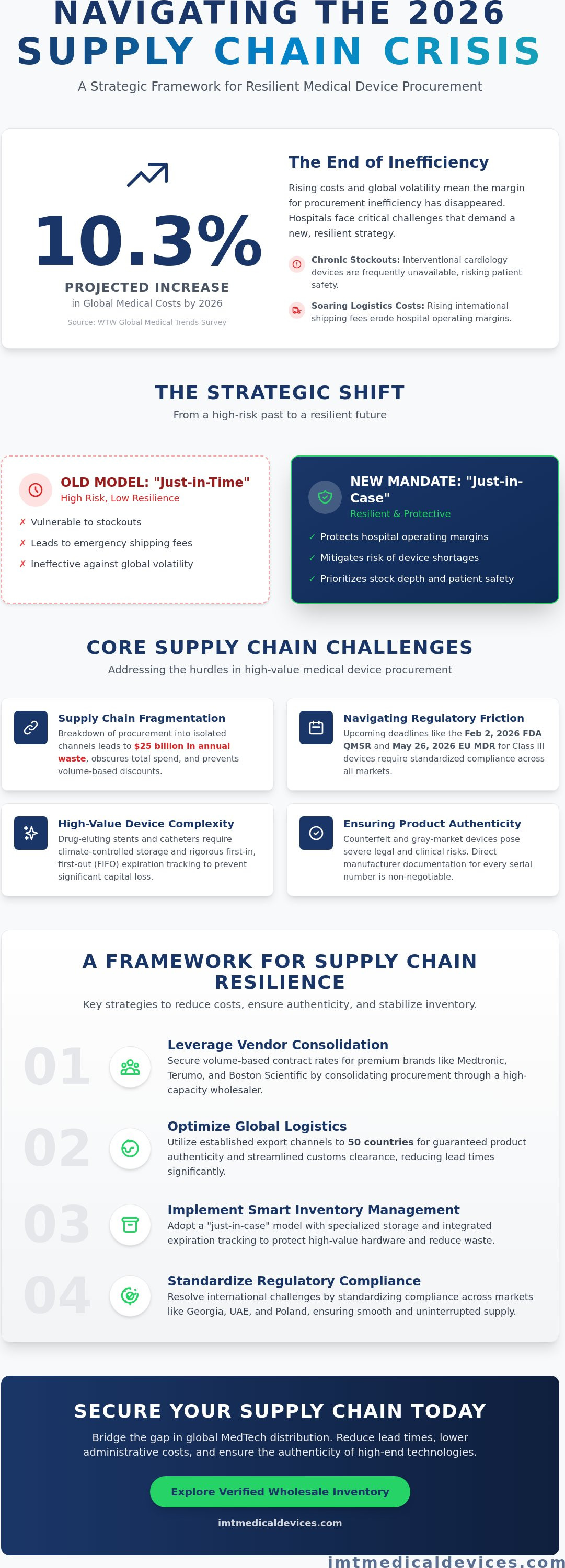
Global medical costs are projected to increase by 10.3% in 2026. This data, sourced from the WTW Global Medical Trends Survey, confirms that the margin for procurement inefficiency has disappeared. Current procurement cycles suffer from critical hospital supply chain management challenges, including chronic stockouts of interventional cardiology devices and rising international shipping fees. These bottlenecks, alongside the February 2, 2026 FDA Quality Management System Regulation (QMSR) implementation, necessitate a shift toward resilient, brand-aligned sourcing strategies.
This strategic guide identifies how to overcome procurement hurdles through high-capacity wholesale logistics and direct manufacturer access. We'll provide a roadmap for reducing lead times and ensuring the authenticity of high-end technologies from brands like Medtronic, Terumo, and Boston Scientific. You'll learn to navigate the May 26, 2026 EU MDR deadline for Class III devices and the potential impact of Section 232 tariffs on imported equipment. We'll demonstrate how to lower administrative costs and stabilize your medical inventory in a volatile global market.
Key Takeaways
- Transition to just-in-case inventory models to protect hospital operating margins against supply chain fragmentation.
- Implement specialized storage and expiration tracking for high-value hardware, including drug-eluting stents and aspiration catheters.
- Resolve hospital supply chain management challenges by standardizing regulatory compliance across international markets like Georgia, UAE, and Poland.
- Leverage wholesale vendor consolidation to secure volume-based contract rates for premium brands like Medtronic, Terumo, and Boston Scientific.
- Optimize global logistics through established export channels to 50 countries for guaranteed product authenticity and streamlined customs clearance.
Defining the Scope of Modern Hospital Supply Chain Management Challenges
By 2026, the medical device sector has moved decisively away from just-in-time logistics. Global volatility and recent regulatory shifts, such as the February 2, 2026 FDA QMSR update, have forced a transition toward just-in-case inventory models. This shift is a direct response to persistent hospital supply chain management challenges that threaten both clinical outcomes and fiscal health. Procurement departments now prioritize stock depth over lean inventory to mitigate the risk of interventional device shortages.
Financial stability depends on efficient movement of goods. Modern Hospital Supply Chain Management requires a holistic view of the procurement cycle to protect operating margins. When fragmentation occurs, hospitals lose leverage. Fragmented systems prevent volume-based discounts and increase the likelihood of duplicate orders. Delayed access to interventional cardiology hardware or neurovascular catheters isn't just a logistical failure; it's a patient safety risk. Global wholesalers stabilize these domestic fluctuations by providing a reliable bridge to premium international brands.
The High Cost of Procurement Inefficiency
Annual waste in healthcare logistics reached $25 billion according to recent industry analysis. This waste stems from several factors:
- Administrative overhead from managing hundreds of individual vendor contracts.
- Emergency shipping fees for "stat" delivery of critical surgical consumables.
- Loss of capital due to unorganized bulk purchasing.
In 2026 healthcare, supply chain fragmentation is the breakdown of procurement into isolated, non-communicating purchase channels that obscure total spend and inventory levels. This lack of cohesion forces hospitals to pay higher per-unit prices for essential technologies from manufacturers like Medtronic or Boston Scientific.
Inventory Visibility and Data Silos
Fragmented data leads to overstocking and high rates of expired products. High-value implants require precise environmental controls and rigorous tracking. When data silos exist between departments, a hospital might order new aspiration catheters while the same model sits unused in a different wing. Integrating manufacturer lead times directly into hospital ERP systems is now a requirement for operational survival. This integration allows for real-time adjustments based on actual production schedules in 50 countries. Accessing a digital warehouse feed ensures that part numbers and model specifications remain accurate across the entire facility, reducing the $25 billion waste attributed to logistics errors.
Technical Hurdles in High-Value Medical Device Procurement
High-value medical device procurement involves technical specifications that exceed standard inventory management. Sensitive cardiology hardware requires climate-controlled storage and precise handling to maintain structural integrity. These requirements exacerbate hospital supply chain vulnerabilities, particularly when dealing with drug-eluting stents. Managing expiration dates for these chemically coated implants is critical; a single batch of expired stents represents significant lost capital and procedural delays. Procurement officers must maintain a rigorous first-in, first-out (FIFO) system to prevent stock obsolescence.
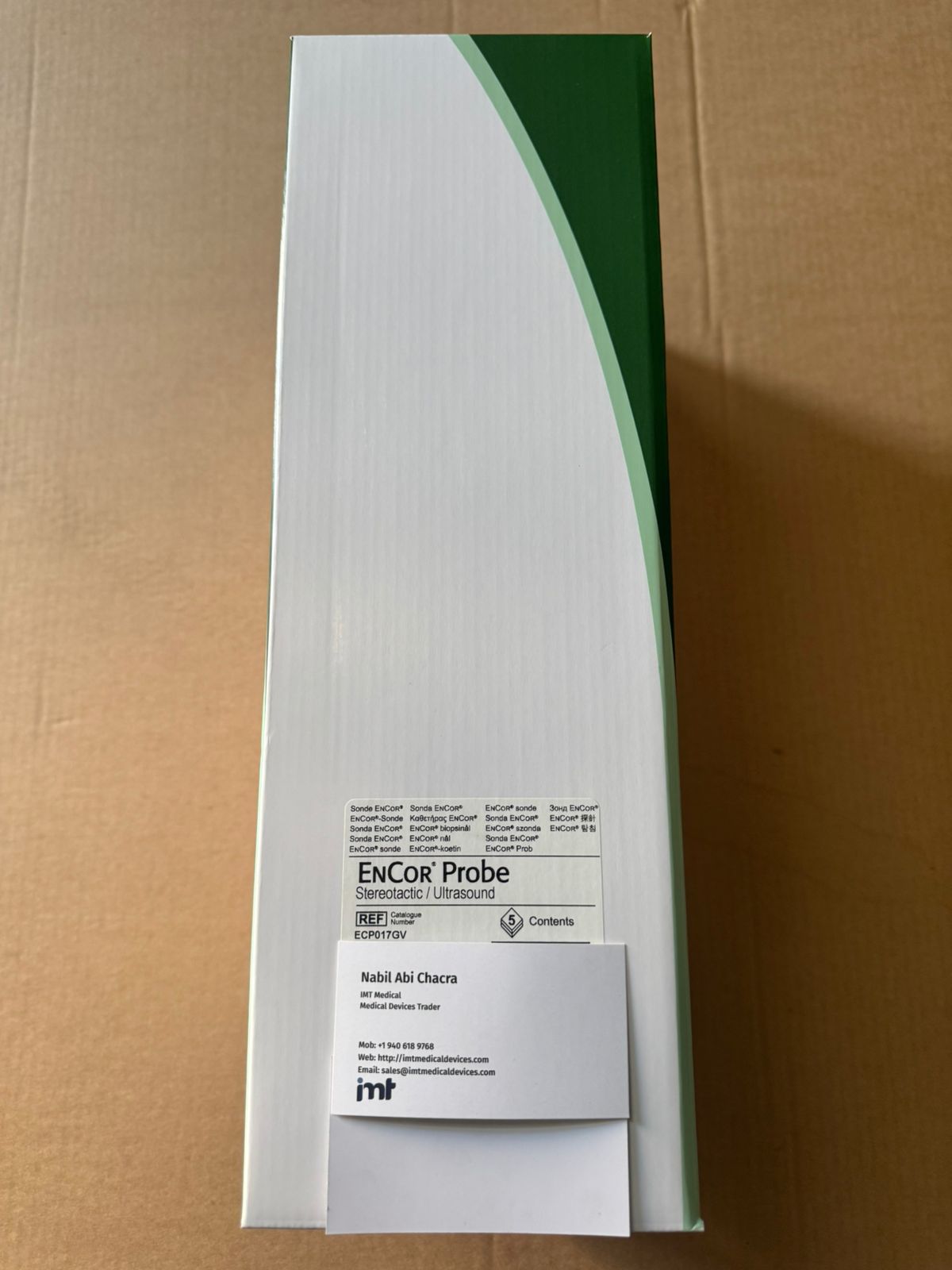
Procurement departments face a constant trade-off between clinician brand preference and actual product availability. Interventionalists often demand specific profiles from Terumo, Medtronic, or Boston Scientific based on tactile feedback and trackability during procedures. Ensuring authenticity in a globalized market remains a top priority. Counterfeit or gray-market devices pose severe legal and clinical risks. Reliable distributors solve these hospital supply chain management challenges by providing direct manufacturer documentation for every serial number. You can access our verified wholesale inventory to ensure product pedigree and clinical safety.
Interventional Cardiology Supply Complexity
Sourcing ptca balloon catheters requires an exhaustive inventory of diameters and lengths. Interventional labs can't function without a complete range of balloon sizes to match varying vessel anatomies. Constant PTCA balloon availability is critical for PCI procedures because it ensures the operator can safely dilate lesions and prepare vessels for stent deployment without intra-procedural delays. Supply chain managers must balance the following catalog requirements:
- Semi-compliant and non-compliant balloon variants.
- Diverse French sizes for radial and femoral access.
- Specific balloon lengths from 6mm to 30mm.
- Brand-specific hub designs and coating technologies.
Cardiac Rhythm Management (CRM) Logistics
The procurement cycle for permanent pacemakers and ICDs involves rigorous technical documentation. Every device must be tracked from the manufacturer to the specific patient through unique device identification (UDI) systems. Managing the supply of electrophysiology catheters and ICDs requires coordination with specialized technicians and manufacturer representatives. These high-cost items contribute significantly to hospital supply chain management challenges due to their long lead times and high clinical stakes. Effective CRM logistics rely on a "Brand + Product + Model Number" tracking format to minimize ambiguity in the operating room. This systematic approach ensures that the correct generator and lead combination is available for every scheduled implant procedure.
Navigating Global Logistics and International Regulatory Friction
International logistics for medical devices require precise coordination to avoid border delays. Customs clearance for sensitive neurovascular and cardiology technologies represents a significant hurdle. These hospital supply chain management challenges often stem from misaligned regulatory requirements between export hubs and destination markets. By May 26, 2026, compliance with the EU Medical Device Regulation (MDR) for Class III custom-made implantable devices becomes mandatory, increasing the documentation burden for shipments into Poland and other European territories. Failure to provide exact certificates of origin or sterilization records results in prolonged impoundment at customs.
Maintaining cold chain integrity is non-negotiable for specific catheters and drug-coated devices. Temperature fluctuations during international transit compromise product efficacy and safety. Rapid border transit depends on the accuracy of export documentation. Precise labeling, following the "Brand + Product + Model Number" format, allows customs officials to verify shipments quickly. Specialized logistics protocols ensure that high-end devices from Medtronic, Terumo, and Boston Scientific move through transit corridors without technical friction. Reliable transit is the only way to bypass the volatility of global shipping lanes.
Cross-Border Documentation and Compliance
Efficient transit requires a comprehensive documentation package. This includes:
- CE Mark and ISO 13485:2016 certifications.
- Manufacturer's Declaration of Conformity.
- Sterilization certificates for surgical consumables.
- Detailed commercial invoices for VAT and tariff assessment.
Handling VAT and tariff complexities across multi-regional distribution networks is a core competency for global wholesalers. In 2026, the potential for new Section 232 tariffs on imported medical supplies adds another layer of financial risk. Strategic documentation management minimizes these impacts on device availability and prevents unexpected cost spikes.
Strategic Export Hubs and Logistics
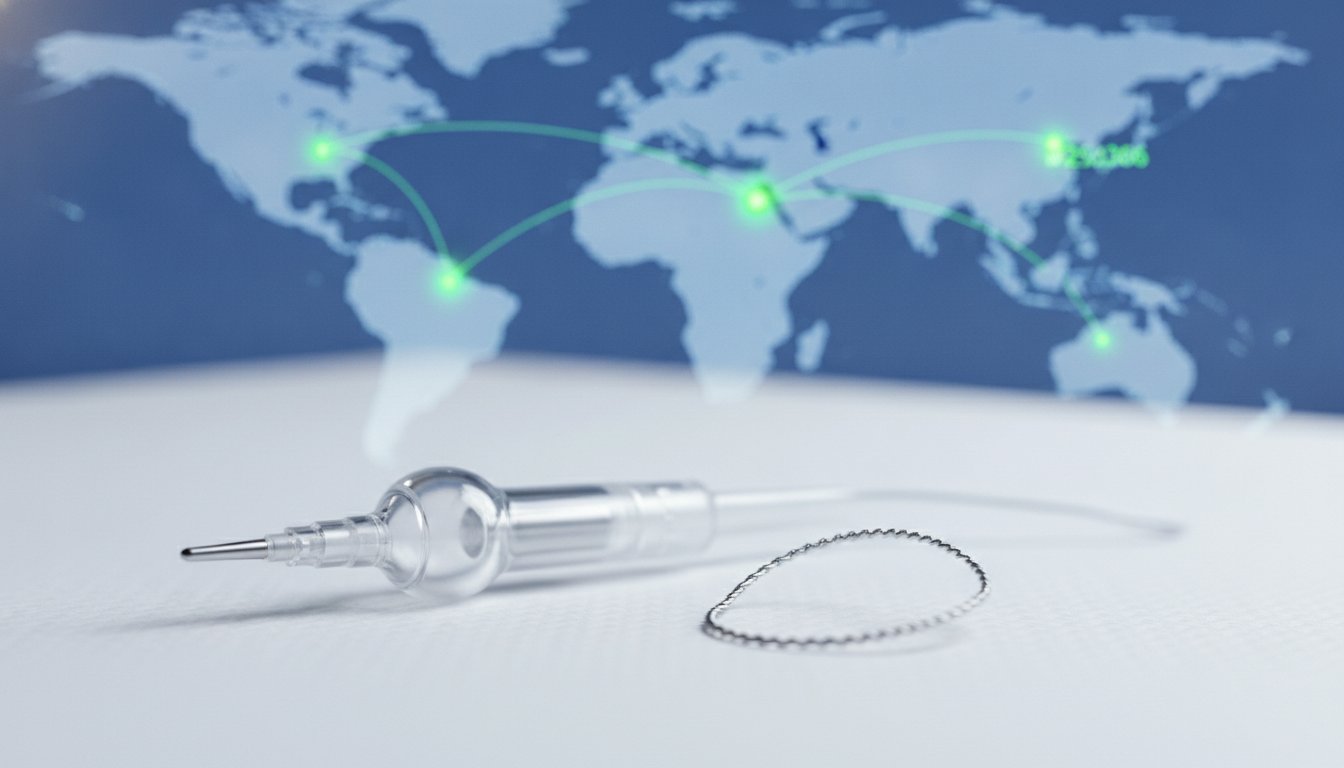
Localized warehousing reduces lead times and stabilizes regional supply. Utilizing regional offices in Dubai and Tbilisi allows for rapid deployment into the Middle East and Caucasus regions. Warehousing in Poland and Turkey provides a logistical bridge to European and Central Asian markets. Our "Export 50 Country" capability ensures that regional shortages don't disrupt clinical operations. By positioning inventory closer to the point of demand, we bypass typical hospital supply chain management challenges associated with long-haul international shipping. High-speed inventory feeds from these hubs provide procurement officers with real-time availability of best sellers in coronary and peripheral intervention categories.
Strategic Frameworks for Supply Chain Resilience and Cost Optimization
Resilience in 2026 requires a decisive shift from price-only models to value-based procurement. This approach evaluates the total cost of ownership, including device shelf-life, clinical outcomes, and the technical support provided by manufacturers. Addressing hospital supply chain management challenges necessitates the consolidation of vendors to leverage volume-based contract rates. By reducing the total number of suppliers, hospitals minimize administrative friction and improve price transparency. Standardizing guidewire and surgical consumable selections across different interventional departments prevents inventory bloat and reduces training requirements for clinical staff. High-capacity wholesalers serve as a vital buffer against manufacturer volatility; they provide immediate access to stock when direct factory lead times fluctuate due to raw material shortages or geopolitical shifts.
Leveraging Wholesale Partnerships
Wholesale intermediaries offer immediate access to tier-one brands like Medtronic, Abbott, and Boston Scientific. This partnership model allows B2B healthcare providers to benefit from bulk-sale pricing without the need for massive on-site storage or complex direct-manufacturer contracts. Procurement officers can source coronary intervention, neurovascular, and peripheral devices from a single point of contact, simplifying the accounts payable process. Wholesale intermediaries reduce manufacturer lead times by maintaining large, ready-to-ship inventories across established regional hubs in Dubai, Turkey, and Poland. This strategy effectively bypasses production delays and ensures that critical interventional labs remain operational during global supply disruptions. You can partner with an international distributor to secure consistent access to high-demand medical technology.
Technological Integration in 2026
Standardizing order processes is essential to minimize manual entry errors and shipping discrepancies. Automated systems now link hospital ERP platforms directly to distributor inventory feeds via secure API connections. This integration enables real-time inventory tracking and triggers automated replenishment whenever stock reaches pre-set minimums. Analytics tools predict demand surges in surgical departments by analyzing historical procedural data and clinical schedules. These technological frameworks solve hospital supply chain management challenges by providing data-driven visibility into the entire procurement cycle. Accurate forecasting prevents expensive emergency orders and stabilizes the supply of high-value implants, aspiration catheters, and drug-eluting stents. Implementing Unique Device Identification (UDI) scanning at the point of care ensures that every model number and serial number is recorded accurately for both billing and patient safety tracking.
IMT Medical Devices: Bridging the Gap in Global MedTech Distribution
IMT Medical Devices functions as a high-capacity international distributor. We address hospital supply chain management challenges by providing direct access to premium global brands. Our logistical infrastructure supports exports to 50 countries. We act as a professional bridge between major manufacturers and international healthcare providers. Strategic presence in Georgia, UAE, Turkey, and Poland allows for localized inventory management. This geographical reach minimizes the impact of global shipping disruptions and regulatory friction. Our warehouse operations prioritize industrial competence and logistical reliability over narrative fluff.
Our wholesale model focuses on specialized medical technology for coronary, neurovascular, and peripheral intervention. High-speed inventory feeds allow procurement officers to identify specific part numbers quickly. This pragmatic approach eliminates the ambiguity often found in fragmented supply chains. We value scale and reach. Our ability to stabilize regional shortages through strategic export hubs ensures clinical continuity in high-stakes surgical environments. By streamlining the path from manufacturer to hospital, we resolve the persistent bottlenecks in medical device procurement.
Reliable Sourcing for Critical Procedures
Product availability is the core of our business. We maintain a comprehensive portfolio from prestigious global manufacturers. This includes everything from drug-eluting stents to surgical staplers. Every shipment undergoes rigorous quality assurance to ensure authenticity and product pedigree. We provide full technical documentation for every serial number, meeting the high standards required for cardiac and neurovascular implants.
Product Details:
- Medtronic: Onyx Frontier DES, Coda Balloon Catheters, and Solitaire Revascularization Devices.
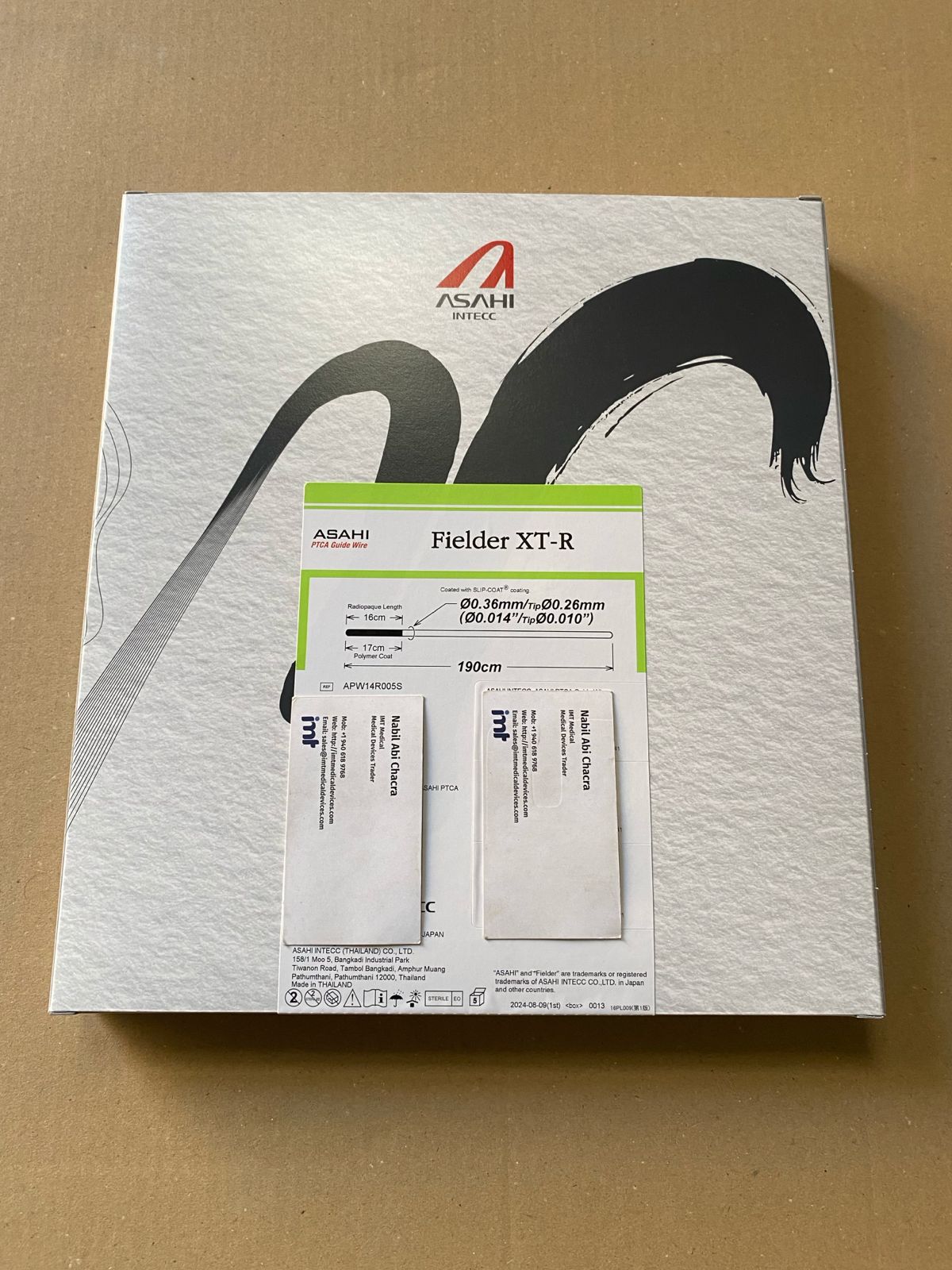
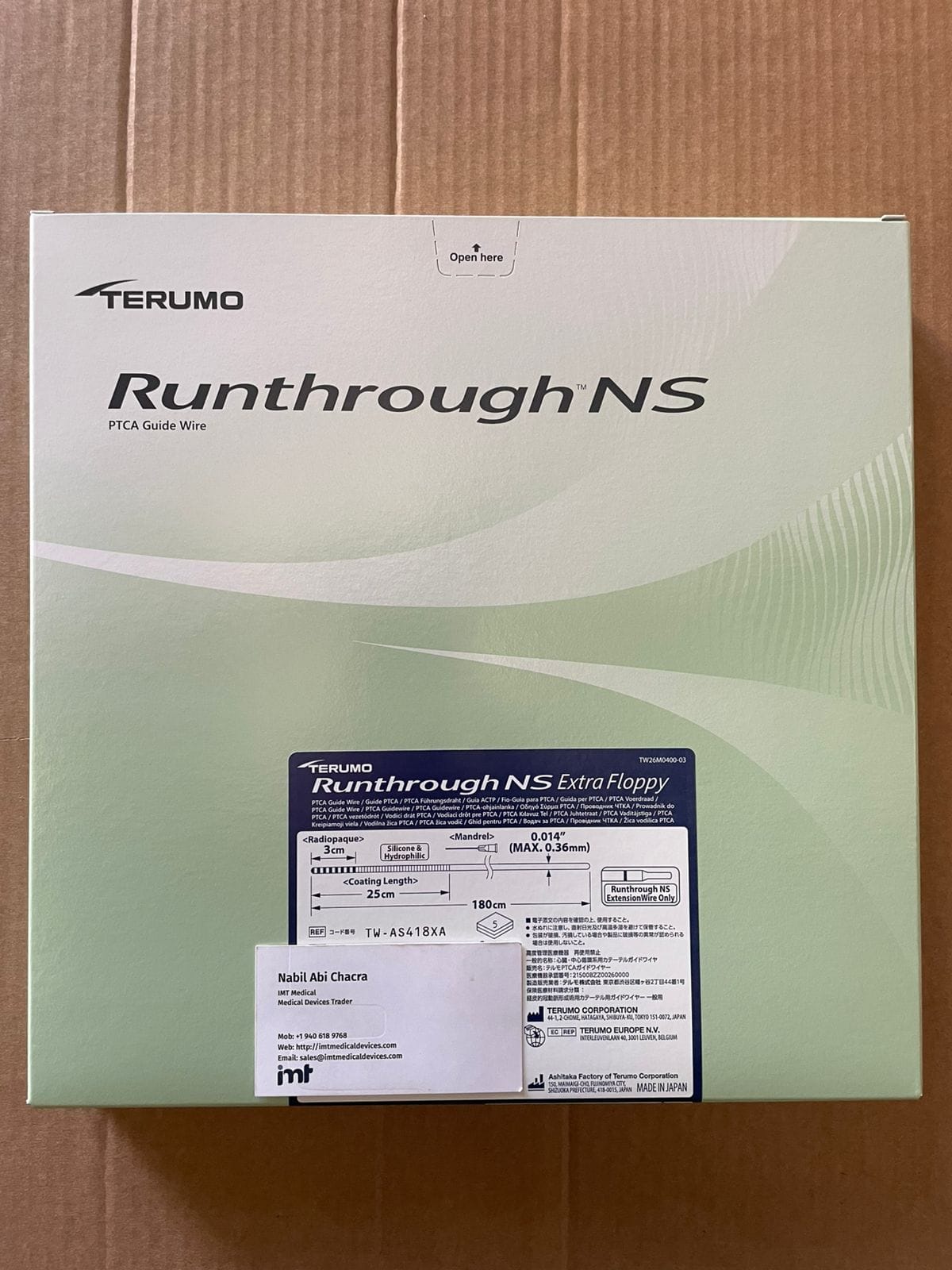
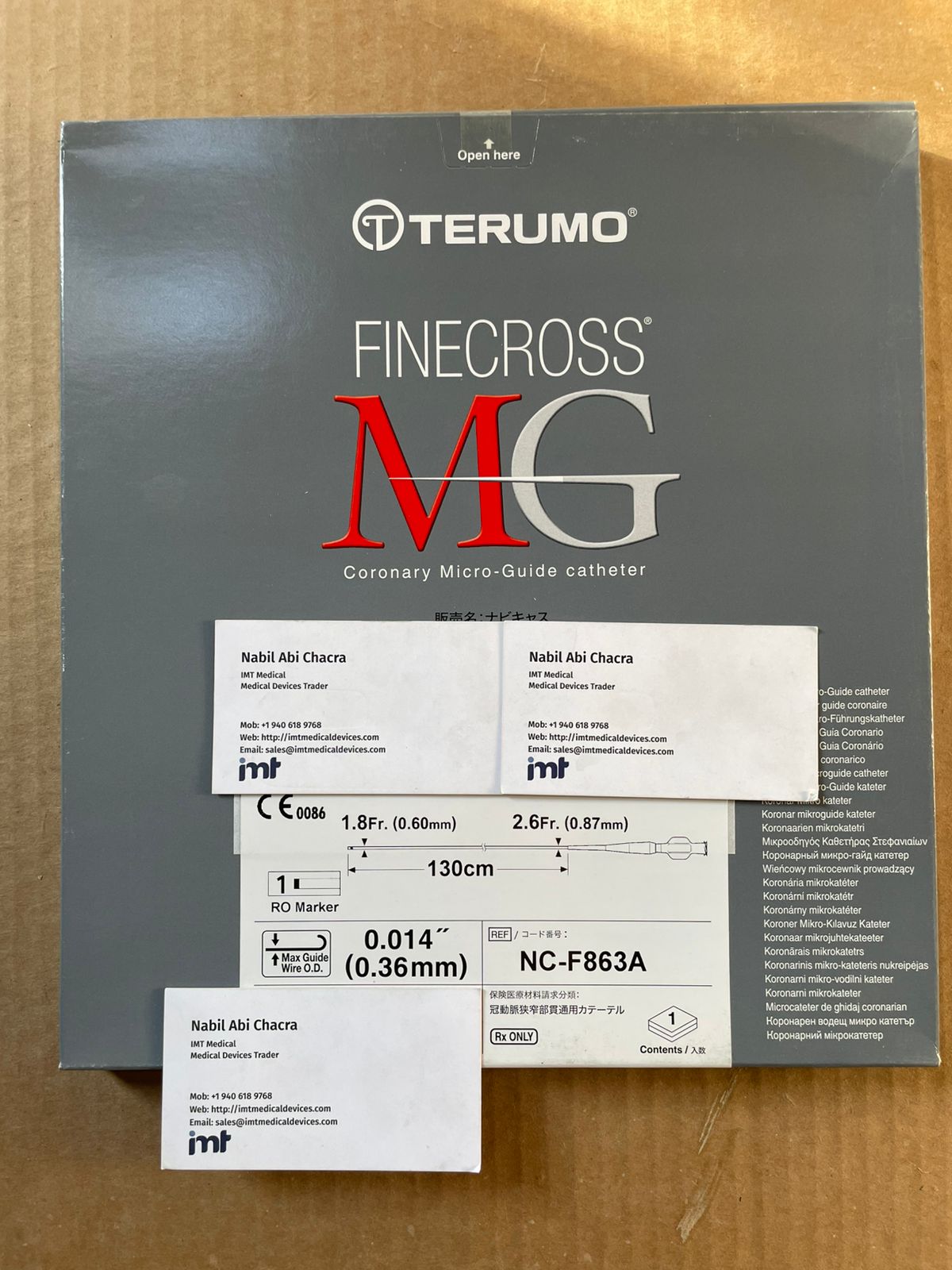
- Terumo: Glidesheath Slender, Radifocus Guidewires, and Finecross Microcatheters.
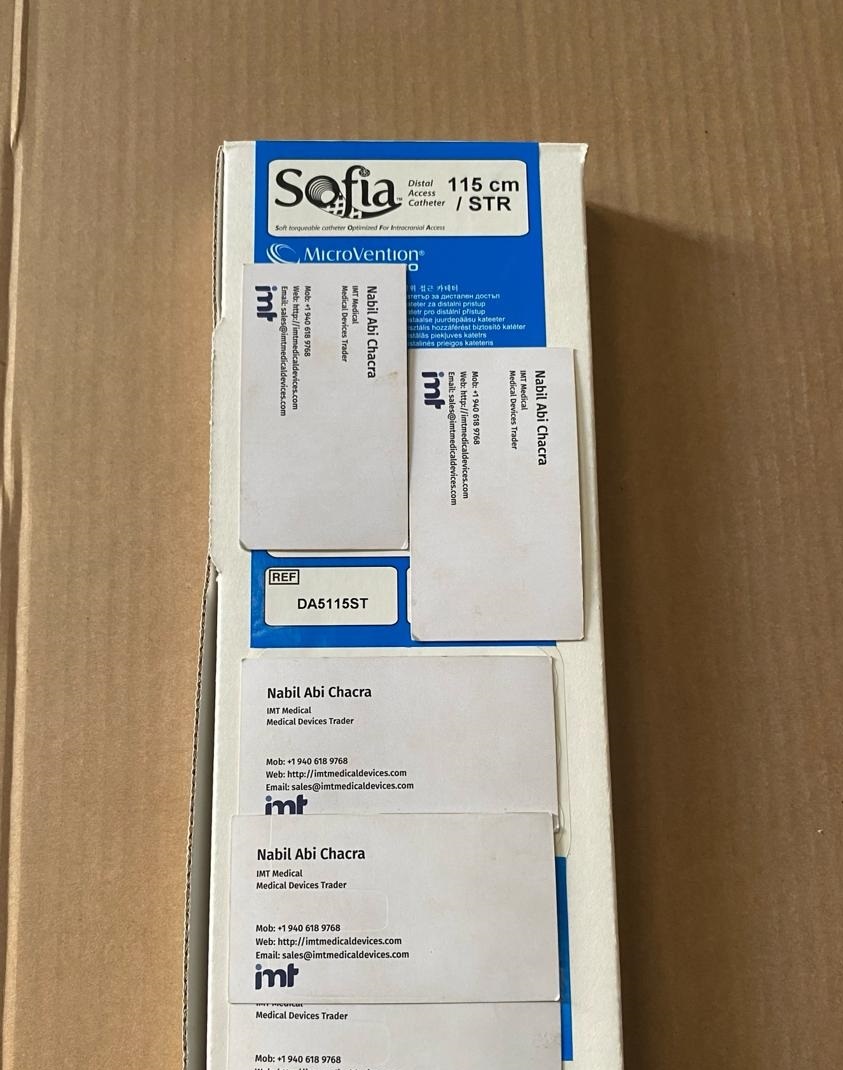
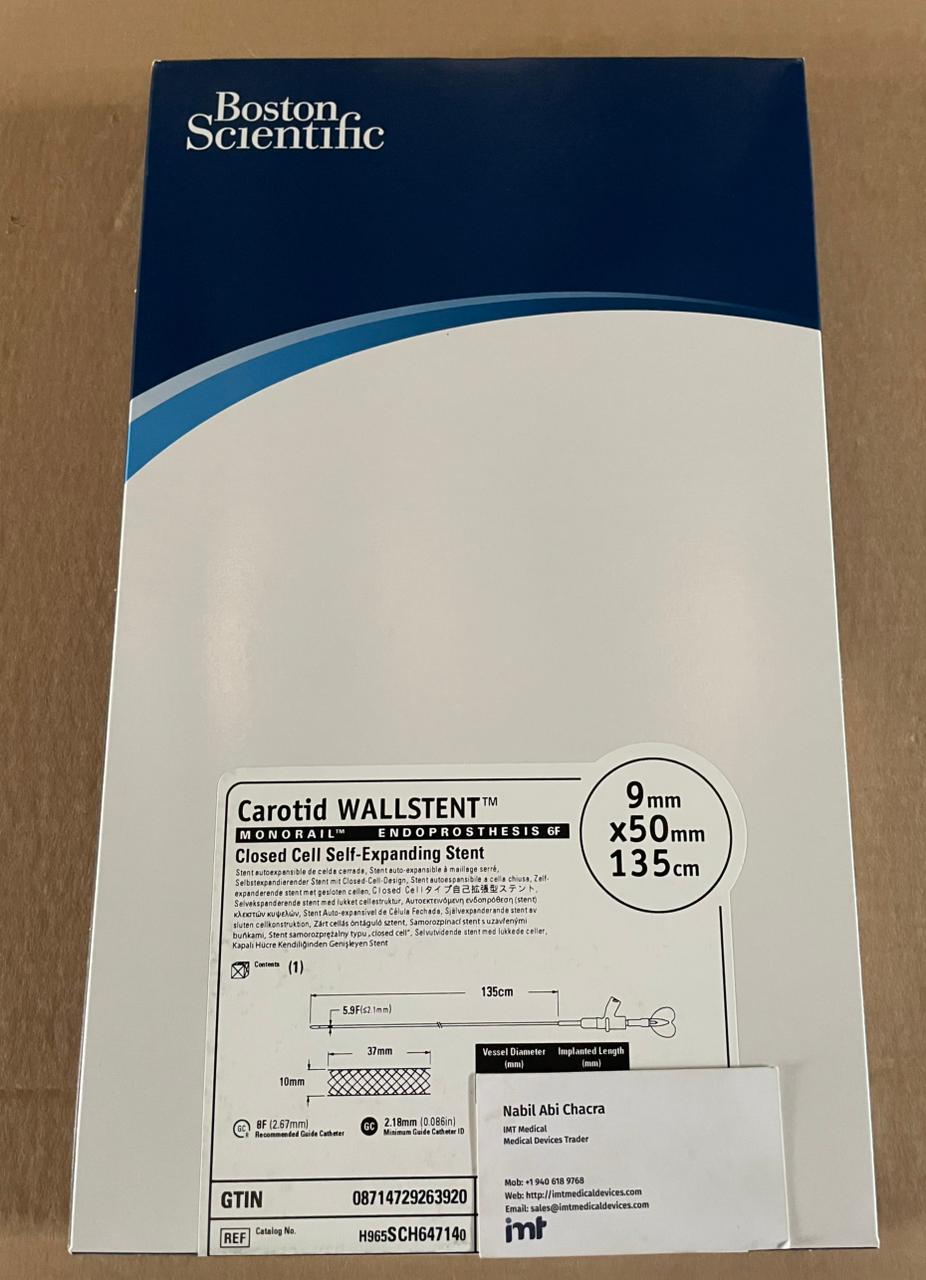
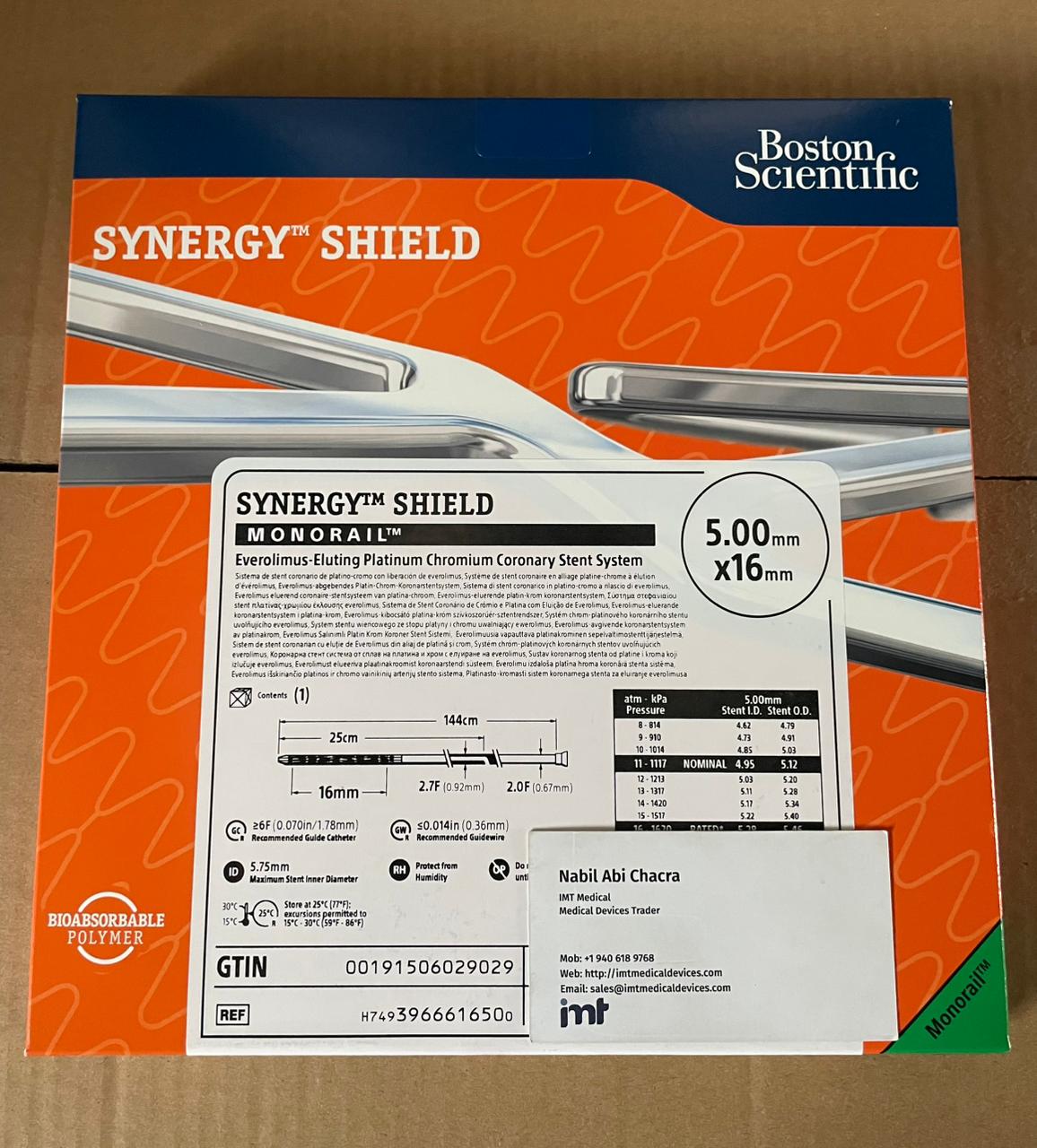
- Boston Scientific: Promus Elite Stents, Rotablator Systems, and AngioJet Aspiration Catheters.
- Abbott: XIENCE Skypoint Stents and Perclose ProStyle Suture-Mediated Closure Systems.
Streamlined International Logistics
B2B clients require high-capacity distribution and expert management of export documentation. We handle all compliance requirements for multi-regional transit, including the 2026 EU MDR standards for Class III devices. Our logistical networks are designed for speed and reliability. We manage VAT complexities and customs clearance for sensitive medical technologies. This efficiency-first model reduces the administrative burden on hospital procurement teams. Our "Export 50 Country" capability serves as a primary trust signal for global partners. We solve hospital supply chain management challenges through precise data transmission and rapid fulfillment. Secure your inventory through a reliable wholesale intermediary today. Contact IMT Medical Devices for Global Wholesale Solutions.
Strategic Resilience for 2026 Procurement
Addressing hospital supply chain management challenges requires a transition toward value-based procurement and high-capacity wholesale partnerships. The $25 billion annual waste in healthcare logistics identifies a critical need for standardized sourcing of high-value implants and surgical consumables. By 2026, successful facilities will prioritize brand-aligned inventory models to ensure product authenticity and procedural continuity. Integrating manufacturer lead times directly into procurement cycles is the only way to mitigate the 10.3% projected increase in global medical costs.
IMT Medical Devices provides the industrial infrastructure necessary for international stability. We function as a reliable distributor for prestigious brands including Medtronic, Terumo, and Boston Scientific. With strategic hubs in Georgia, UAE, Turkey, and Poland, we maintain a ready-to-ship inventory of neurovascular and cardiology technologies. Our established logistical network supports exports to over 50 countries worldwide, ensuring rapid transit and strict regulatory compliance. View Our Full Inventory of High-Value Medical Devices to optimize your 2026 procurement strategy. We are ready to serve as your vital bridge to the global MedTech market.
Frequently Asked Questions
What are the most common hospital supply chain management challenges in 2026?
Primary hurdles include procurement fragmentation, a projected 2.78% healthcare supply chain inflation rate, and the February 2, 2026 FDA QMSR transition. These factors lead to chronic stockouts of interventional devices and increased administrative overhead. Hospitals face the dual pressure of managing these disruptions while meeting aggressive cost-savings targets in a volatile global market.
How do drug-eluting stent shortages impact patient care?
Shortages force interventionalists to cancel procedures or utilize sub-optimal alternative sizes, which increases intra-procedural risks. Lack of specific models from Medtronic or Boston Scientific disrupts clinical workflows and directly correlates with higher patient morbidity. Consistent access to a full range of diameters and lengths is essential for safe lesion preparation and stent deployment.
Can hospitals reduce costs through international medical device wholesalers?
Hospitals reduce costs by consolidating vendors and accessing volume-based wholesale pricing that's often unavailable through fragmented local channels. Utilizing a high-capacity distributor bypasses direct-manufacturer lead times and eliminates emergency shipping fees. This strategy effectively resolves hospital supply chain management challenges by stabilizing unit prices against the 10.3% global medical cost increase projected for 2026.
What role does technology play in healthcare supply chain optimization?
Technology enables real-time inventory tracking and automated replenishment through ERP integration. Analytics tools predict demand surges in surgical departments, reducing the $25 billion annual waste attributed to logistics errors and product expiration. Digitizing the "Brand + Product + Model Number" format ensures accurate data transmission and minimizes manual entry errors across multiple hospital facilities.
How can hospitals manage the risks of international medical device shipping?
Risk management depends on utilizing strategic regional hubs and expert export documentation. Positioning inventory in locations like Dubai, Poland, or Turkey reduces lead times and bypasses shipping lane volatility. Maintaining cold chain integrity and ensuring compliance with local trade regulations prevents border delays and protects the structural integrity of sensitive cardiology hardware.
Why is brand-specific procurement difficult for interventional cardiology?
Difficulty stems from the specific tactile feedback and trackability requirements clinicians expect from brands like Terumo or Abbott. Sourcing these specific profiles requires a distributor with deep stock and direct manufacturer access. Fragmented supply chains often fail to provide the exhaustive inventory of semi-compliant and non-compliant balloons needed for complex PCI anatomical variations.
What documentation is required for exporting medical devices to over 50 countries?
Essential documentation includes ISO 13485:2016 certifications, sterilization records, and CE Markings. Shipments into the EU after the May 26, 2026 deadline must demonstrate full MDR compliance for Class III implantable devices. Detailed commercial invoices and certificates of origin are also required for accurate VAT assessment and rapid customs clearance.
How does IMT Medical Devices ensure the authenticity of MedTech products?
Authenticity is guaranteed through direct manufacturer sourcing and rigorous serial number tracking for every unit. Each shipment includes a complete product pedigree and manufacturer-issued technical documentation. This professional approach addresses hospital supply chain management challenges by eliminating the legal and clinical risks associated with counterfeit or gray-market medical technology.