Synergy Coronary Stent Supplier: Reliable Sourcing Guide
A single breakdown in the cold chain or a delay in export documentation can render a high-value shipment of Drug-Eluting Stents (DES) clinically useless. Procurement professionals recognize that securing a reliable Synergy coronary stent supplier is about more than just finding inventory; it's about mitigating the risks of non-authentic products and inconsistent delivery schedules. Effective procurement requires a partner who understands the technical nuances of the SYNERGY XD and SYNERGY MEGATRON platforms while navigating the complexities of Class III medical device regulations and the NIQ classification code.
This guide provides a strategic framework for sourcing authentic Boston Scientific technology. It ensures your facility maintains consistent stock of premium bioabsorbable polymer (BP) stents designed for rapid healing and radial strength. We prioritize technical specifications and international shipping compliance to minimize procurement friction for global distributors.
The following sections examine ISO 25539-2 performance standards, the impact of the 2026 EU Medical Device Regulation (MDR) on global trade, and the logistical protocols required for secure international transit. This overview targets the specific requirements of high-capacity medical distributors looking to streamline their global supply chain through authoritative sourcing and rigorous compliance standards.
Key Takeaways
- Assessment of bioabsorbable polymer (BP) platforms for reduced long-term inflammation and optimized Dual Antiplatelet Therapy (DAPT) timelines.
- Technical evaluation of Platinum Chromium (PtCr) alloy and 74 μm strut thickness for enhanced deliverability in complex PCI cases.
- Comparison of Synergy and Synergy Megatron structural designs to align inventory with specific proximal vessel and overexpansion needs.
- Selection of a professional Synergy coronary stent supplier to manage global logistics, temperature-sensitive handling, and international export compliance.
The Evolution of Drug-Eluting Stents in Modern Cardiology
The transition from bare-metal stents to advanced drug-eluting stents (DES) represents a fundamental shift in interventional cardiology. Early bare-metal designs faced high restenosis rates, which led to the development of permanent polymer DES. However, the industry has now moved toward bioabsorbable polymer (BP) technology to address long-term inflammatory responses. Procurement managers seeking a reliable Synergy coronary stent supplier focus on these technical advancements to meet the demands of complex Percutaneous Coronary Intervention (PCI). Modern platforms prioritize ultra-thin strut designs, which facilitate faster endothelialization and improve deliverability through tortuous anatomy.
Ultra-thin strut designs, typically measuring around 74 μm, have become the clinical standard for reducing vessel injury during deployment. These thin profiles improve the stent's crossing profile, allowing interventionalists to reach distal lesions that were previously inaccessible. By reducing the metal volume within the artery, these designs promote faster healing and lower the incidence of target lesion revascularization (TLR). Hospital procurement departments prioritize manufacturer-backed platforms like Synergy because they're built on established safety data, such as the EVOLVE II trial results, which streamlines the approval process within hospital value analysis committees.
The Synergy Bioabsorbable Polymer (BP) Advantage
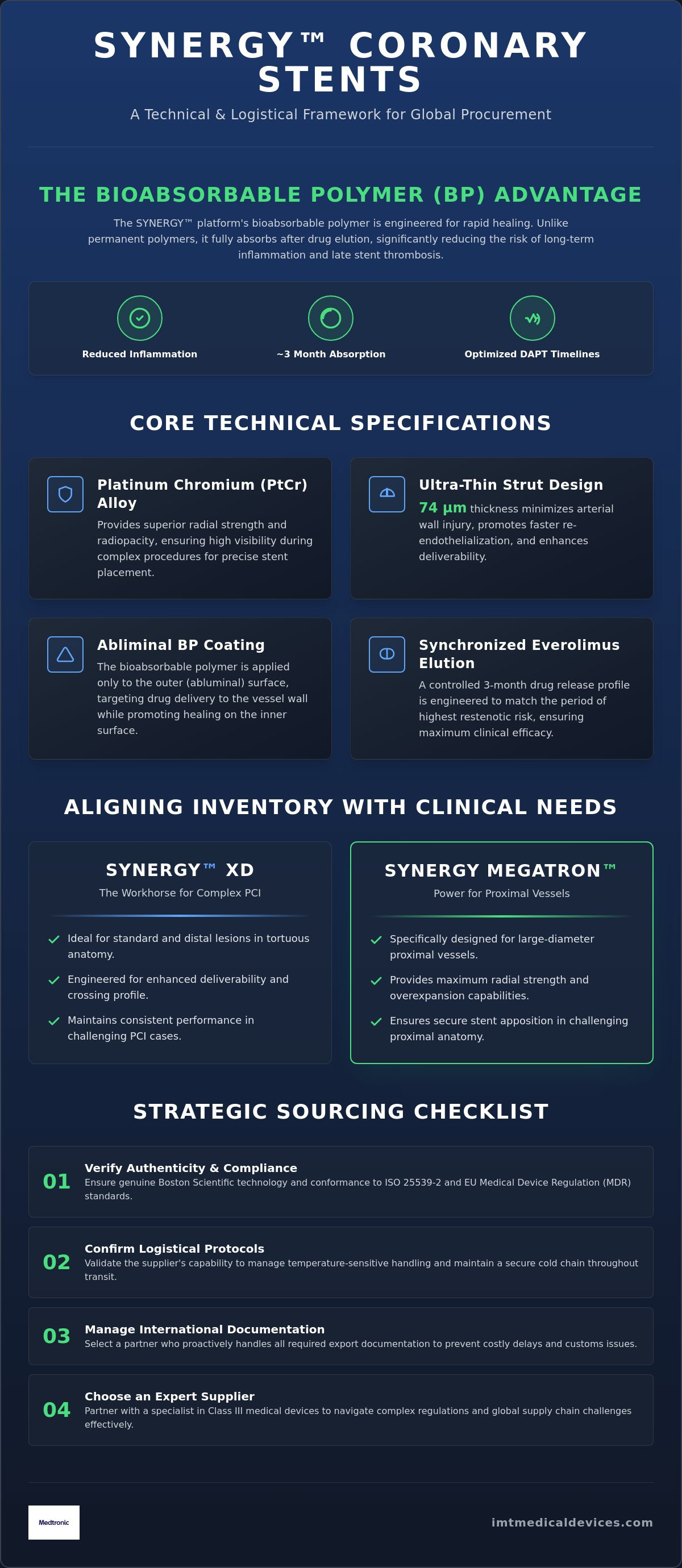
The Synergy stent platform utilizes an abluminal bioabsorbable polymer coating. Unlike permanent polymer stents that remain in the vessel indefinitely, the Synergy polymer is fully absorbed within approximately three months after drug elution is complete. This mechanism reduces the risk of late stent thrombosis and chronic vessel irritation. For procurement professionals, stocking BP stents is a strategic necessity. Clinical guidelines increasingly favor technologies that minimize long-term foreign body presence in the coronary arteries, making Synergy a high-demand item in hospital tenders and private clinic inventory.
Global Demand Trends for Coronary Intervention Products
Global volume for PCI procedures continues to rise, particularly in emerging healthcare markets requiring high-performance hardware. The ability of modern Drug-Eluting Stents to support shortened Dual Antiplatelet Therapy (DAPT) durations is a primary driver of this demand. Clinical trials like EVOLVE Short DAPT have demonstrated that Synergy stents allow for reduced DAPT in patients at high risk of bleeding. This clinical flexibility makes the product an essential anchor for any cardiology product portfolio. A professional Synergy coronary stent supplier ensures these high-tier devices are available to meet shifting regulatory requirements and patient safety standards across international borders. Maintaining a consistent supply of these stents allows facilities to treat a broader patient demographic, including those with complex lesions and high bleeding risks.
Technical Specifications for Synergy Stent Procurement
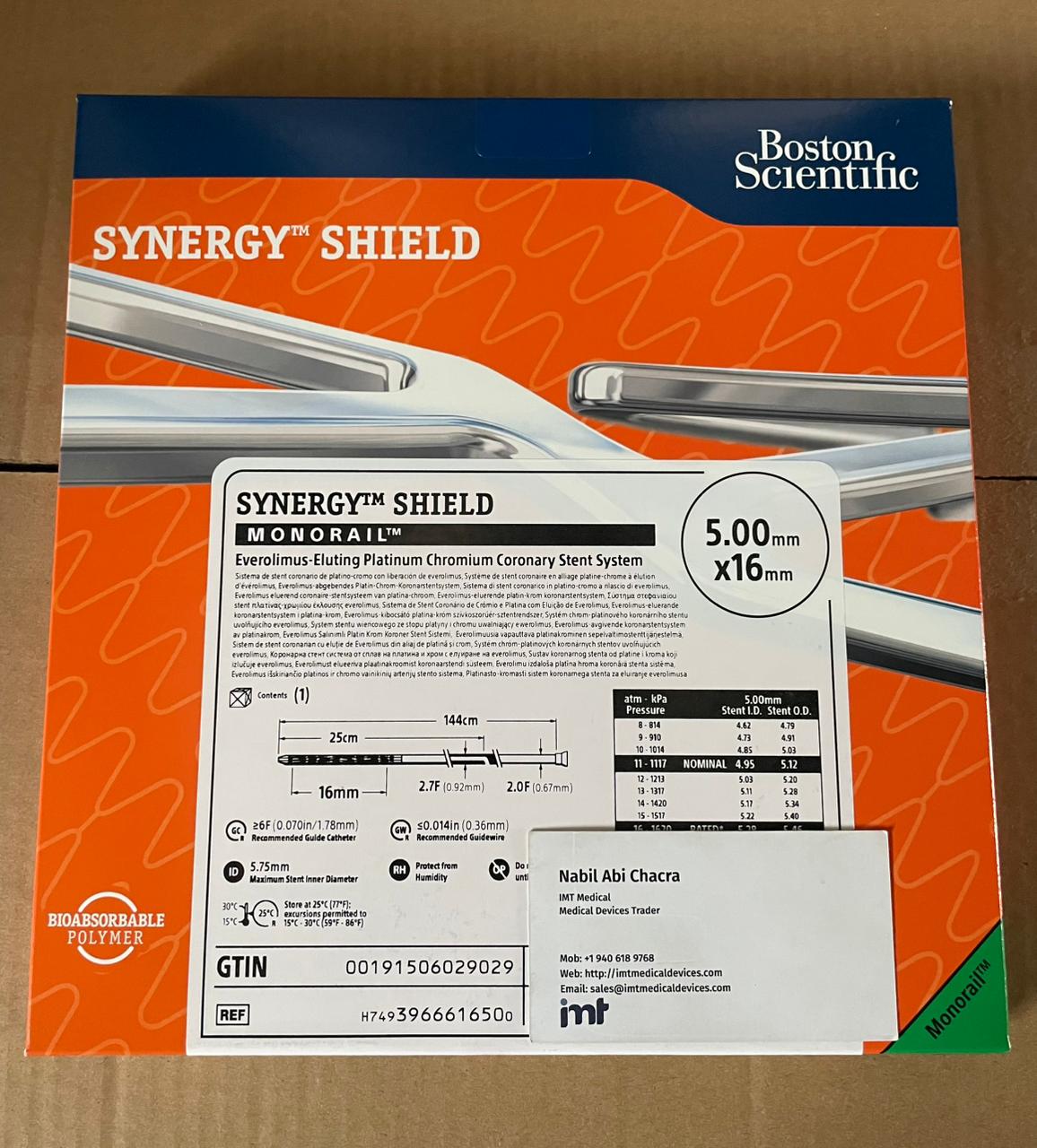
Procurement professionals prioritize the SYNERGY platform due to its Platinum Chromium (PtCr) alloy construction. This specific material choice offers superior radial strength and radiopacity compared to traditional cobalt chromium or stainless steel alternatives. When selecting a Synergy coronary stent supplier, verify that the inventory consists of authentic PtCr-based units to ensure interventionalists maintain high visibility during complex procedures. The platform's balloon-expandable delivery system utilizes a tapered tip and low crossing profile; these are essential features for navigating calcified or tortuous vessels.
The Everolimus elution profile is engineered for a synchronized three-month release. Detailed data within the Technical Specifications for Synergy Stent confirms that this drug release timeline correlates with the period of highest restenotic risk. For high-capacity distributors, these technical metrics serve as primary trust signals when evaluating wholesale lots for international export. The precision of the delivery system ensures that the stent reaches the target lesion without premature drug loss or mechanical failure.
Strut Design and Vessel Healing
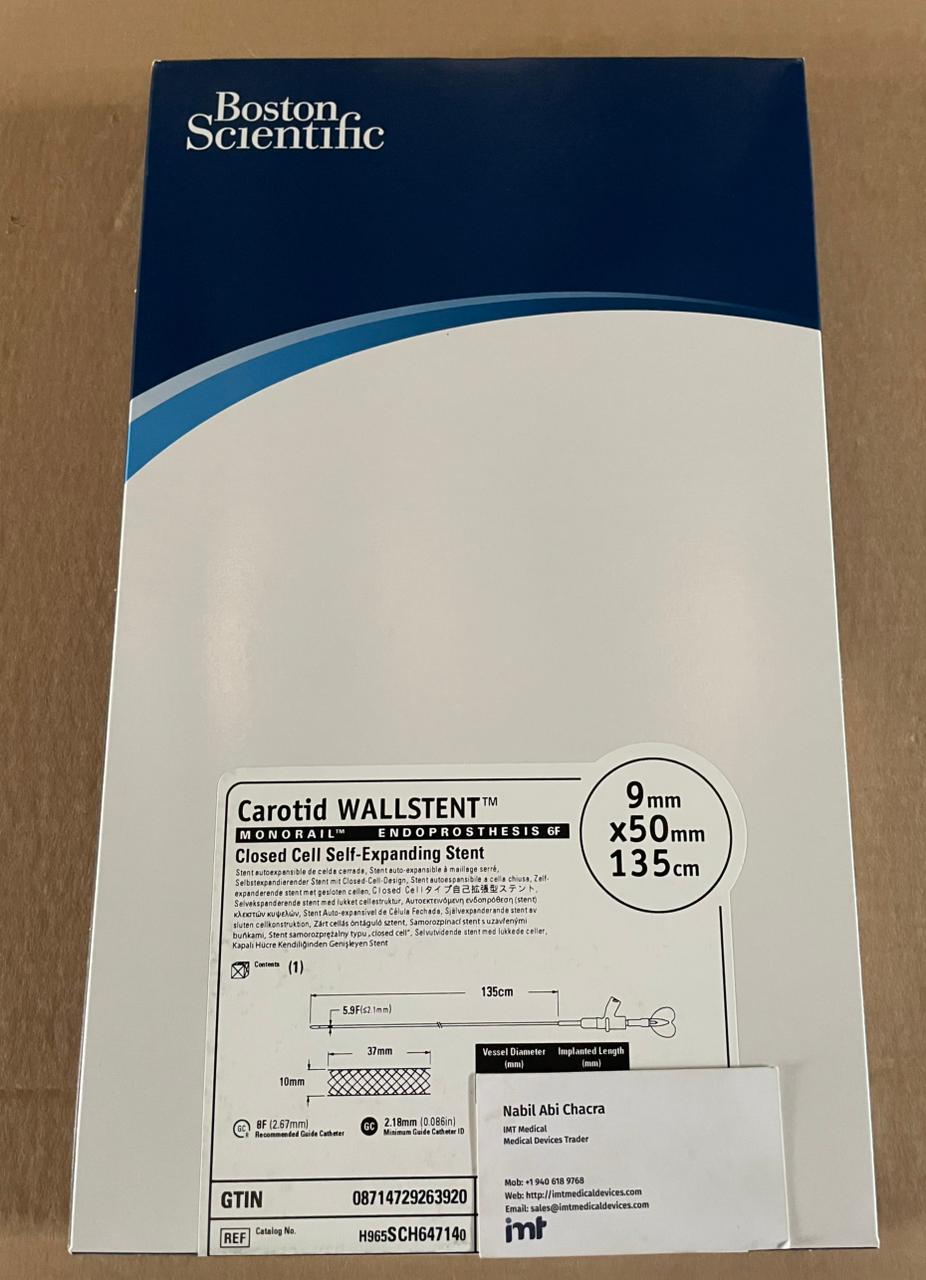
The 74 μm strut thickness is a critical specification for optimizing vessel healing. Ultra-thin struts minimize arterial wall injury and promote faster re-endothelialization, reducing the risk of late-stage complications. Procurement teams should standardize their inventory based on these strut performance data points to ensure clinical consistency across different patient demographics. In tortuous coronary anatomy, the reduced metal volume allows for greater stent flexibility and conformability. You can review current availability for these high-performance models in our Boston Scientific inventory.
Bioabsorbable Polymer Integrity
The Synergy system utilizes a bioabsorbable PLGA polymer that typically disappears around the four-month mark. This transition to a polymer-free state is a significant advantage in hospital tenders, as it eliminates the long-term inflammatory triggers associated with permanent polymers. Maintaining the authenticity of this bioabsorbable technology in wholesale lots is paramount. Sourcing through an established Synergy coronary stent supplier guarantees that the polymer coating has been handled according to manufacturer specifications, preserving its chemical integrity for clinical use. Procurement managers must prioritize suppliers with documented handling protocols to ensure the polymer remains stable throughout the distribution cycle.
Evaluating Synergy vs. Synergy Megatron for Inventory Strategy
Effective inventory management requires a distinct categorization of stent platforms based on vessel diameter and lesion location. A reliable Synergy coronary stent supplier must provide access to both the standard Synergy XD and the specialized Megatron platforms to cover the full spectrum of coronary anatomy. While the standard Synergy XD focuses on deliverability and crossing profiles for distal vessels, the Megatron version addresses the mechanical requirements of large proximal vessels. Procurement logic dictates that centers performing complex left main interventions prioritize Megatron stock to ensure structural integrity during aggressive overexpansion.
Technical data indicates that Megatron maintains superior radial strength in aorto-ostial lesions where vessel recoil is a primary concern. The platform's design allows for significant overexpansion; for instance, a 4.0 mm Megatron stent can be safely expanded to 6.0 mm without compromising the structural scaffolding. This capability is critical for achieving optimal wall apposition in large vessels. Procurement professionals should evaluate their Synergy coronary stent supplier based on their ability to provide the full size matrix for both models, ensuring that interventionalists have the correct hardware for every anatomical challenge.
Synergy Megatron: Purpose-Built for Proximal Vessels
The Boston Scientific Synergy Megatron is engineered specifically for the Proximal Optimization Technique (POT). This procedure involves expanding the proximal segment of the stent to match a larger mother vessel, which is common in bifurcation stenting. Standard stents often suffer from cell distortion or longitudinal compression when subjected to these forces. Megatron’s wide-cell architecture and reinforced PtCr alloy struts prevent these issues, making it the preferred choice for complex PCI cases involving the left main or proximal LAD. Stocking these units ensures that the cath lab is equipped for high-risk procedures where standard workhorse stents may fall short of mechanical requirements.
Stocking Framework for Cardiology Labs
Developing a stocking framework involves balancing high-turnover workhorse stents with specialized large-vessel hardware. For most high-volume centers, a 75/25 inventory split between standard Synergy XD and Megatron models is recommended. Sourcing Boston Scientific products in bulk requires a deep understanding of SKU availability across different lengths and diameters. Megatron inventory typically focuses on diameters from 3.5 mm to 5.0 mm, while standard Synergy inventory spans the 2.25 mm to 4.0 mm range. This strategic distribution ensures that the facility maintains a lean but comprehensive inventory that minimizes waste while maximizing clinical readiness for both routine and complex coronary interventions.
Navigating International Logistics for Stent Distribution
Global distribution of high-value implants requires strict adherence to environmental controls. A professional Synergy coronary stent supplier maintains a validated cold chain to preserve the chemical stability of the everolimus drug coating and the PLGA polymer. Temperature fluctuations during transit can compromise elution profiles. Real-time monitoring and insulated packaging are essential. Cold chain validation protocols often include the use of single-use data loggers to record temperature history throughout the journey. If a shipment exceeds the specified 25°C threshold, the product's clinical efficacy is called into question.
Sterilization integrity must remain uncompromised from the point of origin to the sterile field. This involves using double-barrier packaging and shock-absorbent shipping materials to prevent micro-perforations. Batch tracking and expiry management are equally critical. Procurement teams require precise data on manufacturing dates and shelf-life. This data prevents inventory obsolescence in high-volume cardiology centers. Batch tracking allows for rapid identification of specific lots in the event of a manufacturer field safety notice. This level of logistical precision is what separates a standard vendor from a strategic partner.
Export Documentation and Compliance
Cross-border trade for Class III devices involves rigorous paperwork. This includes Certificates of Free Sale (CFS), ISO 13485 certifications, and detailed commercial invoices. Navigating these requirements requires specialized knowledge of regional import duties and medical device registration protocols. Understanding how Medical Device Distribution bridges the gap between manufacturers and providers is vital for reducing customs clearance times. It's the most effective way to avoid costly shipment seizures at international borders. Accurate documentation ensures that high-value hardware moves through customs without technical delays.
Global Supply Chain Reliability
Strategic logistical hubs in Georgia, Turkey, and Poland facilitate rapid fulfillment across Europe, Central Asia, and the Middle East. These hubs act as critical nodes in the supply chain. They allow for the rapid deployment of Coronary Intervention tools when local stocks are low. Partnering with a Synergy coronary stent supplier who understands regional healthcare regulations ensures that products arrive with the necessary local labeling. This infrastructure mitigates the risk of supply chain disruptions caused by regional instability or transit bottlenecks. Reliable fulfillment depends on a network that can bypass traditional shipping delays through localized inventory positioning.
For bulk orders and global logistics support, explore our full range of Boston Scientific products.
IMT Medical Devices: Your Global Synergy Stent Supplier
IMT Medical Devices serves as a high-capacity international distributor specializing in the fulfillment of premium cardiology hardware. As a professional Synergy coronary stent supplier, the entity provides procurement officers with direct access to authentic Boston Scientific and Medtronic inventory. The distribution network spans over 50 countries, utilizing strategic logistical hubs to ensure rapid delivery. This infrastructure supports high-volume B2B transactions and handles the complex export documentation required for Class III medical technology. The manufacturer-centric model ensures that every unit of Synergy XD or Megatron inventory carries the original producer's performance guarantees and sterilization integrity.
Logistical reliability is the foundation of the supply chain. IMT manages the entire procurement cycle, from manufacturer sourcing to final delivery at international ports. Expertise in complex export logistics allows for the seamless movement of temperature-sensitive implants through customs. We prioritize industrial competence, ensuring that all inventory meets rigorous supply chain standards. This includes strict batch tracking and expiry management to prevent inventory obsolescence. By positioning itself as a vital bridge between major manufacturers and international markets, IMT provides the scale and reach necessary for large-scale healthcare providers.
Comprehensive Cardiology Solutions
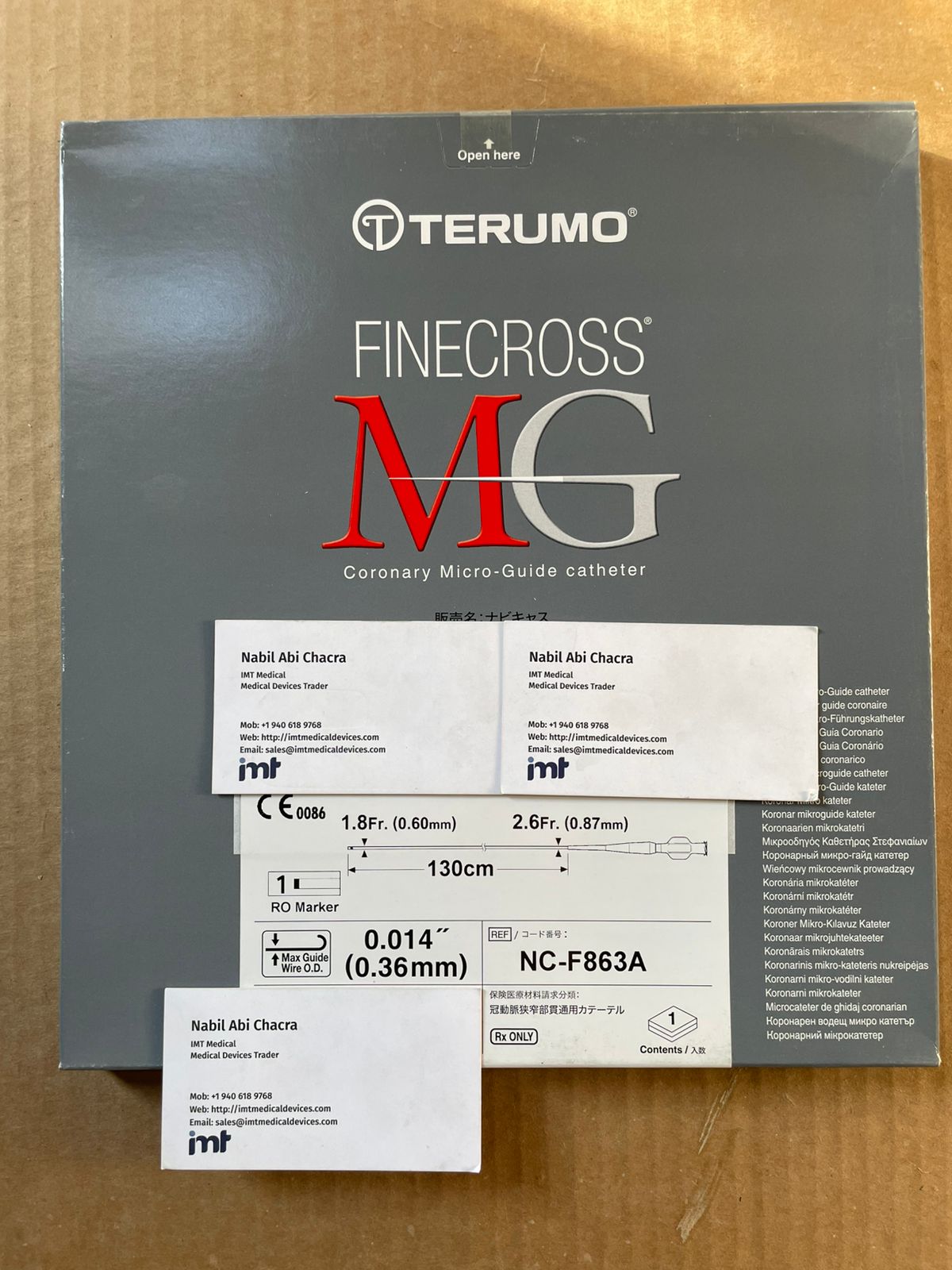
Inventory management extends beyond individual stents to include a full range of interventional tools. IMT provides wholesale availability of PTCA Balloon Catheters and specialized Coronary Guidewires. Bundling these components allows for complete lab fulfillment and simplified vendor management. Access to the latest generation DES technology ensures that global markets receive hardware that meets current clinical standards. Portfolio highlights also include products from Terumo, Asahi Intec, and Cordis, allowing for a diversified cardiology inventory strategy.
Strategic Wholesale Partnership Benefits
Efficiency in procurement translates to reduced operational overhead for hospitals and clinics. IMT offers volume-based pricing tiers designed for large-scale procurement and regional distribution. Key partnership advantages include:
- Reliable Lead Times: Consistent stock levels of high-demand stents for critical cardiology inventory.
- Global Reach: Proven export capabilities serving over 50 countries with localized compliance expertise.
- Technical Integrity: Validated cold chain and sterilization protocols for all high-value implants.
Procurement teams can rely on IMT for predictable delivery schedules and authentic manufacturer-backed products. For a customized procurement quote or to discuss specific logistical requirements for your facility, contact IMT Medical Devices. Our team provides the data and technical identifiers required for rapid information retrieval and order processing.
Strategic Procurement for Advanced Cardiology Hardware
Securing a reliable Synergy coronary stent supplier ensures consistent access to bioabsorbable polymer technology and Platinum Chromium alloy platforms. Effective procurement hinges on balancing ultra-thin strut workhorse stents with specialized large-vessel hardware like the Synergy Megatron. This strategy optimizes clinical outcomes while maintaining a lean, high-turnover inventory. Logistics remain the final pillar; validated cold chain handling and precise export documentation are mandatory for preserving product integrity across international borders.
IMT Medical Devices facilitates these complex transactions through an expansive global distribution network serving over 50 countries. With strategic offices in Poland, Georgia, and the UAE, we operate as an authorized wholesaler for premium manufacturers including Boston Scientific and Terumo. Our commitment to industrial competence and technical accuracy streamlines the path from manufacturer to the catheterization lab. Secure your facility's supply chain by partnering with a distributor that prioritizes logistical transparency and product authenticity.
Request a Wholesale Quote for Synergy Stents to align your inventory with current interventional standards. We look forward to supporting your global distribution needs.
Frequently Asked Questions
Who is the primary manufacturer of the Synergy stent system?
Boston Scientific is the original manufacturer of the Synergy coronary stent portfolio. They produce several variations including the Synergy XD and Synergy Megatron models. As a leading producer of interventional cardiology hardware, Boston Scientific controls the Premarket Approval (PMA) and technical specifications for the entire platform. Procurement through an authorized wholesaler ensures access to authentic manufacturer technology and valid sterilization certifications.
What makes the Synergy stent different from other drug-eluting stents?
The Synergy platform utilizes an abluminal bioabsorbable polymer coating on a Platinum Chromium (PtCr) alloy scaffold. This differs from permanent polymer drug-eluting stents by eliminating the polymer carrier within three to four months. The 74 μm ultra-thin struts facilitate faster healing and reduce vessel injury. This technical configuration targets the reduction of late stent thrombosis and chronic inflammatory responses in the coronary vessel wall.
Does the Synergy stent require long-term dual antiplatelet therapy (DAPT)?
Clinical evidence from the EVOLVE Short DAPT trial indicates that this platform can be safely used with shortened DAPT durations. It's specifically indicated for patients at high risk for bleeding who cannot tolerate long-term antiplatelet regimens. While the bioabsorbable polymer promotes rapid healing, the specific DAPT timeline is determined by the interventionalist based on individual patient risk factors and lesion complexity during the PCI procedure.
How is the Synergy stent shipped to ensure technical integrity?
Synergy stents require temperature-controlled logistics to maintain the stability of the PLGA polymer and everolimus drug coating. Shipments utilize validated cold chain protocols with real-time data loggers to monitor for temperature fluctuations exceeding 25°C. Double-barrier packaging and shock-absorbent shipping materials prevent mechanical damage. A professional Synergy coronary stent supplier implements these rigorous handling standards to ensure clinical efficacy upon arrival at the cath lab.
What is the shelf life and storage requirement for Synergy stents?
Controlled room temperature storage is mandatory, typically not exceeding 25°C (77°F). The specific shelf life is determined by the manufacturer and is clearly indicated on the sterile packaging for each batch. Procurement managers must implement strict inventory rotation based on these expiration dates to prevent obsolescence. Maintaining these storage conditions is critical for preserving the chemical integrity of the bioabsorbable coating and the delivery system balloon mechanics.
Can Synergy stents be used in complex lesions like bifurcations or diabetes cases?
Yes, the platform is indicated for complex lesion subsets including diabetic patients and bifurcation anatomy. The EVOLVE II trial demonstrated the stent's safety and performance in a complex patient population. For bifurcation cases, the Synergy Megatron model offers specialized overexpansion capabilities and radial strength. This makes it a primary choice for proximal optimization techniques (POT) and large-vessel scaffolding where mechanical support is a priority.
What documentation is required for the international export of coronary stents?
Standard documentation for international trade includes the Certificate of Free Sale (CFS), ISO 13485 quality management certificates, and comprehensive commercial invoices. Exporting Class III medical devices to global markets requires precise technical identifiers and manufacturer-backed data. A reliable Synergy coronary stent supplier ensures all regulatory paperwork aligns with regional import requirements. This prevents costly customs delays and ensures the technical integrity of high-value cardiology shipments during cross-border transit.
Is the Synergy Megatron available for wholesale in emerging markets?
Synergy Megatron units are available for wholesale distribution to emerging markets through established logistical networks. IMT Medical Devices facilitates bulk orders for healthcare providers in over 50 countries, utilizing strategic hubs in Poland, Georgia, and the UAE. This infrastructure ensures that advanced proximal vessel technology is accessible to facilities with increasing PCI volumes. Wholesale availability includes the full size matrix to support diverse anatomical requirements in global cardiology centers.