

Trusted Medical Device Supplier in UAE: Advanced Solutions
The transition to the Emirates Drug Establishment (EDE) and the February 2026 anti-monopoly policy have fundamentally restructured how hospitals identify a reliable medical device supplier UAE. This regulatory shift, mandated by Federal Decree-Law No. 38 of 2024, ends the single-distributor model and demands total transparency across the medical supply chain. You're likely managing the pressure of avoiding counterfeit hardware while handling the technical documentation required for manufacturing site registration and five-year certification cycles. It's a high-stakes environment where logistical efficiency and regulatory compliance are the primary benchmarks of procurement success.
This article provides a technical framework for healthcare procurement professionals to source high-specification interventional cardiology and surgical equipment across the Emirates. You'll learn how to secure a stable supply of authentic Drug-Eluting Stents (DES), CRM devices, and PTCA balloon catheters from global leaders like Medtronic, Boston Scientific, and Terumo. We'll outline specific EDE registration timelines for high-risk Class III and IV devices and explain how to streamline your import documentation. This guide ensures your facility maintains access to premium global inventory while mitigating the risks associated with inconsistent supply chains and gray-market imports.
Key Takeaways
- Analyze the transition to the Emirates Drug Establishment (EDE) and the impact of the 2026 anti-monopoly policy on national procurement strategy.
- Define technical selection criteria for high-performance interventional cardiology hardware, including Drug-Eluting Stents (DES) and PTCA balloon catheters.
- Establish a verification framework for evaluating a medical device supplier UAE using manufacturer-specific technical codes and authentic Tier-1 inventory access.
- Implement specialized logistics protocols to maintain cold chain integrity for sensitive implants and streamline international customs clearance.
- Optimize supply chain reliability by leveraging wholesale partnerships with premium global manufacturers like Medtronic, Terumo, and Boston Scientific.
The Landscape of Medical Device Supply in the UAE
A medical device supplier UAE acts as the primary logistical conduit between global manufacturers and national clinical facilities. This role involves more than simple distribution. It requires managing the technical interface between international production standards and local clinical demands. The market currently experiences a significant shift toward high-tech interventional devices. This trend aligns with the UAE National Health Vision 2031, which prioritizes advanced cardiovascular care and surgical precision. Success in this sector depends on sourcing from distributors with established international export hubs. These hubs provide the necessary scale to maintain consistent inventory levels for critical cardiology implants. Understanding the infrastructure of Health in the United Arab Emirates highlights the growing demand for these specialized services.
The operational environment for a medical device supplier UAE is defined by rapid information retrieval and technical accuracy. Procurement professionals require immediate access to manufacturer technical specifications and logistical status. This data-centric approach ensures that high-specification equipment reaches cardiac labs without delay. By bridging the gap between global production and local patient needs, wholesalers provide the industrial competence required for modern healthcare systems. They serve as a vital link for hospitals seeking authentic inventory from Tier-1 global brands.
In addition to sourcing high-specification medical hardware, many premium healthcare providers are focusing on the total patient environment to differentiate their services. For those interested in enhancing clinical spaces through sophisticated environmental branding, you can discover ISCENT and their range of premium scenting solutions.
Regulatory Framework and National Compliance
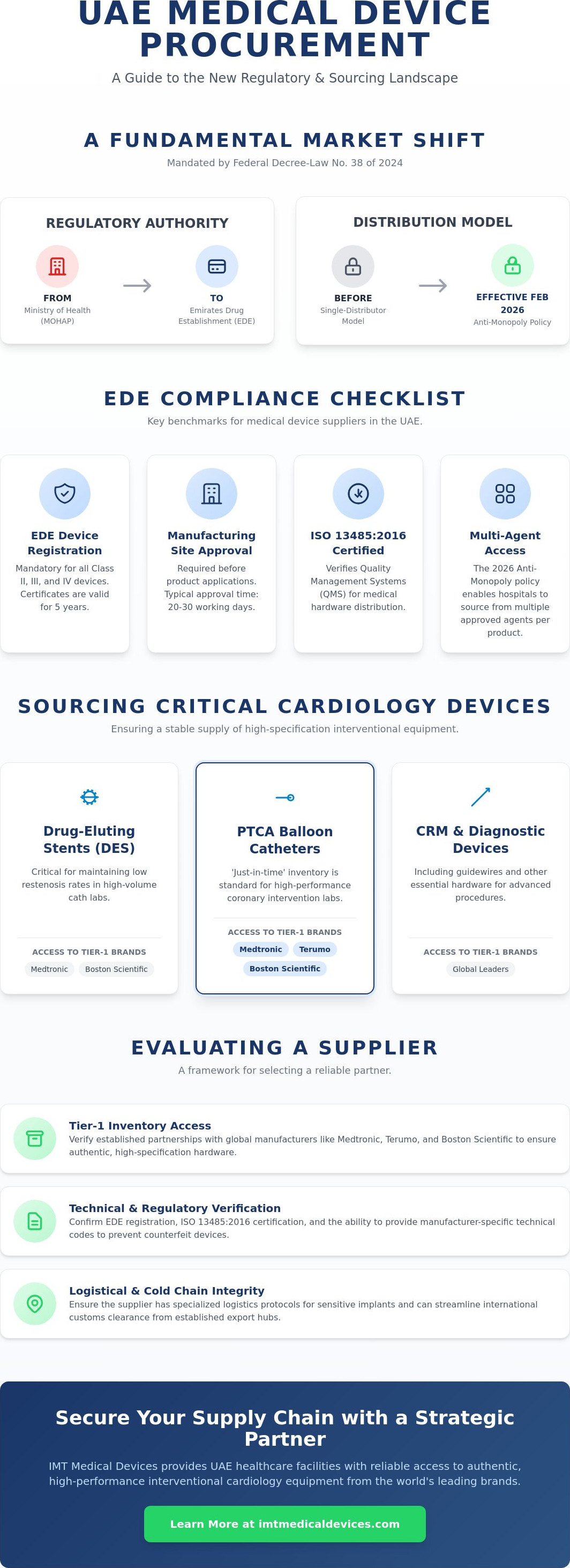
Regulatory authority transitioned from the Ministry of Health and Prevention (MOHAP) to the Emirates Drug Establishment (EDE) in early 2026. This shift, mandated by Federal Decree-Law No. 38 of 2024, standardized the registration process for high-risk medical hardware. Key compliance benchmarks include:
- EDE Registration: Mandatory for all Class II, III, and IV devices. Certificates remain valid for five years from approval.
- Manufacturing Site Approval: Facilities must be registered with the EDE before product applications. This process typically requires 20 to 30 working days.
- ISO 13485:2016: Wholesalers must maintain this certification to verify quality management systems for medical hardware.
- Anti-Monopoly Policy: The February 2026 mandate requires multiple agents per product, ending the single-distributor model.
B2B Procurement Trends in the UAE Healthcare Market
Hospital groups increasingly adopt centralized procurement models to maximize volume efficiency. This move impacts both public and private sectors. Demand for 'just-in-time' inventory is now standard for coronary intervention labs. These facilities require rapid delivery of specialized items like PTCA balloon catheters and diagnostic guidewires. International wholesalers play a vital role here. They mitigate local stockouts by providing a direct link to global inventory from brands like Medtronic and Terumo. This logistical reliability is the cornerstone of modern UAE healthcare procurement, ensuring clinicians have the tools required for complex procedures.
Sourcing Specialized Interventional Cardiology Equipment
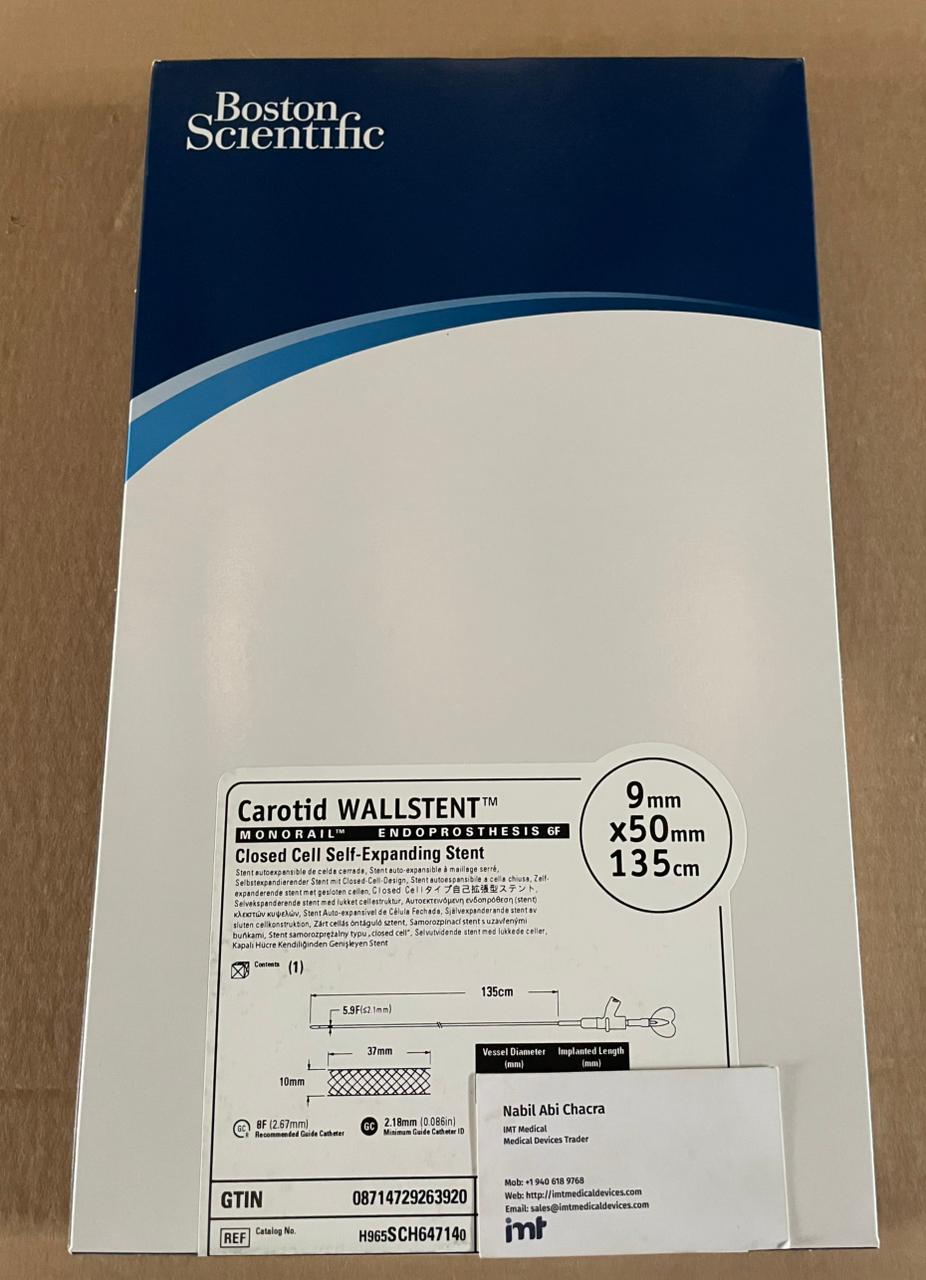
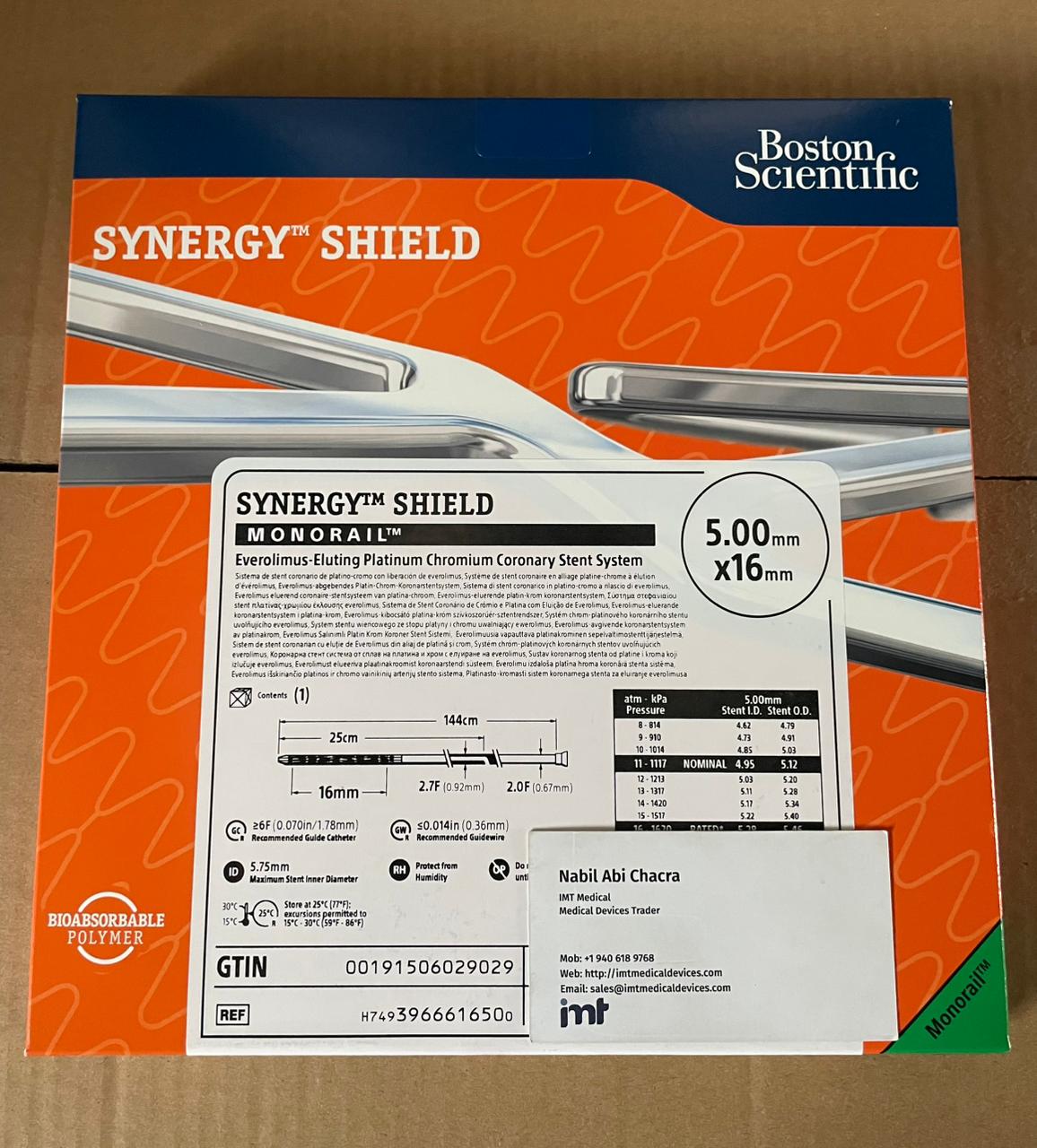
Cardiac centers in the Emirates require constant access to Tier-1 interventional technology. Identifying a reliable medical device supplier UAE is essential for sourcing high-specification Drug-Eluting Stents (DES). These devices are critical for maintaining low restenosis rates in high-volume cath labs. Procurement teams must verify manufacturer reputations and technical identifiers to ensure clinical safety. Inventory availability for specialized hardware determines the operational capacity of national cardiac programs. It's not just about procurement; it's about securing a pipeline for life-critical implants.
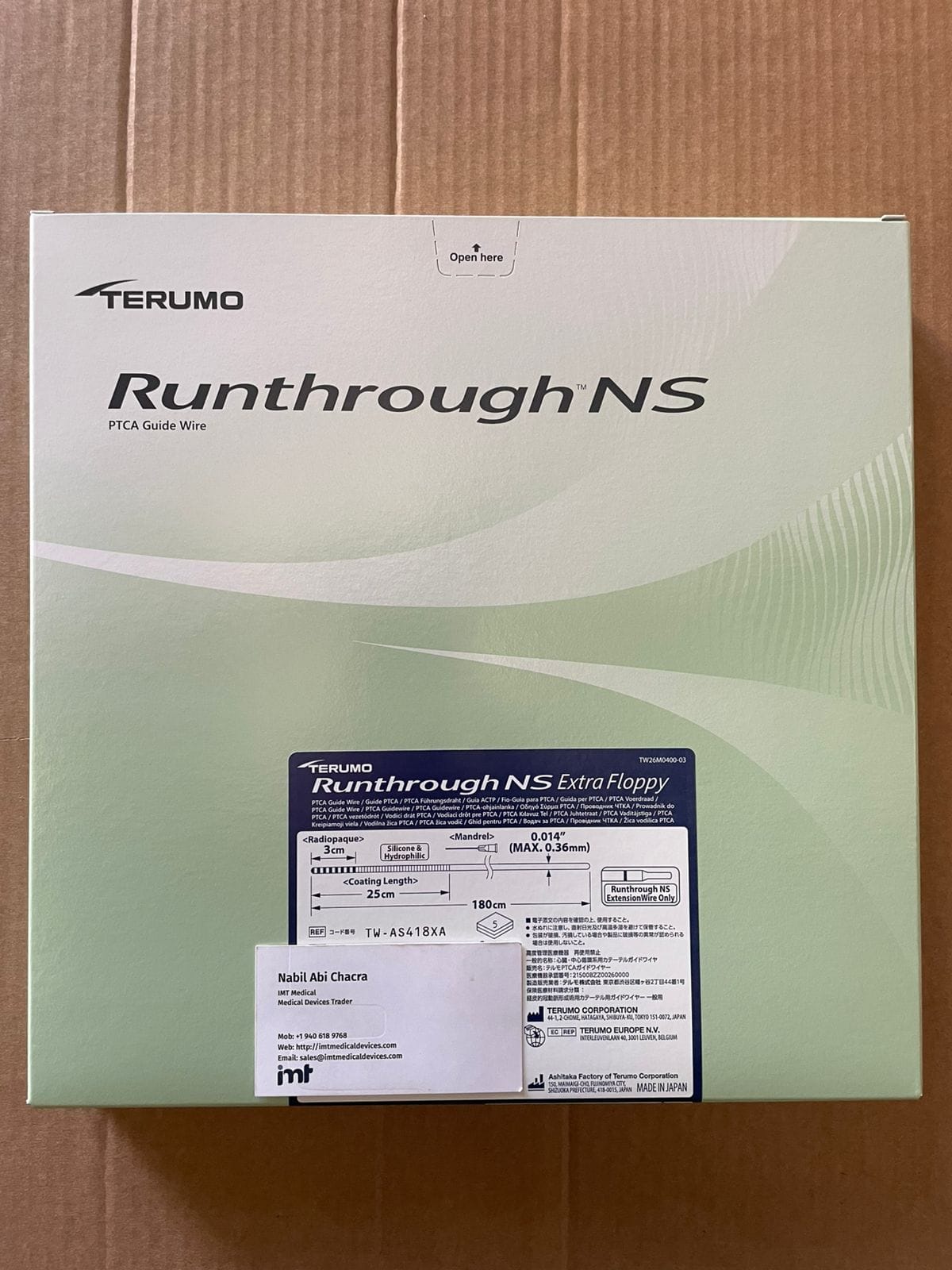
Technical requirements for PTCA balloon catheters and diagnostic guidewires are stringent. High-performance hardware from Medtronic, Boston Scientific, and Terumo defines the standard for local interventional procedures. The UAE Healthcare Resource Guide confirms that the demand for advanced medical equipment continues to grow as infrastructure expands. This growth necessitates a medical device supplier UAE capable of managing complex inventory for specialized cardiac interventions. Reliable sourcing prevents procedural delays in time-sensitive cardiology cases.
Coronary Intervention: Stents and Balloons
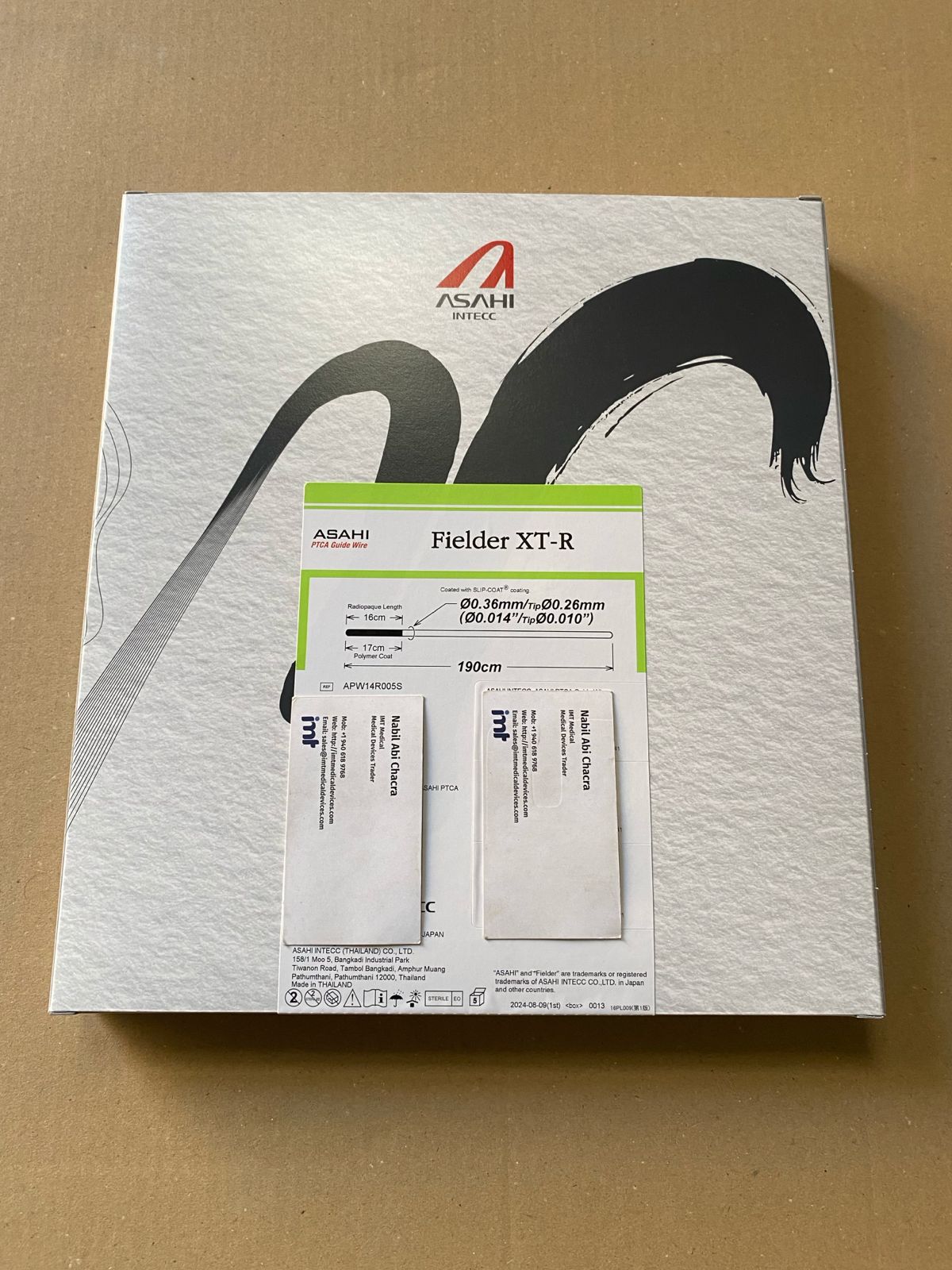
Clinicians evaluate drug-eluting stents based on specific polymer biocompatibility and drug-release profiles. Modern DES designs prioritize rapid endothelialization to improve patient outcomes. Procurement of coronary balloons for complex PCI procedures involves selecting semi-compliant and non-compliant options. Technical specifications for guiding catheters and high-torque guidewires are equally vital. These components ensure precise device delivery in tortuous anatomy. Hospitals often look for a comprehensive portfolio that includes Asahi Intec and Cordis alongside major global brands.
Cardiac Rhythm Management and Electrophysiology
Strategic sourcing for permanent pacemakers and implantable cardioverter defibrillators (ICDs) requires long-term supply chain stability. These Class III devices demand rigorous documentation and batch tracking. Technical considerations for electrophysiology catheters and mapping systems include signal resolution and steerability. Maintaining inventory for critical CRM leads and accessories is a priority for electrophysiology departments. High-capacity distributors manage these requirements by providing direct access to Medtronic and Boston Scientific CRM technologies. For facilities seeking to optimize their inventory, partnering with an experienced distributor ensures consistent access to authentic cardiac hardware.
Criteria for Evaluating a Medical Device Supplier in the UAE
Evaluation of a medical device supplier UAE now requires a focus on manufacturer-direct sourcing. The February 2026 anti-monopoly policy implemented by the Emirates Drug Establishment (EDE) ended single-distributor models. Procurement professionals must now verify the breadth of a supplier's inventory across multiple prestigious brands. Tier-1 access is the primary trust signal. It ensures that critical hardware, such as drug-eluting stents or surgical staplers, comes directly from authorized production lines. Reliability is measured by the ability to provide high-capacity distribution without narrative fluff. Identifying a partner with a manufacturer-centric approach ensures consistent access to global technology.
Authenticity verification relies on manufacturer-specific technical codes and lot numbers. A capable distributor provides immediate access to technical identifiers for rapid data transmission. This minimizes the risk of sourcing counterfeit or gray-market devices. Documentation such as Certificates of Analysis (COAs) and quality control reports must be available for every SKU. This level of transparency is vital for maintaining clinical safety standards in the UAE's medical device market. When selecting a medical device supplier UAE, procurement teams must demand comprehensive technical documentation for all high-risk Class III and IV devices. Volume-based pricing tiers and contract rate transparency ensure that bulk B2B orders remain predictable.
Manufacturer Integrity and Brand Portfolio
Accessing Medtronic products and Terumo solutions through a centralized wholesaler simplifies procurement. It reduces errors in technical specification matching for interventional cardiology and neurovascular procedures. A broad cardiovascular portfolio allows for consolidated logistics and streamlined vendor management. This manufacturer-centric approach ensures that technical specifications speak for themselves. Choosing a partner with an expansive reach signals a commitment to global clinical standards. It's a pragmatic strategy for hospitals seeking to maintain a competitive technological edge.
Technical Support and Documentation Fees
Logistics cost structures must be transparent. This includes specific fees for export documentation and regulatory compliance handling. Pre-shipment inspections are standard requirements for high-complexity surgical devices. Wholesalers must demonstrate logistical reliability through structured reporting and after-sales technical support. Efficient data flow regarding logistical status and product availability allows hospitals to maintain 'just-in-time' inventory models. It's about finding an efficient bridge between global production and local market demands. This logistical competence is what defines a serious player in the global medical supply chain.
Logistics and Supply Chain Integrity for Medical Exports
Logistical competence defines the operational utility of a medical device supplier UAE. Sourcing premium hardware from global manufacturers requires a supply chain that maintains technical integrity from the warehouse to the cardiac lab. For high-specification items such as drug-eluting stents and neurovascular coils, the priority is rapid, secure transit. A distributor's ability to manage international shipping while navigating the specific regulatory requirements of the Emirates is a primary trust signal. Professional wholesalers utilize strategic global offices to reduce lead times, ensuring that critical inventory remains available for urgent clinical procedures.
Specialized handling protocols are mandatory for sensitive cardiology and neurovascular equipment. Fragile components like diagnostic guidewires and microcatheters require reinforced packaging to prevent structural damage during air freight. Industrial-grade logistics ensure that technical identifiers and manufacturer batch numbers remain legible and trackable. This transparency allows procurement teams to verify the logistical status of their orders in real time. Efficient supply chains mitigate the risk of procedural delays by providing a bridge between international production hubs and national healthcare facilities.
Cold Chain and Sensitive Handling Protocols
Drug-eluting technology requires strictly controlled storage and transit conditions, typically maintained between 15°C and 30°C, though specific drug-coated balloons may require 2°C to 8°C environments depending on the active pharmaceutical ingredient. Monitoring systems provide continuous thermal data logging to ensure stability throughout the export process. Packaging standards for fragile interventional devices prioritize shock absorption and sterile barrier protection. These protocols ensure that high-value implants like PTCA balloons arrive in factory-calibrated condition.
Streamlining Import Documentation and Customs
Navigating the UAE's specific import permit requirements involves close coordination with the Emirates Drug Establishment (EDE). Accurate technical identifiers, specifically Harmonized System (HS) codes for medical hardware, are essential for rapid customs clearance. Expert documentation management reduces friction in the national supply chain by preventing administrative bottlenecks at the port of entry. This includes the preparation of Certificates of Analysis (COAs) and manufacturer-direct invoices. Facilities seeking to optimize their procurement cycles can view our international distribution capabilities to ensure a reliable pipeline of authentic medical technology.
IMT Medical Devices: A Strategic Partner for the UAE Market
IMT Medical Devices operates as a high-capacity international wholesaler, specializing in the rapid distribution of premium clinical technology. As a medical device supplier UAE, the entity provides a pragmatic solution for hospitals seeking consistent access to Tier-1 inventory. The operational model prioritizes logistical reliability and technical accuracy over decorative branding. By maintaining a warehouse in Dubai and leveraging a network of strategic global offices, IMT ensures that national healthcare providers can secure authentic hardware without the risks of gray-market sourcing. The focus remains on industrial competence and the efficient management of international supply chains.
The entity serves as a vital bridge for B2B healthcare providers nationwide. It addresses the critical need for a medical device supplier UAE that understands both global manufacturing cycles and local regulatory documentation. This expertise allows procurement teams to streamline their inventory management for high-complexity procedures. IMT's commitment to quality standards and precise data transmission makes it a reliable partner for large-scale cardiac centers and surgical facilities.
Premium Portfolio for Interventional Medicine
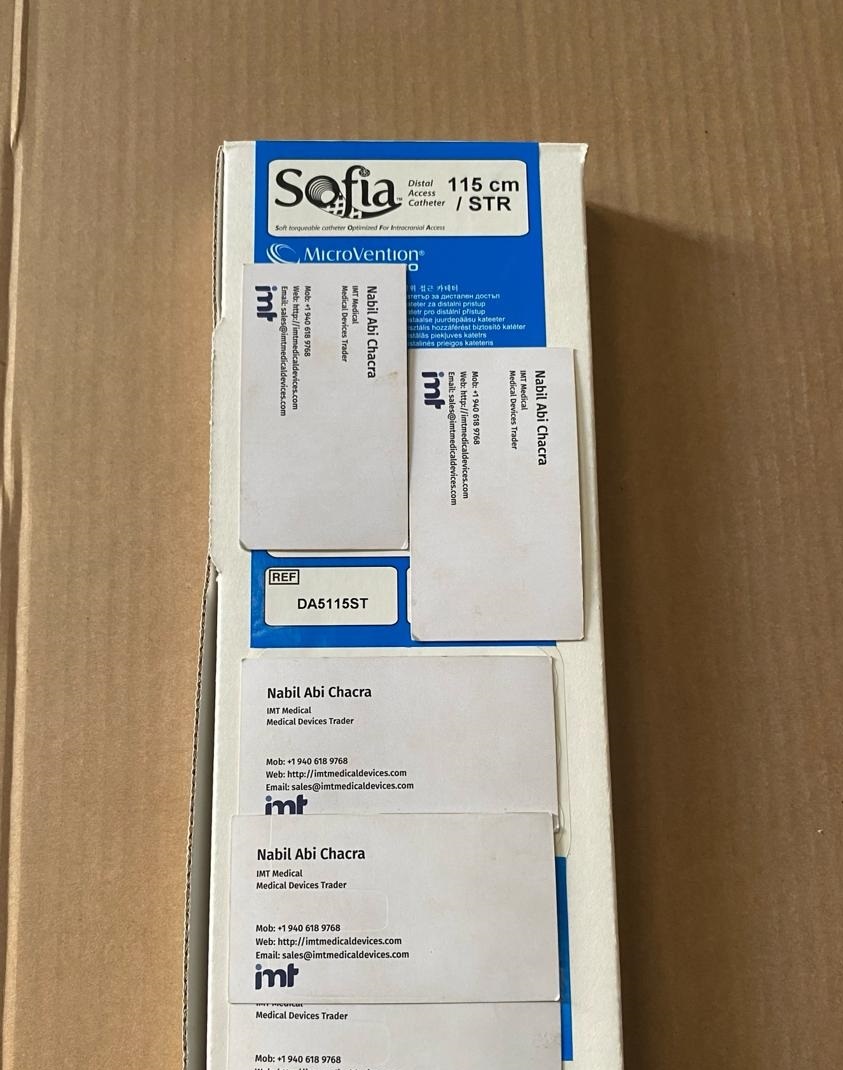
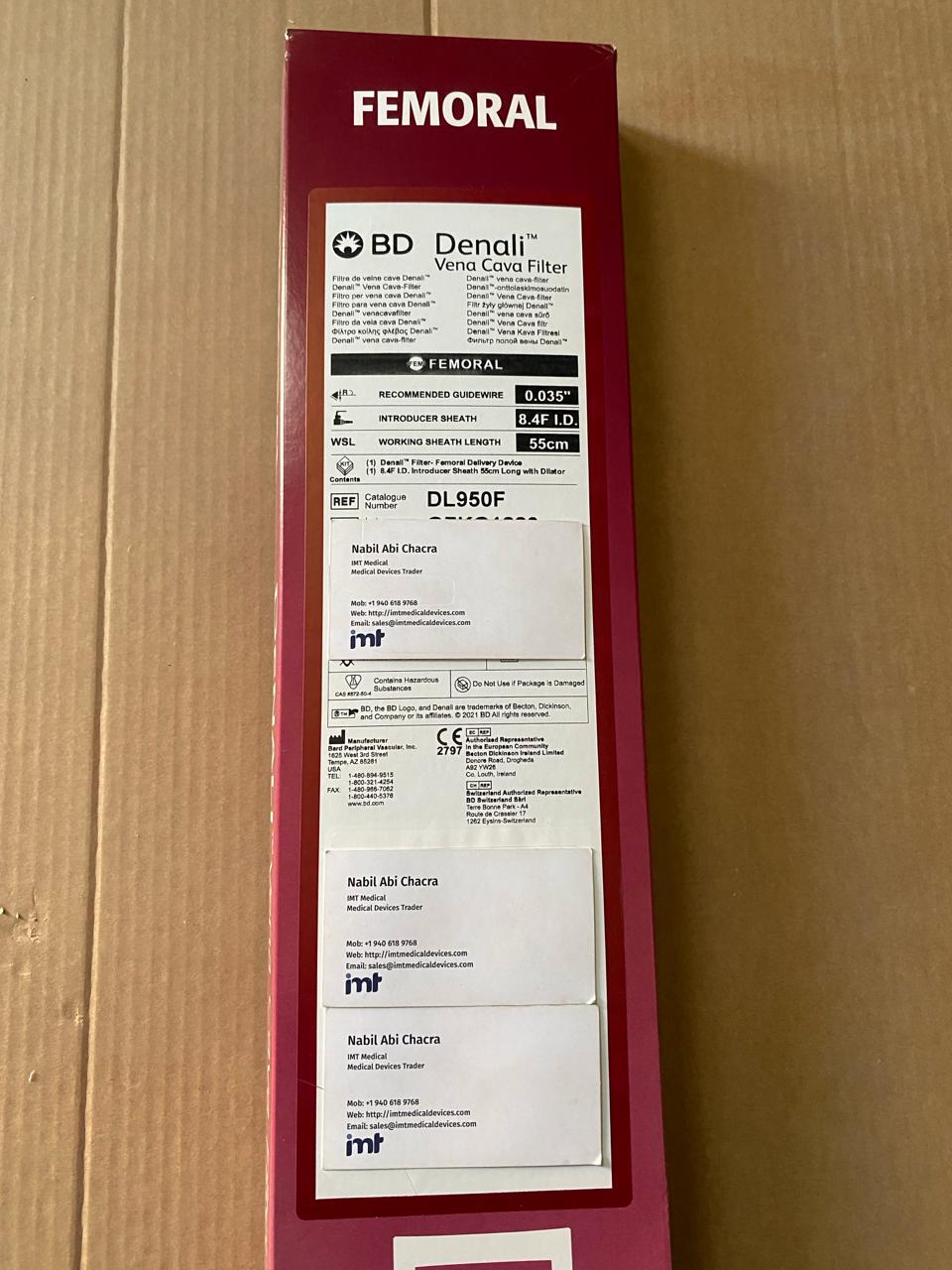
The inventory includes an exhaustive range of coronary intervention and peripheral intervention products. Hospitals can access a manufacturer-centric portfolio featuring Medtronic, Boston Scientific, Abbott, and Terumo hardware. This distribution model ensures that technical specifications and manufacturer reputations are the primary value drivers. Bulk sourcing efficiency is maximized through consolidated logistics for the following categories:
- Drug-Eluting Stents (DES) with specific drug-release profiles.
- PTCA and PTA balloon catheters for complex dilations.
- Permanent pacemakers and ICDs from leading global producers.
- Advanced surgical staplers and electrophysiology catheters.
Global Reach and Reliable Distribution
IMT's strategic offices provide the infrastructure required to support the national UAE medical supply chain. This global reach reduces lead times for specialized equipment, mitigating the impact of local stockouts. Every transaction follows a structured process, from technical identifier verification to pre-shipment quality control. Procurement professionals seeking to optimize their supply chain can initiate bulk inquiries through the company's digital inventory interface. For more information on manufacturer-direct sourcing and international export capabilities, you can contact our procurement team to discuss contract rate transparency and bulk inventory availability.
Optimizing Your Medical Supply Chain Infrastructure
Effective healthcare procurement in the Emirates now depends on a focus on manufacturer authenticity and logistical precision. The transition to the Emirates Drug Establishment (EDE) framework and the anti-monopoly mandates of 2026 have redefined the benchmarks for a medical device supplier UAE. Success requires securing a transparent pipeline of Tier-1 interventional hardware, including drug-eluting stents and CRM devices, while maintaining cold chain integrity across international borders. Technical accuracy in documentation and HS code management is no longer optional for national clinical facilities.
IMT Medical Devices provides the industrial capacity required to support these national healthcare objectives. With distribution reach extending to over 50 countries, the entity offers direct access to premium portfolios from Medtronic, Terumo, and Boston Scientific. Specialized expertise in interventional cardiology and cardiac rhythm management ensures that technical specifications are matched with logistical reliability. It's a pragmatic bridge between global production and the UAE market.
Request a quote for premium medical devices from IMT Medical Devices to streamline your procurement cycles and secure your facility's supply chain. Accessing authentic, high-specification technology ensures your clinical programs remain at the forefront of medical advancement.
Frequently Asked Questions
What are the primary regulatory requirements for medical device suppliers in the UAE?
The Emirates Drug Establishment (EDE) regulates all medical hardware under Federal Decree-Law No. 38 of 2024. Suppliers must complete manufacturing site registration and obtain product approval for all Class I through IV devices. A valid ISO 13485:2016 certificate is mandatory for wholesalers. The February 2026 anti-monopoly policy also requires multiple agents per product, ending single-distributor models for a medical device supplier UAE.
How do I verify the authenticity of cardiology stents sourced from a wholesaler?
Authenticity verification requires cross-referencing manufacturer-specific technical codes and lot numbers against official production databases. Procurement teams should request a Certificate of Analysis (COA) and a quality control report for every batch. Technical identifiers for items like Asahi Intec guidewires or Medtronic stents must match factory specifications. Direct wholesaler transparency regarding the supply chain origin is the primary safeguard against gray-market hardware.
Which global medical brands are most commonly used in the UAE's cardiology sector?
The UAE cardiology sector relies on Tier-1 global manufacturers including Medtronic, Boston Scientific, and Terumo. These brands provide the standard for drug-eluting stents and CRM hardware in national cardiac centers. Other frequently utilized producers include Abbott for pacemakers and Asahi Intec for specialized PTCA guidewires. Access to these specific manufacturer portfolios defines the technical capacity of a medical device supplier UAE.
What is the importance of cold chain integrity for drug-eluting stents?
Cold chain integrity is vital for maintaining the pharmaceutical stability of active drug coatings on stents and balloons. Temperature excursions outside the 15°C to 30°C range, or 2°C to 8°C for specific drug-coated balloons, can compromise clinical efficacy. Continuous thermal data logging during air freight and local transport ensures hardware remains within factory-calibrated safety parameters. Professional logistics prevent polymer degradation and ensure optimal drug-release profiles.
How does international medical device distribution work for the UAE market?
International distribution involves a coordinated flow between global manufacturing hubs and local warehouses. Wholesalers utilize strategic offices in major logistical centers to consolidate inventory and manage export documentation. Hardware moves via temperature-controlled air freight to Dubai or Abu Dhabi. Upon arrival, the distributor handles EDE import permits and customs clearance before final-mile delivery to the clinical facility. This process ensures a consistent pipeline of premium hardware.
Can a UAE healthcare provider source bulk medical supplies directly from global wholesalers?
UAE healthcare providers source bulk inventory from international wholesalers to optimize procurement costs and bypass local stockouts. This B2B model allows hospital groups to access a broader range of manufacturer technical codes and Tier-1 brands. Wholesalers provide volume-based pricing tiers and contract rate transparency for large-scale orders. This approach is highly effective for high-volume items like surgical staplers, diagnostic guidewires, and PTCA catheters.
What documentation is required for importing medical equipment into the UAE?
Mandatory documentation includes an EDE-issued import permit and a valid manufacturing site registration. Accompanying paperwork must feature accurate Harmonized System (HS) codes, manufacturer-direct invoices, and Certificates of Origin. For Class III and IV devices, detailed quality control reports and batch-specific technical identifiers are required. Expert documentation management ensures rapid customs clearance and prevents administrative delays at the port of entry.
Why is manufacturer-centric procurement preferred for interventional cardiology?
Manufacturer-centric procurement prioritizes the technical reputation and specific identifiers of the original producer. This approach reduces errors in matching hardware specifications for complex interventional procedures. It ensures clinicians receive authentic technology from brands like Boston Scientific or Terumo without unnecessary narrative fluff. Focusing on manufacturer identity provides a clear audit trail for post-market surveillance and reporting obligations within the UAE healthcare sector.