
Wholesale Coronary Balloons: Guide to Bulk Procurement
The global PTCA balloon market is projected to reach $4.96 billion by 2033. Despite this expansion, many cardiology procurement departments remain trapped in fragmented supply chains requiring separate vendors for every major brand. Securing a reliable source for coronary balloons wholesale requires more than a simple inventory list. It demands a distribution partner capable of managing the transition to the FDA’s Quality Management System Regulation (QMSR), which replaced the legacy Quality System Regulation on February 2, 2026.
International logistics for Medtronic, Terumo, and Boston Scientific hardware involve complex export documentation and strict cold chain requirements. Lead time delays and authenticity concerns frequently disrupt clinical operations. This guide provides a comprehensive B2B framework for consolidated procurement and verified regulatory compliance. We'll examine technical classifications for non-compliant and drug-eluting balloons, current market shifts toward outpatient PCI settings, and the specific logistics protocols required for secure global shipping.
Key Takeaways
- Consolidate multi-brand procurement to eliminate supply chain fragmentation and reduce administrative lead times for interventional cardiology departments.
- Differentiate between semicompliant and non-compliant PTCA balloons based on technical material properties and specific clinical applications.
- Secure reliable access to coronary balloons wholesale with a centralized inventory including Medtronic, Terumo, and Boston Scientific technology.
- Simplify international logistics by utilizing distributors with expertise in export documentation, Certificates of Free Sale, and global regulatory compliance.
- Maintain cold chain integrity and product authenticity across international borders through ISO 13485 certified distribution channels.
Wholesale Coronary Balloon Sourcing: Global Market Overview 2026
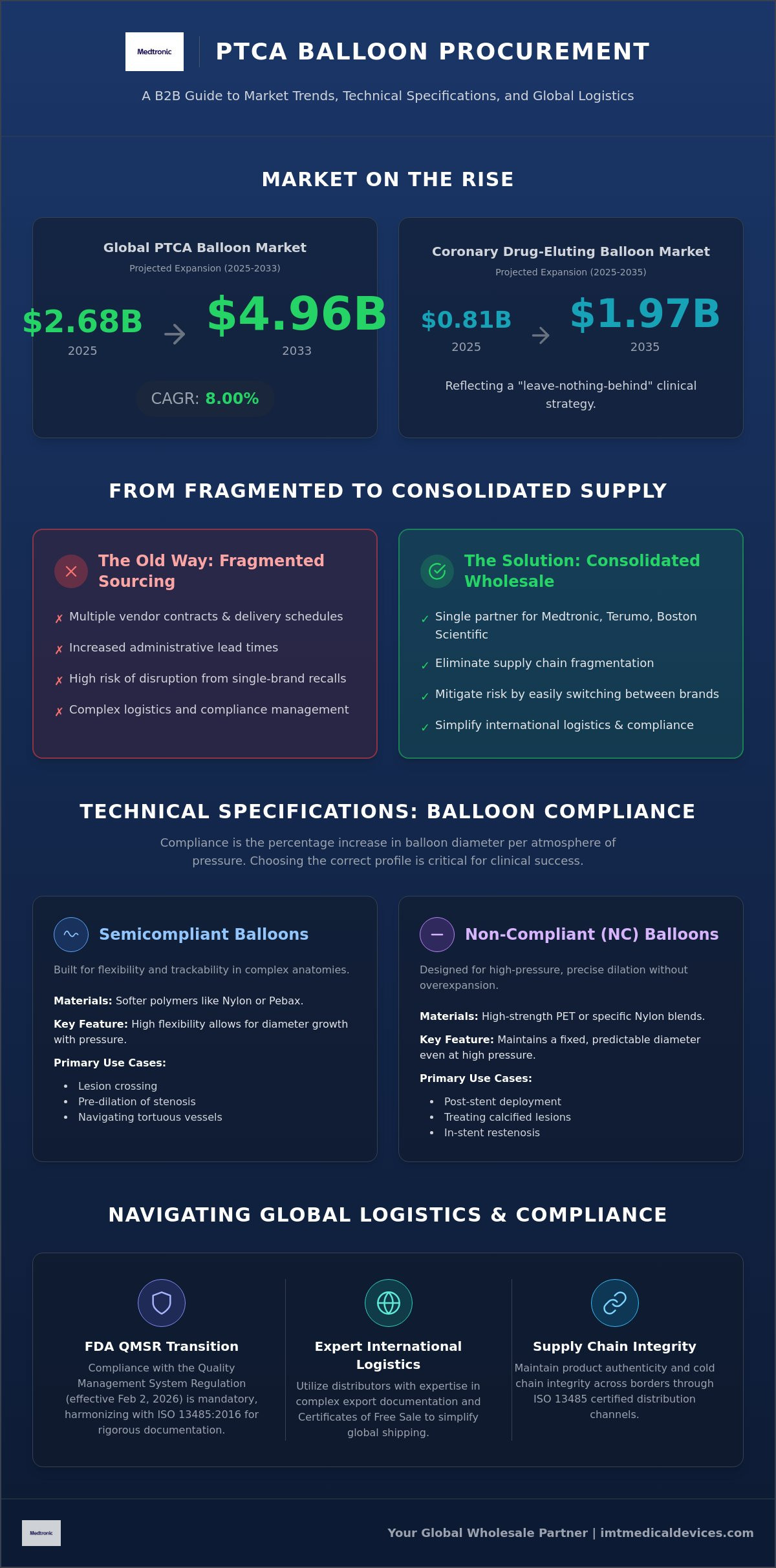
The global PTCA balloon market reached a valuation of $2.68 billion in 2025. Projections indicate it will expand to $4.96 billion by 2033, maintaining a compound annual growth rate of 8.00%. This growth is anchored by the fundamental role of coronary balloon angioplasty in treating atherosclerotic disease. Modern interventional cardiology requires high-performance hardware capable of navigating increasingly complex coronary architectures. Procurement professionals are shifting away from basic dilation tools toward thin-strut, high-pressure technology that offers superior trackability and crossability in calcified lesions.
Market demand is currently bifurcated between high-pressure non-compliant balloons and drug-coated options. The coronary drug-eluting balloon market, valued at $0.81 billion in 2025, is expected to grow to $1.97 billion by 2035. This shift reflects a "leave-nothing-behind" clinical strategy. Securing a consistent supply of coronary balloons wholesale is now a strategic necessity for high-volume catheterization laboratories and ambulatory surgical centers (ASCs). As PCI procedures move increasingly to outpatient settings, the need for rapid, bulk inventory replenishment has intensified.
The Evolving Landscape of PTCA Procurement
Aging global populations and expanded access to percutaneous coronary intervention (PCI) drive the surge in consumable demand. The Asia-Pacific region is currently the fastest-growing market for these devices. Wholesale distributors act as the primary logistical bridge between major manufacturers and international clinics. This role has become more complex following the FDA’s transition to the Quality Management System Regulation (QMSR) on February 2, 2026. This regulatory update harmonizes U.S. standards with ISO 13485:2016, requiring distributors to maintain rigorous documentation and medical device files (MDF) for all exported inventory.
Wholesale vs. Direct Manufacturer Sourcing
Direct sourcing from manufacturers often results in fragmented supply chains. Hospitals must manage multiple contracts and delivery schedules to maintain a full clinical range. Consolidated wholesale models offer significant logistical advantages. A single partner provides access to coronary balloons from top-tier producers like Medtronic, Terumo, and Boston Scientific. This diversity is essential for risk mitigation. When specific product lines face disruptions, such as the May 2026 Medtronic surgical device recall or the early 2026 Boston Scientific Coyote catheter recall, a wholesale partner can immediately transition procurement to alternative, compliant brands without interrupting clinical workflows.
Technical Specifications: Semicompliant vs. Non-compliant PTCA Balloons
Compliance defines device performance. It's the percentage increase in balloon diameter per atmosphere of pressure. Sourcing coronary balloons wholesale requires a technical understanding of material composition. Semicompliant balloons typically use softer materials like nylon or Pebax. These provide high flexibility and trackability. Non-compliant (NC) balloons utilize high-strength materials like PET (polyethylene terephthalate) or specific nylon blends. These maintain a fixed diameter even at high pressures. This Overview of Angioplasty Balloon Technology highlights how these differences dictate clinical utility. Choosing the wrong compliance profile risks vessel dissection or inadequate lesion preparation.
Technical metrics are critical for procurement data sheets. Nominal Pressure (NP) is the pressure at which the balloon reaches its labeled diameter. Rated Burst Pressure (RBP) is the limit where 99.9% of balloons won't burst. Crossing profile measures the device's ability to pass through a lesion. Lower profiles are better for tight stenoses. Procurement managers must verify these metrics across different brands to ensure clinical parity. A 3.0mm NC balloon from one manufacturer may have a different RBP than a competitor's equivalent. Precise data retrieval speeds up the vendor selection process.
Semicompliant Balloon Applications
These devices are the primary choice for lesion crossing and pre-dilation. Their flexibility allows navigation through tortuous anatomy. Materials balance trackability with enough strength to prepare the vessel. Typical diameters range from 1.20mm to 4.00mm. Lengths vary from 6mm to 30mm. In 2026, the trend toward ultra-thin-strut technology has reduced crossing profiles further. This allows for easier access to distal lesions. Procurement teams should focus on tip entry profiles when evaluating semicompliant stock.
Non-compliant Balloons and Stent Optimization
NC balloons are essential for post-dilation. They ensure uniform stent expansion. This prevents late stent thrombosis and restenosis. Precise diameter control is vital for treating calcified lesions. They operate at higher pressures without "dog-boning" or over-expanding at the ends. For high-volume centers, maintaining a full size-run of coronary balloons ensures preparedness for complex PCI. Accessing premium NC coronary balloons wholesale allows facilities to manage these high-pressure cases with cost-effective, bulk-sourced hardware.
Review our current coronary intervention inventory for technical specifications on leading NC platforms.
Premium Brand Portfolio: Medtronic, Terumo, and Boston Scientific
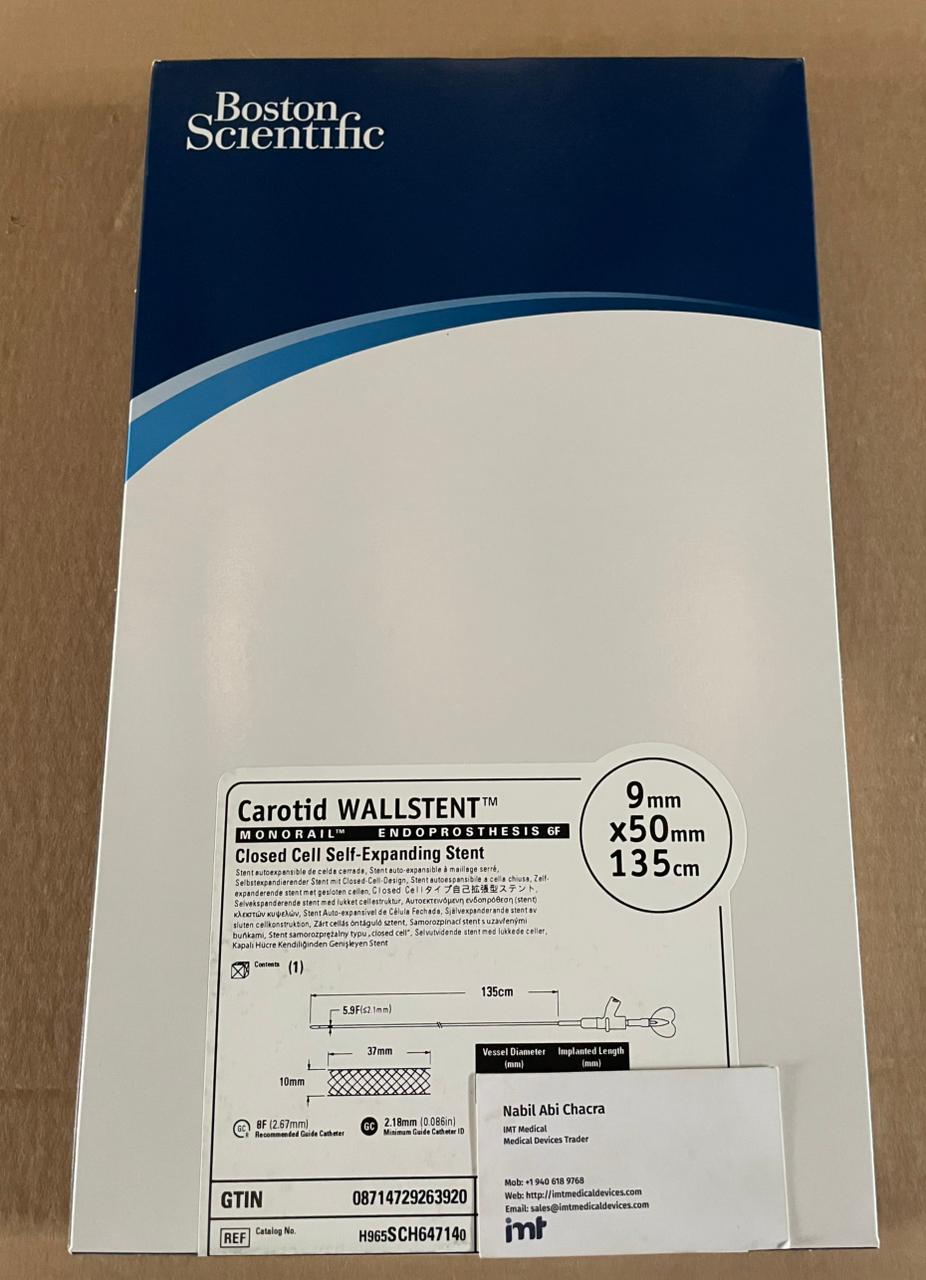
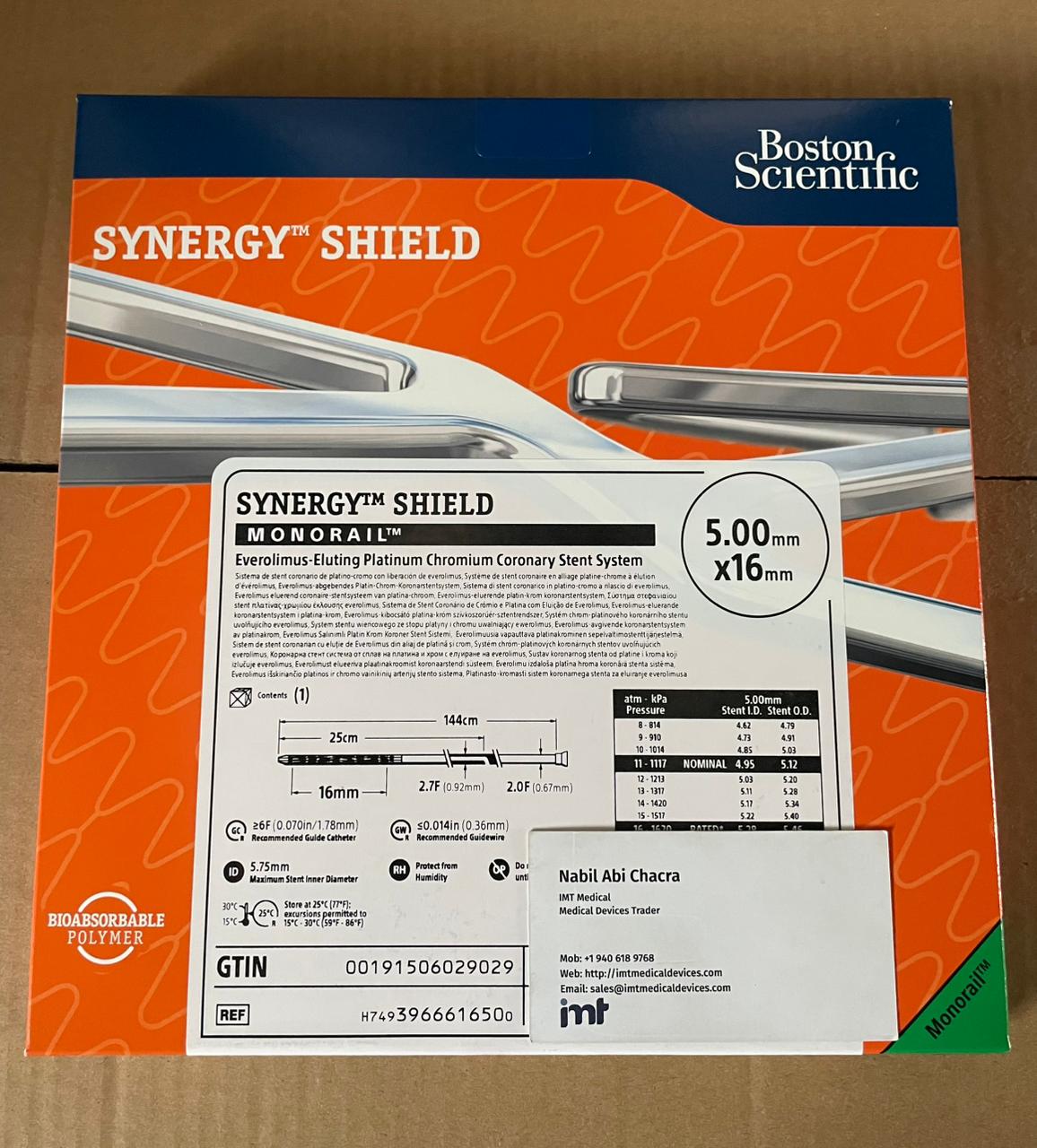
Efficient cardiology procurement relies on access to the three dominant market players: Medtronic, Terumo, and Boston Scientific. Each manufacturer provides distinct technical advantages for specific lesion morphologies. Selecting the right brand for coronary balloons wholesale procurement involves balancing clinical performance with logistical availability. Medtronic’s portfolio is led by the Euphora and NC Euphora series. These platforms utilize advanced hydrophilic coatings to enhance trackability. Terumo Interventional Systems offers the Senri and Hiryu platforms, which are engineered for high-performance radial access procedures. Boston Scientific provides specialized solutions, including cutting and scoring balloons designed for complex, calcified lesions. Accessing these brands through a single wholesale channel allows clinics to maintain technical flexibility without managing multiple manufacturer contracts.
Medtronic and Terumo Wholesale Availability
High-capacity distributors provide immediate access to Medtronic products, ensuring cath labs maintain stock of critical sizes. The NC Euphora series remains a primary choice for high-pressure post-dilation due to its 20 atm rated burst pressure. Terumo coronary solutions, specifically the Hiryu NC balloon, are valued for their durability and low crossing profiles. Managing inventory for high-turnover cardiology consumables requires a partner capable of shipping multi-brand orders in a single consolidated package. This reduces administrative overhead and minimizes the risk of stockouts during urgent PCI cases. In 2026, the demand for Terumo’s radial-specific hardware has increased as more centers transition to radial-first protocols for patient safety and faster recovery times.
Specialized Intervention Tools
Niche technologies like Drug-coated balloons (DCB) are seeing increased adoption for treating In-Stent Restenosis (ISR) and small vessel disease. The 'leave-nothing-behind' strategy drives the 9.29% CAGR projected for this segment through 2035. Procurement teams must also source coronary guidewires to complement balloon shipments. Ensuring cross-platform compatibility is essential. For instance, pairing a Terumo Senri balloon with a specialized guidewire requires verified technical specifications for lumen clearance. Boston Scientific’s Wolverine cutting balloons provide a mechanical solution for resistant lesions where standard high-pressure balloons may fail. A consolidated wholesale partner verifies these technical compatibility metrics before dispatch, mitigating the risk of intra-procedural hardware failure. This technical oversight is a primary trust signal for international medical device distributors.
Logistics and Compliance in International Medical Device Wholesale
International distribution of interventional hardware requires strict adherence to ISO 13485 quality standards. This ensures every unit in a coronary balloons wholesale order maintains sterile barrier integrity from the manufacturer to the clinical environment. As of February 2, 2026, the FDA’s Quality Management System Regulation (QMSR) has harmonized U.S. requirements with international ISO standards. This change simplifies the export process for distributors managing multi-brand inventories. It replaces the previous Quality System Regulation with a single Medical Device File (MDF) requirement, facilitating faster cross-border movement of catheters and stents. Reliable wholesale partners must manage specific export documentation, including Certificates of Free Sale (CFS) and Certificates of Origin (COO), to prevent customs delays at international borders.
Temperature control is a critical logistical requirement for PTCA catheters. While not strictly "cold chain" like biologics, coronary balloons are sensitive to extreme thermal fluctuations that can compromise the balloon material or the hydrophilic coating. Strategic distribution hubs in Georgia, Dubai, Turkey, and Poland serve as primary gateways for global trade. These locations offer high-capacity bonded warehousing and specialized medical logistics infrastructure. Utilizing these hubs allows for rapid deployment to emerging markets in the Asia-Pacific region, which is currently the fastest-growing segment for PTCA and drug-eluting balloons.
Regulatory Compliance for Global Exports
Navigating customs clearance for sensitive cardiology implants demands precise technical labeling and traceability. Wholesale distributors must maintain a robust tracking system to manage potential device recalls. For example, the May 2026 Medtronic recall of 18,000 surgical devices highlighted the necessity of immediate product identification across global supply chains. Adhering to the EU Medical Device Regulation (MDR) ensures that all inventory meets the highest safety standards for the European market. Traceability from the manufacturer’s lot number to the end-user facility is mandatory for maintaining regulatory standing and patient safety.
Efficient Supply Chain Management
Bulk order consolidation is the primary method for reducing international freight costs. By combining coronary balloons with complementary items like guidewires or stents, procurement officers can optimize shipping volumes. Lead time optimization is essential for high-turnover inventory. Reliable logistics partners provide real-time tracking and expedited shipping options for urgent clinical requirements. This efficiency minimizes the financial burden of carrying excess safety stock while ensuring that interventional suites remain fully operational.
Contact IMT Medical Devices to discuss our international export capabilities and ISO-compliant distribution protocols.
Procurement with IMT Medical Devices: Your Global Wholesale Partner
IMT Medical Devices functions as a high-capacity bridge between global manufacturers and international healthcare providers. We maintain a centralized inventory of coronary balloons, facilitating rapid fulfillment for high-turnover cardiology consumables. Our operational model prioritizes scale and logistical reach. We currently manage exports to over 50 countries, utilizing established distribution networks to ensure product authenticity and regulatory compliance. For organizations seeking coronary balloons wholesale, we provide a consolidated procurement solution that eliminates the need for multiple vendor contracts. This approach reduces administrative complexity and optimizes supply chain efficiency for both hospitals and secondary distributors.
Our B2B pricing structures are specifically tailored for high-volume procurement. We recognize the financial requirements of large-scale interventional programs. By leveraging our established relationships with producers like Medtronic, Terumo, and Boston Scientific, we offer competitive commercial terms that reflect the scale of the order. Our support extends beyond simple product delivery. We provide technical data sheets, regulatory documentation, and logistical oversight for every transaction. This ensures that every shipment of PTCA hardware meets the stringent requirements of modern clinical environments. It's a pragmatic approach designed for the urgent nature of the medical supply chain.
Why Partner with IMT Medical Devices?
Partnership with IMT Medical Devices provides immediate access to a comprehensive portfolio of interventional hardware. Our inventory includes an extensive range of coronary stents, guiding catheters, and specialized balloons. We've a proven track record in navigating the complexities of international medical technology distribution. Every order is managed with professional precision. We handle all necessary documentation, including Certificates of Origin and compliance filings, ensuring a seamless transition through global customs protocols. Our focus remains on industrial competence and logistical reliability, positioning us as a vital link in the global cardiology supply network.
Requesting a Wholesale Quote
We utilize a streamlined inquiry process designed for international B2B clients. Procurement professionals can initiate a quote request via our digital platform. We provide detailed consultations on inventory planning and brand selection to match specific clinical demands. This data-driven approach helps partners optimize their stock levels and select the most appropriate technical identifiers for their patient populations. Contact IMT Medical Devices today to receive a comprehensive quote on bulk pricing and current inventory availability. Our team is prepared to facilitate high-speed data transmission regarding SKUs, technical specifications, and international shipping lead times.
Optimizing International Cardiology Procurement
Consolidating the procurement of Medtronic, Terumo, and Boston Scientific hardware reduces administrative fragmentation and ensures clinical readiness. Technical precision in selecting semicompliant versus non-compliant profiles remains a primary driver for procedural success. Navigating the 2026 transition to the FDA’s Quality Management System Regulation requires a partner with documented expertise in Medical Device Files and international compliance. Maintaining a reliable supply of coronary balloons wholesale is essential for high-volume centers transitioning to outpatient PCI settings.
IMT Medical Devices serves as a strategic bridge for high-volume cardiology and vascular interventions. We're an authorized distributor for Medtronic, Terumo, and Abbott, maintaining strategic offices in the UAE, Georgia, Turkey, and Poland to facilitate rapid global deployment. With a proven track record as a global exporter to 50+ countries, our team manages every logistical detail from export documentation to sterile-barrier integrity. Request a Wholesale Quote for Coronary Balloons to secure compliant, multi-brand inventory for your clinical facility. We're prepared to optimize your supply chain with industrial-scale reliability and technical precision.
Frequently Asked Questions
What are the main differences between semicompliant and non-compliant coronary balloons?
Compliance distinguishes these devices. Semicompliant balloons increase in diameter by 5% to 10% as pressure rises, making them ideal for initial lesion crossing and pre-dilation. Non-compliant balloons maintain a fixed diameter even at high pressures, ensuring uniform stent expansion during post-dilation. Materials like PET or specific nylon blends provide the high-pressure stability required for NC platforms, while semicompliant versions prioritize trackability in tortuous coronary anatomy.
Do you provide wholesale access to Medtronic and Terumo coronary products?
We provide direct wholesale access to the complete coronary portfolios of Medtronic and Terumo. This inventory includes high-performance platforms like the Euphora, NC Euphora, Senri, and Hiryu series. Our distribution model allows high-volume centers to secure coronary balloons wholesale alongside complementary hardware like guidewires and stents. Every order is backed by full manufacturer traceability and verified technical specifications to ensure clinical parity across different brands.
What documentation is required for international medical device exports?
International exports demand a Certificate of Free Sale (CFS), Certificate of Origin (COO), and detailed commercial invoices. Following the FDA’s February 2, 2026, regulatory update, we also maintain a Medical Device File (MDF) for all exported inventory to ensure harmonization with ISO 13485 standards. These documents are essential for navigating customs protocols in over 50 countries and verifying the regulatory standing of sensitive cardiology implants.
Can IMT Medical Devices handle bulk shipments to multiple global regions?
Bulk shipments are managed through strategic distribution hubs located in Georgia, Dubai, Turkey, and Poland. These centers facilitate efficient order consolidation for multi-brand coronary balloons wholesale procurement. By utilizing these regional gateways, we reduce international freight costs and optimize lead times for cardiology providers. Our logistics network is specifically designed to handle high-volume shipments of PTCA catheters while maintaining strict temperature controls and product integrity.
What is the typical shelf life of wholesale coronary balloon catheters?
Most PTCA balloon catheters possess a validated shelf life of 24 to 36 months from the date of sterilization. This duration is determined by manufacturer testing of the sterile barrier and material degradation. We implement rigorous inventory management to monitor expiration dates for all wholesale stock. This ensures that clinical facilities receive hardware with maximum usable life, minimizing waste and maintaining high safety standards for interventional procedures.
How do you ensure the authenticity of the medical devices you distribute?
Authenticity is ensured through authorized manufacturer channels and ISO 13485 certified distribution protocols. We maintain strict lot-number traceability for every unit in our warehouse. Every balloon catheter is shipped in its original manufacturer packaging with intact sterile barriers and technical labeling. This rigorous oversight prevents the entry of counterfeit devices into the supply chain and guarantees that clinics receive premium, authentic medical technology.
Are drug-coated balloons (DCB) available for wholesale procurement?
Drug-coated balloons (DCB) are available for wholesale procurement and are increasingly utilized for treating in-stent restenosis (ISR). These specialized devices deliver antiproliferative agents directly to the vessel wall without the need for a permanent implant. We provide access to DCB technology from major manufacturers like Medtronic and Boston Scientific to support modern 'leave-nothing-behind' clinical strategies in both hospitals and ambulatory surgical centers.
What are the technical advantages of using a cutting balloon in complex lesions?
Cutting balloons feature longitudinal micro-blades that score calcified or fibrotic plaque during inflation. This mechanical action allows for vessel expansion at lower pressures, reducing the risk of uncontrolled dissections or 'dog-boning.' Technically, they're superior for resistant lesions where standard non-compliant balloons fail to achieve uniform dilation. These devices are critical for preparing complex vessels before stent implantation to ensure optimal long-term clinical outcomes.