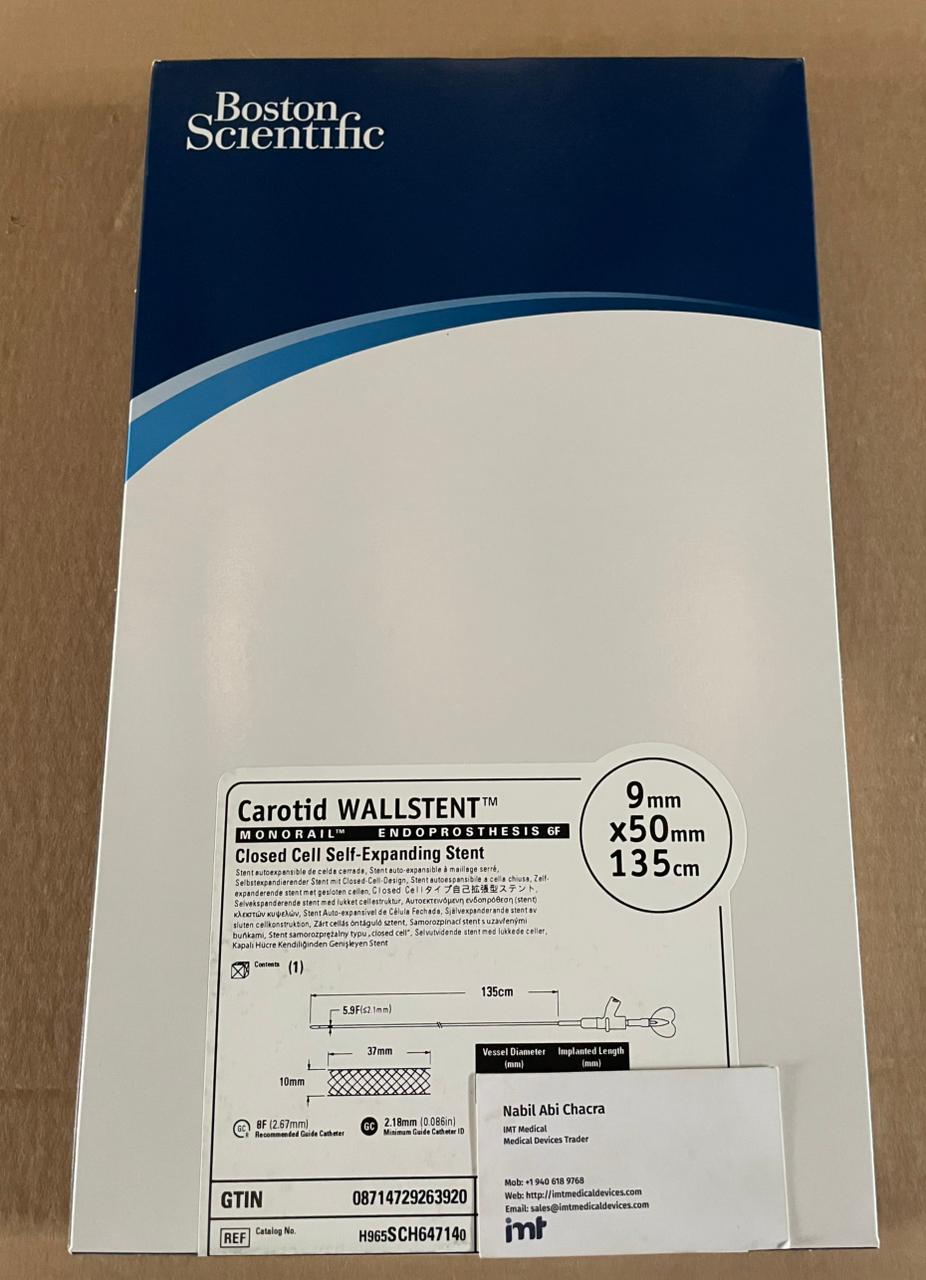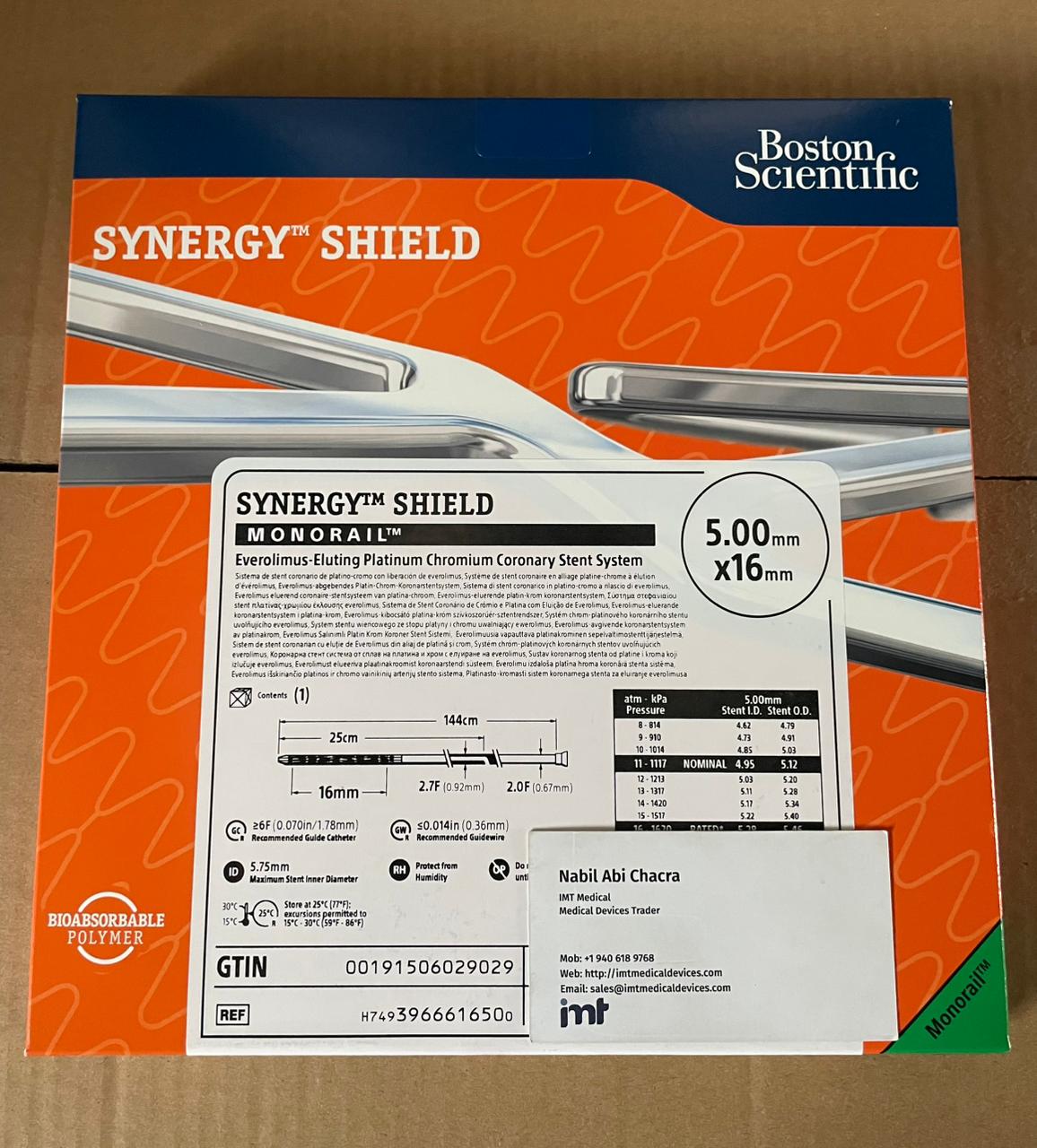


Get a Professional Coronary Stent Price Quote Today
Securing a competitive coronary stent price quote involves more than comparing unit costs. It requires a technical evaluation of manufacturer tiers, sterilization validation, and 2026 HTSUS compliance. Procurement professionals understand that opaque pricing structures and the risk of counterfeit products in secondary markets create significant operational friction. You need a supply chain that guarantees product authenticity while maintaining the strict 15 to 25 degrees Celsius temperature range required for drug-eluting stents during international transit.
This guide provides the professional framework needed to navigate bulk procurement and master the logistics of global medical device export. We will analyze inventory from primary manufacturers like Medtronic, Boston Scientific, and Terumo. You will learn to streamline international shipping using HTSUS 9021.39.0000 classifications and ensure all shipments meet the 18 month shelf-life requirement for customs entry. This overview prepares you to secure reliable inventory and optimize your procurement pipeline for high-capacity medical operations.
Key Takeaways
- Analyze how volume-based contracts and manufacturer-direct tiers define a professional coronary stent price quote.
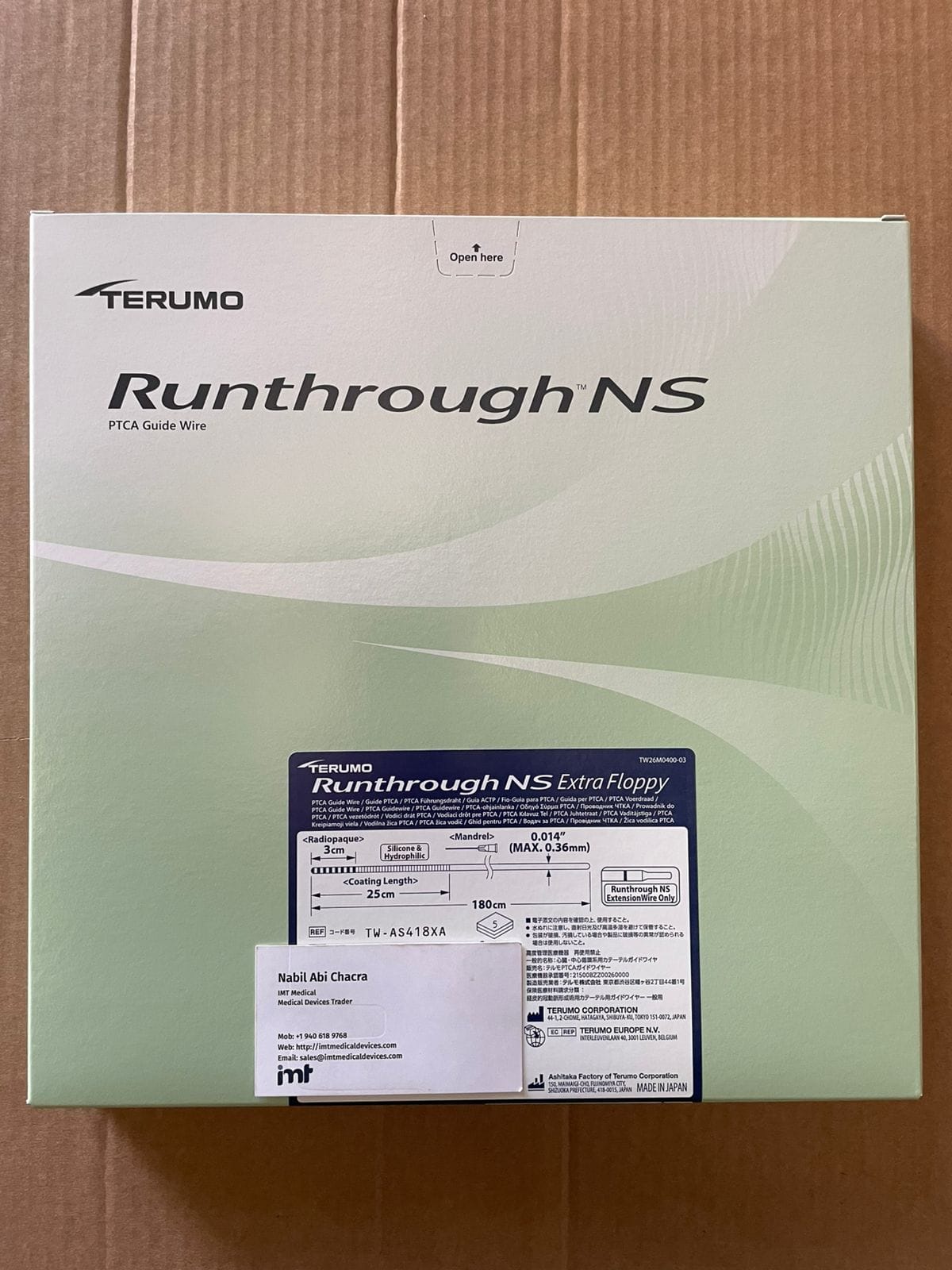
- Compare technical advantages of Medtronic, Boston Scientific, and Terumo inventory for high-capacity interventional cardiology.
- Assess the strategic procurement shift toward Drug-Eluting Stents (DES) as the global standard for modern PCI procedures.
- Identify essential documentation and cold chain protocols necessary for seamless international customs clearance.
- Streamline the RFQ process by organizing technical identifiers and volume requirements for bulk cardiology supply acquisition.
Key Factors Influencing a Coronary Stent Price Quote
Procurement efficiency depends on understanding the variables behind a coronary stent price quote. Total landed cost includes more than the hardware. It incorporates manufacturer tiers, supply chain integrity, and regulatory compliance. Direct manufacturer agreements often don't provide the same flexibility as wholesale channels, as they require massive annual commitments and rigid procurement schedules. Conversely, wholesale distribution allows for flexible inventory management without the same administrative overhead. For many facilities, the ability to mix brands like Medtronic and Terumo in a single shipment provides significant logistical advantages.
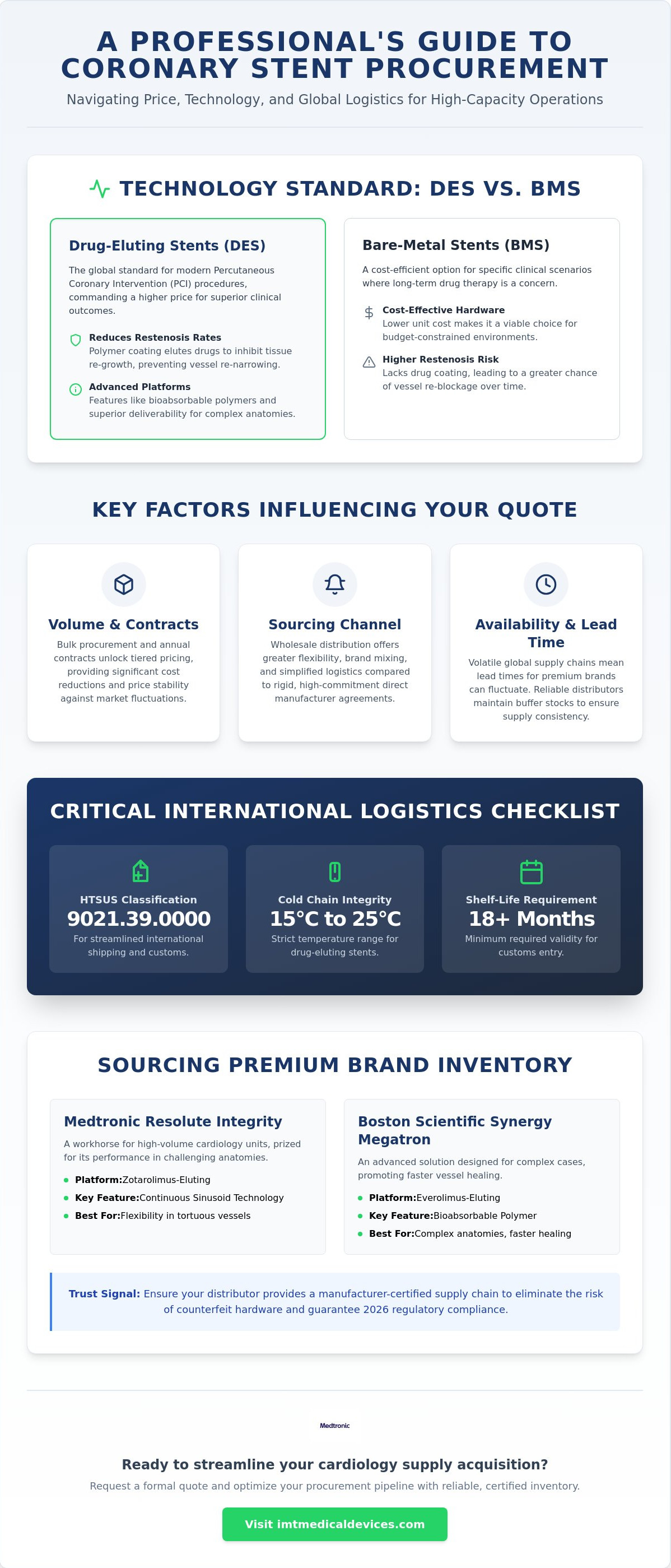
Technology generation remains a primary cost driver. While Bare-Metal Stents (BMS) offer cost-efficiency for specific clinical scenarios, the market has shifted toward Drug-Eluting Stents (DES). This Coronary Stent Overview highlights how DES platforms reduce restenosis rates, making them the standard for modern PCI. Advanced platforms like the Terumo Ultimaster Nagomi or the Boston Scientific Synergy Megatron command higher price points due to their bioabsorbable polymers and superior deliverability. These technical specifications directly influence the commercial offer, especially when sourcing latest-generation hardware for complex bifurcations or chronic total occlusions.
Volume and Contractual Commitments
Bulk procurement significantly alters the bottom line. Tiered pricing structures reward higher volume orders with reduced unit costs. Annual procurement contracts provide price stability against market fluctuations and currency changes. International export operations typically involve Minimum Order Quantities (MOQ) to offset specialized logistics and customs handling. Securing a competitive coronary stent price quote requires clearly defined volume forecasts and multi-quarter commitments. Geographic destination also impacts the quote, as regulatory compliance for 2026 mandates specific sterilization validations and shelf-life requirements for customs entry.
Market Availability and Lead Times
Global supply chains for high-demand DES are volatile. Inventory status in regional distribution hubs determines how quickly a facility can replenish stock. Lead times for premium brands can fluctuate based on manufacturing cycles and regulatory bottlenecks. Rapid availability often carries a premium, whereas planned, long-lead orders facilitate better commercial terms. It's essential to recognize that efficiency in logistics reduces the risk of stockouts during critical interventional procedures. Reliable distributors maintain buffer stocks of essential items like Medtronic Resolute Integrity to ensure consistent supply regardless of broader market disruptions.
Sourcing Premium Brands: Medtronic, Boston Scientific, and Terumo
Authenticity verification remains the primary trust signal for procurement officers. A professional coronary stent price quote must account for manufacturer-certified supply chains to eliminate the risk of counterfeit hardware. Reliable international distributors provide access to premium inventory from manufacturers such as Medtronic, Boston Scientific, and Terumo. This ensures that all devices meet 2026 regulatory standards for sterilization and shelf-life. Procurement teams must prioritize distributors with established export capabilities to maintain cold chain integrity for drug-coated devices. Efficient sourcing minimizes the administrative burden of managing multiple vendor relationships while securing high-end clinical technology.
Medtronic and Boston Scientific Portfolio
Evaluating the Medtronic Resolute Integrity Stent for bulk inventory focuses on its zotarolimus-eluting platform. Its continuous sinusoid technology provides the flexibility required for tortuous vessels. This remains a staple for high-volume interventional cardiology units. For complex anatomies, the Boston Scientific Synergy Megatron provides specific technical advantages. Its everolimus-eluting bioabsorbable polymer facilitates faster vessel healing, leaving only a bare-metal scaffold after drug delivery. Reference the Stent Cost-Effectiveness Analysis to justify the higher initial expenditure of these DES platforms. Comparing everolimus-eluting vs. zotarolimus-eluting options allows procurement teams to balance clinical outcomes with long-term economic value.
Terumo and Abbott Specialised Stents
Procurement strategy often necessitates the inclusion of specialized hardware. Sourcing Terumo Ultimaster Nagomi coronary stents is standard for facilities prioritizing radial access. The device's gradient coating and ultra-thin struts enhance crossability in challenging lesions. For specific indications like coronary artery perforations, the Abbott Graftmaster RX system is essential. Managing a diverse portfolio from multiple manufacturers within a single quote streamlines logistics. It reduces administrative friction and simplifies customs documentation for international shipments. High-capacity distributors allow you to consolidate these requirements into a unified delivery schedule. You can explore the full range of available hardware in the coronary intervention category.
Technical Comparison: DES vs. BMS in Procurement Strategy
Procurement officers must evaluate the commercial trade-offs between Drug-Eluting Stents (DES) and Bare-Metal Stents (BMS) to optimize hospital budgets. While DES platforms represent the global standard for Percutaneous Coronary Intervention (PCI), BMS hardware remains a niche requirement for specific clinical profiles. A professional coronary stent price quote typically reflects this technological divide. High-capacity facilities prioritize DES for its ability to reduce target lesion revascularization, which offsets the higher initial acquisition cost. Analyzing the long-term cost implications of coronary stenting confirms that superior clinical outcomes often translate to reduced secondary procedure expenses. Consequently, the ROI of premium stents is measured through hospital throughput and patient recovery rates rather than unit cost alone.
Bio-resorbable scaffolds (BRS) currently occupy a specialized segment of the market. While initial industry enthusiasm has stabilized, certain interventional cardiology departments maintain limited inventory for younger patients or specific vessel types. Procurement outlook for 2026 suggests a focus on bioabsorbable polymer DES, such as the Boston Scientific Synergy series, which combines the mechanical strength of metal scaffolds with the healing benefits of temporary polymers. These hybrid technologies provide a pragmatic middle ground for bulk procurement strategies.
Drug-Eluting Stent (DES) Platforms
Technical specifications distinguish polymer-free DES from permanent polymer variants. Permanent polymers provide controlled drug release but may influence long-term vessel inflammation. Polymer-free or bioabsorbable polymer designs, utilized by manufacturers like Medtronic and Terumo, aim to improve endothelialization. Sourcing for complex coronary interventions requires high-performance hardware with superior radial strength and trackability. Procurement teams should evaluate coronary intervention products to ensure that stents are supported by compatible balloon catheters and guidewires. This holistic approach to inventory management ensures that the coronary stent price quote aligns with the technical demands of modern catheterization labs.
Bare-Metal Stent (BMS) Utility
BMS remains a viable procurement choice in scenarios where short-duration Dual Antiplatelet Therapy (DAPT) is mandatory. Patients undergoing urgent non-cardiac surgery or those with high bleeding risks often require BMS hardware. Price differentials in wholesale markets make BMS an attractive option for cost-sensitive regions or secondary healthcare tiers. However, the volume of BMS orders continues to decline as DES technology becomes more accessible. Storage and shelf-life considerations also vary. DES requires stricter cold chain management (15 to 25 degrees Celsius) to maintain drug integrity, whereas BMS hardware is less sensitive to temperature fluctuations during long-haul international export. Identifying the correct technical identifier for each stent type is critical for accurate customs documentation and inventory reconciliation.
International Logistics and Export Documentation Requirements
Logistics and export fees represent critical variables in a professional coronary stent price quote. These costs encompass more than simple freight; they cover the technical overhead required to maintain the stability of drug-eluting polymers. International regulations for 2026 mandate a controlled temperature range of 15 to 25 degrees Celsius for DES shipments. Failure to maintain this cold chain invalidates the device's clinical performance and often leads to customs rejection. Procurement officers must account for these specialized handling requirements when evaluating the total landed cost of cardiology inventory.
High-capacity distribution relies on strategic logistics hubs in Dubai, Georgia, and Poland. These locations minimize transit times and simplify the re-export process to diverse global markets. Poland serves as a primary entry point for European Union compliance. Dubai provides a central gateway for Middle Eastern and African procurement. Georgia offers a streamlined corridor for Central Asian logistics. Utilizing these hubs ensures that high-value cardiology hardware reaches its destination without compromising the 18 month shelf-life requirement mandated for customs entry in many jurisdictions.
Documentation and Compliance
Exporting sensitive medical implants requires a rigorous paperwork trail. A standard shipment must include the Certificate of Origin, CE certification, and valid sterilization validation (ISO 11135 or ISO 11137). Customs officials utilize the Harmonized Tariff Schedule (HTSUS) code 9021.39.0000 for coronary stents. This classification typically allows for duty-free entry, though secondary codes like 9817.00.96 may apply for specific merchandise processing fee waivers. For a deeper analysis of these variables, consult our Medical Device Distribution: A Global Guide. Precise documentation prevents costly administrative delays and ensures that the final coronary stent price quote remains accurate throughout the shipping process.
Shipping and Handling Protocols
Standard Operating Procedures (SOPs) for interventional cardiology products prioritize speed and security. High-value shipments require comprehensive insurance and real-time monitoring to mitigate financial risk. Tracking technology provides visibility into the environmental conditions of the cargo throughout the journey. Strategic regional offices allow for localized customs handling, which reduces the likelihood of long-term storage at uncontrolled border facilities. This level of logistical precision is essential for maintaining the integrity of devices from Medtronic, Boston Scientific, and Terumo. You can request a logistics-inclusive quote to see how these factors integrate into your specific procurement plan.
Requesting a Formal Quote for Coronary Stents
Generating an accurate coronary stent price quote requires high-fidelity data at the point of inquiry. Procurement efficiency is compromised by vague requests that lack specific technical identifiers or volume metrics. A professional commercial offer must account for the full Bill of Materials (BOM) needed for interventional procedures. This ensures that the quoted prices reflect the actual scale of the operation and the specific technical requirements of the catheterization lab. Establishing a global supply partnership depends on transparency regarding volume forecasts and long-term procurement schedules.
Evaluating a commercial offer involves more than a simple unit price comparison. You've got to analyze the total landed cost, which incorporates Incoterms, specialized cold chain logistics, and insurance for high-value medical hardware. Verification of remaining shelf-life is also critical, as devices with less than 18 months of utility may face customs rejection in specific jurisdictions. A pragmatic procurement strategy prioritizes supply chain security and manufacturer authenticity over the lowest possible unit cost in the secondary market.
Preparing Your RFQ
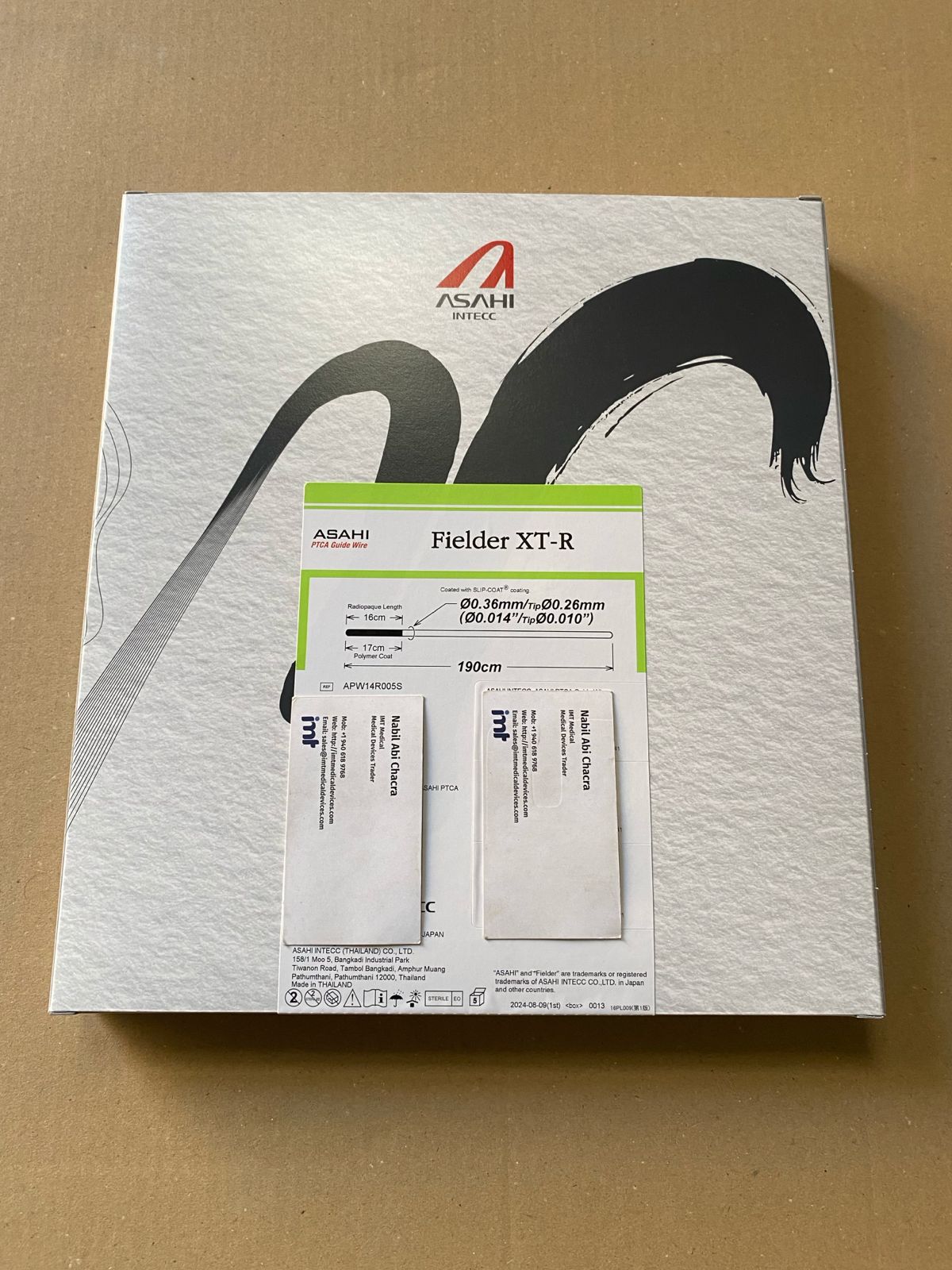
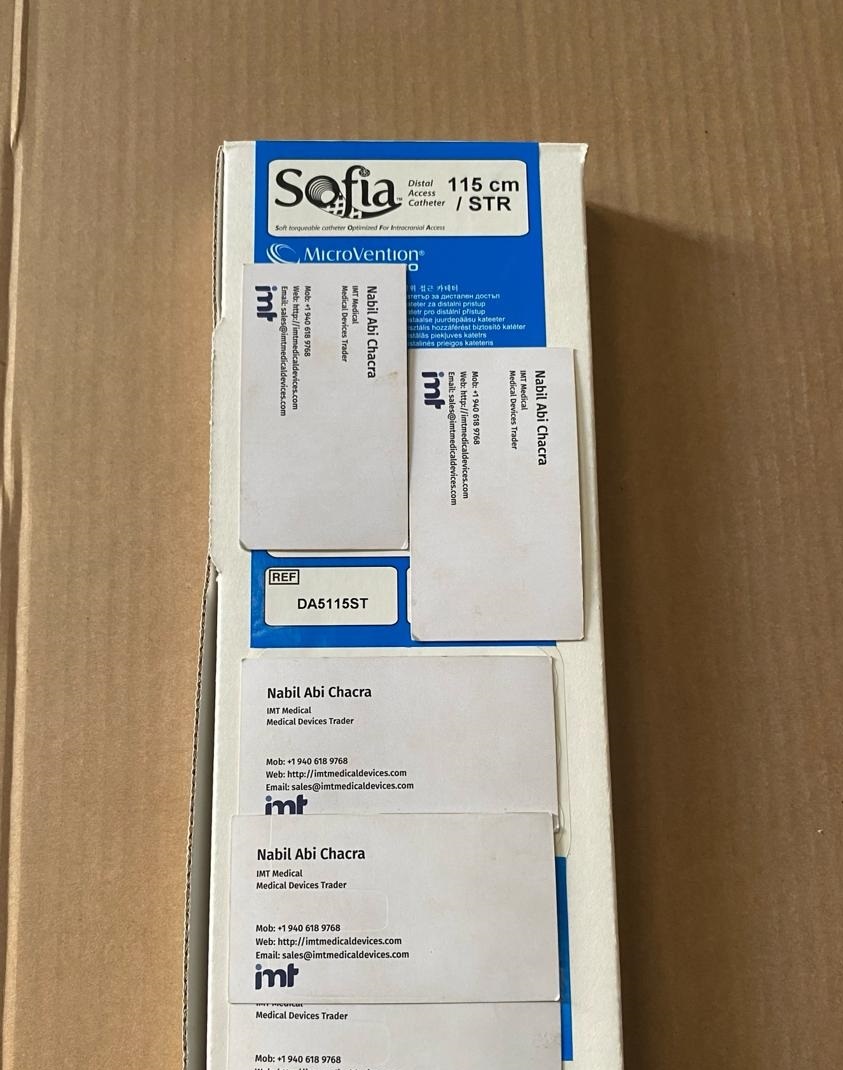
A structured Request for Quotation (RFQ) facilitates rapid information retrieval and faster turnaround times. Your request should include SKU-level data for each device, specifying the manufacturer and the required quantity per size. Clearly define the destination port and the expected delivery timelines to allow for accurate logistics planning. It's also efficient to inquire about complementary items like PTCA Balloon Catheters and diagnostic guidewires in the same document. Consolidating these requirements into a single RFQ reduces administrative friction and allows for better volume-based discount structures across the entire interventional portfolio.
Why Partner with IMT Medical Devices
Partnering with an established international distributor provides immediate access to an expansive portfolio of premium hardware. We maintain a manufacturer-centric inventory featuring industry leaders like Medtronic, Abbott, and Terumo. Our logistical infrastructure supports reliable supply chain solutions to over 50 countries, utilizing strategic hubs to ensure 2026 regulatory compliance. We prioritize industrial competence and logistical precision, serving as a vital bridge between major manufacturers and international markets. You can contact our procurement specialists today to secure a professional coronary stent price quote tailored to your facility's specific volume and technical requirements. Our no-nonsense approach to global distribution ensures your inventory remains stocked with authentic, high-performance clinical technology.
Optimizing Your Global Cardiology Supply Chain
Procurement efficiency in interventional cardiology requires a focus on technical identifiers and logistical reliability. You've analyzed how manufacturer-direct tiers and volume-based contracts define the commercial landscape. Selecting between Drug-Eluting Stents and Bare-Metal Stents involves a technical evaluation of clinical outcomes versus long-term procedure costs. Success in international markets depends on maintaining cold chain integrity and ensuring all documentation meets 2026 HTSUS standards. Precise data in your RFQ ensures that the final commercial offer reflects the technical demands of your facility.
IMT Medical Devices operates as a high-capacity bridge between prestigious manufacturers and global healthcare facilities. We're an authorized wholesaler of Medtronic, Terumo, and Abbott. With strategic offices in Dubai, Georgia, Turkey, and Poland, our logistical network supports seamless exports to 50+ countries. You can request a wholesale coronary stent price quote from IMT Medical Devices to secure authentic clinical technology for your facility. Our team ensures your inventory remains clinically viable and commercially competitive through every stage of the global supply chain.
Frequently Asked Questions
How is the wholesale price of a coronary stent determined?
Wholesale pricing depends on manufacturer-direct tiers, total volume, and the technical generation of the device. Drug-Eluting Stents (DES) command higher prices than Bare-Metal Stents (BMS) due to specialized coatings and bioabsorbable polymers. A professional coronary stent price quote also reflects current market availability and the specific technical identifiers requested by the facility. Regional distribution costs and regulatory compliance fees for 2026 further influence the final unit cost.
What is the typical minimum order quantity for international stent export?
Minimum Order Quantities (MOQ) are established to maintain the economic viability of specialized cold chain logistics. While MOQs vary by manufacturer, international shipments typically require a baseline volume to offset the costs of temperature-controlled freight and customs documentation. These requirements ensure that high-value cardiology hardware is transported under 15 to 25 degrees Celsius conditions. This volume-based approach also helps guarantee that shipments meet the 18 month shelf-life mandate for customs entry.
Are prices for Medtronic and Boston Scientific stents negotiable for bulk orders?
Tiered pricing structures are standard for premium brands like Medtronic and Boston Scientific. Procurement officers can negotiate lower unit costs by committing to higher volumes or annual supply agreements. Bulk contracts provide commercial stability against currency fluctuations and supply chain volatility. Final commercial offers reflect these contractual commitments and the scale of the regional distribution hub's inventory. Negotiated rates are typically locked in for the duration of the procurement cycle.
What documentation is needed to import coronary stents into my country?
Importing coronary stents requires a Certificate of Origin, CE certification, and valid sterilization validation (ISO 11135 or ISO 11137). Customs officials utilize HTSUS code 9021.39.0000 for these devices. Accurate documentation is essential to prevent administrative delays at the border. Logistics partners must also provide temperature logs to verify that cold chain protocols were maintained throughout transit. These documents serve as primary trust signals for the authenticity and safety of the implants.
Do coronary stent price quotes include international shipping and insurance?
Quotes are typically issued based on specific Incoterms, such as CIF (Cost, Insurance, and Freight) or EXW (Ex Works). A CIF coronary stent price quote includes the cost of the devices, international shipping, and insurance to the destination port. Procurement teams should specify their preferred Incoterms during the RFQ process to ensure all logistical and risk management costs are accurately represented. This clarity prevents unexpected fees during the final stages of the transaction.
How do you ensure the authenticity of the stents provided in a quote?
Authenticity is guaranteed through manufacturer-certified supply chains and authorized wholesaler status. We source directly from prestigious producers like Medtronic, Abbott, and Terumo to eliminate the risk of counterfeit products. Every shipment includes original manufacturer packaging and technical identifiers that match global registry standards. This manufacturer-centric approach serves as a primary trust signal for international procurement partners. We maintain a strict chain of custody from the manufacturer to the final delivery point.
What are the payment terms for large-scale medical device procurement?
Payment terms follow standard international business-to-business protocols. Common methods include telegraphic transfers (T/T) or confirmed irrevocable Letters of Credit (L/C) for large-scale transactions. These structures provide financial security for both the distributor and the procurement entity. Specific terms are finalized during the contract negotiation stage based on the total value of the cardiology supplies and the export destination. Reliable payment structures facilitate faster processing and shipment of high-demand medical hardware.
How long is a coronary stent price quote typically valid?
Quotes are generally valid for 15 to 30 days. This timeframe accounts for fluctuations in global supply chain costs and currency exchange rates. If the validity period expires, a revised quote may be necessary to reflect current market status. Procurement officers should aim to finalize purchase orders within this window to secure the specific pricing and inventory availability listed in the commercial offer. This ensures the technical specifications and manufacturer allocations remain reserved for your facility.