
Asahi Guidewire Buying Guide
When a case is delayed because the required wire is not on the shelf, the issue is rarely clinical preference alone. It is usually a sourcing problem - wrong family, wrong diameter, wrong length, or no reliable path to replenishment. For cath labs, specialty hospitals, and independent distributors, an Asahi guidewire purchase should be handled like any other critical interventional line item: by exact product identification, procedural fit, and supply continuity.
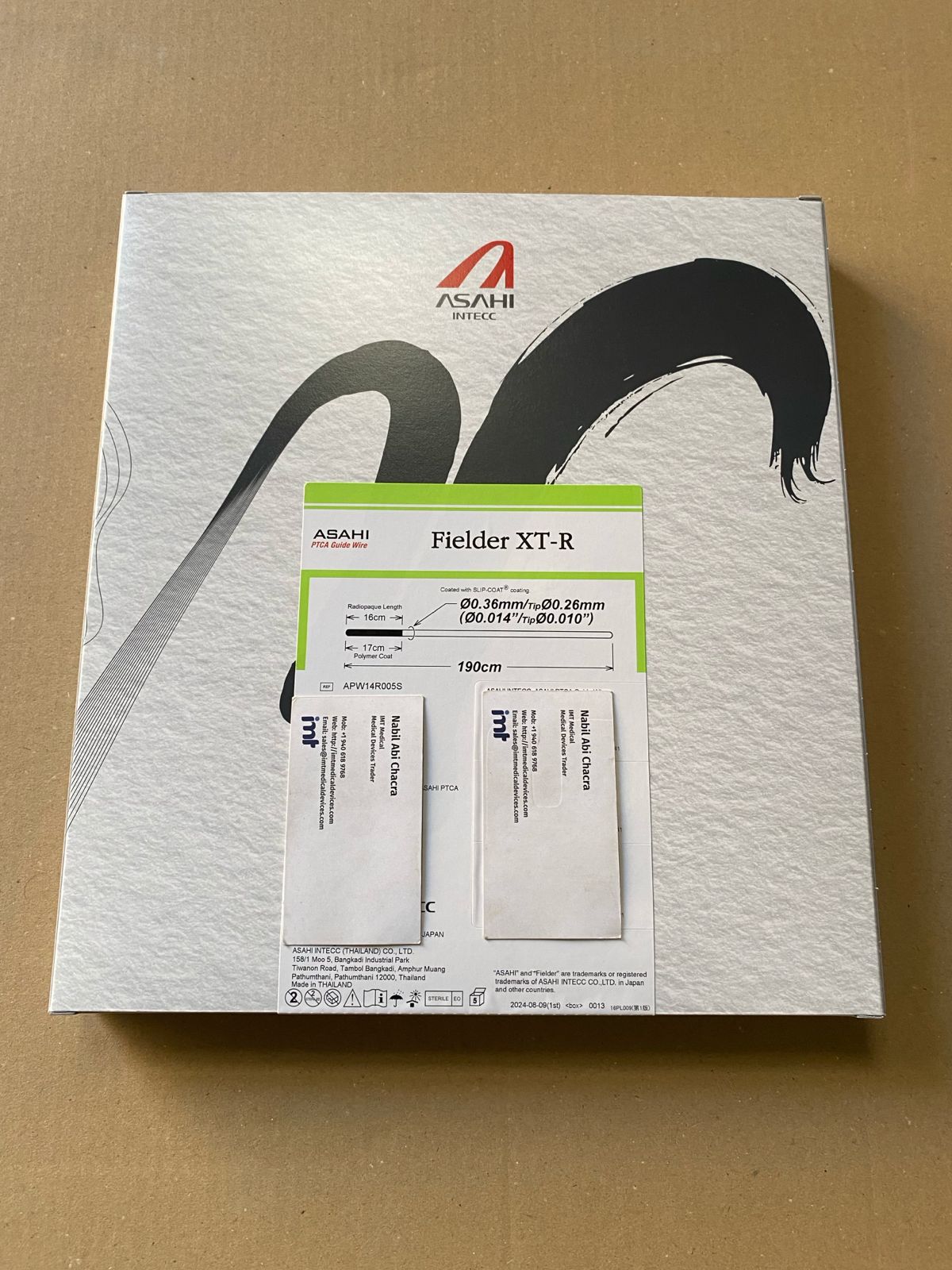
Asahi is a recognized name across coronary and peripheral interventions because buyers and operators know the product families. That matters in procurement. A request for "an Asahi wire" is not actionable. A request with the correct product family, diameter, tip load profile, coating style, and length is. The faster those details are aligned, the faster a quote can move and the lower the risk of receiving stock that does not match physician preference.
Why the Asahi guidewire line gets specified early
In many labs, guidewire choice is not a secondary decision. It is built into the physician's case planning, especially in CTO, complex coronary crossing, and selective peripheral work where support, torque response, penetration, and lubricity have direct procedural consequences. That makes Asahi guidewire sourcing less flexible than commodity purchasing.
For procurement teams, the practical takeaway is simple: substitutions are not always acceptable, even when the basic dimensions look similar. A wire with the same nominal diameter can still perform differently because of tip construction, shaft support, coating behavior, and trackability. If the operator expects a specific Asahi family, matching by category alone may create friction at the table.
This is why experienced buyers usually start with exact identifiers, not broad descriptions. They verify whether the requirement is coronary, peripheral, or neurovascular adjacent support, then move to the known wire family and ordering configuration.
Asahi guidewire categories buyers usually need to sort first
The fastest way to avoid errors is to classify the request by procedure type before discussing availability. In practice, most inquiries fall into three common pathways.
Coronary work
Coronary wire requests are often the most specific. Physicians may ask for a workhorse wire, a specialty wire for tortuous anatomy, or a CTO-focused option with known penetration and support characteristics. In these cases, purchasing should confirm whether the request is for routine lesion access, complex deliverability support, or dedicated crossing strategy. A workhorse line and a CTO line are not interchangeable just because both are coronary wires.
Peripheral interventions
Peripheral requests often involve a wider range of lengths and support expectations. Here, the same brand decision can branch quickly into very different product needs depending on lesion location, access strategy, and device delivery requirements. Length mismatches are common on peripheral orders, especially when a buyer assumes a standard configuration from a previous coronary purchase.
Inventory support for distributors
Distributors competing with local channels usually need a more structured stock view. They are not just looking for one urgent box. They need repeatable access to high-turn part numbers, clean manufacturer identification, and enough detail to quote their own customers confidently. For them, Asahi guidewire sourcing is less about one procedure and more about maintaining a dependable branded offering.
What to verify before requesting an Asahi guidewire quote
A good quote request reduces back-and-forth. In most cases, five data points matter immediately: exact product family, diameter, length, coating or functional profile if relevant, and required quantity. If the buyer has the full manufacturer reference or SKU, the process becomes much faster.
If the exact reference is not available, the next best option is a very specific product description. "Asahi coronary guidewire, 0.014 in, 190 cm" is better than "Asahi wire," but still incomplete if multiple families fit that description. Tip behavior and intended use still matter.
This is where supply-chain discipline helps. Procurement should not rely on memory from a previous case or an incomplete internal note. The carton label, prior invoice, physician preference card, or formal item master entry should be checked first. A single incorrect character in a product code can point to a different length or configuration.
Common purchasing errors with Asahi guidewire orders
Most order friction comes from preventable mistakes, not market scarcity.
The first is requesting by brand only. Asahi has broad recognition, but the line is not a single product. Broad requests slow quoting and increase the chance of mismatch.
The second is missing procedural context. A buyer may provide size and length but omit whether the requirement is a routine coronary case, a CTO strategy, or peripheral support. That omission matters because clinically adjacent products can still be operationally wrong.
The third is ignoring physician standardization. Some labs can accept equivalent configurations across a preferred shortlist. Others are highly locked into one wire family. If the physician will not accept substitution, that should be stated at the start.
The fourth is underestimating lead-time impact on urgent restocking. A lab that only keeps minimal safety stock for specialty wires can become vulnerable after one heavy week of complex cases. Buyers handling Asahi guidewire lines should review usage patterns, not just current depletion.
How hospitals and distributors should approach stock planning
Not every Asahi guidewire should be held in the same quantity. High-use workhorse references justify more regular replenishment. Specialty wires with narrower use cases may be better handled through tighter demand tracking and faster quote response rather than broad overstocking.
For hospitals, the right model usually combines physician preference mapping with reorder discipline. If two or three Asahi references appear repeatedly in complex coronary schedules, they should be treated as protected inventory, not incidental purchases.
For distributors, the calculus is different. Holding branded stock can create a competitive advantage, but only if the exact part numbers match market demand. Slow-moving references tie up capital. Fast-moving ones support repeat orders and better response times. The practical approach is to build around proven request history rather than broad catalog depth.
In both cases, exact identification remains central. Part-number accuracy does more for purchasing efficiency than any broad category label.
When substitution is possible and when it is not
There are cases where buyers ask whether another wire can be supplied if the requested Asahi reference is unavailable. The honest answer is that it depends on the procedure, the physician, and the purpose of the wire.
If the requested item is a general support or routine access wire and the operator is flexible, an alternative may be acceptable after review. If the request is tied to complex crossing behavior, CTO strategy, or a physician's established handling preference, substitution becomes much less practical. On those orders, the correct move is usually to source the exact Asahi guidewire reference rather than improvise.
This is why procurement teams should label requests clearly as either exact-match only or open to reviewed alternatives. That one note can save multiple emails and prevent avoidable shipment errors.
What a quote-ready Asahi guidewire inquiry should look like
The best inquiries are short and precise. They identify the manufacturer, product family, full reference if available, quantity, and destination requirements. If temperature handling, documentation, or shipment timing is relevant, that should be stated upfront as well.
A buyer asking for "Asahi guidewire - need price" will almost always trigger clarification. A buyer asking for a named Asahi reference with quantity and delivery country is much closer to immediate quote processing. That difference matters, especially for hospitals and distributors working across Gulf markets, Latin America, and Asia where import handling and transit planning may affect the purchase timeline.
For branded interventional lines, speed comes from specificity.
A practical sourcing standard for Asahi guidewire procurement
If you are purchasing Asahi guidewire products regularly, the cleanest internal standard is straightforward: store exact product names and references in the item master, link them to physician or procedure preference where relevant, and use prior verified labels for repeat orders. That reduces dependence on informal descriptions and makes urgent replenishment easier.
For buyers that need support across multiple branded intervention categories, https://imtmedicaldevices.com is structured around recognizable manufacturer lines and quote-based procurement rather than general consumer-style browsing. That model fits teams that already know the brand and need a sourcing path that respects exact identifiers.
The most useful habit is also the simplest one: treat every wire request as an exact product request until proven otherwise. It saves time, reduces receiving errors, and keeps the cath lab focused on the case instead of the shipment.