
Managing Medical Device Recalls with a Distributor: A Logistical Guide
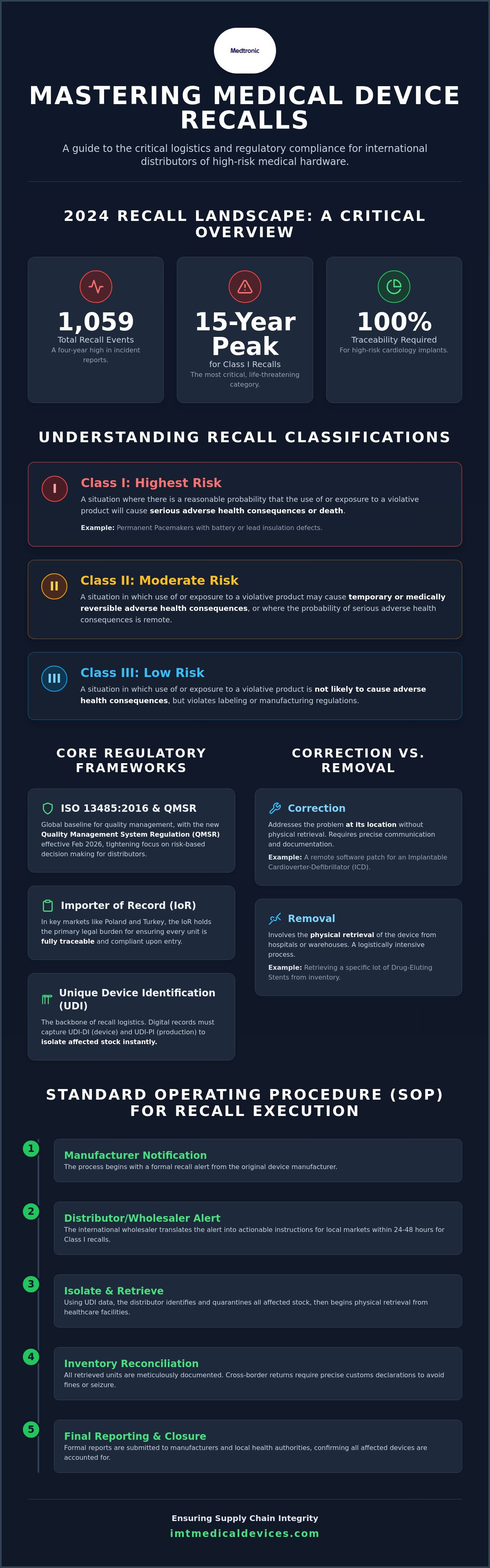
In 2024, medical device recall events reached a four-year high of 1,059 incidents, with Class I recalls hitting a 15-year peak. When a high-risk cardiology implant like an ICD or a drug-eluting stent fails, the margin for error in your retrieval process disappears. Managing medical device recalls with a distributor requires a rigid, risk-based logistical framework that aligns with the February 2026 Quality Management System Regulation (QMSR) and ISO 13485:2016 standards.
You're likely aware that fragmented communication and retrieval delays don't just cause logistical headaches; they lead to regulatory non-compliance and a total loss of clinical trust. This guide provides the technical SOPs necessary to master the complex logistical and regulatory requirements for executing recalls within an international distributor-wholesaler partnership. We'll examine the essential protocols for maintaining supply chain integrity, minimizing legal liability, and ensuring rapid retrieval of critical hardware across global markets. This overview covers everything from manufacturer notification to the final inventory reconciliation process.
Key Takeaways
- Identify regulatory obligations under ISO 13485 and QMSR to ensure compliance across international distribution networks.
- Execute a structured SOP for managing medical device recalls with a distributor, prioritizing lot-level traceability for high-risk cardiology implants.
- Resolve communication gaps in multi-tier export models to prevent logistical delays during the retrieval of stents and diagnostic guidewires.
- Utilize the Importer of Record framework in markets like Poland and Turkey to mitigate legal liability and maintain clinical trust.
- Leverage strategic distribution hubs in Dubai and Georgia for rapid inventory validation and efficient cross-border logistics.
The Critical Stakes of Medical Device Recalls in Global Distribution
In the international medical supply chain, a product recall represents a high-stakes logistical reversal. Unlike consumer retail returns, B2B medical recalls require absolute traceability and documented destruction or return of faulty inventory. Managing medical device recalls with a distributor involves coordinating between the original manufacturer, the international wholesaler, and the local healthcare provider. The wholesaler acts as the primary communication node, translating manufacturer alerts into actionable retrieval instructions for local markets. When communication fails at this level, the risk of non-compliant hardware remaining in clinical use increases exponentially.
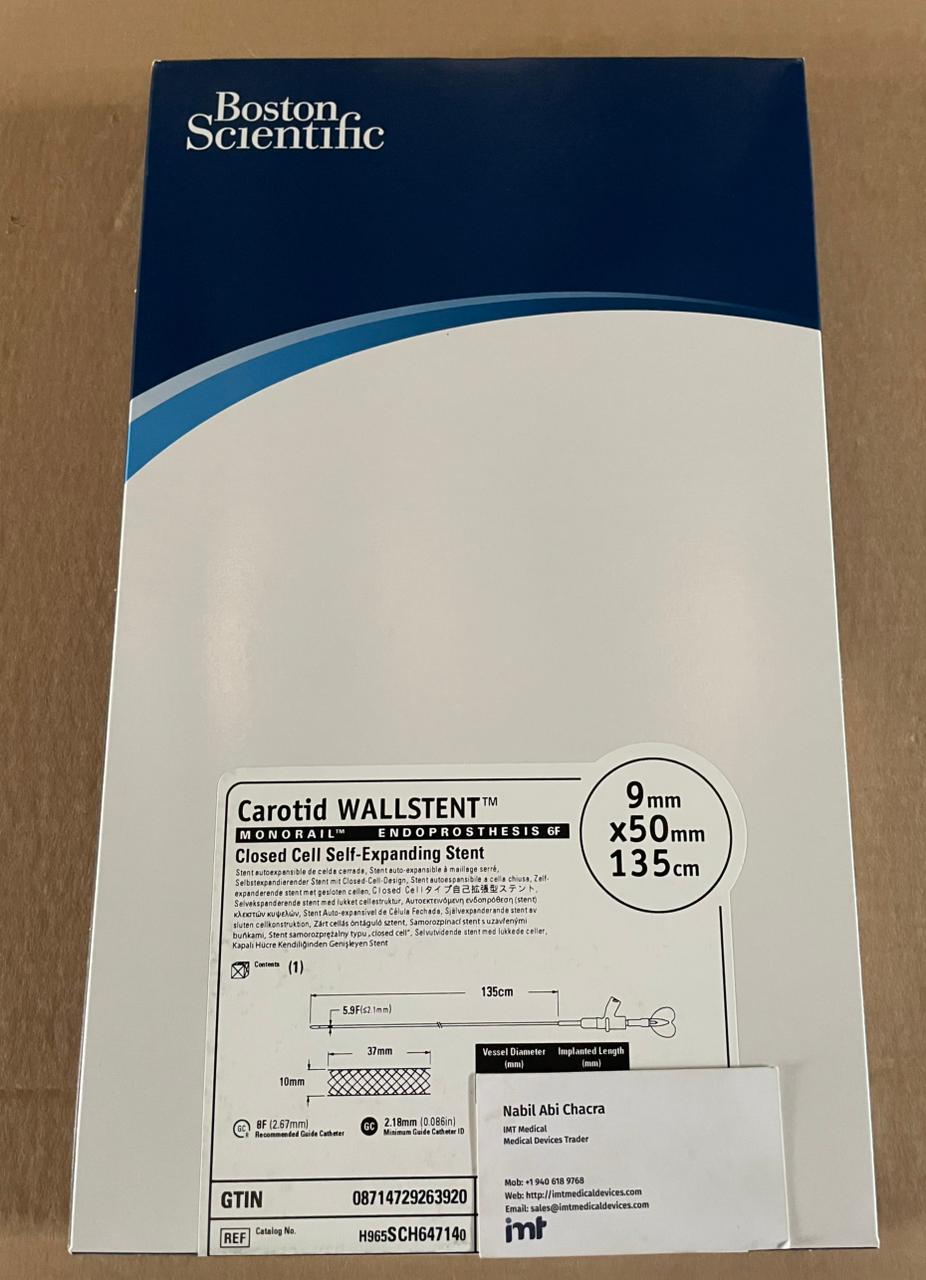
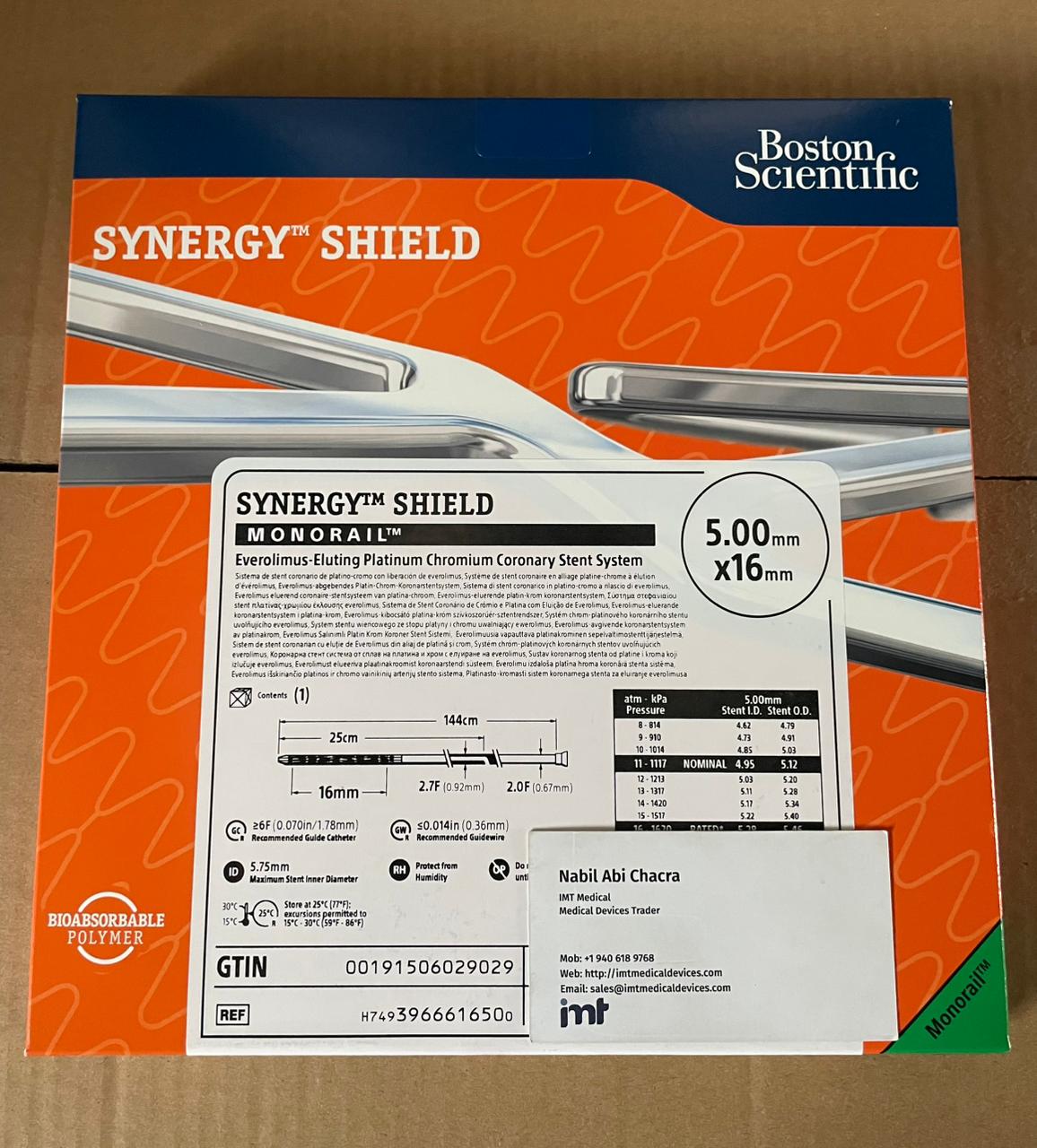
Liability is highest for high-risk implants like Drug-Eluting Stents. These devices are permanent and life-sustaining; any manufacturing defect or software failure can result in immediate patient trauma or mortality. For distributors in markets like Venezuela, a failed recall execution doesn't just trigger legal penalties. It destroys clinical trust. If a hospital procurement team cannot rely on a distributor to pull faulty stents from their shelves within 24 hours, they'll shift their volume to more reliable partners to protect patient safety and institutional reputation.
Recall Classifications and Patient Risk
Recall severity is categorized into three distinct classes. Class I recalls are the most critical, involving situations where there's a reasonable probability that the use of the product will cause serious adverse health consequences or death. Permanent Pacemakers often trigger these high-priority alerts due to battery depletion issues or lead insulation defects. Class II recalls involve temporary or medically reversible health problems, while Class III recalls cover products unlikely to cause adverse health consequences but that violate labeling or manufacturing regulations.
Distributors must distinguish between "Correction" and "Removal" in international trade. A correction addresses the problem at its location, such as a software patch for an ICD. A removal involves the physical retrieval of the device from the hospital or warehouse. Each requires different export documentation and logistical handling to remain compliant with global health authorities.
The Financial Impact of Logistical Failure
Unrecovered devices in international markets represent a direct financial loss and a massive liability. If a distributor fails to retrieve a recalled unit, they often face the cost of the device plus significant regulatory fines. Export documentation is vital here; returning faulty goods across borders requires precise customs declarations to avoid double taxation or seizure by authorities. The wholesaler holds the primary financial responsibility for the physical coordination and documented verification of all recalled inventory within their territory.
Regulatory Frameworks Governing Distributor Recall Responsibilities
ISO 13485:2016 remains the global baseline for quality management systems, but the February 2026 implementation of the Quality Management System Regulation (QMSR) has tightened the focus on risk-based decision making. In markets like Turkey and Poland, the Importer of Record (IoR) carries the primary legal burden for ensuring every unit entering the territory is fully traceable. The Regulatory Frameworks Governing Distributor Recall Responsibilities established by the FDA and EU MDR mandate that distributors maintain records for the expected life of the device, often exceeding ten years for implants. Managing medical device recalls with a distributor in the Middle East or Caucasus requires specific reporting to local ministries of health. These authorities often demand formal notification within 24 to 48 hours of a Class I alert.
Traceability and the Unique Device Identification (UDI)
Unique Device Identification (UDI) systems are the backbone of modern recall logistics. For high-turnover intervention tools like PTCA Balloon Catheters, lot-level traceability is non-negotiable. Digital record-keeping in a B2B warehouse must capture the UDI-DI (device identifier) and UDI-PI (production identifier), including specific lot numbers and expiration dates. This granularity allows a wholesaler to isolate affected stock instantly. It prevents the unnecessary quarantine of safe inventory, which is critical for maintaining the availability of essential surgical hardware. Automated scanning at the point of entry and exit ensures that the distribution chain remains unbroken and audit-ready.
Adverse Event Reporting and Timelines
Distributors are legally obligated to disseminate Field Safety Notices (FSN) without delay. When major manufacturers like Medtronic or Boston Scientific issue a correction, the distributor must notify all downstream hospitals and clinics. In Venezuela, reporting timelines are particularly sensitive due to local import regulations and health authority oversight. Failure to sync data between the manufacturer’s global alerts and the distributor's local ledger can lead to catastrophic legal exposure. Reliable partners ensure that FSNs are translated and delivered to the relevant clinical leads within the mandated window. This synchronization is vital for protecting patient safety during the retrieval of high-risk hardware.
For procurement teams in emerging markets, sourcing through a specialized medical equipment exporter provides a layer of regulatory security that direct-to-factory models often lack in complex jurisdictions.
Direct vs. Wholesaler-Distributor Recall Workflows
Direct-to-hospital models offer a linear chain of custody. In these setups, the manufacturer maintains a direct line to the clinical end-user. International export models are different. They're multi-tiered, often involving a manufacturer, a global wholesaler, and a local distributor. This structure creates a communication gap. Manufacturers often lose visibility once products leave their regional hubs. Managing medical device recalls with a distributor requires closing this gap through synchronized data sharing. Without a centralized information node, field safety alerts might stall at the border, leaving non-compliant hardware in the field.
Retrieving high-risk items like Peripheral Stents from remote clinics presents significant hurdles. In regions like Venezuela or the Caucasus, rural medical centers often lack the digital infrastructure for rapid inventory reconciliation. Logistical delays in these areas aren't just administrative; they're clinical risks. Wholesalers like IMT Medical Devices mitigate these risks by maintaining exhaustive lot-level records. We ensure that every technical identifier is tracked from the point of export to the final delivery destination. This level of oversight is essential for meeting the standards outlined in the FDA Guidance on Medical Device Recalls, which places equal weight on the speed and accuracy of the retrieval process.
The Wholesaler as the Information Hub
IMT aggregates manufacturer data for local distributors, acting as a single point of truth. We ensure consistency in Field Safety Corrective Actions (FSCA) across all territories. When a manufacturer like Medtronic or Boston Scientific issues an update, we disseminate the technical specifications and lot codes immediately. This prevents the "fragmented alert" problem where different clinics receive conflicting instructions. For a deeper look at these logistical structures, consult our IMT Medical Device Distribution Guide. We prioritize data integrity to ensure that clinical trust remains intact during high-pressure recall events.
Managing Cross-Border Return Logistics
Handling customs clearance for recalled medical hardware is complex. Faulty goods must be clearly marked to avoid re-entry into the commercial supply chain. Return to Manufacturer (RTM) processes require specialized export documentation to prove the goods are non-conforming. This documentation is critical for avoiding double taxation and ensuring the manufacturer accepts the return. Furthermore, sensitive implants often have strict cold chain requirements. Even during return transit, drug-coated hardware must remain within specified temperature ranges to prevent further degradation. We manage these environmental variables through established strategic hubs in Dubai and Georgia, ensuring that the return loop is as secure as the initial delivery.
Standard Operating Procedure (SOP) for Distributor Recall Execution
Managing medical device recalls with a distributor requires a rigid logistical protocol to ensure clinical safety and regulatory compliance. Efficiency here prevents regulatory drift and maintains the integrity of the cardiology supply chain. A successful execution follows a five-step technical framework.
- Step 1: Notification Validation. Confirm the recall class and affected regions immediately upon receiving the manufacturer's Field Safety Notice (FSN). Validate that the technical codes match your current inventory.
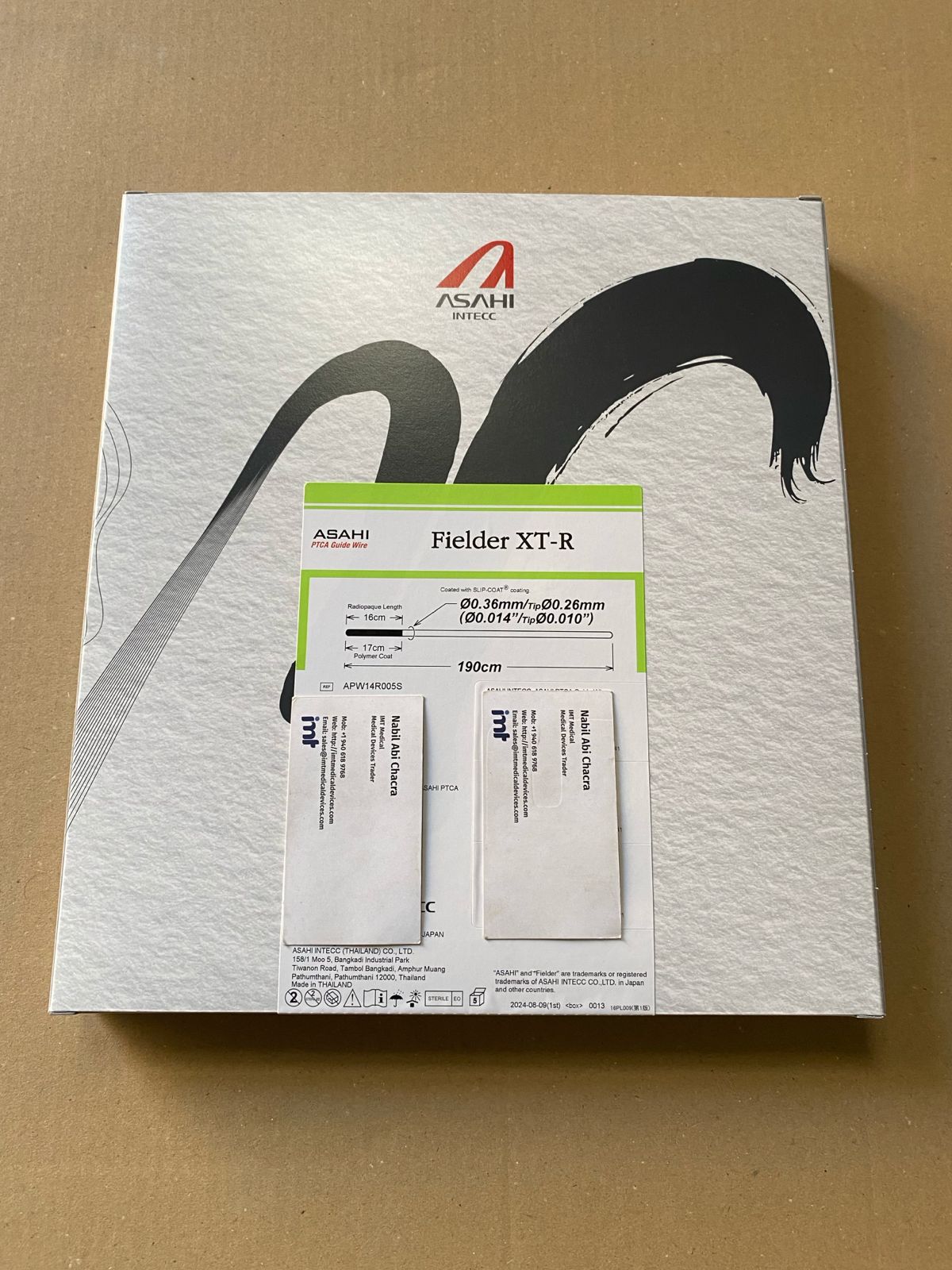
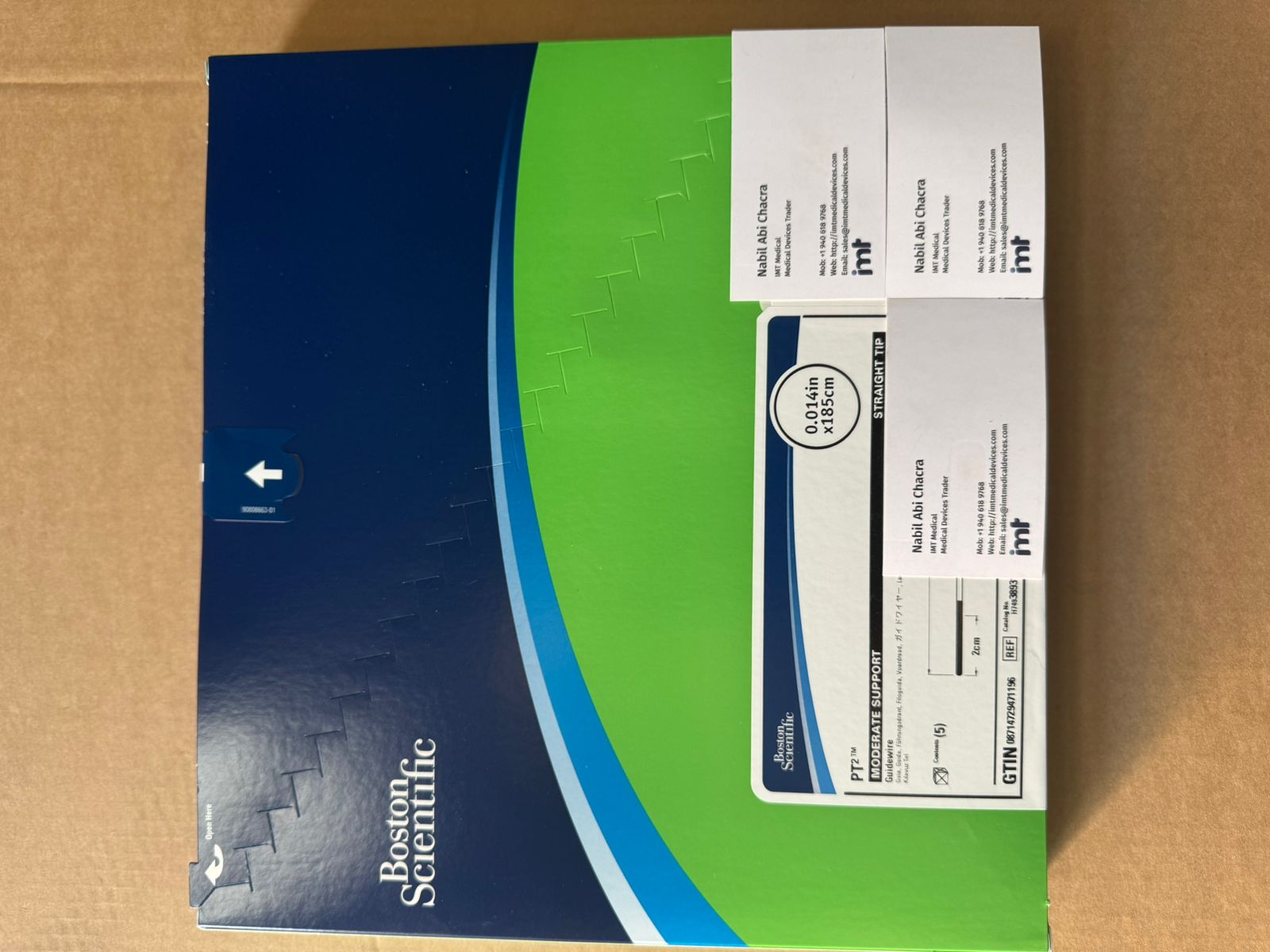
- Step 2: Inventory Identification. Query the warehouse management system for all matching technical identifiers. Managing medical device recalls with a distributor is only possible with granular data, so isolate every Guidewire lot number to ensure only the affected production runs are pulled from circulation.
- Step 3: Provider Outreach. Alert procurement departments and clinical leads at all hospitals that received the affected stock. Direct communication is essential for devices that haven't been implanted yet.
- Step 4: Physical Quarantine. Retrieve non-implanted devices and move them to a designated, locked quarantine zone. This prevents accidental re-entry into the supply chain while waiting for return shipping or destruction.
- Step 5: Final Reconciliation. Document the total quantity shipped versus the total quantity recovered. Provide a final report to the manufacturer to close the recall event and trigger inventory replacement.
Effective Communication with Healthcare Providers
Surgeons require technical clarity, not panic. Notification letters must lead with the manufacturer name, model number, and the specific failure mode. When coordinating the retrieval of Diagnostic Guide Wires, provide clear instructions for return packaging to maintain traceability. A standard Field Safety Notice for cardiology supplies should state: "Urgent: Immediate quarantine required for [Manufacturer Name] [Product Category], Lot #[Number], due to identified technical non-conformance." This directness allows clinical teams to act quickly without ambiguity. Don't leave room for interpretation when patient safety is at stake; it's better to be overly specific than vague.
Quarantine and Inventory Reconciliation
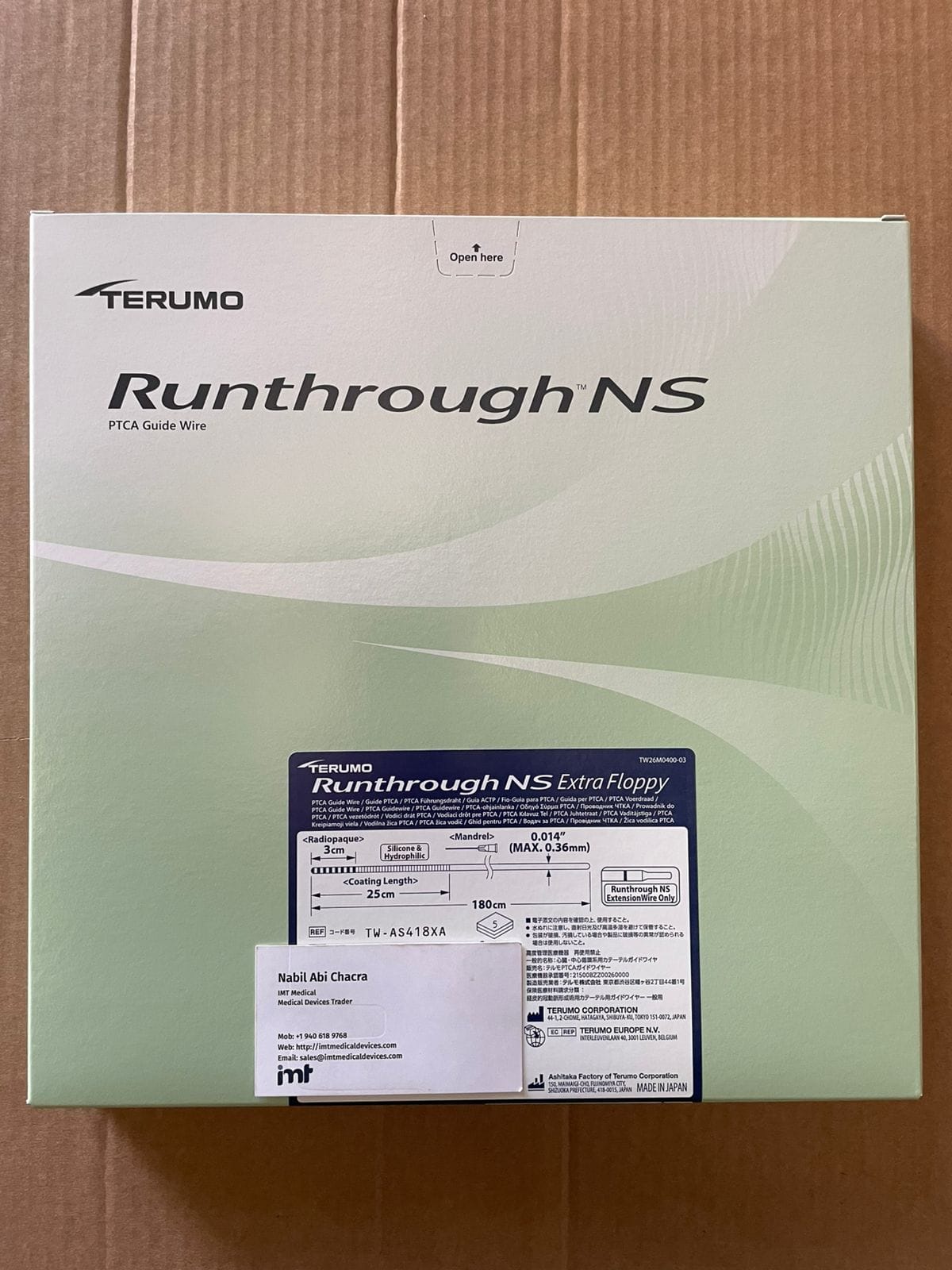
Establish secure quarantine zones within the distributor warehouse to isolate faulty hardware. These areas must be clearly labeled and physically separated from saleable inventory to avoid fulfillment errors. Reconciling "shipped" versus "returned" quantities is the only way to ensure 100% accounting of the recall scope. Managing the destruction or return of Abbott or Terumo products requires strict adherence to manufacturer guidelines. Some brands require the physical return of all units to their regional hubs, while others authorize local destruction with a witnessed certificate. Precise documentation here serves as the final trust signal in the distributor-wholesaler relationship.
For professional logistical support in emerging markets, partner with IMT Medical Devices to secure your cardiology supply chain.
Ensuring Supply Chain Integrity with IMT Medical Devices
IMT Medical Devices functions as the vital logistical link between major manufacturers and international markets. Our operations prioritize absolute traceability to ensure that every device, from a single guidewire to a permanent pacemaker, is accounted for throughout the supply chain. Strategic hubs in Dubai, Georgia, Turkey, and Poland provide the geographic reach necessary for rapid inventory recovery. This infrastructure is essential when managing medical device recalls with a distributor in regions where logistical delays can lead to regulatory non-compliance or clinical risk.
We maintain a rigorous commitment to providing authentic technology from prestigious global producers. Our inventory includes high-end hardware from Medtronic, Boston Scientific, and Terumo. For distributors in Venezuela, IMT provides the expert documentation and export logistics required to navigate complex customs environments. This support ensures that faulty goods are returned or destroyed according to manufacturer specifications without triggering administrative penalties or double taxation.
Proactive Logistics and Compliance Support
Our specialized protocols cover sensitive Cardiac Rhythm Management devices. These implants require high-precision tracking and environmental monitoring during every stage of transit. IMT’s experience across 50+ countries allows us to manage local regulatory nuances effectively, ensuring that all field safety corrective actions align with regional ministry of health requirements. We leverage our strategic offices to validate field safety notices and coordinate with local health authorities in real-time. This proactive approach reduces the response time for Class I alerts, protecting both the patient and the distributor’s clinical reputation.
Partnering for Patient Safety
Transparency in the supply chain is the ultimate trust signal for procurement professionals. We assist our partners in minimizing disruption to hospital operations by maintaining a robust buffer of authentic inventory. Managing medical device recalls with a distributor requires a partner who can provide immediate replacements for recalled units to prevent surgical delays. Our goal is to ensure that clinical teams have continuous access to the tools they need for life-saving interventions, even during active recall events; this level of supply chain integrity is equally vital for specialized centers like The Orthopaedic & Sports Medicine Institute that rely on precision hardware for orthopedic and sports injury care.
Distributors seeking a reliable global supply partner can contact IMT Medical Devices to discuss procurement and logistical integration. We provide the scale, reach, and technical expertise required to maintain supply chain integrity in the most demanding international markets.
Securing the Future of International Cardiology Logistics
Effective recall management serves as the ultimate benchmark for supply chain maturity. It requires more than just technical knowledge; it demands a robust, risk-based infrastructure. Success in managing medical device recalls with a distributor hinges on two critical factors: absolute lot-level traceability and rapid, synchronized communication. By adopting the SOPs and regulatory frameworks discussed, you can mitigate legal liability and protect clinical trust during high-pressure events. Utilizing a wholesaler with established hubs in Georgia and Dubai ensures your retrieval process isn't slowed by regional logistical barriers.
Don't leave your patient safety protocols to chance in complex international markets. Reliable execution depends on having a partner who understands the nuances of global export documentation and manufacturer-specific return requirements. Partner with IMT Medical Devices for Reliable Global Distribution to leverage our specialized expertise in high-risk cardiology implants. With proven export capabilities to 50+ countries, we provide the industrial competence and logistical reliability your clinical operations demand. Secure your supply chain and maintain the highest standards of patient care today.
Frequently Asked Questions
What is the distributor’s primary role during a medical device recall?
The distributor acts as the central node for communication and physical logistics between the manufacturer and the clinical end-user. Key responsibilities include identifying affected lot numbers within the warehouse management system and notifying all healthcare facilities that received the stock. The distributor must coordinate the physical retrieval, quarantine, and documented return of non-implanted hardware to maintain supply chain integrity.
How quickly must a distributor notify customers of a Class I recall?
Notification must occur immediately, typically within 24 to 48 hours for Class I events involving life-sustaining hardware. These recalls carry a high probability of causing serious health consequences or death. Wholesalers use automated systems to disseminate Field Safety Notices (FSNs) to hospital procurement teams. Rapid transmission of lot codes and failure modes is essential for preventing the use of non-compliant devices.
Can a distributor be held liable for a manufacturer’s device failure?
Distributors carry significant legal and regulatory liability for the execution of the retrieval process. While the manufacturer is responsible for the device’s design or production failure, the distributor is accountable for any failure to retrieve the product effectively. Non-compliance with ISO 13485 or QMSR standards can result in the loss of import licenses and heavy financial penalties from local health authorities.
What documentation is required for returning recalled medical devices across borders?
Required documentation includes a Return to Manufacturer (RTM) authorization and a formal Certificate of Non-Conformance. For cross-border transit, customs declarations must specify that items are "Return for Destruction" or "Return for Credit" to avoid double taxation. Precise technical identifiers and lot numbers must match the original export documents. Specialized shipping manifests are also necessary for hardware with battery components or drug coatings.
How does UDI technology improve the recall process for stents and catheters?
UDI technology allows for the instant isolation of specific production lots using standardized digital codes. This granularity is vital for stents and catheters where only certain batches might be affected by a manufacturing defect. UDI eliminates manual inventory checks and prevents the unnecessary quarantine of safe hardware. It ensures 100% accounting of the recalled scope by tracking each unit from export to clinical delivery.
What happens if a recalled medical device has already been implanted?
The distributor must immediately provide the manufacturer’s clinical guidance to the attending surgeon or hospital lead. For implanted devices like pacemakers or ICDs, the recall often involves increased patient monitoring or software updates rather than physical retrieval. The distributor’s role is to facilitate the delivery of these corrective instructions and ensure the healthcare provider has documented the manufacturer’s recommended safety protocols.
Does the distributor or the manufacturer pay for recall logistics costs?
The manufacturer generally pays for the direct costs of shipping and replacement inventory. However, managing medical device recalls with a distributor often involves local logistical and administrative labor costs that the wholesaler absorbs. Pre-existing commercial agreements should define the financial responsibility for local retrieval operations. Accurate record-keeping is required to claim reimbursement for the physical return of faulty hardware to the manufacturer’s regional hub.
How should a distributor handle a recall in a market like Venezuela with complex imports?
Managing medical device recalls with a distributor in Venezuela requires utilizing strategic hubs in Dubai or Georgia for inventory consolidation. These locations provide a stable environment for validating technical codes and preparing export documentation. Distributors must ensure all local ministry of health reporting timelines are met despite regional infrastructure challenges. Success depends on maintaining a transparent, documented loop between the international wholesaler and the local facility.