Bioabsorbable Polymer DES Procurement: A Technical and Logistical Guide for 2026
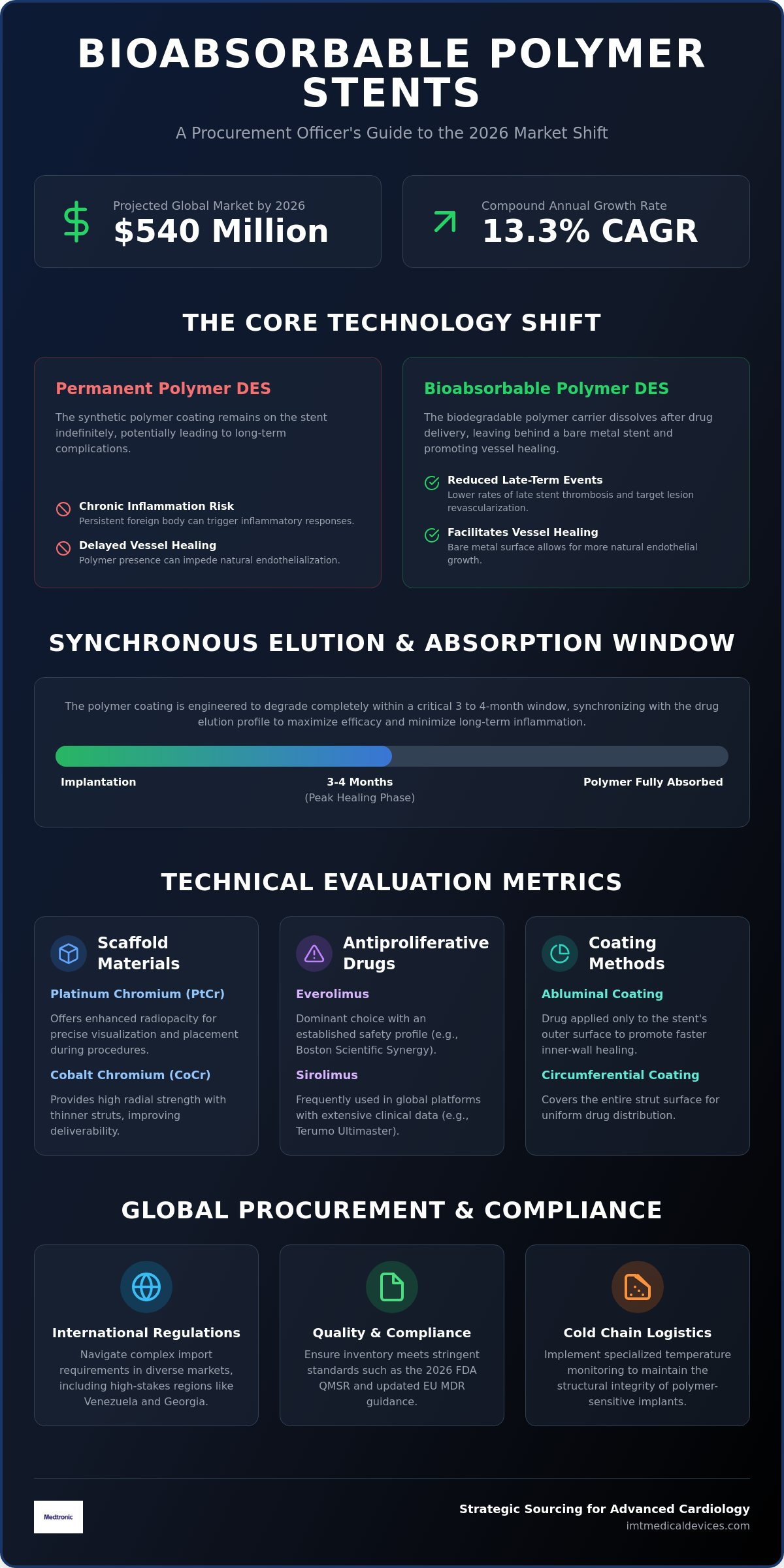
The global market for bioabsorbable stents is projected to reach $540 million in 2026. This 13.3% compound annual growth rate signals a definitive clinical shift toward biodegradable polymer platforms. For procurement officers, this transition isn't just a clinical update; it's a logistical challenge involving international supply chains and strict regulatory hurdles. Efficient bioabsorbable polymer DES procurement now demands a dual focus: technical hardware specifications and the ability to navigate the 2026 FDA Quality Management System Regulation (QMSR) alongside updated EU MDR guidance.
Maintaining stable inventory for high-end cardiology implants while reducing late stent thrombosis rates is a primary operational goal. This guide provides a functional B2B framework for evaluating, sourcing, and importing bioabsorbable polymer drug-eluting stents. Content includes technical specifications for the Boston Scientific Synergy Megatron and Medtronic Resolute Integrity platforms, bulk procurement protocols for global distribution, and specific compliance data for markets including Georgia and Venezuela.
Key Takeaways
- Understand the critical 3-to-4 month polymer degradation window and how synchronous elution profiles impact long-term patient event rates.
- Identify key B2B evaluation metrics for bioabsorbable polymer DES procurement, focusing on shelf life, deliverability, and manufacturer clinical backing.
- Navigate complex international import regulations for high-stakes cardiology hardware in markets such as Venezuela and Georgia.
- Implement specialized cold chain logistics and temperature monitoring protocols to maintain the structural integrity of polymer-sensitive implants.
- Optimize supply chain efficiency by consolidating wholesale sourcing for Medtronic, Boston Scientific, and Terumo platforms through a single reliable exporter.
Bioabsorbable Polymer DES: The New Standard in Cardiology Procurement
Bioabsorbable polymer drug-eluting stents (BP-DES) represent the current technical peak of percutaneous coronary intervention. Unlike traditional metallic stents with permanent coatings, BP-DES platforms feature a polymer carrier that degrades after drug delivery is complete. This evolution addresses the primary limitation of earlier generations: the presence of a permanent synthetic layer that can trigger chronic inflammatory responses. Effective bioabsorbable polymer DES procurement in 2026 centers on long-term clinical outcomes rather than initial unit cost. Procurement officers now prioritize devices that facilitate vessel healing and reduce the risk of late stent thrombosis (LST) and neoatherosclerosis.
The global market for these devices is valued between $450 million and $540 million in 2026, driven by a 13.3% CAGR. This growth reflects a systemic shift in hospital inventory management. High-volume catheterization labs are moving away from permanent polymer inventory in favor of platforms that allow for shorter Dual Antiplatelet Therapy (DAPT) durations. Technical specifications now emphasize the resorption timeline of the polymer coating, typically aiming for a 3-to-4 month window to match the peak of the inflammatory phase.
BP-DES vs. Permanent Polymer DES
Structural differences define the procurement choice. Permanent polymer stents retain their synthetic coating indefinitely, which can lead to delayed endothelialization. In contrast, BP-DES platforms utilize a metallic scaffold, such as the platinum chromium found in the Boston Scientific Synergy Megatron, paired with a bioabsorbable coating. While a Bioresorbable Vascular Scaffold (BVS) disappears entirely, BP-DES maintains structural integrity while leaving a bare metal surface after the polymer dissolves. This reduction in chronic inflammation is a critical factor for managing higher-tier technology budgets, as it correlates with lower target lesion revascularization rates.
Market Drivers for Bioabsorbable Technology in 2026
Clinical guidelines in 2026 increasingly favor BP-DES for high-bleeding-risk (HBR) patients who require abbreviated DAPT protocols. This clinical demand is particularly high in emerging markets such as Venezuela and Georgia, where healthcare providers seek premium outcomes to minimize long-term patient event rates. Technological maturation from major manufacturers has stabilized the supply chain. Wholesalers now offer consolidated access to established platforms like the Medtronic Resolute Integrity Stent and the Terumo Ultimaster Nagomi. These platforms provide the clinical backing necessary for bulk procurement, ensuring that inventory meets the stringent 2026 FDA Quality Management System Regulation (QMSR) standards for international export.
Technical Specifications: Synchronous Elution and Absorption
Technical evaluation for bioabsorbable polymer DES procurement requires a detailed analysis of drug elution kinetics and polymer resorption synchronization. Most modern platforms utilize either Everolimus or Sirolimus as the primary antiproliferative agent. Everolimus remains a dominant choice for its established safety profile in platforms like the Boston Scientific Synergy, while Sirolimus is frequently utilized in global designs such as the Terumo Ultimaster. The choice between these drugs often depends on the specific clinical preferences of the catheterization lab and the historical data supporting each agent's performance in complex lesion subsets.
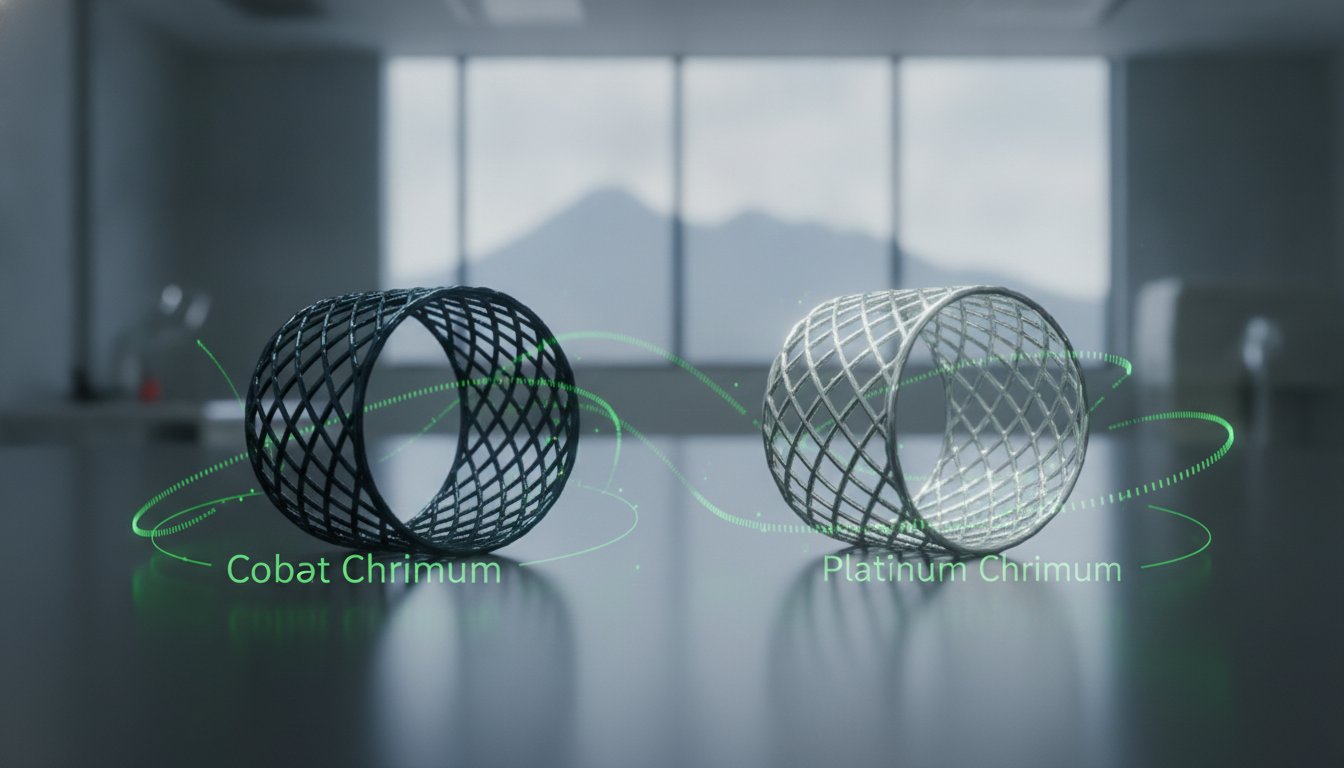
Coating application methods significantly impact vascular healing. Abluminal coating, where the polymer and drug are applied only to the outer surface of the stent, is designed to facilitate faster endothelialization by reducing the total polymer load in contact with the blood flow. This differs from circumferential coating, which covers the entire strut surface. Scaffold material selection also influences deliverability. Cobalt Chromium (CoCr) provides high radial strength with thin struts, whereas Platinum Chromium (PtCr) offers enhanced radiopacity, allowing for more precise visualization during high-stakes procedures.
The Chemistry of Bioabsorption
The bioabsorption process is primarily driven by biodegradable polyesters, specifically Poly(L-lactide) (PLLA) and Poly(lactic-co-glycolic acid) (PLGA). These materials break down into water and carbon dioxide through the Krebs cycle, effectively minimizing the long-term "foreign body" presence within the coronary artery. According to the 2026 technology standard, synchronous drug elution is defined as the controlled release of the therapeutic agent in parallel with the 90 to 120 day resorption timeline of the polymer carrier. This specific window is validated by latest clinical trials, which confirm that removing the polymer after the initial healing phase reduces the risk of chronic inflammatory responses.
Stent Architecture and Deliverability
Modern stent architecture prioritizes ultra-thin struts to decrease the volume of displaced tissue and lower the risk of vascular injury. Thinner struts correlate with improved deliverability, particularly when navigating tortuous anatomy or calcified lesions. A low crossing profile is essential for successful deployment, ensuring that the stent can pass through tight stenoses without compromising the integrity of the polymer coating. For successful outcomes, these stents must maintain full compatibility with standard PTCA balloon catheters used in pre-dilation and post-dilation protocols. Professional distributors like IMT Medical Devices provide detailed technical data sheets to ensure hardware compatibility across different manufacturer platforms.
Procurement Evaluation: Comparing Global DES Platforms
Successful bioabsorbable polymer DES procurement in 2026 relies on three primary variables: clinical backing, shelf life, and deliverability. Procurement officers must look beyond simple unit pricing to assess the "Total Cost of Care." This metric accounts for the reduction in long-term patient event rates and the potential for abbreviated DAPT protocols. BP-DES platforms typically command a higher initial acquisition cost; however, the clinical superiority in reducing late stent thrombosis justifies the investment for high-volume centers. Efficient inventory management requires a strategic balance between these premium BP-DES units and permanent polymer alternatives for routine cases.
Manufacturer reputation serves as a primary trust signal in the global medical supply chain. Brands like Medtronic, Abbott, and Terumo have established exhaustive clinical data sets that simplify the B2B evaluation process. Reliable distributors provide access to these diverse portfolios in a single wholesale order, allowing hospital groups to maintain consistent hardware standards across multiple facilities. This consolidated approach minimizes logistical friction and ensures that cath labs aren't vulnerable to manufacturer-specific supply chain disruptions.
Top-Tier Bioabsorbable Platforms for 2026
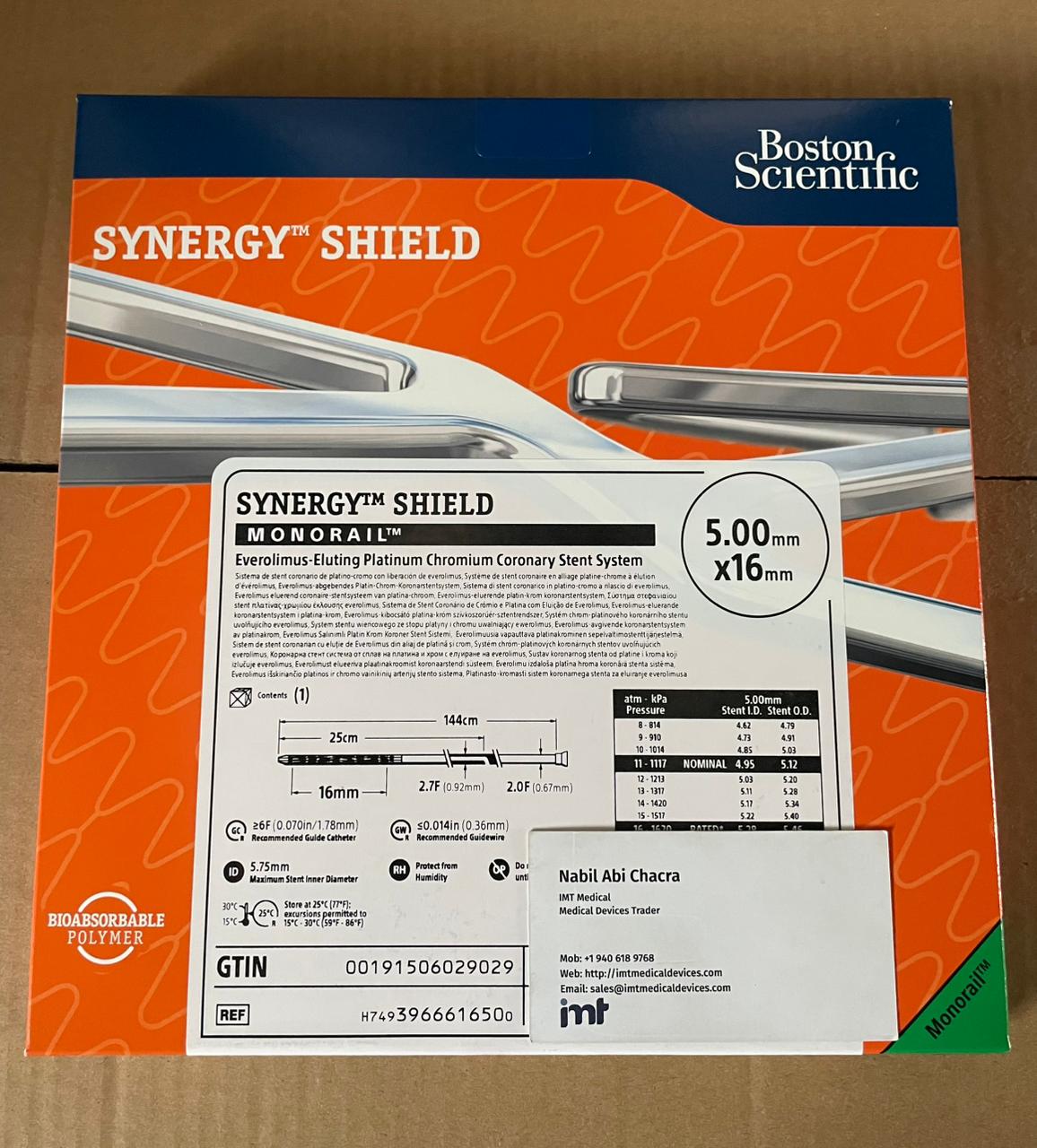
The Boston Scientific Synergy remains a staple in modern procurement due to its abluminal coating. This design ensures that the polymer is only present where needed, promoting faster vessel healing. The Terumo Ultimaster Nagomi offers an optimized platform for radial access, featuring a highly flexible scaffold that maintains radial strength. For complex cases involving small vessels, the Medtronic Resolute Onyx provides the necessary versatility. Its thin-strut design and radiopacity make it a preferred choice for intricate bifurcations and calcified lesions.
Selection Criteria for Wholesale Buyers
Wholesale buyers must prioritize regulatory compliance to ensure smooth international transit. In 2026, verifying that products meet the transitioned FDA Quality Management System Regulation (QMSR) or the latest EU MDR guidance is mandatory for markets like Georgia or Venezuela. Documentation must clearly state the certification status for each SKU. Furthermore, a comprehensive sizing matrix is essential. Catheterization labs require a full range of diameters and lengths to treat diverse patient populations. Buyers should verify the availability of an exhaustive Coronary Stents Category before finalizing bulk contracts. This ensures that the facility doesn't face stockouts during critical procedures.
Logistics and Compliance: Ensuring Integrity in Global Export
Logistics for bioabsorbable polymer drug-eluting stents (BP-DES) require higher precision than standard metallic implants. The polymer coating is susceptible to thermal degradation. Maintaining a strict temperature range during transit is non-negotiable for bioabsorbable polymer DES procurement. Professional exporters utilize active and passive temperature-controlled packaging equipped with digital data loggers. This ensures that the structural integrity of the PLGA or PLLA coating remains intact from the manufacturer warehouse to the hospital's sterile storage.
International shipping for high-end cardiology hardware relies on sterile packaging that meets ISO 11607 standards. High-value implants require expedited logistics to prevent stockouts in active catheterization labs. Strategic distribution hubs in Dubai, Turkey, and Poland serve as critical waypoints for global reach. These locations facilitate rapid transshipment to regions with complex trade routes. Insurance coverage must be comprehensive, covering the full wholesale value of the shipment against damage or loss during international transit. Specialized handling protocols prevent mechanical vibration or pressure from compromising the stent's delivery system.
International Shipping Standards
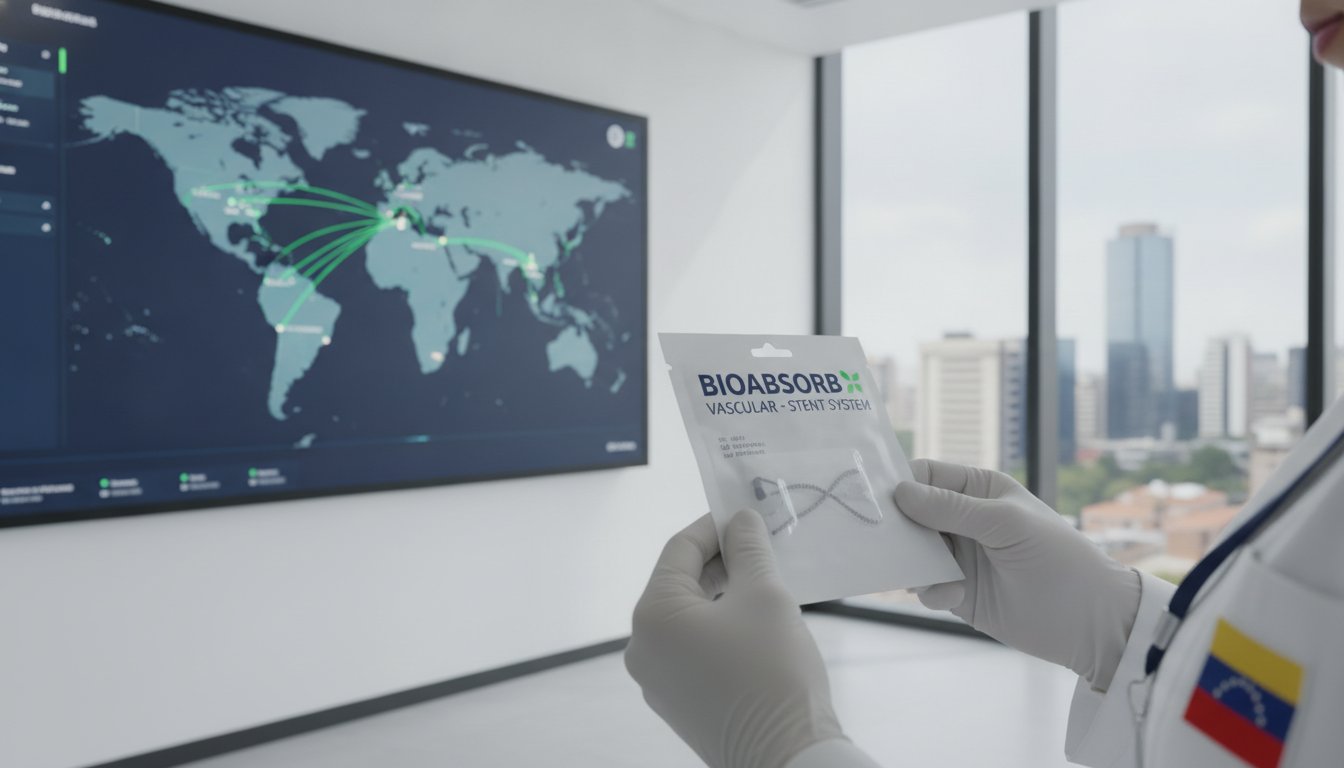
Shipping sensitive medical technology requires a tiered logistics approach. Packaging must withstand the rigors of international air freight while maintaining a sterile barrier. For urgent hospital inventory replenishment, priority courier services with end-to-end tracking are essential. Hubs in Dubai and Turkey provide the logistical infrastructure needed to manage customs clearance and re-exportation efficiently. This specialized network reduces the transit time for critical hardware, ensuring that life-saving devices reach their destination within the required shelf-life parameters.
Regulatory Compliance and Export Documentation
Navigating customs requires precise documentation and an understanding of the 2026 regulatory landscape. Essential files include the Certificate of Origin, Certificate of Analysis (CoA), and Certificate of Free Sale (CFS). As of February 2, 2026, the FDA has transitioned to the Quality Management System Regulation (QMSR), which impacts the compliance documentation required for international suppliers. For markets like Venezuela, managing registrations with the Ministerio del Poder Popular para la Salud (MPPS) is a prerequisite for entry. In Georgia, staying updated on the April 2026 EU MDR guidance revisions ensures that high-tech implants pass through customs without delay.
Traceability is maintained through unique device identification (UDI) codes. This allows for real-time monitoring of inventory batches and ensures manufacturer-to-user accountability. For more details on optimizing these processes, consult a comprehensive Medical Device Distribution Guide. Effective procurement is impossible without a partner capable of handling these logistical variables. You can contact IMT Medical Devices to secure reliable export services for your cardiology department.
Strategic Sourcing: Bulk DES Procurement via IMT Medical Devices
IMT Medical Devices functions as a vital bridge in the global cardiology supply chain. Optimizing bioabsorbable polymer DES procurement requires a partner capable of consolidating high-end inventory from multiple manufacturers. By centralizing access to Medtronic, Terumo, and Boston Scientific platforms, IMT eliminates the administrative burden of managing disparate supplier contracts. This consolidated approach allows hospital groups and international distributors to maintain a consistent supply of premium drug-eluting stents while benefiting from industrial-scale logistical reliability. Scale and reach are the primary value drivers in this wholesale model.
Wholesale pricing tiers are structured to support both large-scale hospital networks and regional distributors. Volume-based contract rates provide predictable cost structures for long-term inventory planning. Every unit in the IMT inventory is a verified authentic product sourced from prestigious global manufacturers. This guarantee of premium technology is a critical trust signal for procurement professionals operating in markets with stringent quality controls. Authenticity documentation accompanies every shipment; this ensures compliance with local regulatory bodies and hospital safety protocols.
Streamlining the B2B Ordering Process
The B2B ordering process is designed for rapid information retrieval and execution. Quote generation is efficient, providing clear breakdowns of technical specifications and availability status. Technical support teams are available to assist procurement officers and clinical staff with hardware compatibility queries. For detailed technical identifiers, buyers can review the Terumo Ultimaster Nagomi product page, which lists specific resorption timelines and deliverability metrics. This transparency minimizes ambiguity during the selection phase.
Global Reach and Local Support
IMT serves 50+ countries with localized expertise in navigating customs and documentation. Strategic offices in Georgia, Dubai, Turkey, and Poland provide the physical infrastructure necessary for high-stakes medical export. This presence ensures that high-value cardiology implants reach their destination without regulatory delays. IMT Medical Devices maintains a 2026 commitment to expanding medical technology accessibility across South America through specialized import frameworks for high-stakes cardiology hardware. These customized supply chain solutions are essential for the Venezuelan healthcare market, where navigating local health authority registrations is a prerequisite for successful bioabsorbable polymer DES procurement. Reliability in these complex markets is a badge of global competence.
Optimizing Global Cardiology Supply Chains for 2026
Effective bioabsorbable polymer DES procurement requires a strategic balance between clinical superiority and logistical precision. The 2026 market demands platforms that offer synchronous drug elution and verified resorption timelines to minimize long-term patient event rates. Procurement officers must prioritize suppliers capable of navigating the complex regulatory shifts of the FDA QMSR and EU MDR while maintaining the integrity of polymer-sensitive implants through specialized cold-chain logistics. Consolidated sourcing remains the most efficient method for securing authentic hardware from Medtronic, Boston Scientific, and Terumo.
IMT Medical Devices serves as a reliable international bridge; we provide access to a comprehensive inventory of high-end cardiology hardware with distribution capabilities to over 50 countries. Our specialized export protocols ensure that your facility maintains stable stock levels of the latest coronary technology. Contact our procurement specialists for wholesale DES pricing and export logistics to secure your 2026 inventory requirements. Future-proof your catheterization lab with a partner focused on scale, reach, and industrial reliability.
Frequently Asked Questions
What is the primary clinical advantage of bioabsorbable polymer DES over permanent polymers?
The elimination of chronic inflammatory triggers is the primary clinical benefit. Once the polymer carrier fully absorbs, the metallic scaffold remains as a bare metal surface. This process reduces the risk of late stent thrombosis and neoatherosclerosis. It also allows for abbreviated Dual Antiplatelet Therapy (DAPT) protocols in high-bleeding-risk patients. Clinical outcomes show improved vessel healing compared to older permanent polymer generations.
How long does the polymer take to fully absorb in latest-generation stents like the Synergy?
The bioabsorbable polymer on the Boston Scientific Synergy stent fully absorbs within 3 to 4 months. This timeline is engineered to synchronize with the drug elution process and the initial vascular healing phase. By the 120-day mark, the synthetic polymer carrier is replaced by the patient's own endothelial tissue. This rapid resorption minimizes the long-term foreign body presence in the coronary artery.
Can bioabsorbable polymer stents be used in complex lesions and small vessels?
Yes, latest-generation BP-DES platforms are specifically engineered for complex coronary anatomy. Ultra-thin strut designs and high radiopacity materials, such as platinum chromium, allow for precise placement in small vessels and bifurcations. Deliverability metrics for these devices match or exceed permanent polymer standards. They maintain high radial strength while providing the flexibility required for tortuous vessels and calcified lesions.
What documentation is required for the international export of cardiology stents to Venezuela?
Exporting to Venezuela requires a comprehensive documentation package including the Certificate of Origin, Certificate of Free Sale (CFS), and Certificate of Analysis (CoA). Importers must also manage active registrations with the Ministerio del Poder Popular para la Salud (MPPS). Traceability via unique device identification (UDI) codes is mandatory for successful customs clearance. Accurate documentation prevents delays at the port of entry.
How does IMT Medical Devices ensure the sterile integrity of stents during global transit?
IMT Medical Devices utilizes ISO 11607 compliant sterile packaging paired with active temperature monitoring systems. Digital data loggers track thermal exposure throughout the journey to prevent polymer degradation. Specialized handling protocols and expedited logistics hubs in Dubai and Turkey minimize transit time and mechanical vibration. These measures ensure that the structural and chemical integrity of the implant remains intact upon arrival.
What is the typical shelf life for a bioabsorbable polymer drug-eluting stent?
The typical shelf life for these devices ranges from 12 to 24 months depending on the specific manufacturer and storage conditions. Procurement officers must verify expiration dates during the bioabsorbable polymer DES procurement process to ensure inventory rotation aligns with clinical demand. Stents must be stored in temperature-controlled environments to maintain the stability of both the drug coating and the biodegradable polymer carrier.
Is there a significant price difference between bioabsorbable and permanent polymer DES in wholesale procurement?
BP-DES platforms generally command a higher wholesale price compared to permanent polymer alternatives. This cost reflects advanced material science and the reduction in "Total Cost of Care" through lower revascularization rates. Bulk procurement contracts often include volume-based pricing tiers to offset initial acquisition costs. Procurement strategies in 2026 prioritize the long-term clinical value and reduced patient event rates over the initial unit price.
Which manufacturers currently lead the bioabsorbable polymer DES market in 2026?
Medtronic, Boston Scientific, and Terumo are the primary market leaders for bioabsorbable polymer technology in 2026. Key platforms available for bioabsorbable polymer DES procurement include the Synergy Megatron, Resolute Integrity, and Ultimaster Nagomi. These manufacturers provide the extensive clinical data and regulatory certifications required for high-stakes cardiology interventions. Their established supply chains ensure consistent wholesale availability for international hospital groups and distributors.