
Cobalt Chromium vs Platinum Chromium Stent Supply: A B2B Procurement Guide (2026)
The clinical superiority of a specific alloy often matters less than the logistical infrastructure supporting its global distribution. While cardiologists debate the deliverability of thin-strut platforms, procurement officers face a more immediate challenge: securing reliable cobalt chromium vs platinum chromium stent supply amid shifting 2026 regulatory landscapes. You likely recognize the tension between technical performance and inventory availability when sourcing for high-volume cardiac centers. Balancing the radial strength of cobalt chromium with the superior radiopacity of platinum chromium remains a complex trade-off in medical device procurement.
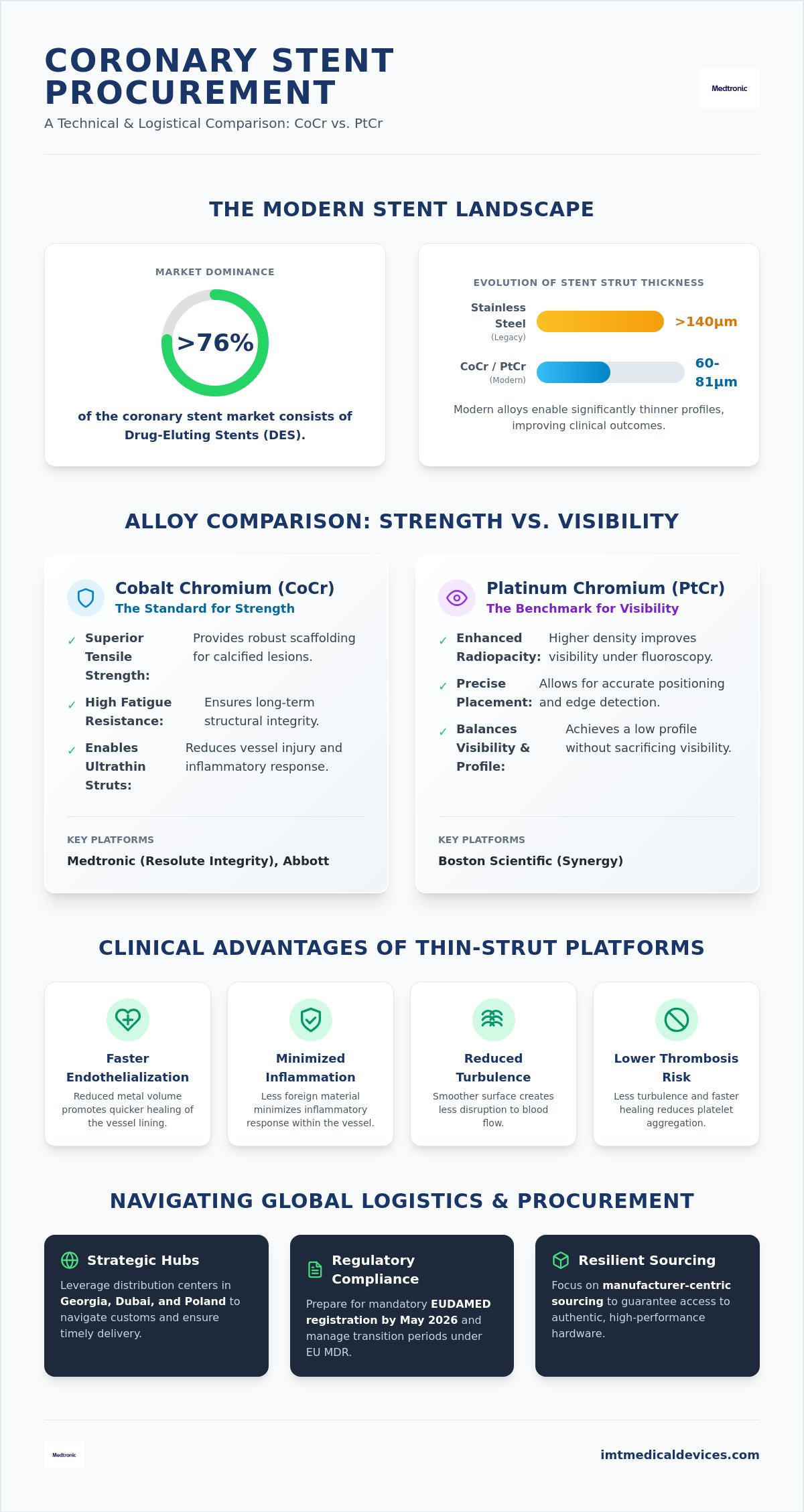
This article provides a technical and logistical comparison of CoCr and PtCr stent platforms to optimize your cardiology inventory and procurement strategy. We analyze the market dominance of drug-eluting stents, which currently hold over 76% of the coronary stent market share. You'll find a data-backed justification for DES procurement decisions involving major manufacturers like Medtronic and Boston Scientific. We detail specific technical differentiators, current market growth statistics, and proven strategies for navigating international export hurdles. Our analysis includes the impact of mandatory EUDAMED registration as of May 2026 and the transition periods for legacy devices under EU MDR.
Key Takeaways
- Differentiate between the structural strength of Cobalt Chromium and the enhanced radiopacity of Platinum Chromium to align inventory with specific clinical procedural needs.
- Optimize your cobalt chromium vs platinum chromium stent supply by evaluating the logistical reliability and lead times of major platforms like Medtronic Resolute and Boston Scientific Synergy.
- Utilize clinical safety data, including Target Lesion Failure (TLF) and MACE rates, to provide a data-backed justification for DES procurement and inventory investment.
- Streamline international distribution by leveraging strategic hubs in Georgia, Dubai, and Poland to navigate 2026 regulatory hurdles and customs documentation.
- Establish a resilient supply chain through manufacturer-centric sourcing that ensures access to authentic, high-performance cardiovascular hardware from prestigious global producers.
Understanding Stent Metallurgy: Cobalt Chromium vs Platinum Chromium Platforms
The transition from 316L stainless steel to advanced alloys defines the modern era of interventional cardiology. Early stainless steel stents required thick struts, often exceeding 140 microns, to maintain sufficient radial strength. This bulk increased the risk of vessel injury and late-stage thrombosis. Modern engineering utilizes cobalt chromium and platinum chromium alloys to achieve significantly thinner profiles without compromising structural integrity. These materials allow for strut thicknesses between 60 and 81 microns, which improves deliverability in complex anatomies.
Cobalt Chromium (CoCr) serves as the industry-standard high-strength alloy. Its superior tensile strength and fatigue resistance permit the construction of ultrathin-strut platforms. This reduction in metal volume facilitates faster endothelialization and minimizes the inflammatory response within the vessel wall. Procurement teams must evaluate these metallurgical properties when securing a cobalt chromium vs platinum chromium stent supply for high-volume cardiac centers. The material's inherent stiffness provides the necessary scaffolding for calcified lesions.
Platinum Chromium (PtCr) represents a next-generation approach to stent architecture. By incorporating platinum into the chromium-based matrix, manufacturers increase the alloy's density. This metallurgical shift results in enhanced radiopacity. Higher visibility under fluoroscopy allows for precise stent placement and edge detection. While CoCr relies on mechanical strength for thin-strut designs, PtCr leverages material density to balance visibility with a low profile. This distinction is critical for clinicians performing complex bifurcations or treating distal vessels where visibility is often limited.
The Evolution of Drug-Eluting Stent (DES) Materials
The move toward thin-strut CoCr and PtCr platforms directly impacts clinical safety profiles. Thinner struts create less turbulence in blood flow, reducing the likelihood of platelet aggregation. Material strength remains the primary driver for vessel scaffolding; however, the alloy choice also dictates how polymer coatings interact with the metal surface. Modern DES platforms use these alloys to ensure uniform drug elution and coating stability. High-performance alloys support the mechanical expansion required for large-vessel apposition while maintaining the flexibility needed for tortuous paths.
Key Manufacturers in the Global Stent Market
Procurement professionals must identify which manufacturers control specific metallurgical patents to maintain a stable inventory. The following brands dominate the global supply chain:
- Medtronic: A leader in CoCr technology with the Medtronic Resolute Integrity stent platform.
- Abbott: Maintains a substantial market share in Cobalt Chromium hardware.
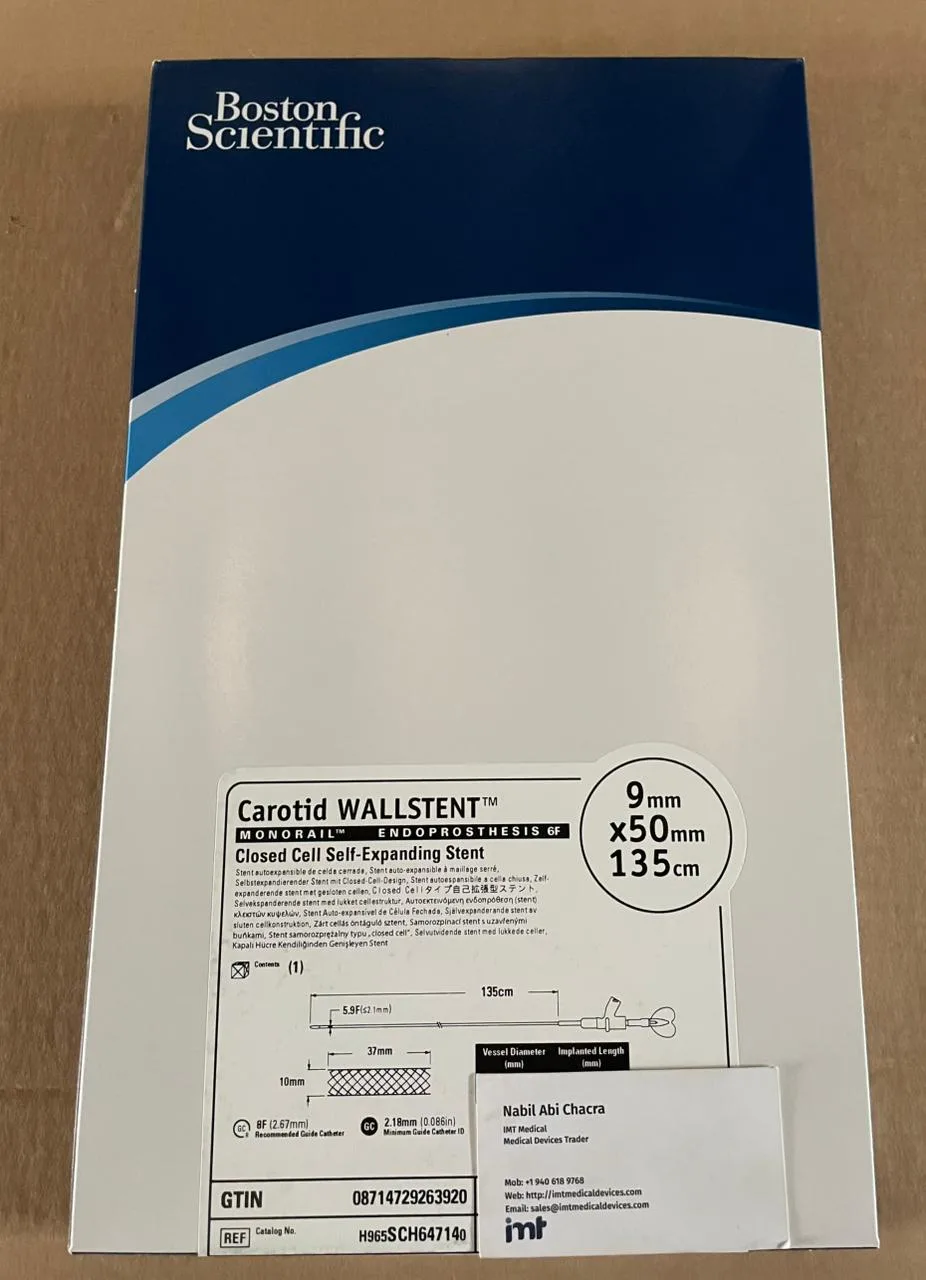
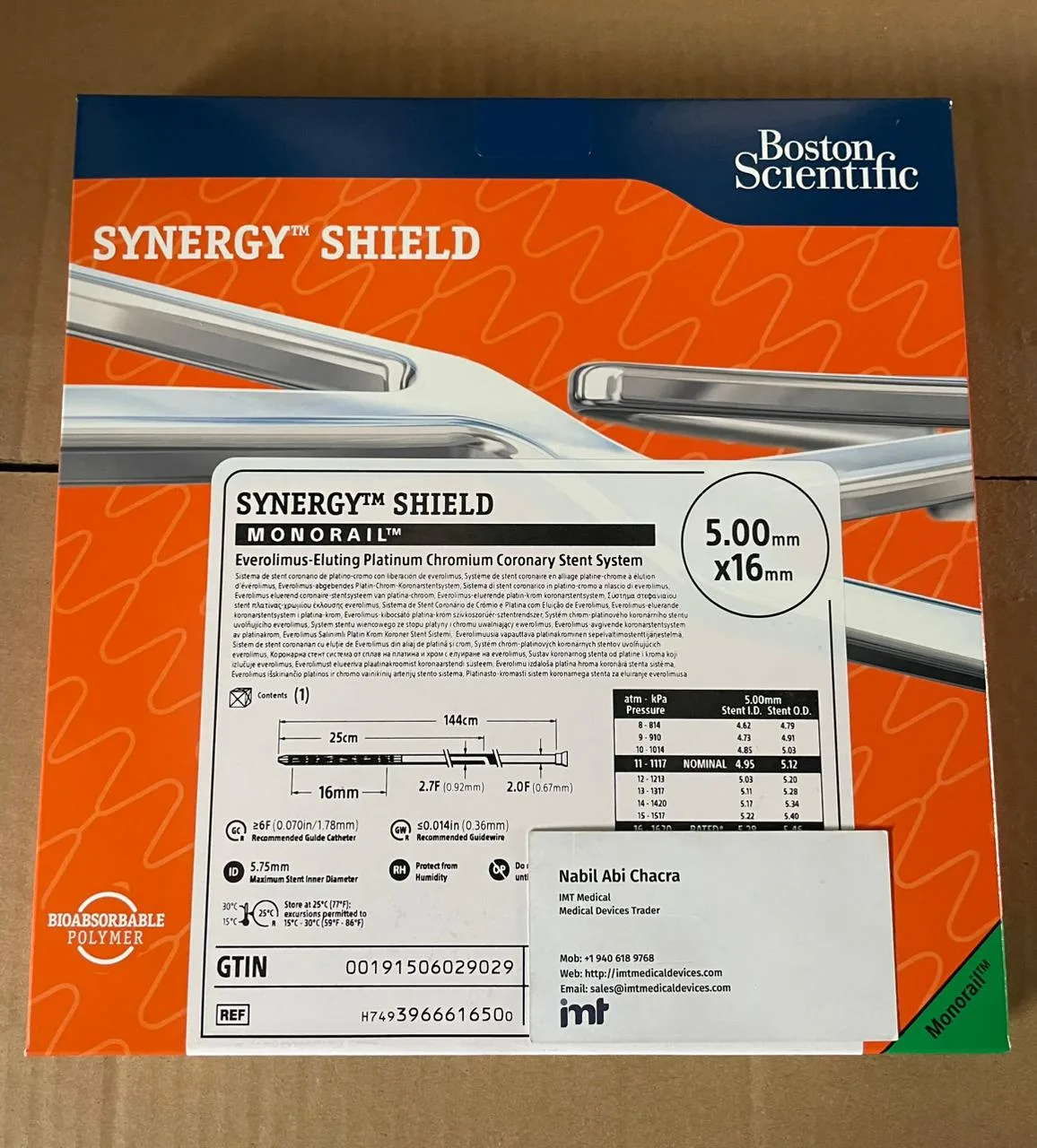
- Boston Scientific: Holds proprietary rights to Platinum Chromium technology, featured in the Boston Scientific Synergy Megatron.
- Terumo: Provides high-end alternatives such as the Terumo Ultimaster Nagomi for global distribution.
Technical Performance Metrics: Radiopacity and Deliverability
Procedural outcomes in the catheterization lab depend on the specific mechanical properties of the stent alloy. Procurement officers must analyze these technical variables when managing cobalt chromium vs platinum chromium stent supply for international medical centers. High-density alloys like platinum chromium provide distinct advantages in visualization, while cobalt chromium offers high-tensile strength for ultrathin architectures. These material choices directly influence the physician's ability to navigate complex coronary anatomy and ensure long-term vessel patency.
Platinum Chromium and Enhanced Visibility
Platinum chromium alloys utilize a high percentage of platinum to increase the material's density compared to traditional cobalt-based metals. This increased density translates directly to superior radiopacity under fluoroscopic guidance. Precise edge detection is critical in complex interventions, particularly bifurcation stenting and distal lesion treatment. Enhanced visibility reduces the volume of contrast media required during the procedure, which minimizes the risk of contrast-induced nephropathy in high-risk patients. Inventory managers often prioritize platforms like the Boston Scientific Synergy Megatron for these specific procedural requirements where visibility is paramount.
Strut Thickness and Vascular Healing
Cobalt chromium platforms enable the manufacturing of struts as thin as 60 to 80 microns due to the metal's high fatigue resistance. Thinner struts correlate with reduced vessel wall irritation and lower rates of target lesion revascularization. Clinical data regarding long-term safety and efficacy confirms that modern thin-strut alloys maintain vessel patency as effectively as older, thicker-strut stainless steel models. In 2026, the industry-recognized sweet spot for DES strut thickness is between 70 and 80 microns to maximize radial strength while minimizing vascular injury.
Recoil resistance ensures the stent maintains the intended vessel diameter after balloon deflation. Cobalt chromium stents like the Medtronic Resolute Integrity demonstrate excellent radial force, which is essential for calcified coronary arteries. Deliverability and trackability remain high for both alloys, allowing the hardware to navigate tortuous anatomy without compromising the polymer coating or the structural integrity of the device. Procurement professionals seeking these specialized platforms can view the full range of available hardware at IMT Medical Devices.
Clinical Performance & Safety Data: CoCr vs PtCr
Procurement strategy for high-volume cardiac centers relies on the clinical equivalence established between these two dominant alloys. Analysis of Major Adverse Cardiac Events (MACE) confirms that both platforms provide predictable outcomes in unselected, real-world patient populations. By 2026, clinical data suggests that Target Lesion Failure (TLF) rates are statistically comparable; it doesn't matter if the facility secures a cobalt chromium vs platinum chromium stent supply regarding long-term revascularization needs. Both materials are recognized as the industry gold standard for drug-eluting stent (DES) construction.
Long-term safety remains a primary concern for cardiology inventory managers. The risk of late-term stent thrombosis is minimal for both alloys when paired with advanced biocompatible polymers. This consistency allows hospital administrators to prioritize logistics and manufacturer-specific supply chain stability without compromising patient safety standards. Clinical trials demonstrate that the metallurgical choice doesn't negatively influence late-term safety profiles in standard or complex lesions.
12-Month vs 3-Year Follow-up Data
The HOST-ASSURE trial provided early evidence of non-inferiority between Platinum Chromium Everolimus-eluting stents (PtCr-EES) and Cobalt Chromium Zotarolimus-eluting stents (CoCr-ZES). Longitudinal studies extending to three and five years confirm these findings. Performance metrics for everolimus and zotarolimus coatings show uniform drug elution kinetics across both alloy types. These results remain consistent even in unselected, real-world populations where patient comorbidities vary significantly. Reliable outcomes across these timelines justify the inclusion of both platforms in a diversified coronary stents category inventory.
Recoil Resistance and Structural Integrity
Structural performance under high-pressure balloon inflation is a critical differentiator for calcified lesions. Both CoCr and PtCr platforms exhibit high radial strength to prevent vessel recoil. However, engineers focus heavily on longitudinal strength to eliminate the "stent accordion" effect during delivery. Modern designs ensure that axial compression or elongation is minimized even when navigating tortuous anatomy. Key performance indicators for 2026 inventory include:
- Radial Support: Maintaining vessel patency against chronic outward force.
- Longitudinal Strength: Resistance to axial deformation during post-dilation.
- Recoil Percentages: Minimal diameter loss following balloon deflation.
- Coating Integrity: Stability of the drug-polymer matrix during high-pressure expansion.
These metrics ensure that the physical hardware withstands the mechanical stresses of complex PCI procedures. When evaluating a cobalt chromium vs platinum chromium stent supply, procurement teams should focus on these structural benchmarks to ensure procedural success.
Procurement Strategy: Evaluating Brand Availability and Lead Times
Technical differentiation between alloys is clinically established, but procurement decisions must prioritize manufacturer-specific supply chain stability. Securing a reliable cobalt chromium vs platinum chromium stent supply requires a multi-vendor strategy to mitigate localized shortages or regulatory delays. In 2026, the global coronary stent market is estimated at approximately $7.38 billion, driven by high demand for drug-eluting platforms. Procurement officers must balance clinical preference for specific metallurgies with the logistical reality of bulk availability from major manufacturers. It's essential to monitor manufacturer output and regional stock levels to prevent procedural delays.
Medtronic and Boston Scientific Supply Chains
The Medtronic Resolute Integrity remains a high-volume staple for cobalt chromium inventory due to its established global distribution network and consistent production cycles. Conversely, sourcing the Boston Scientific Synergy Megatron is essential for facilities requiring platinum chromium's superior radiopacity in large-vessel PCI. Lead times in 2026 are heavily influenced by mandatory EUDAMED registration and EU MDR compliance, which can create bottlenecks for new device models. Bulk procurement contracts often include price-volume tiers that favor centers maintaining consistent order cycles for these primary platforms. Large-scale wholesalers provide a vital buffer against manufacturer backlogs by maintaining deep physical inventory across multiple regional hubs.
Alternative Platforms: Terumo and Abbott
Diversifying inventory with alternative manufacturers reduces dependency on a single supply line. Procurement of the Terumo Ultimaster Nagomi offers a strategic hedge for global markets, especially in regions with specific regulatory or pricing pressures. Abbott's XIENCE and specialized Graftmaster systems provide additional depth to clinical offerings. Integrating these varied manufacturers into a single procurement workflow ensures that clinical needs are met despite manufacturer-specific backlogs. Price ceilings in markets like India, where DES is capped at ₹39,186 as of April 2026, drive manufacturers to streamline production costs, which often results in fluctuating availability for premium platforms in uncapped markets. Explore our full range of coronary intervention products to secure your facility's requirements.
Managing international wholesale contracts requires expertise in cross-border logistics and customs documentation. Effective cobalt chromium vs platinum chromium stent supply management involves monitoring stock levels across multiple hubs to ensure rapid deployment to complex markets. For reliable access to authenticated cardiovascular hardware from Medtronic, Boston Scientific, and Terumo, contact IMT Medical Devices for a comprehensive procurement quote and inventory availability report.
Strategic Sourcing and Global Logistics for DES Inventory
The physical movement of Class III medical devices requires a specialized logistical infrastructure that matches the technical precision of the hardware itself. Managing a cobalt chromium vs platinum chromium stent supply involves more than simple inventory tracking; it necessitates a deep understanding of international export protocols and sensitive handling requirements. IMT Medical Devices serves as a high-capacity distributor, bridging the gap between global manufacturers and regional cardiac centers. Our operational model prioritizes rapid data transmission and product availability to ensure that life-saving technology reaches its destination without delay.
Sensitive handling is mandatory for drug-eluting stents to maintain the integrity of the polymer-drug matrix. While the metal alloys are robust, the coatings are susceptible to extreme temperature fluctuations during transit. We implement strict temperature-controlled environments and meet specific cold chain requirements where necessary to prevent degradation. This level of logistical oversight is essential for maintaining the clinical efficacy of high-end platforms from Medtronic, Boston Scientific, and Terumo.
Bulk Export Solutions for Georgia, UAE, and Turkey
Our distribution network utilizes strategic hubs in Tbilisi, Dubai, and Istanbul to facilitate rapid transit across Eastern Europe and the Middle East. These locations allow for consolidated B2B cargo management, which significantly reduces shipping costs for large-scale procurement. We ensure full compliance with local healthcare ministry regulations, including the mandatory 2026 EUDAMED registration for all new device models. This structured approach minimizes customs delays and ensures that regional inventories remain stocked with the latest cobalt chromium and platinum chromium alloys.
Specialized Logistics for the Venezuela Market
Supplying the Venezuelan healthcare sector requires expertise in navigating unique procurement needs and complex documentation. We manage the exhaustive paperwork required for importing high-value cardiology hardware to ensure a transparent and efficient supply chain. Documentation focuses on authentication, regulatory clearance, and proof of origin for every unit shipped. IMT Medical Devices serves as a vital bridge for Venezuelan medical supply chains, ensuring the consistent arrival of high-performance cardiovascular hardware despite complex regional logistical hurdles. Our team coordinates directly with local providers to synchronize deliveries with procedural demand, maintaining stability in a challenging market environment.
Optimizing Your 2026 Cardiovascular Inventory Strategy
Success in cardiology procurement depends on balancing metallurgical performance with logistical reliability. While platinum chromium offers superior radiopacity and cobalt chromium provides high radial strength, clinical outcomes remain comparable across both platforms. Your facility's priority should be the establishment of a resilient supply chain that mitigates manufacturer backlogs and regulatory delays. Maintaining a stable cobalt chromium vs platinum chromium stent supply requires a partner with proven international reach and authenticated hardware access.
IMT Medical Devices operates as an authorized distributor for Medtronic, Boston Scientific, and Terumo platforms. We leverage strategic hubs in Dubai and Georgia to streamline 2026 logistics, ensuring rapid delivery to over 50 countries including complex markets like Venezuela. Our infrastructure handles the documentation and sensitive requirements of high-value cardiology hardware with industrial precision. It's time to secure your facility's inventory by partnering with a distributor that values scale and logistical competence.
Request a Bulk Quote for DES Platforms and stabilize your cardiovascular supply chain today.
Frequently Asked Questions
What is the primary clinical difference between cobalt chromium and platinum chromium stents?
The primary difference lies in the metallurgical trade-off between radial strength and radiopacity. Cobalt chromium platforms prioritize high-tensile strength to achieve ultrathin struts. Platinum chromium focuses on material density to enhance visibility under fluoroscopy. Both alloys achieve excellent clinical outcomes in modern drug-eluting stent applications. Procurement decisions often depend on physician preference for visibility versus a lower metallic profile.
Which stent alloy offers better visibility under fluoroscopy?
Platinum chromium stents offer superior visibility under fluoroscopy due to the high density of the platinum-alloy matrix. This enhanced radiopacity allows for precise edge detection and accurate placement in complex coronary lesions. Clinicians often prefer these platforms for bifurcation stenting where visibility is critical for successful procedural outcomes and precise positioning.
Are platinum chromium stents more expensive than cobalt chromium for bulk procurement?
Procurement costs for bulk inventory are typically dictated by manufacturer-specific volume contracts rather than alloy type alone. While platinum is a precious metal, the overall unit cost is influenced by regional pricing caps and wholesale agreements. Facilities managing a cobalt chromium vs platinum chromium stent supply should evaluate total contract value and lead-time reliability rather than material costs.
Does IMT Medical Devices supply both Medtronic and Boston Scientific stents?
Yes, IMT Medical Devices maintains a comprehensive inventory of both Medtronic and Boston Scientific platforms. Our stock includes the Medtronic Resolute Integrity and the Boston Scientific Synergy Megatron systems. This dual-brand availability ensures that procurement teams can fulfill diverse clinical requirements from a single distribution source while maintaining stable inventory levels across multiple regions.
What are the typical lead times for international stent exports to Georgia or the UAE?
Typical lead times for exports to Georgia or the UAE are minimized by utilizing strategic hubs in Tbilisi and Dubai. Shipments are processed through consolidated B2B cargo management to ensure rapid transit. Most orders for in-stock inventory reach these regional hubs within a standard logistics window defined by local customs protocols and current stock availability.
Can IMT Medical Devices handle medical supply documentation for Venezuela?
Specialized export documentation for the Venezuelan market is a core competency of our logistics team. We manage all required ministry clearances, proof of origin, and authentication paperwork for high-value cardiology hardware. This expertise ensures a stable supply chain for Venezuelan healthcare providers despite complex international regulatory hurdles and documentation requirements.
Which alloy has thinner struts, cobalt or platinum chromium?
Cobalt chromium generally allows for the thinnest struts, often ranging between 60 and 80 microns. The alloy's high fatigue resistance permits these ultrathin profiles while maintaining necessary radial support for the vessel. While platinum chromium also features thin-strut designs, cobalt-based metals remain the industry benchmark for minimizing metal volume and improving endothelialization rates.
Is there a difference in stent thrombosis rates between these two materials?
Clinical data shows no statistically significant difference in stent thrombosis rates between these two materials. Both alloys are considered gold standards in 2026 and demonstrate high safety profiles when paired with biocompatible polymers. Long-term safety depends more on proper vessel apposition and drug elution kinetics than the underlying metallic alloy choice.