
Logistics for Exporting Implantable Cardiac Devices: A 2026 Technical Guide
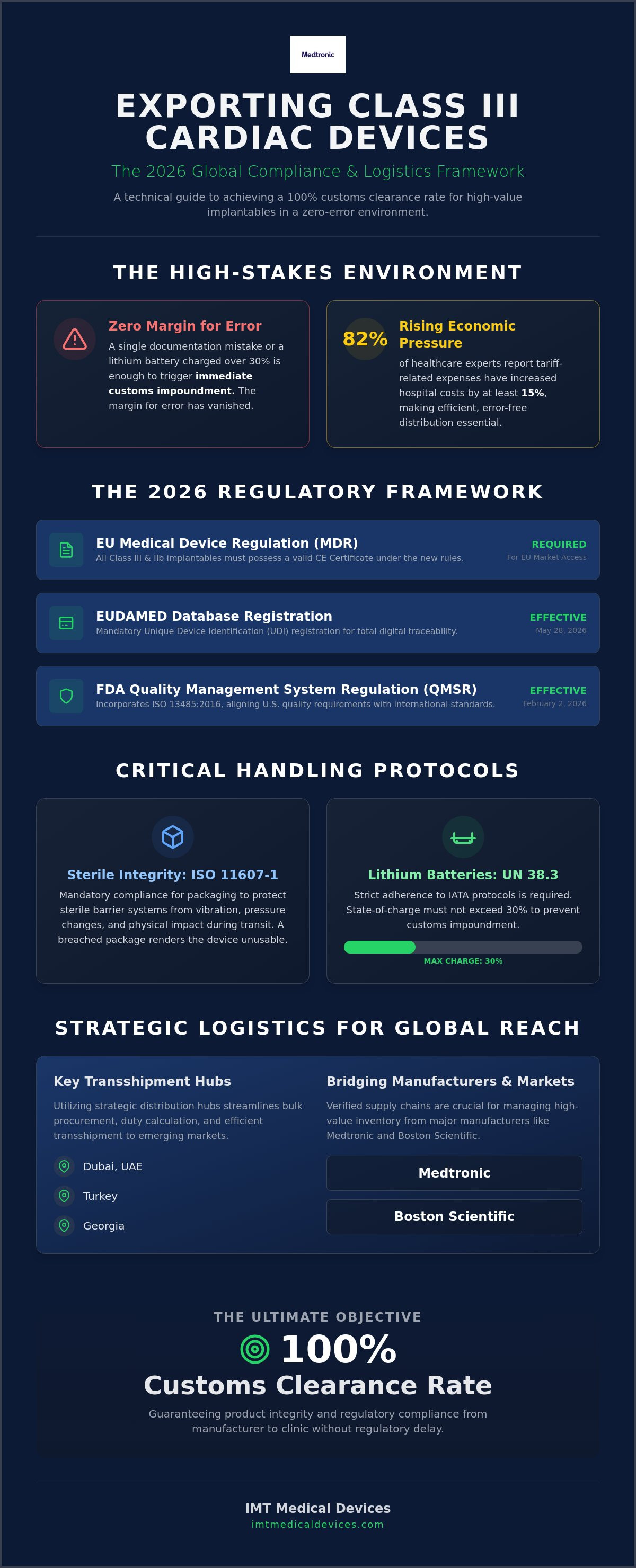
A single documentation error or a lithium battery charged above 30% is now sufficient to trigger immediate customs impoundment at international borders. In 2026, the margin for error in global medical distribution has effectively vanished. Managing the logistics for exporting implantable cardiac devices requires more than a carrier; it demands rigorous adherence to EU MDR and FDA QMSR standards. You require a supply chain that guarantees product integrity from manufacturer to clinic without regulatory delay.
This guide provides the technical framework to achieve a 100% customs clearance rate for high-value Class III implants. We detail the mandatory EUDAMED UDI registration requirements effective May 28, 2026, and the critical UN 38.3 shipping protocols for battery-powered hardware. From analyzing the 2026 tariff landscape to implementing ISO 11607-1 packaging standards, this technical brief ensures your bulk procurement cycles remain efficient, compliant, and secure.
Key Takeaways
- Align with 2026 EU MDR and FDA QMSR documentation protocols to prevent customs impoundment of Class III hardware.
- Master logistics for exporting implantable cardiac devices through strict adherence to IATA lithium battery packing instructions and current state-of-charge mandates.
- Maintain sterile integrity from manufacturer to clinic by implementing ISO 11607-1 packaging standards for all cardiac rhythm management units.
- Streamline bulk procurement cycles using strategic distribution hubs in Dubai, Turkey, and Georgia for efficient transshipment and duty calculation.
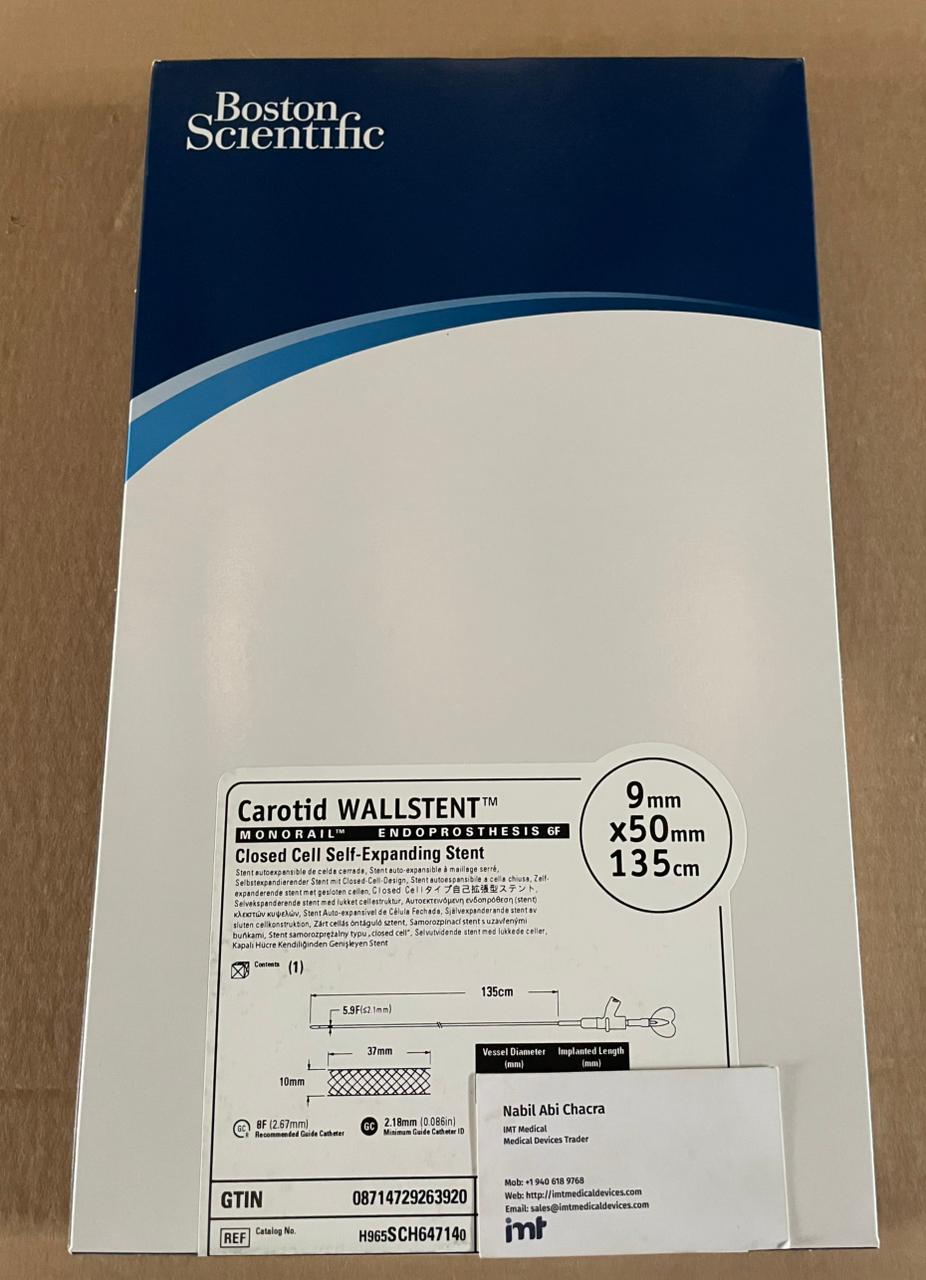
- Bridge the gap between major manufacturers and emerging markets through verified supply chains specializing in Medtronic and Boston Scientific inventory.
The Critical Nature of Logistics for Exporting Implantable Cardiac Devices
Distributing Class III medical hardware requires a specialized logistical framework. Unlike standard pharmaceutical cold chain, the logistics for exporting implantable cardiac devices involves managing complex electronic components and maintaining sterile barrier systems under extreme transit conditions. A single failure in the supply chain leads to immediate clinical delays and financial loss. In 2026, the global medical device market reached an estimated $536 billion; however, 82% of healthcare experts report that tariff-related expenses have increased hospital costs by at least 15%. This economic pressure makes efficient, error-free distribution a baseline requirement for international wholesalers.
Devices such as Implantable Cardioverter-Defibrillators (ICDs) and permanent pacemakers represent the highest tier of medical risk. Manufacturers like Medtronic and Boston Scientific mandate specific handling protocols to protect the sensitive circuitry and lithium power sources within these units. Transit delays don't just affect inventory levels. They disrupt surgical schedules and patient care cycles, particularly in emerging markets where local stock is limited.
High-Value Asset Management in Global Transit
Managing permanent pacemakers and ICDs requires aggressive risk mitigation. These are high-theft clinical technologies with significant black-market value. Security protocols must include GPS tracking at the pallet level and verified chain-of-custody documentation at every transshipment point. Wholesalers must conduct a cost-benefit analysis of expedited freight versus standard specialized services. While expedited shipping increases upfront costs, it minimizes the window for environmental exposure and unauthorized access, ultimately protecting the 100% customs clearance rate required for high-value exports.
Sterile Integrity: The Non-Negotiable Standard
Sterile integrity is the primary technical challenge during international distribution. Vibration during long-haul flights and pressure changes in cargo holds can compromise sterile barrier systems. Compliance with ISO 11607-1:2019/Amd 1:2023 is mandatory for all packaging for terminally sterilized medical devices. Logistics protocols must account for physical impact during international transloading, especially when moving products through strategic hubs in Dubai or Turkey. Any breach in the packaging renders the device unusable, leading to immediate impoundment or destruction. Effective logistics for exporting implantable cardiac devices ensures that the physical protection of the device is as robust as the regulatory documentation accompanying it.
2026 Regulatory Frameworks for Cardiac Device Export
The 2026 regulatory environment for Class III cardiac hardware has shifted toward total digital traceability. The EU Medical Device Regulation (MDR) transition period for Class III and Class IIb implantable devices concludes this year. All hardware entering the European Union must now possess a valid CE Certificate under these updated rules. Additionally, mandatory UDI registration in the EUDAMED database became required on May 28, 2026. These changes demand that the logistics for exporting implantable cardiac devices include real-time digital traceability and verified compliance documentation before any shipment leaves the warehouse.
Global distribution quality is now governed by the FDA’s new Quality Management System Regulation (QMSR), which became effective on February 2, 2026. This regulation incorporates ISO 13485:2016 by reference, finally aligning U.S. quality system requirements with international standards. Exporters must strictly adhere to FDA Export Regulations to ensure products transshipped through U.S. jurisdictions maintain their legal status. For distributors operating through strategic hubs in Georgia, Turkey, and the UAE, maintaining an ISO 13485 certified supply chain is the only way to ensure 100% customs clearance in 2026.
Documentation Requirements for Customs Clearance
A Certificate of Free Sale (CFS) remains the essential trust signal for emerging markets. This document verifies that the devices are legally marketed in their country of origin. Logistics providers must also maintain comprehensive technical data sheets and manufacturer authorization letters to prevent shipment impoundment. For high-risk inventory like Permanent Pacemakers, documentation must explicitly match the UDI recorded in EUDAMED or the FDA's GUDID. Any discrepancy between physical labeling and digital records results in immediate seizure at the border.
Managing Compliance in Local Markets like Venezuela
The Venezuelan healthcare market presents unique logistical hurdles that require established local expertise. Navigating local import permits for cardiovascular technology requires 100% documentation accuracy and a deep understanding of the Venezuelan National Institute of Hygiene (INH) requirements. Wholesalers must manage specific sanitary registrations and "No Objection" certificates required for Class III technology. Success in these regions depends on a dual-protocol approach: technical compliance with global standards and administrative precision at the local level. To ensure your shipments meet these rigorous 2026 standards, partner with an experienced international distributor capable of managing complex cross-border requirements.
Technical Handling: Sterile Integrity and Lithium Battery Protocols
Technical handling of Class III hardware requires a dual-protocol approach: maintaining sterile barrier systems while managing hazardous material compliance. The logistics for exporting implantable cardiac devices involves navigating strict international safety standards for energy-dense components. Effective January 1, 2026, all lithium batteries shipped by air, including those packed with devices under PI 966, must maintain a state of charge (SoC) of 30% or less. This mandate requires precise pre-shipment battery health checks and verified manufacturer documentation to ensure compliance with the latest IATA Dangerous Goods Regulations.
Environmental monitoring is mandatory for high-value cardiac rhythm devices. Shipments must utilize calibrated sensors to track temperature, humidity, and shock throughout the transit cycle. Specialized outer-box cushioning, such as high-density polyethylene foams and custom-molded inserts, protects delicate electronics from the mechanical stresses of international transloading. These physical safeguards prevent internal component shifting that could lead to device failure post-implantation.
Lithium Battery Shipping Compliance
Cardiac devices are classified under UN3481 (lithium-ion) or UN3091 (lithium metal) codes depending on the specific power source. Labeling requirements differ significantly between air and sea freight. Air freight demands strict adherence to UN 38.3 test summaries and specific Class 9 hazard labels. Sea freight protocols focus on moisture protection and thermal stability within shipping containers. Wholesalers must verify that every unit meets these technical identifiers to avoid immediate impoundment during the logistics for exporting implantable cardiac devices.
Maintaining the Sterile Barrier
Sterile integrity relies on double-barrier packaging systems, especially for Drug-Eluting Stents and catheters. These systems must comply with ISO 11607-1:2019/Amd 1:2023. Cleanroom-to-clinic chain of custody protocols ensure that the primary sterile barrier remains uncompromised during multi-modal transport. If a breach is detected via impact sensors or visual inspection, the product must be quarantined immediately. Standard procedures for compromised packaging include documented destruction or return-to-manufacturer for re-sterilization, as a breached barrier renders Class III devices clinically unusable.
Strategic Sourcing and Customs Efficiency
Global distribution efficiency depends on accurate Harmonized System (HS) code classification. In 2026, customs authorities have increased scrutiny on Chapter 90 medical equipment to ensure correct duty application. Misclassification leads to immediate shipment impoundment and heavy financial penalties. Effective logistics for exporting implantable cardiac devices utilizes pre-clearance documentation protocols to reduce transit times at major international borders. By submitting digital manifests to customs before the physical arrival of cargo, wholesalers avoid the high-cost storage fees associated with technical inspections.
Strategic transshipment through hubs in Dubai, Turkey, and Georgia provides essential logistical flexibility. These locations allow for bulk cardiology inventory storage in Free Trade Zones (FTZs), deferring duties until the final destination is confirmed. This approach is vital for serving complex markets like Venezuela, where local stockouts are frequent. Using FTZs allows distributors to maintain a "floating inventory" that can be deployed rapidly across 50 countries without the tax burden of multiple import-export cycles.
HS Code Mastery for Cardiac Implants
Identifying the correct codes for PTCA Balloon Catheters and stents is essential for accurate duty calculation. Stents are typically classified under 9021.90, while catheters fall under 9018.39. Classification errors in stent distribution often occur when differentiating between bare-metal and drug-eluting variants. Trade agreements significantly impact total landed costs. For example, medical device imports from the European Union currently face a tariff of up to 15%, while Japanese imports are subject to a 15% baseline reciprocal tariff. Wholesalers must verify these codes against current 2026 tariff schedules to maintain price competitiveness in price-sensitive markets.
Bulk Procurement and Inventory Buffering
Managing lead times for Abbott and Medtronic product lines requires a centralized sourcing strategy. Local distributors often face stock volatility due to manufacturing delays or regional supply chain disruptions. Sourcing through a global wholesaler ensures a consistent supply of Class III hardware and optimizes the logistics for exporting implantable cardiac devices. This inventory buffering mitigates the impact of sudden spikes in clinical demand and ensures that hospitals maintain 100% procedure readiness. For a deeper analysis of these systems, review our Medical Device Distribution Guide.
Access our full portfolio of Medtronic cardiology products to streamline your 2026 procurement cycles and ensure reliable clinical availability.
Strategic Export Solutions with IMT Medical Devices
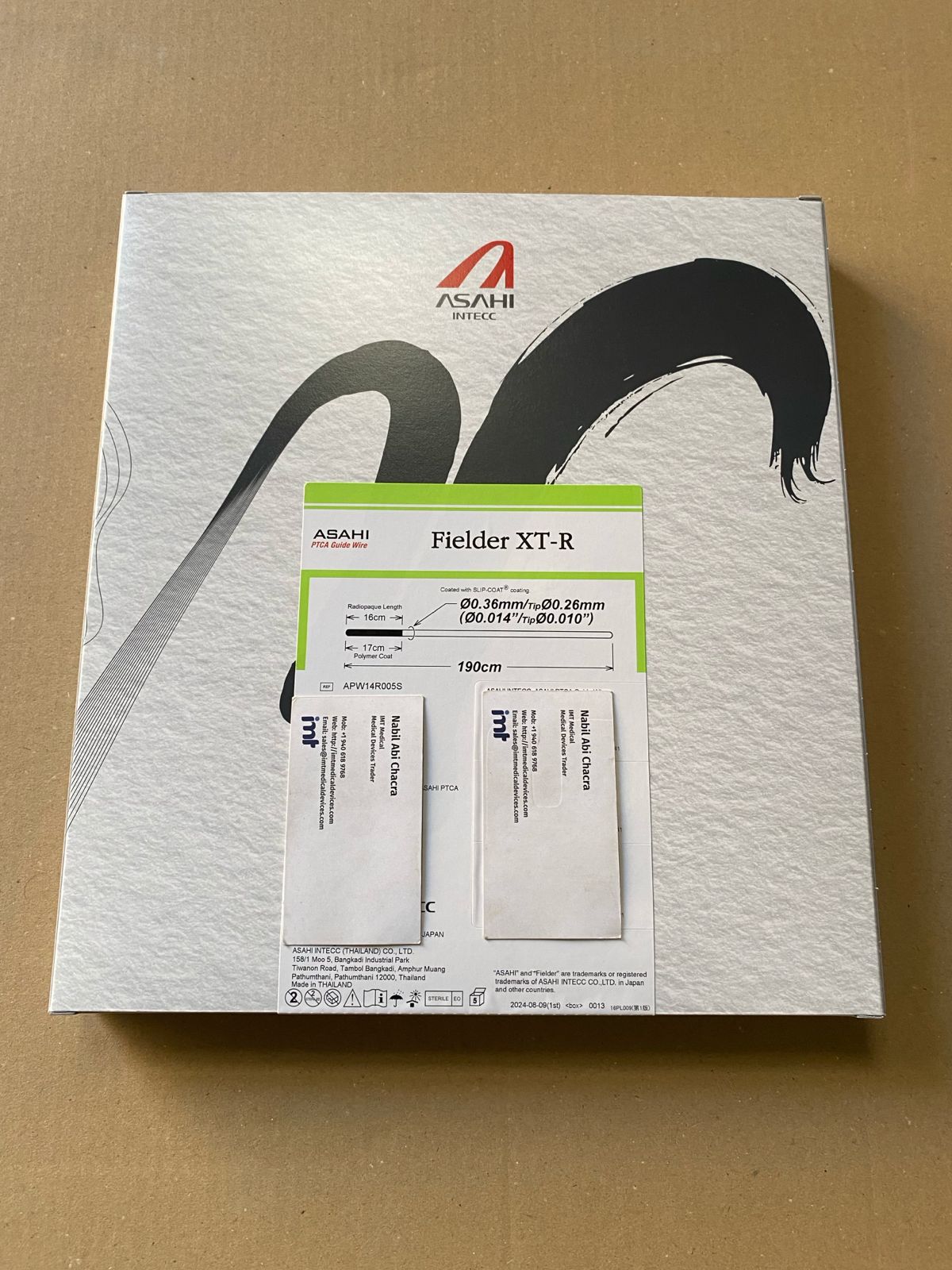
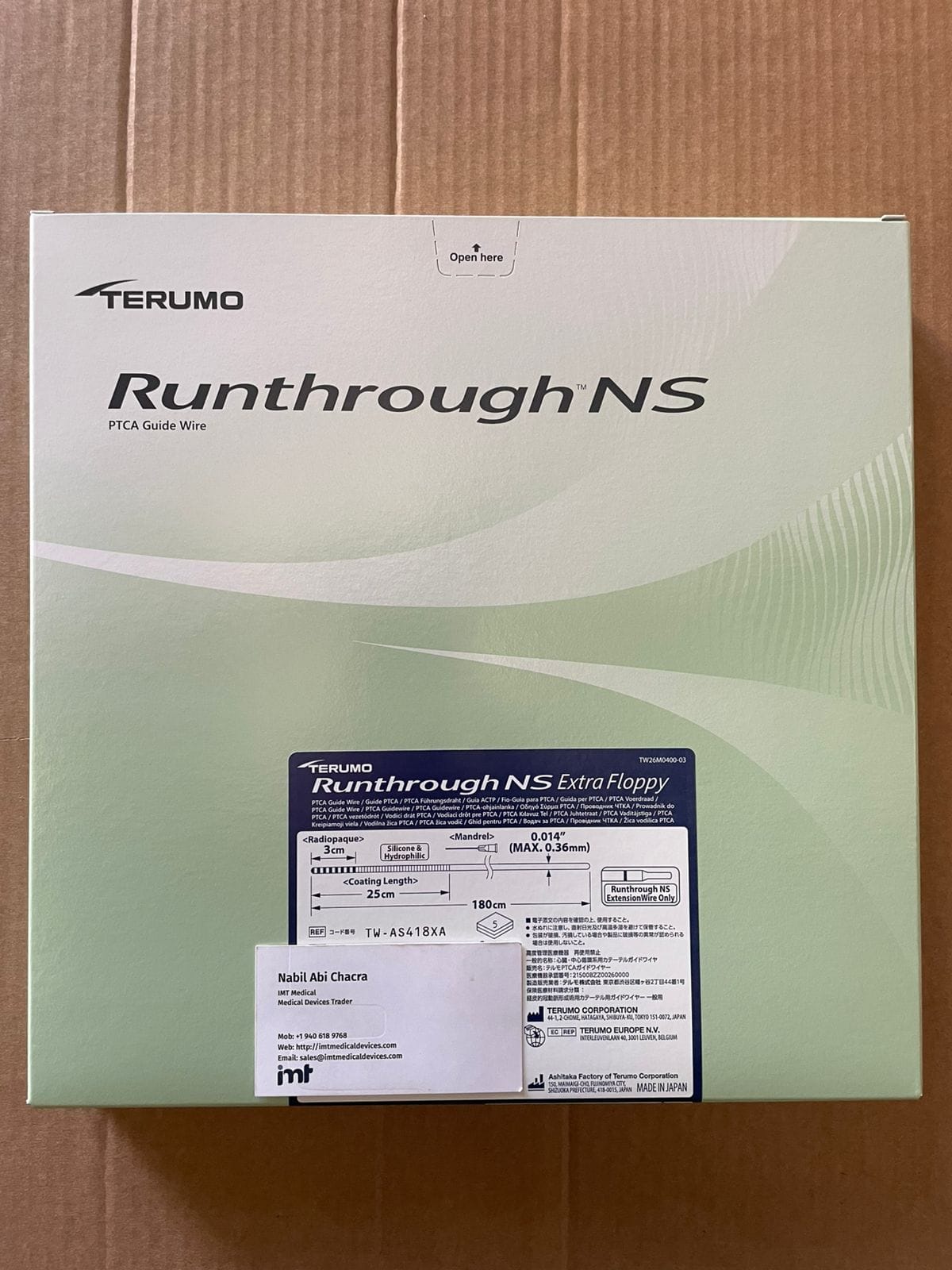
IMT Medical Devices operates as a high-capacity international distributor specializing in Class III cardiology hardware. We provide the technical infrastructure required for the logistics for exporting implantable cardiac devices to over 50 countries. Our strategic hubs in Georgia, Dubai, Turkey, and Poland serve as regional anchors, ensuring rapid distribution and consistent inventory availability. By maintaining direct-from-manufacturer supply chains for Medtronic, Boston Scientific, and Terumo, we eliminate the supply chain volatility often found in fragmented local markets.
Our team manages the entire export documentation cycle, covering specialized handling fees and technical data sheet verification. This is particularly critical for the Venezuelan market, where established logistics partnerships are necessary to navigate local import permits and sanitary registrations. We don't just move products; we provide a verified bridge between global production and clinical application. Our specialized handling protocols ensure that every shipment complies with the latest 2026 international safety and regulatory standards.
Accessing Premium Cardiology Technology
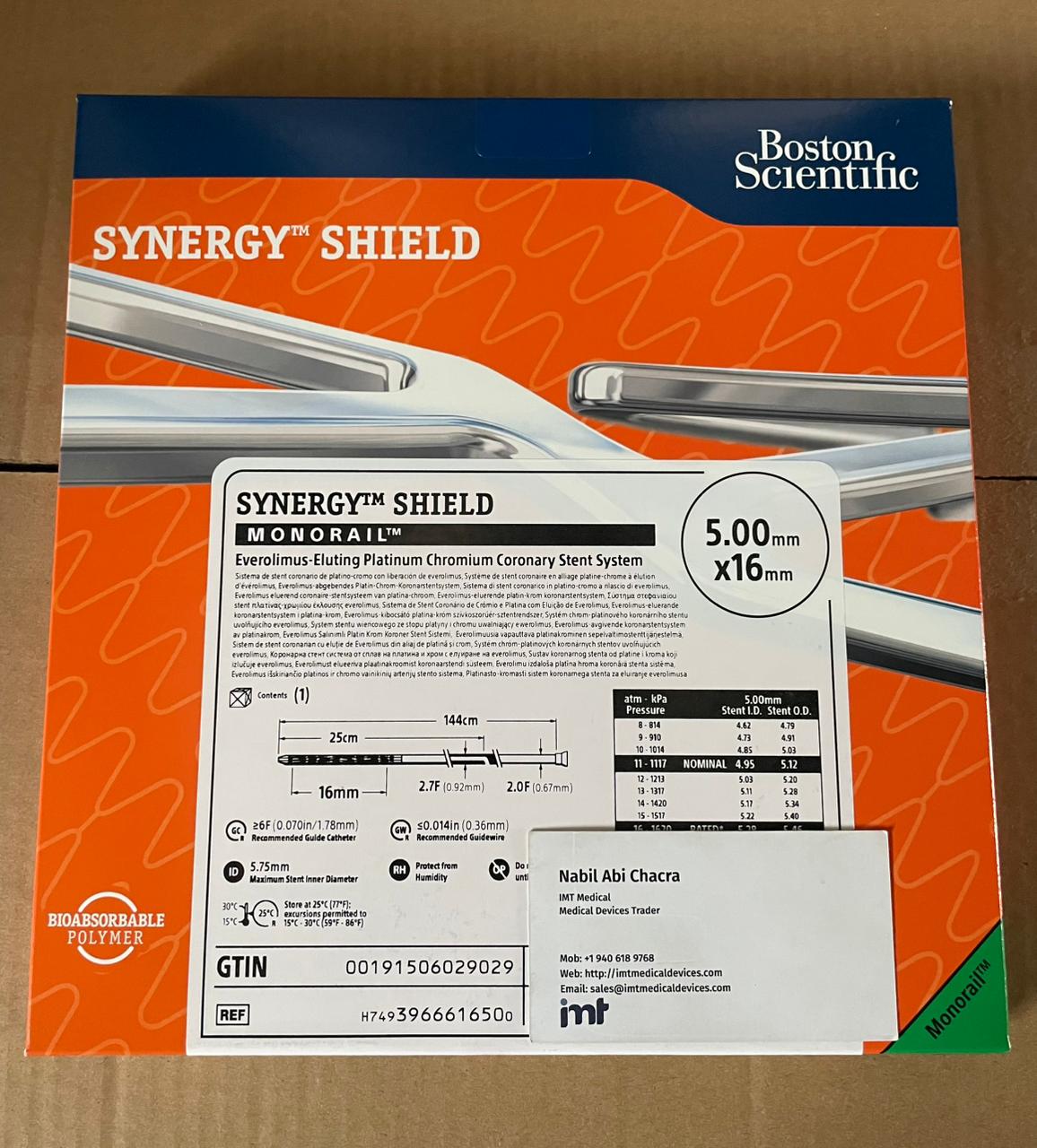
We maintain a consistent wholesale inventory of Permanent Pacemakers and ICD technology. This portfolio extends to high-demand Coronary Intervention tools, including drug-eluting stents and PTCA catheters. By centralizing procurement through IMT, B2B clients secure access to authentic hardware with full UDI traceability. Our supply chain is designed to protect the sterile integrity of every unit, from the manufacturer’s cleanroom to the final clinical destination.
Partnering for Global Reach
IMT facilitates rapid market entry for new cardiology clinics and provides the logistical backbone for high-volume hospital tenders. We understand the precise requirements of B2B cardiology procurement, including the need for predictable lead times and error-free documentation. Our regional offices in Georgia and Poland allow us to bypass traditional logistical bottlenecks, providing a faster route to market for sensitive clinical technologies. This local presence ensures that we can respond to urgent procurement cycles with industrial speed and precision.
Effective logistics for exporting implantable cardiac devices requires a partner with proven international reach and technical competence. Contact IMT Medical Devices today for a personalized logistics and procurement offer tailored to your specific regional requirements.
Optimizing 2026 Cardiology Supply Chains
Successful distribution in 2026 depends on the convergence of technical precision and regulatory expertise. Wholesalers must prioritize 100% documentation accuracy for EU MDR and FDA QMSR standards to avoid border impoundment. Maintaining sterile integrity and lithium battery compliance under current IATA mandates is non-negotiable for Class III hardware. Strategic transshipment through global hubs reduces transit times and optimizes duty calculations for international procurement cycles. Professional logistics for exporting implantable cardiac devices ensures that high-value assets reach clinical environments without compromise.
IMT Medical Devices operates strategic hubs in Georgia, Dubai, and Poland to provide wholesale access to Medtronic, Abbott, and Boston Scientific inventory. We offer comprehensive regulatory compliance support for over 50 countries, including high-complexity markets like Venezuela. This infrastructure allows cardiology clinics and hospitals to maintain procedure readiness through reliable bulk procurement. Our established supply chain minimizes risk and maximizes clinical availability across the globe.
Contact IMT Medical Devices for specialized cardiac export solutions and secure your 2026 supply chain today.
Frequently Asked Questions
What are the main challenges when exporting cardiac devices to Venezuela?
Primary challenges include securing Venezuelan National Institute of Hygiene (INH) permits and managing specific sanitary registrations for Class III technology. Success requires 100% documentation accuracy to avoid long-term customs impoundment at the border. IMT Medical Devices utilizes established local logistics partners to bridge the gap between international manufacturer standards and local administrative requirements.
Do implantable cardioverter defibrillators (ICDs) require special battery shipping labels?
Implantable cardioverter defibrillators (ICDs) require Class 9 Dangerous Goods labeling for all air and sea freight. As of January 1, 2026, air shipments must comply with IATA PI 966 instructions, including a mandatory 30% or less state of charge (SoC). Proper UN3481 or UN3091 identification is essential for the logistics for exporting implantable cardiac devices to prevent carrier rejection.
How is sterile integrity maintained for cardiac stents during international shipping?
Maintenance of sterile integrity for drug-eluting stents relies on double-barrier packaging compliant with ISO 11607-1:2019/Amd 1:2023. Logistics protocols incorporate high-density foam cushioning and shock-sensitive sensors to track physical impact during international transloading. Any breach in the primary barrier detected during the supply chain renders the stent clinically unusable and requires immediate quarantine.
Which HS codes are used for permanent pacemakers and cardiac leads?
Permanent pacemakers are classified under HS code 9021.50, while cardiac leads and related components fall under 9021.90. Accurate classification within Chapter 90 ensures correct duty calculation and prevents delays during technical inspections. Wholesalers must verify these codes against the 2026 tariff schedules of the destination country to maintain price competitiveness.
Are there specific temperature requirements for shipping cardiac implants?
Cardiac implants generally require controlled room temperature (CRT) maintained between 15°C and 25°C. These requirements protect the shelf life of lithium batteries and the integrity of adhesives used in sterile packaging systems. Environmental monitoring with calibrated data loggers is mandatory to provide a verified temperature history upon delivery to the clinic.
What documentation is required for the customs clearance of Medtronic cardiac devices?
Customs clearance for Medtronic hardware requires a Certificate of Free Sale (CFS), Certificate of Origin, and manufacturer authorization letters. In 2026, mandatory UDI registration in EUDAMED or the FDA's GUDID is also required for all shipments. Every document must match the physical device labels and technical identifiers to ensure 100% clearance rates.
How does ISO 13485 affect the logistics of medical device distribution?
ISO 13485:2016 defines the quality management system (QMS) requirements for the logistics for exporting implantable cardiac devices. The FDA’s adoption of this standard into its QMSR on February 2, 2026, harmonizes global distribution rules for wholesalers. It mandates strict traceability, risk management, and documented handling procedures for all Class III cardiology exports.
Can cardiac implants be shipped via standard commercial air freight?
Standard commercial air freight is often unsuitable for Class III cardiac implants due to lithium battery restrictions and sterile integrity risks. Most battery-powered devices require specialized medical freight services or "Cargo Aircraft Only" (CAO) designations to comply with safety regulations. These specialized routes offer the environmental controls and security protocols necessary for high-value clinical technology.