
CRM Device Distribution: 2026 Global Market Trends and Supply Chain Strategies
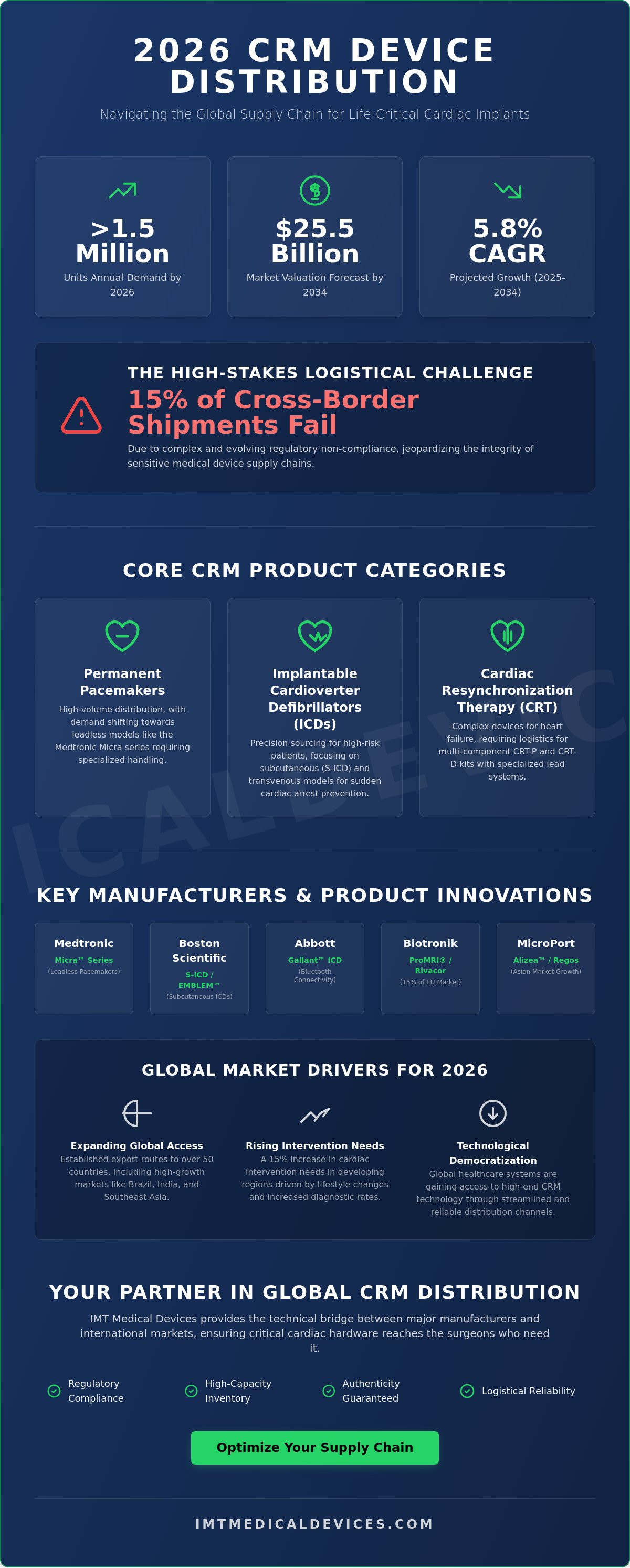
By 2026, global demand for cardiac rhythm management implants will exceed 1.5 million units annually, but 15% of cross-border shipments currently fail due to regulatory non-compliance. Procuring sensitive electronics like pacemakers and ICDs remains a high-stakes logistical challenge. You know that maintaining supply chain integrity for tier-1 brands like Medtronic, Boston Scientific, and Abbott requires more than standard freight handling. Reliable crm device distribution is the essential link between manufacturer production and clinical availability. It's about technical precision and inventory speed.
This analysis details the 2026 market outlook and provides a framework to optimize global procurement for sensitive medical implants. You'll learn to navigate complex regulatory requirements while reducing logistical friction in device acquisition. We examine current export trends across 50 countries and provide a structured approach for evaluating international distribution partners. The focus remains on authenticity, product availability, and wholesale efficiency. This guide offers the data needed to secure high-capacity supply chains for the next three years of cardiac care demand.
Key Takeaways
- Analyze 2026 market dynamics and growth drivers for pacemakers, ICDs, and CRT devices.
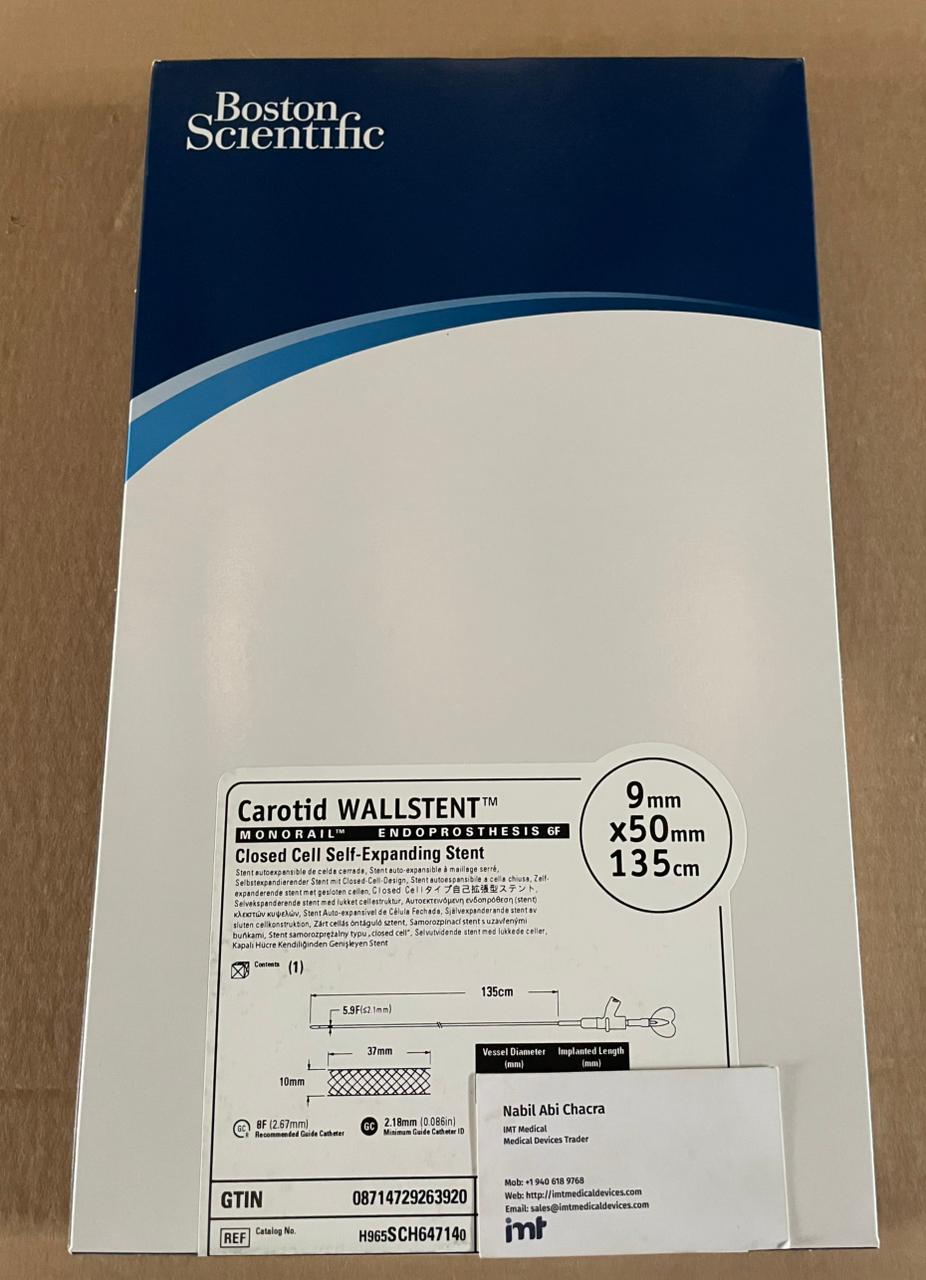
- Review distribution strategies for specialized systems including Medtronic Micra and Boston Scientific S-ICD technology.
- Optimize crm device distribution through rigorous cold chain monitoring and international regulatory compliance.
- Enhance procurement efficiency via bulk purchasing models and wholesaler reliability assessments.
- Access high-capacity supply chain solutions for exporting medical technology to over 50 countries.
The 2026 Global Landscape of Cardiac Rhythm Management
CRM device distribution focuses on the precision logistics of life-critical hardware. This specialized supply chain includes the movement of pacemakers, implantable cardioverter defibrillators (ICDs), and cardiac resynchronization therapy (CRT) systems. By 2026, global supply chains must adapt to a market forecast to reach a valuation of approximately $25.5 billion by 2034. Growth is driven by increased diagnostic rates for cardiac arrhythmias and a shifting demographic profile. IMT Medical Devices manages these complex flows across 50 countries, ensuring product availability for high-demand clinical environments.
Technological shifts are redefining inventory requirements. Leadless pacemakers and remote monitoring infrastructure are now standard. Logistics providers must track specialized SKU codes for brands like Medtronic, Boston Scientific, and Abbott. Efficient crm device distribution relies on rapid throughput and strict regulatory compliance. The 2025 to 2034 forecast period shows a steady 5.8% CAGR in the CRM sector. This expansion requires a pragmatic approach to wholesale export and inventory management. Our focus remains on logistical reliability and the availability of premium medical technology.
Core Product Categories in CRM
Product Details for the CRM sector are categorized by device function and patient need. Distribution strategies vary based on these technical specifications.
- Permanent Pacemakers: High-volume distribution of single-chamber and dual-chamber units. Demand is shifting toward leadless models like the Medtronic Micra series. These devices require specialized handling and rapid delivery cycles.
- Implantable Cardioverter Defibrillators (ICDs): Precision sourcing for high-risk patient populations. Distribution focus remains on subcutaneous (S-ICD) and transvenous models. These units are essential for sudden cardiac arrest prevention.
- Cardiac Resynchronization Therapy (CRT): Complex devices for heart failure management. These require specialized lead systems and high-capacity battery units. Logistics must account for the multi-component nature of CRT-P and CRT-D kits.
Emerging Market Drivers for 2026
Global demand is rising due to lifestyle changes. Sedentary habits and obesity rates contribute to a 15% increase in cardiac intervention needs in developing regions. Favorable reimbursement scenarios in markets like Brazil, India, and Southeast Asia are accelerating adoption. Technological democratization allows these healthcare systems to access high-end CRM tech. IMT Medical Devices facilitates this access through established export routes to 50 countries.
The personality of the 2026 market is pragmatic and expansive. We prioritize the efficient movement of hardware from warehouse to hospital. Product Details focus on availability, model numbers, and manufacturer specifications. We don't use decorative language. We provide the technical bridge between major manufacturers and international markets. Our crm device distribution network ensures that critical cardiac hardware reaches the surgeons who need it. We maintain high-capacity inventory to support global healthcare infrastructure.
Key Manufacturers and Product Innovations in 2026
Global crm device distribution in 2026 centers on five dominant manufacturers. Medtronic leads with the Micra leadless series, specifically the Micra VR and Micra AV2 models. These systems eliminate lead-related complications and require high-precision logistics for global export. Boston Scientific maintains market share through the S-ICD and EMBLEM MRI technology. Their supply chain focus remains on specialized hardware for subcutaneous placement. Abbott's Gallant ICD and CRT-D platforms utilize Bluetooth connectivity to improve patient monitoring. These devices represent a significant portion of current wholesale inventory. Biotronik and MicroPort remain specialized players. Biotronik controls approximately 15% of the European market with its ProMRI and Rivacor technology. MicroPort secures Asian market growth through the Alizea and Regos pacemaker series. Distributors manage a vast inventory of FDA-approved cardiovascular devices to meet these diverse regional demands. This ensures hospitals receive authenticated hardware for critical cardiac interventions.
Brand-First Procurement Strategies
Manufacturer-specific contract rates determine bulk wholesale profitability. Procurement officers prioritize Medtronic and Abbott for high-volume 500+ unit orders to secure competitive pricing. Brand reputation influences 85% of clinician adoption rates in North America and the EU. Inventory management requires tracking specific model numbers and technical iterations. Examples include the Abbott Gallant CDVRA500 and Boston Scientific G264 models. Accurate SKU tracking prevents deployment of outdated hardware. Logistics providers like IMT Medical Devices facilitate these high-capacity international transfers, ensuring product availability for global clinics. Efficient sourcing involves direct manufacturer relationships to bypass secondary market delays.
Technological Evolution and Supply Chain
Bluetooth-enabled cardiac implants require updated distribution protocols. Secure firmware verification and digital security checks are now part of the standard delivery process. Sourcing MRI-conditional CRM devices is a standard requirement in 2026. Leadless technology is the primary driver of current CRM innovation. Distribution networks must accommodate the rapid cycle of technical updates across different regions. Standard ICD units now feature 1.5T and 3T MRI compatibility as a baseline specification. This shift simplifies inventory for crm device distribution by reducing the need for non-compatible legacy models. Supply chains now prioritize devices with extended battery life, such as those exceeding 10-year longevity ratings.
Navigating International Logistics for Sensitive Cardiac Implants
Efficient crm device distribution hinges on technical precision and rigorous environmental control. Cardiac Rhythm Management (CRM) hardware, including pacemakers and Implantable Cardioverter Defibrillators (ICDs), requires stable climate conditions to protect integrated circuitry and battery longevity. International transit involves multiple hand-off points where exposure to temperature extremes or physical shock can compromise device efficacy. Logistics partners must utilize calibrated data loggers to provide a continuous record of environmental variables from the warehouse to the hospital dock. Reliability in this sector is measured by the ability to maintain the cold chain and sterile integrity across 50 countries.
Supply Chain Integrity and Monitoring
Real-time tracking is now a baseline requirement for high-value medical technology. Shipments containing lithium-ion batteries must adhere to strict IATA and IMDG regulations. Specifically, devices with integrated batteries fall under UN 3481 classification, requiring specialized labeling and handling protocols. Packaging standards prioritize sterility; any breach in the double-sterile barrier renders the product unusable. Distributors maintain integrity by utilizing shock-resistant outer casing and tamper-evident seals for all Medtronic, Boston Scientific, and Abbott consignments. Reliable crm device distribution networks ensure that 100% of units arrive within manufacturer-specified tolerances.
The FDA on Medical Device Supply Chain resilience emphasizes that logistical vulnerabilities directly impact public health. To mitigate these risks, distributors implement robust post-market surveillance systems. These systems track serial numbers across borders, allowing for rapid execution of product recalls if a manufacturer issues a safety alert. Reverse logistics capabilities are essential for returning defective or expired units for proper disposal or analysis. This level of oversight ensures that even in complex international routes, patient safety remains the priority.
Export Documentation and Customs
Navigating global markets requires expertise in regional regulatory frameworks, including EU MDR 2017/745 and FDA 21 CFR Part 820. Managing Certificates of Free Sale (CFS) is critical for entry into emerging markets. Without accurate CFS documentation, shipments face indefinite customs delays. Efficient customs clearance strategies involve pre-filing documentation and utilizing Authorized Economic Operator (AEO) status to expedite urgent medical equipment. For a foundational look at these processes, refer to the global guide to medical device distribution. Exporting to over 50 countries demands a standardized approach to Bill of Lading (BOL) and Commercial Invoice (CI) accuracy to ensure patient access to life-saving technology remains uninterrupted.
- Regulatory Compliance: Maintenance of CE Mark and local Ministry of Health (MOH) registrations.
- Documentation: Precise management of Certificates of Origin and high-value export declarations.
- Risk Mitigation: Implementation of 24/7 environmental monitoring for all cardiac leads and generators.
Strategic CRM Procurement: Optimizing the Supply Chain
Cardiology labs must choose between bulk purchasing and just-in-time (JIT) inventory models. Bulk procurement secures stock for high-volume procedures and protects against price fluctuations. JIT models lower holding costs and reduce the risk of stock obsolescence. In 2024, 62% of cardiac centers adopted hybrid strategies. These centers maintain a 15% safety stock for critical crm device distribution needs while using JIT for routine accessories. Strategic regional hubs in Dubai and Poland now reduce lead times by 40% for international markets. Logistics efficiency depends on proximity to these high-capacity hubs.
Inventory Management for Cardiology
CRM devices have strict shelf-life requirements. Managing expiration dates for pacemakers, ICDs, and CRT-D units prevents capital loss. Digital inventory tools offer real-time procurement visibility. This technology tracks stock levels across multiple locations instantly. Distribution of leads and accessories requires precise coordination with pulse generator stock. A 1:2 ratio of leads to generators is the standard for dual-chamber systems. Effective inventory management minimizes waste and ensures product availability for emergency cases.
- Product Details: Medtronic Azure Surescan Pacemakers
- Product Details: Boston Scientific Emblem S-ICD
- Product Details: Abbott Gallant ICD
- Product Details: Biotronik Edora Pacemaker Series
Wholesaler Evaluation Framework
Wholesaler reliability is measured by export history and brand access. A distributor with an "Export 50 Country" record demonstrates logistical competence and global reach. Key performance indicators include order fulfillment rates, which should exceed 98% for critical cardiac components. Access to Tier 1 brands like Medtronic, Terumo, and Boston Scientific is a primary requirement. Multi-office presence in Dubai and Poland facilitates faster customs clearance and local regulatory compliance. Technical support and after-sales service are vital for device programming and troubleshooting in the clinical setting.
Cost-reduction strategies focus on consolidating orders with high-capacity distributors. This reduces freight costs and simplifies the procurement chain. Efficient crm device distribution relies on partners who prioritize technical specifications and product availability over narrative marketing. Direct access to authentic, high-end medical technology remains the most significant trust signal in the global supply chain. Reliable partners provide the necessary bridge between manufacturers and international markets.
IMT Medical Devices: Global CRM Distribution Solutions
IMT Medical Devices operates as a high-capacity wholesale partner for international healthcare providers and medical distributors. The company maintains a massive inventory of Medtronic, Boston Scientific, and Abbott products. This inventory supports the rising global demand for advanced cardiac rhythm management. Reliable crm device distribution requires a focus on inventory depth and technical precision. IMT fulfills this by providing direct access to permanent pacemakers and Implantable Cardioverter Defibrillators (ICDs) that meet 2026 clinical standards.
Operations center on four strategic logistics hubs located in Georgia, UAE, Turkey, and Poland. These locations allow for efficient transit times across Europe, Central Asia, and the Middle East. The company holds a proven track record in the Export 50 Country category, managing the complexities of international trade and specific storage requirements for sensitive cardiovascular electronics. Each hub is positioned to bypass traditional supply chain bottlenecks, ensuring that life-saving technology reaches clinics without delay.
The IMT Advantage in Cardiac Technology
IMT prioritizes technical accuracy and rapid data transmission for procurement officers. The company focuses on the following core strengths:
- Direct access to high-demand technical specifications and specific model numbers from top-tier brands.
- Comprehensive export documentation and regulatory support for over 50 jurisdictions.
- Proven track record in managing sensitive cardiovascular implants, including leadless pacemakers and complex ICD systems.
The logistics infrastructure is designed to handle the delicate nature of CRM hardware. Permanent pacemakers and ICDs require strict environmental controls during transit. IMT utilizes its facilities in Tbilisi, Dubai, Istanbul, and Warsaw to maintain these standards. This infrastructure supports the Export 50 Country signature, providing a reliable pipeline for hospitals in both emerging and established markets. Effective crm device distribution relies on this type of industrial competence.
Partnering for Global Healthcare Reach
IMT serves as a vital bridge between major manufacturers and international clinics. The business model is strictly B2B, focusing on the needs of medical buyers who require scale and speed. The procurement process is streamlined to minimize administrative friction. Buyers get clear Product Details, including battery longevity specs and lead compatibility data, for every unit in the warehouse.
- Efficient bridge between manufacturers and international clinics.
- Streamlined procurement processes for B2B medical buyers.
The company does not engage in lengthy brand dialogue; it delivers authentic medical technology to the global market. Its role as a high-capacity distributor ensures that healthcare providers can maintain their procedural volumes regardless of local supply shortages.
Contact IMT Medical Devices for wholesale CRM inquiries to secure high-quality cardiac technology and reliable export solutions for your facility.
Optimizing Your 2026 CRM Procurement Strategy
The 2026 cardiac rhythm management landscape demands technical precision and rapid inventory turnover. Success in crm device distribution requires direct access to authorized wholesale channels for Medtronic, Boston Scientific, and Abbott technologies. Procurement officers must prioritize logistical reliability to navigate the complexities of international medical commerce. IMT Medical Devices facilitates this through a robust network of strategic hubs in the UAE, Turkey, Poland, and Georgia. We've scaled our operations to export to over 50 countries worldwide, ensuring that sensitive cardiac implants reach their destination without delay. Our focus remains on high-capacity distribution and technical specification accuracy. It's essential to partner with a distributor that values speed and brand authenticity. We provide the infrastructure needed to maintain stock levels of essential pacemakers and defibrillators across global markets. Strengthening your supply chain ensures better patient outcomes and operational efficiency. We're ready to support your 2026 growth objectives with proven logistical expertise.
Request a wholesale quote for CRM devices from IMT Medical Devices
Frequently Asked Questions
What are the primary factors driving CRM device distribution growth in 2026?
Growth in crm device distribution stems from a 15% increase in global geriatric populations and rising cardiac arrhythmia diagnoses. Demand focuses on dual-chamber pacemakers and ICDs. Emerging markets in Asia-Pacific show a 7.2% annual growth rate. Procurement centers prioritize high-volume supply chains to meet these expanding clinical needs.
How do leadless pacemakers change the logistics of cardiac device distribution?
Leadless pacemakers reduce shipping volume by 90% compared to traditional pulse generators and lead systems. These miniaturized devices, like the Medtronic Micra or Abbott Aveir, require specialized sterile barrier packaging. Logistics providers optimize storage density by utilizing 30% less shelf space. This efficiency accelerates international transit speeds for high-value inventory.
What regulatory documents are required for international CRM device export?
International export requires a Certificate of Free Sale (CFS), ISO 13485 certification, and EU MDR 2017/745 compliance documentation. Every shipment includes a detailed commercial invoice and packing list. Customs clearance in 50 countries depends on accurate Harmonized System (HS) codes. IMT Medical Devices maintains current regulatory filings for all distributed brands.
How does IMT Medical Devices ensure the integrity of sensitive cardiac implants during shipping?
IMT Medical Devices utilizes temperature-controlled logistics and shock-resistant packaging to maintain component integrity. We implement strict ISO 9001:2015 protocols for every shipment. Our Export 50 Country capability relies on validated courier partners. Every box undergoes a multi-point inspection before leaving the distribution center. Product Details include serial number tracking and batch verification.
Which brands dominate the global cardiac rhythm management market in 2026?
Medtronic, Boston Scientific, and Abbott Laboratories hold 85% of the global market share in 2026. Biotronik remains a key competitor in the European and Asian sectors. These manufacturers lead in ICD, CRT-D, and pacemaker technology. IMT Medical Devices provides direct access to these premium brands for wholesale procurement and global export.
Can CRM devices be shipped to any country globally?
Distribution is available to 50 countries, subject to local health authority registrations and international trade sanctions. We manage logistics to major hubs in Europe, Asia, and the Middle East. Some regions require specific import permits or local representative mandates. Our export team verifies destination requirements for every wholesale order before dispatch.
What is the typical lead time for bulk CRM device procurement?
Standard lead times for bulk crm device distribution range from 5 to 10 business days for in-stock inventory. Factory-direct orders for specialized models may require 4 to 6 weeks. We provide real-time stock status for Medtronic and Boston Scientific units. Rapid dispatch protocols ensure 48-hour processing for established international accounts.
How does remote monitoring technology affect the supply chain of CRM devices?
Remote monitoring shifts the supply chain toward integrated hardware-software bundles. Providers now ship devices with pre-configured transmitters or mobile application access codes. This integration reduces the need for frequent replacement cycles by 20% through better battery management. Distribution centers now manage both physical implants and digital activation assets simultaneously.