
Drug-Eluting Stent Benefits: A Technical and Clinical Overview for Medical Procurement
Clinical data indicates that third-generation drug-eluting stents have reduced target lesion revascularization rates to below 5% in complex coronary cases. Medical procurement officers recognize that selecting cardiology inventory involves balancing these superior clinical outcomes against the high costs of premium brands. Understanding the specific drug-eluting stent benefits is essential for maintaining high-capacity inventory that meets surgical demands. It's a matter of technical precision and logistical reliability.
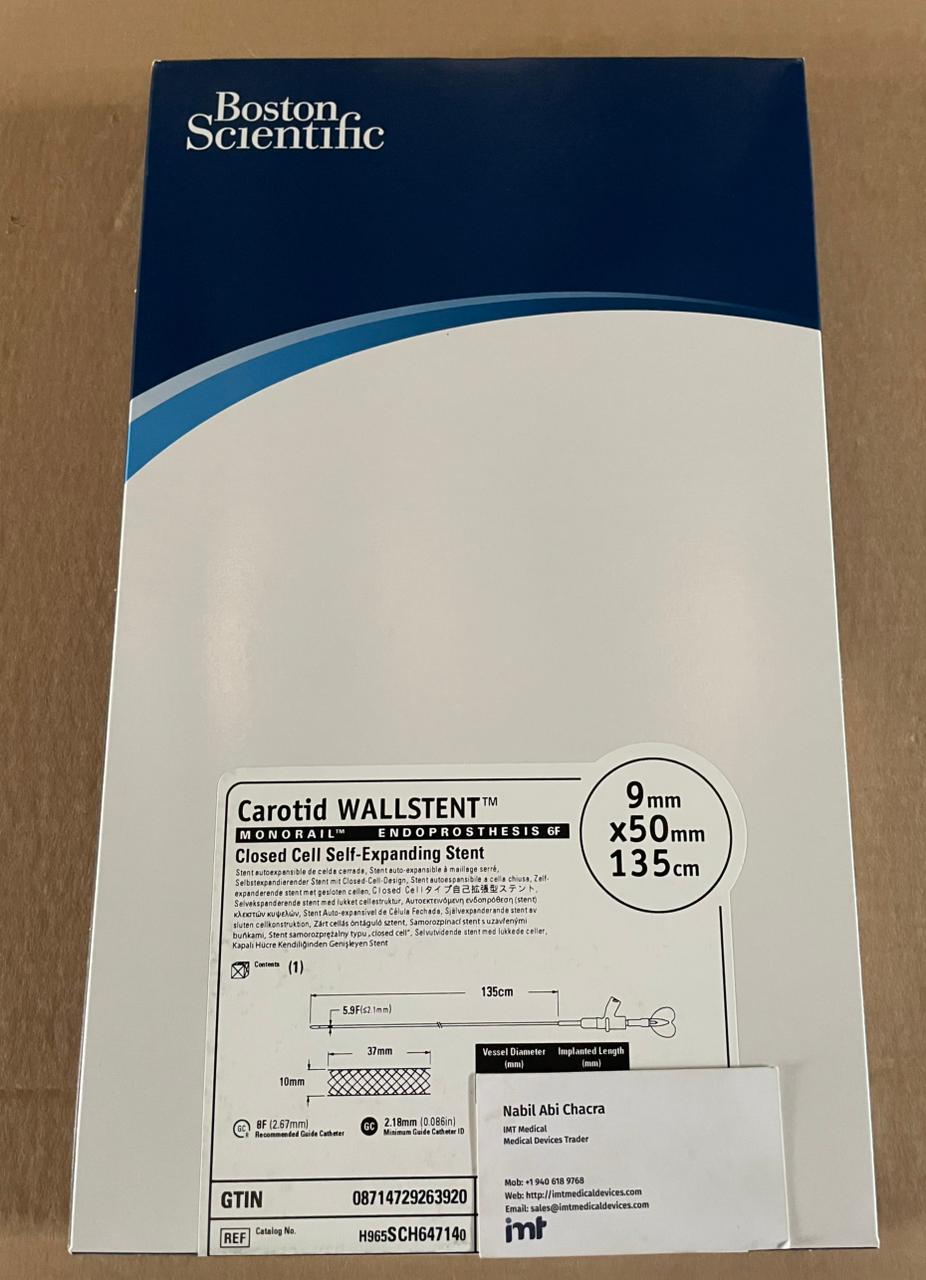
This analysis provides a technical justification for DES procurement, focusing on the latest polymer technologies and clinical safety profiles. You'll gain a clear understanding of how brands like Medtronic, Terumo, and Boston Scientific optimize interventional cardiology outcomes through advanced material science. We detail the procurement criteria for global supply chains, covering export logistics to 50 countries and the technical specifications required for modern catheterization labs. This overview ensures your facility identifies reliable global supply sources for essential coronary intervention tools. Review the Product Details for a complete inventory overview.
Key Takeaways
- Analyze how drug-eluting stent benefits significantly reduce In-Stent Restenosis (ISR) and Target Lesion Revascularization (TLR) compared to bare-metal alternatives.
- Compare technical specifications across DES generations, focusing on the clinical transition to ultra-thin struts and bioresorbable polymer coatings.
- Utilize a technical evaluation checklist for procurement, prioritizing deliverability, radial strength, and evidence-based "all-comers" trial data.
- Navigate global supply chain complexities, including cold chain requirements and documentation for efficient international medical device distribution.
- Optimize cardiology inventory through strategic sourcing from high-capacity B2B wholesalers and leading global manufacturers.
Understanding Drug-Eluting Stents (DES) in Modern Interventional Cardiology
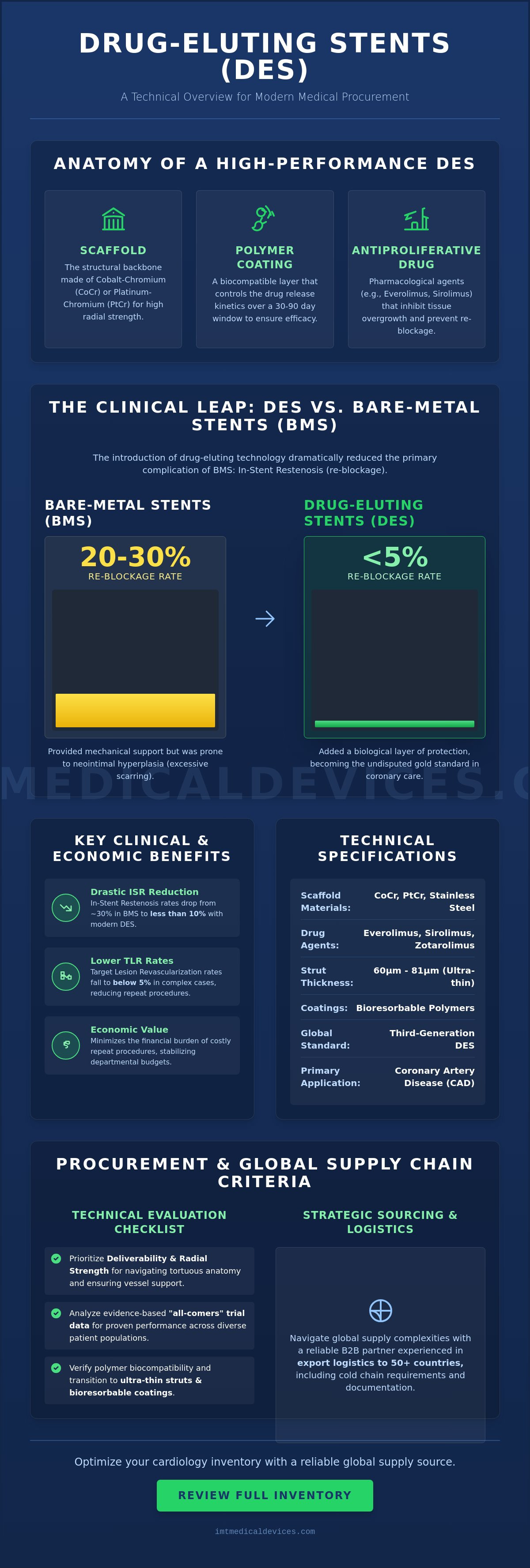
A drug-eluting stent (DES) is a precision-engineered triple-component medical device. It consists of a metallic scaffold, a polymer coating, and an active antiproliferative drug. In modern Percutaneous Coronary Intervention (PCI), these platforms are the primary tool for treating atherosclerotic coronary artery disease (CAD). Global clinical data indicates that over 4 million patients receive DES implants annually. This high volume of adoption is driven by the need for reliable vessel patency and reduced rates of re-hospitalization. Procurement officers focus on these devices because they represent the current peak of coronary hardware technology. The shift from legacy balloon angioplasty to third-generation DES has redefined procedural success in the cath lab. One of the primary drug-eluting stent benefits is the drastic reduction in clinical complications compared to older mechanical methods.
The Anatomy of a High-Performance DES Platform
The scaffold serves as the structural backbone of the device. Professional inventory lists often feature scaffolds made from Cobalt-Chromium (CoCr) or Platinum-Chromium (PtCr) alloys. These materials are chosen for their high radial strength and radiopacity. They allow for thinner struts, often measuring between 60 and 81 microns. Thinner struts facilitate easier navigation through tortuous anatomy. The drug delivery component typically utilizes the "limus" family of pharmacological agents. This includes Sirolimus, Everolimus, and Zotarolimus. These drugs inhibit the cell cycle to prevent excessive tissue growth inside the vessel. Polymer coatings act as the interface between the metal and the arterial wall. They control the drug release kinetics, ensuring the medication elutes over a specific window, usually 30 to 90 days. Modern polymers are designed for high biocompatibility to minimize local inflammation.
Evolution from Bare Metal Stents (BMS) to DES
The history of interventional cardiology is defined by the move away from Bare Metal Stents (BMS). While BMS provided essential mechanical support to prevent vessel recoil, they suffered from a significant "Achilles heel" known as neointimal hyperplasia. This excessive scarring often led to re-blockage rates of 20% to 30% within the first year. The introduction of drug elution solved this mechanical limitation by adding a chemical layer of protection. Current clinical consensus identifies DES as the gold standard for nearly all coronary lesions. Major manufacturers like Medtronic, Boston Scientific, and Terumo have refined these platforms to ensure long-term safety. Key drug-eluting stent benefits include a reduction in Target Lesion Revascularization (TLR) to levels frequently below 5%. This transition has moved the industry from simple mechanical opening to sophisticated biological management of the vessel wall.
- Scaffold Materials: CoCr, PtCr, Stainless Steel
- Drug Agents: Everolimus, Sirolimus, Zotarolimus
- Strut Thickness: 60µm - 81µm (model dependent)
- Primary Application: Coronary Artery Disease (CAD)
- Global Standard: Third-Generation DES Platforms
Primary Drug-Eluting Stent Benefits: Reducing Restenosis and Revascularization
Drug-eluting stents (DES) transformed interventional cardiology by addressing the limitations of bare-metal stents (BMS). The primary drug-eluting stent benefits center on the drastic reduction of In-Stent Restenosis (ISR). Clinical data shows ISR rates dropping from 30-40% in BMS patients to less than 10% with modern DES technology. This shift directly correlates with lower Target Lesion Revascularization (TLR) rates. Procurement officers prioritize DES to minimize the clinical and financial burden of repeat procedures. High-capacity distribution of these devices ensures that hospitals maintain the inventory required for high-volume cardiac centers.
Economic benefits for healthcare systems are substantial. Reducing the frequency of costly repeat procedures stabilizes departmental budgets. DES performance remains superior in complex patient subsets, including diabetic patients and those with multi-vessel disease. These high-risk groups benefit from the controlled drug release that maintains vessel patency over extended periods. Reliability in these cases makes DES the standard choice for modern coronary intervention protocols.
Inhibiting Neointimal Hyperplasia
Vessel injury during stent deployment triggers a natural healing response. This often results in neointimal hyperplasia, where smooth muscle cells migrate and proliferate, narrowing the vessel lumen. Neointimal hyperplasia is the primary target of DES technology, defined as the excessive growth of scar tissue within the stented segment. DES platforms utilize antiproliferative drugs like Sirolimus or Everolimus. These agents arrest the cell cycle to maintain luminal patency. For a deep dive into polymer coatings and drug release kinetics, see this Technical Review of DES Technology. This mechanical and pharmacological synergy ensures the vessel remains open during the critical healing phase.
Long-term Efficacy and Event-Free Survival (EFS)
DES implementation significantly improves Major Adverse Cardiac Events (MACE) markers. Long-term studies indicate higher Event-Free Survival (EFS) compared to BMS. This is critical for complex patient subsets where restenosis risks are elevated. Reducing TLR frequency avoids the need for invasive Coronary Artery Bypass Grafting (CABG) in many cases. This improves patient quality of life and lowers hospital readmission rates. Healthcare systems realize economic advantages through reduced resource utilization and streamlined patient management. One of the major drug-eluting stent benefits is the predictable long-term outcome, which simplifies follow-up care and reduces the strain on outpatient services.
IMT Medical Devices supplies high-performance coronary solutions from Medtronic, Terumo, and Boston Scientific to over 50 countries. Procurement teams can view our full inventory of cardiovascular products to ensure consistent supply chain reliability and access to premium medical technology.
Analyzing DES Generations: Polymer Biocompatibility and Thromboresistance
Drug-eluting stent technology has advanced through three distinct generations since the 2003 FDA approval of the first commercial platforms. Early first-generation DES, such as the Cordis Cypher, utilized 140-micron stainless steel struts. These thick-strut designs often led to delayed endothelialization and increased rates of late-stent thrombosis. Current premium models prioritize ultra-thin cobalt-chromium or platinum-chromium alloys to improve clinical outcomes and vessel integration.
Durable vs. Bioresorbable Polymer Coatings
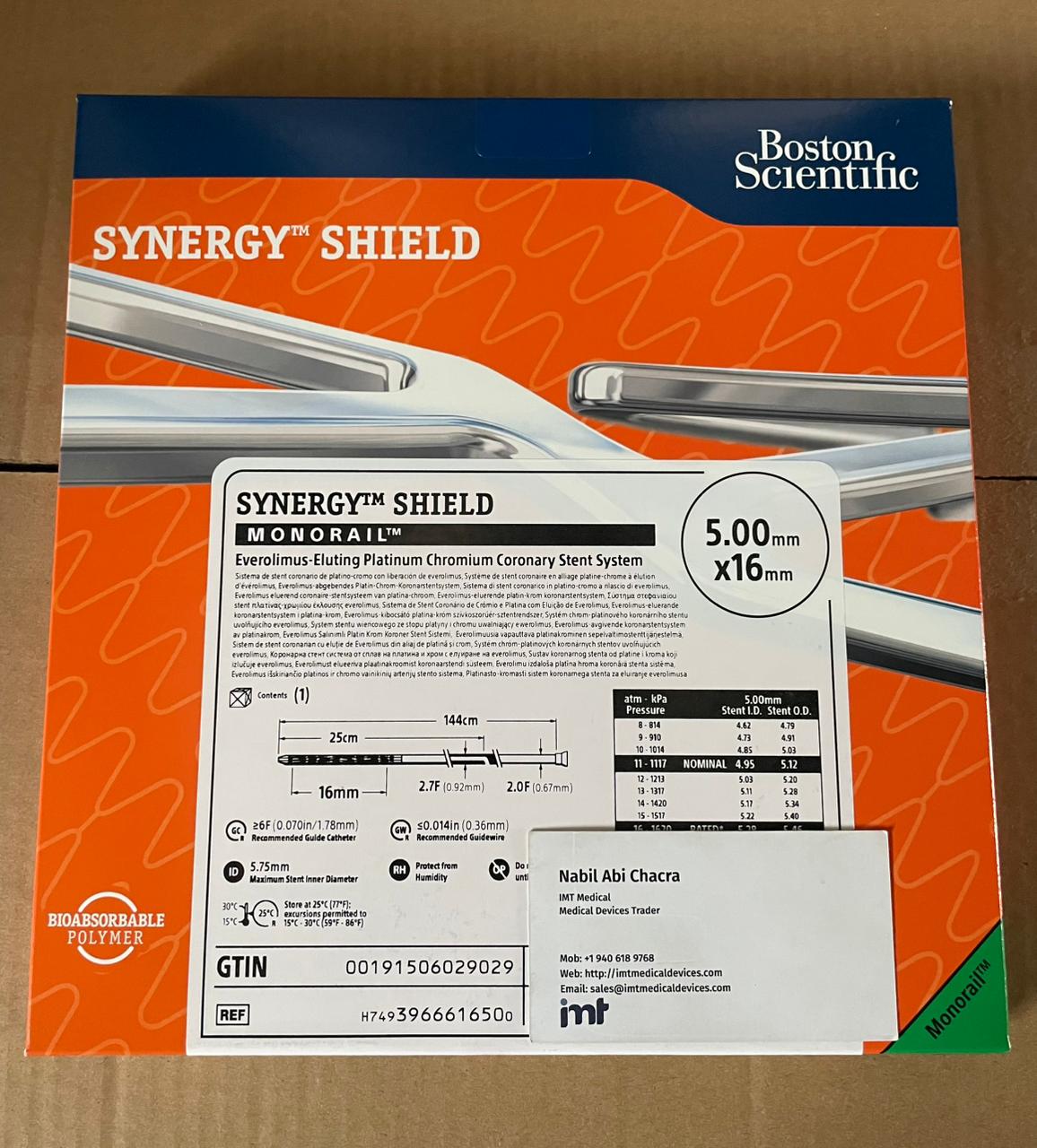
The polymer carrier controls drug release kinetics. Durable polymers remain on the stent permanently. While modern permanent polymers like the BioLinx system in Medtronic Resolute Onyx are highly biocompatible, they carry a theoretical risk of chronic low-grade inflammation. Bioresorbable polymers offer a different approach. These coatings, found in the Terumo Ultimaster or Boston Scientific Synergy, degrade fully within 3 to 4 months. This leaves behind a bare metal surface after the drug delivery phase is complete. One of the primary drug-eluting stent benefits of bioresorbable technology is the potential for shortened Dual Antiplatelet Therapy (DAPT) durations. This is critical for patients with high bleeding risks who cannot tolerate long-term anticoagulation.
- Durable Polymers: Provide continuous drug elution control and proven long-term structural integrity.
- Bioresorbable Polymers: Polymer degradation reduces the foreign body response and promotes faster vessel healing.
- Clinical Impact: These designs have allowed DAPT requirements to drop from 12 months to as little as 1 month in specific high-bleeding-risk patient cohorts.
Strut Thickness and Endothelialization
Strut thickness is a primary determinant of thromboresistance. Ultra-thin struts, typically ranging from 60 to 81 microns, create less turbulence in blood flow and cause less vessel wall penetration. This engineering choice accelerates the growth of the endothelial layer over the stent. Understanding drug-eluting stent benefits involves comparing these technical specifications across major brands:
- Medtronic Resolute Onyx: 81-micron Cobalt-Chromium strut; utilizes CoreWire technology for enhanced radiopacity.
- Boston Scientific Synergy: 74-micron Platinum-Chromium strut; features a bioresorbable abluminal coating.
- Terumo Ultimaster Tansei: 80-micron Cobalt-Chromium strut; employs gradient coating technology to reduce polymer load.
Thinner struts reduce the incidence of very late stent thrombosis, which is a complication occurring more than one year after implantation. Procurement officers should prioritize these latest-generation designs to minimize repeat revascularization rates and improve overall safety profiles in complex percutaneous coronary interventions. Data from the last decade confirms that reducing strut thickness below 100 microns significantly lowers the risk of target lesion failure.
Procurement Criteria for Healthcare Providers and Distributors
Medical procurement officers prioritize technical specifications and clinical validation. Evaluation starts with a robust technical checklist. Radial strength must prevent vessel recoil; radiopacity ensures precise placement under fluoroscopy. High-performing units offer superior drug-eluting stent benefits by reducing target lesion failure (TLF) rates below 5% in 12-month clinical studies. Procurement teams require robust "all-comers" trial data to confirm performance across diverse patient populations. Regulatory compliance remains a baseline. Only CE Mark and FDA-cleared devices enter the global supply chain. This rigor balances unit cost against long-term clinical performance and brand reputation.
- Deliverability: Ability to navigate distal lesions.
- Radial Strength: Resistance to compression from the arterial wall.
- Radiopacity: Visibility of markers under imaging.
- Clinical Backing: Peer-reviewed data from large-scale patient cohorts.
Assessing Deliverability and Crossability
Stent flexibility dictates success in treating tortuous anatomy and distal lesions. High trackability allows the device to navigate complex vessel geometry without damage. Procurement officers analyze profile measurements, specifically crossing profiles often under 0.040 inches. The delivery system, comprising the balloon and catheter, must provide consistent deployment pressure. Technical success depends on these trackability markers during high-stakes coronary interventions. If a stent doesn't cross the lesion, the procedure fails. It's vital to source devices with ultra-low profiles for complex cases.
Brand Reliability and Manufacturing Standards
Sourcing from industry leaders like Medtronic, Abbott, and Boston Scientific mitigates supply chain risks. These manufacturers maintain high-tier manufacturing standards and provide extensive technical documentation. Efficient medical device distribution expertise ensures product availability across international markets. Reliable logistics partners bridge the gap between manufacturer inventory and hospital demand. Authentic medical technology from established brands reduces the likelihood of product recalls or performance inconsistencies. Reliable procurement involves verifying export capabilities to ensure a steady supply of life-saving hardware.
Maximizing drug-eluting stent benefits requires a partnership with a distributor that understands technical specs and global logistics. Brand reputation reflects years of clinical trials and manufacturing refinement. For distributors, carrying recognized product codes like the Medtronic Resolute Onyx or Abbott Xience series signals a commitment to quality. Documentation must be exhaustive, covering everything from polymer biocompatibility to drug release kinetics. This data-driven approach facilitates rapid approval by hospital value analysis committees.
Secure high-performance inventory for your facility. Request a quote for wholesale medical devices and international shipping rates today.
Strategic Sourcing of DES: Global Distribution and Supply Chain Reliability
International medical procurement for interventional cardiology requires a robust logistical framework. The technical advantages and drug-eluting stent benefits are only realized when the device integrity is maintained from the manufacturer to the sterile field. This process involves complex climate-controlled storage and specialized handling. Polymer coatings on drug-eluting stents are sensitive to extreme temperature fluctuations. Professional B2B wholesalers utilize validated environmental monitoring to prevent degradation. Documentation remains a primary hurdle in global trade. Every export requires precise regulatory filings, including certificates of conformity and sterilization validation. Accurate paperwork ensures rapid customs clearance and prevents inventory bottlenecks in high-volume hospitals.
Accessing Premium Cardiology Brands Globally
Consolidated sourcing provides a significant advantage for regional distributors and large-scale cardiology labs. Accessing multiple Tier-1 brands through a single partner reduces administrative overhead. IMT Medical Devices serves as a central point for premium coronary intervention technology. Strategic distribution hubs in Dubai and Poland facilitate rapid global export. These locations serve as logistical anchors, allowing for efficient transit across Europe, Asia, and the Middle East.
- Medtronic: Resolute Onyx, Resolute Integrity
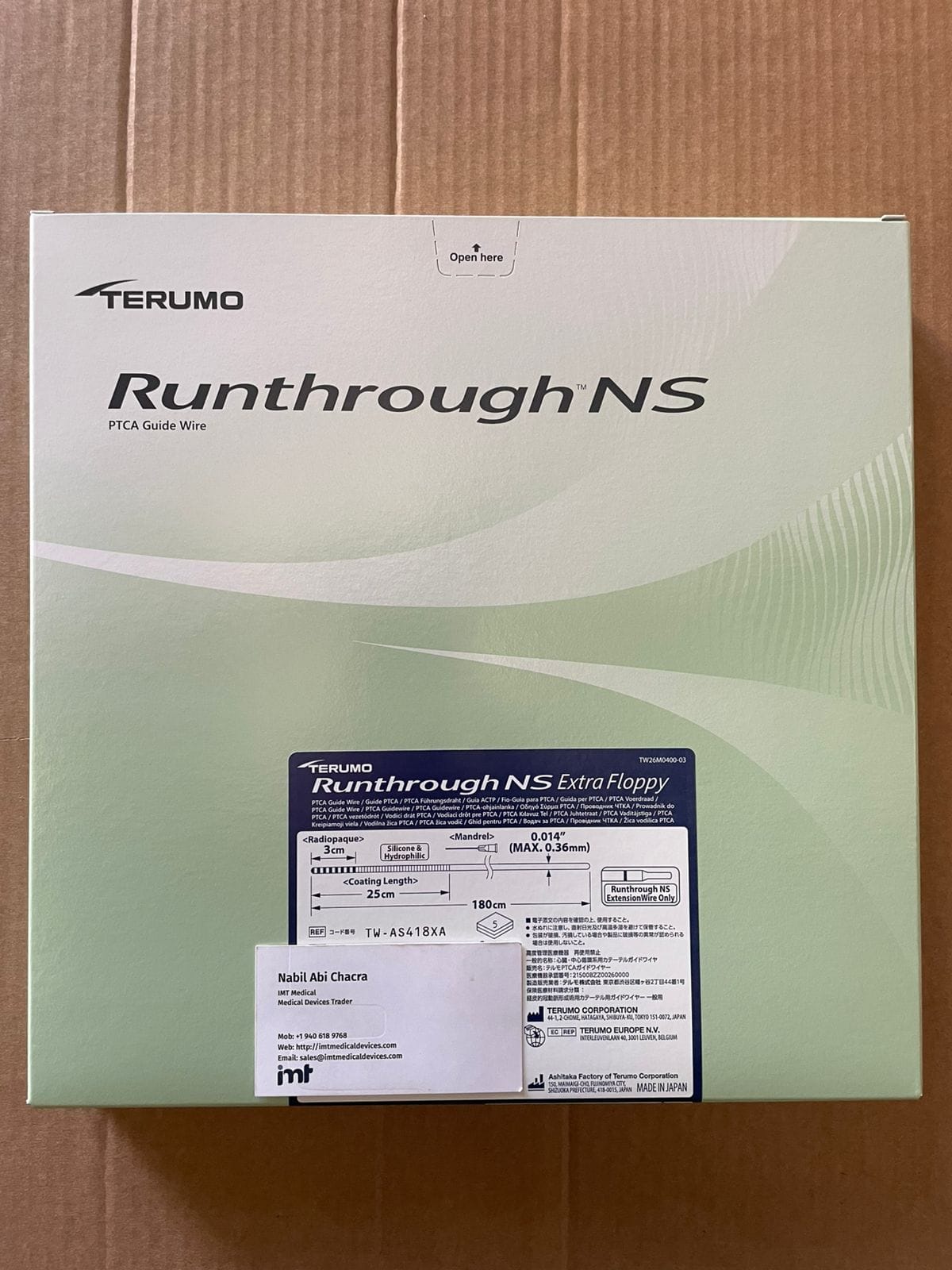
- Terumo: Ultimaster Tansei, Nobori
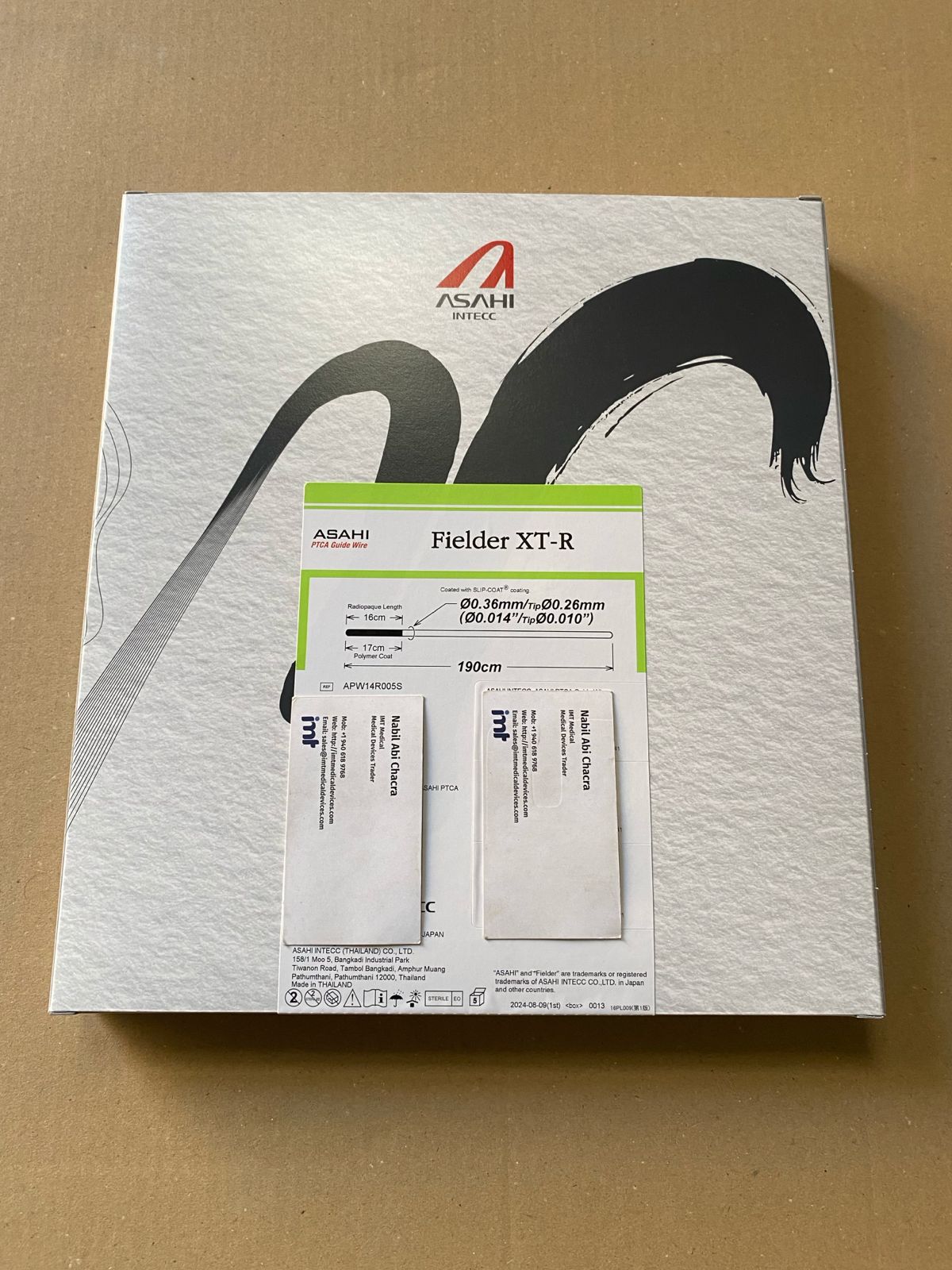
- Asahi Intec: Gaia, Corsair, Sion Blue guide wires
- Boston Scientific: Synergy, Promus Premier
Maintaining consistent inventory for emergency cardiac procedures is essential. B2B partners provide the scale necessary to buffer against manufacturer lead times. This reliability supports continuous clinical operations without the risk of stockouts. Large-scale procurement teams benefit from a unified supply chain that manages the specific requirements of Medtronic, Terumo, and Asahi Intec products simultaneously.
Logistical Efficiency in Medical Device Export
Navigating the regulatory landscape of 50 countries requires specialized expertise. Compliance with international standards ensures that every cardiac implant is authentic and traceable. Volume-based pricing models are vital for international B2B clients managing large-scale tenders or private hospital networks. Efficiency in the supply chain directly impacts the cost-effectiveness of coronary care units. Technical specifications for every model are verified before dispatch to ensure compatibility with existing lab hardware.
- Coronary Intervention: Balloon catheters, PTCA wires, DES platforms
- Neurovascular: Aspiration catheters, flow diverters, embolic coils
- Peripheral: PTA balloons, vascular stents
Reliable export partners act as a bridge between high-end manufacturing and global clinical need. Streamlined logistics and bulk availability define successful procurement strategies. For organizations seeking to optimize their inventory of premium cardiac technology, Contact IMT Medical Devices for specialized DES wholesale solutions.
Optimizing Global Cardiovascular Supply Chains
Effective interventional cardiology programs require consistent access to high-performance technology. We've seen how drug-eluting stent benefits translate into lower restenosis rates and improved patient outcomes through advanced polymer biocompatibility and refined drug-release kinetics. Procurement officers must prioritize these clinical advantages alongside logistical stability. IMT Medical Devices operates as an authorized exporter to over 50 countries, maintaining strategic distribution hubs in Georgia, UAE, Turkey, and Poland to ensure rapid fulfillment. It's our mission to bridge the gap between Tier 1 manufacturers and global healthcare facilities.
Our platform provides direct wholesale access to inventory from Medtronic, Boston Scientific, and Terumo. This focused approach eliminates supply chain volatility for critical cardiology supplies. By centralizing procurement through established international channels, providers maintain the technical standards required for complex percutaneous coronary interventions. We're ready to facilitate your next high-volume order with the efficiency your surgical department demands. We look forward to supporting your facility's operational growth.
View our full inventory of premium Drug-Eluting Stents and Cardiology Supplies
Frequently Asked Questions
What is the main advantage of a drug-eluting stent over a bare-metal stent?
The primary advantage of a drug-eluting stent over a bare-metal stent is the significant reduction in in-stent restenosis (ISR) rates. Clinical data shows that DES reduces ISR to less than 5 percent; bare-metal stents often see rates between 20 percent and 30 percent. This reduction is one of the key drug-eluting stent benefits for procurement officers evaluating long-term patient outcomes. It minimizes the need for repeat revascularization procedures.
How long does the drug elution process typically last in a modern DES?
Modern DES systems typically complete the drug elution process within 30 to 90 days. Most polymer-based platforms release 80 percent of the anti-proliferative drug during the first 30 days post-implantation. This timeline is critical to prevent early-stage neointimal hyperplasia. By 90 days, the drug is fully eluted; it leaves the polymer or bare metal scaffold to provide structural support to the vessel wall.
Are drug-eluting stents safe for patients with diabetes?
Drug-eluting stents are safe and recommended for patients with diabetes. Diabetic patients face a 50 percent higher risk of restenosis compared to non-diabetics. Clinical studies indicate that DES platforms reduce these risks effectively. They're the standard of care for this high-risk population. Procurement teams should prioritize DES for facilities treating high volumes of diabetic patients because it improves clinical efficacy and patient safety.
What is the risk of stent thrombosis with latest-generation DES?
The risk of stent thrombosis with latest-generation DES is extremely low, often falling below 1 percent at the one-year mark. Trials like BIO-RESORT demonstrate that thin-strut cobalt-chromium stents achieve definite or probable thrombosis rates between 0.7 percent and 0.9 percent. These figures represent a major improvement over first-generation devices. Enhanced biocompatibility and thinner struts contribute to these safety levels in modern clinical practice.
Do drug-eluting stents require long-term medication?
Patients with drug-eluting stents require Dual Antiplatelet Therapy (DAPT) for a period of 6 to 12 months. ESC and ACC guidelines specify 6 months for stable coronary artery disease and 12 months for acute coronary syndrome. Shortened DAPT durations of 1 to 3 months are now possible with specific models like the Medtronic Resolute Onyx. It's vital to follow these protocols to prevent late stent thrombosis events.
Which brands are considered the industry leaders in DES technology?
Industry leaders in DES technology include Medtronic, Boston Scientific, and Terumo. These manufacturers produce top-tier models such as the Resolute Onyx, Synergy, and Ultimaster. We facilitate the export of these high-demand brands to over 50 countries. These products are recognized for their technical precision and proven clinical track records in global markets. Procurement officers rely on these brands for consistent performance and reliability.
How does strut thickness affect the clinical benefits of a stent?
Thinner struts improve clinical outcomes by reducing vessel wall injury and accelerating the healing process. Modern stents feature strut thicknesses ranging from 60 microns to 81 microns. Research shows that struts under 100 microns lead to lower rates of periprocedural myocardial infarction. These drug-eluting stent benefits result from improved deliverability and less turbulent blood flow within the treated vessel; it ensures better long-term patency for the patient.
Can drug-eluting stents be used in complex coronary lesions?
Drug-eluting stents are highly effective for treating complex coronary lesions, including bifurcations and Chronic Total Occlusions (CTO). Success rates for CTO procedures using modern DES platforms now exceed 85 percent in specialized cardiac centers. Their design allows for better navigation through tortuous anatomy. Using these stents in complex cases reduces the likelihood of target lesion failure compared to older technology; it provides a reliable solution for difficult interventions.