Pacemaker Lead Technology: Engineering Standards and Pacing System Performance in 2026
What is Pacemaker Lead Technology and Why Does Design Matter?
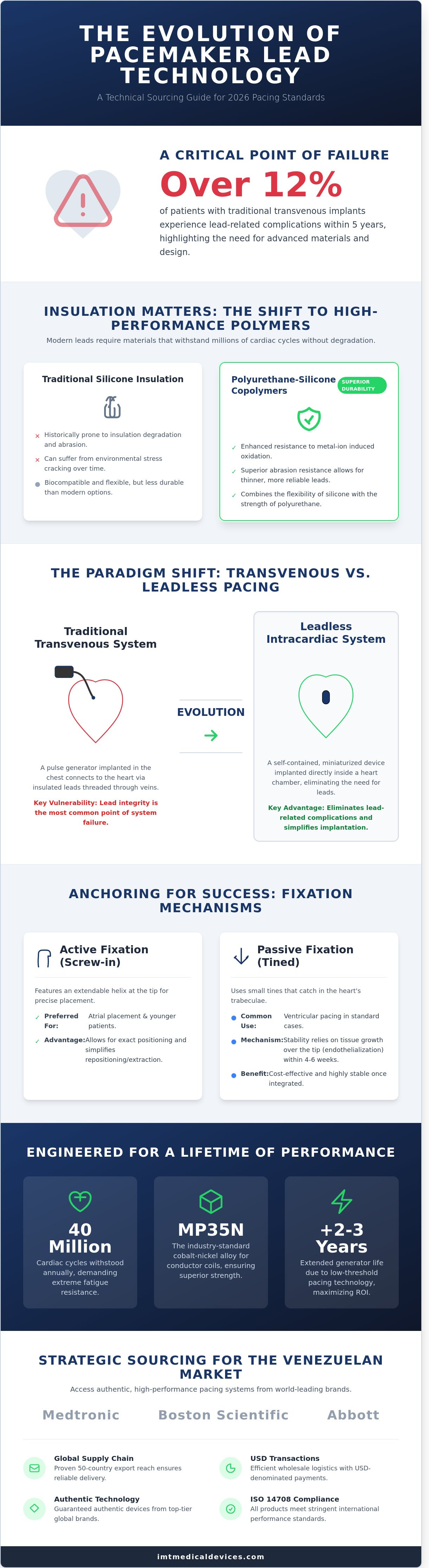
Pacemaker lead technology represents the critical interface connecting a pacemaker's pulse generator to the heart's myocardium. These sophisticated, insulated wires are responsible for sensing intrinsic cardiac activity and delivering the precise electrical impulses needed to regulate heart rhythm. The design of these leads is a primary determinant of the entire pacing system's long-term performance and reliability. Lead failure, often due to insulation degradation or conductor fracture, is a significant clinical concern, making the engineering and material science behind lead construction paramount for procurement professionals.
- Definition: Pacemaker leads are the insulated electrical conductors that connect the pacemaker generator to the heart muscle.
- Evolution: Pacing systems have evolved from simple unipolar designs to advanced bipolar and multipolar configurations, demanding more complex and durable lead technology.
- Performance Impact: The longevity and reliability of a pacing system are fundamentally tied to the durability and biocompatibility of its leads.
- Clinical Impact: Lead failure can result in loss of pacing, inappropriate shocks (in ICDs), and the need for high-risk lead extraction procedures.
The Role of the Lead in Cardiac Rhythm Management
A pacemaker lead performs two essential functions: sensing and pacing. It must accurately detect the heart's natural electrical signals (sensing) to inhibit pacing when unnecessary, and it must deliver low-energy electrical stimuli (pacing) to trigger a heartbeat when required. Efficient energy transfer is critical; leads with low pacing thresholds—the minimum energy needed to capture the myocardium—help preserve the pacemaker's battery life, extending the device's service interval. For healthcare systems managing a comprehensive cardiac care portfolio, understanding lead technology is as vital as evaluating other interventional devices like Drug-Eluting Stents.
According to pacemaker technology, this is a well-documented area of ongoing research and practical application.
Active vs. Passive Fixation Mechanisms
The method by which a lead secures itself to the heart wall is known as fixation. The choice between active and passive mechanisms is a key clinical and procurement consideration.
- Active Fixation (Screw-in): These leads feature a small, extendable helix (screw) at the tip that is actively screwed into the myocardial tissue. This design offers precise placement, allows for repositioning during implant, and is preferred for its stability in various anatomical locations.
- Passive Fixation (Tined): These leads have soft, flexible tines (prongs) near the tip that lodge in the trabeculae of the heart chamber. While a more traditional approach that relies on long-term tissue growth (endothelialization) for stability, it is often used in the ventricular apex.
Material Science: Insulation and Conductor Technology in Modern Leads
The reliability of pacemaker lead technology is a direct function of its material composition. Modern leads are engineered for extreme flexibility and fatigue resistance to withstand the millions of cardiac cycles they endure annually. Key innovations in insulation and conductor materials have dramatically improved long-term performance and safety, particularly regarding MRI compatibility.
- Insulation Evolution: A major engineering shift has been the transition from early silicone formulations to advanced, high-performance polyurethane and hybrid materials.
- Conductor Materials: The industry standard for conductors is MP35N, a nickel-cobalt alloy known for its exceptional strength, fatigue resistance, and biocompatibility. Some designs incorporate silver cores to reduce electrical resistance.
- Steroid-Eluting Tips: Most modern leads feature a tip that slowly elutes a small dose of steroid (dexamethasone) to minimize local inflammation at the lead-tissue interface, which helps maintain low and stable pacing thresholds over time.
Advanced Insulation Materials
Insulation prevents electrical leakage and protects the conductor wires from the body's environment. The choice of material impacts lead diameter, handling, and long-term durability.
Research published by Pacemaker Lead Reliability Data shows that this is a well-documented area of ongoing research and practical application.
- Silicone Rubber: A historically proven material valued for its biostability, flexibility, and resistance to body fluids. Its primary drawback is a higher coefficient of friction and relative bulkiness compared to newer materials.
- Polyurethane (e.g., Optim™, Pellathane™): Offers superior tensile strength, abrasion resistance, and a lower friction coefficient, allowing for thinner lead profiles. Early formulations faced issues with cracking, but modern polyurethanes like Optim have demonstrated excellent long-term biostability.
- Hybrid Designs: Some leads use a co-polymer or layered design, combining an inner layer of silicone for its biostability with an outer layer of polyurethane for its toughness and lubricity.
Conductor Design and Reliability
The internal conductor coil transmits the electrical signal. Its design is critical for preventing fractures and ensuring patient safety during MRI scans.
- Multifilar vs. Unifilar Coils: Multifilar (multi-strand) coils offer built-in redundancy; if one strand fractures, others can maintain the electrical circuit. This design is more resistant to complete failure than a single-strand (unifilar) coil.
- Coaxial vs. Coradial Designs: In bipolar leads, two conductors are required. Coaxial designs place one coil inside another, while coradial designs run multiple coils parallel to each other. Coradial designs generally allow for a smaller lead diameter.
- Optimizing for MRI Compatibility: Modern leads are engineered to be "MRI-conditional." This involves modifying the lead length, conductor shape, and terminal connections to minimize the risk of radiofrequency-induced heating during an MRI scan.
Traditional Transvenous Leads vs. Leadless Pacemaker Technology
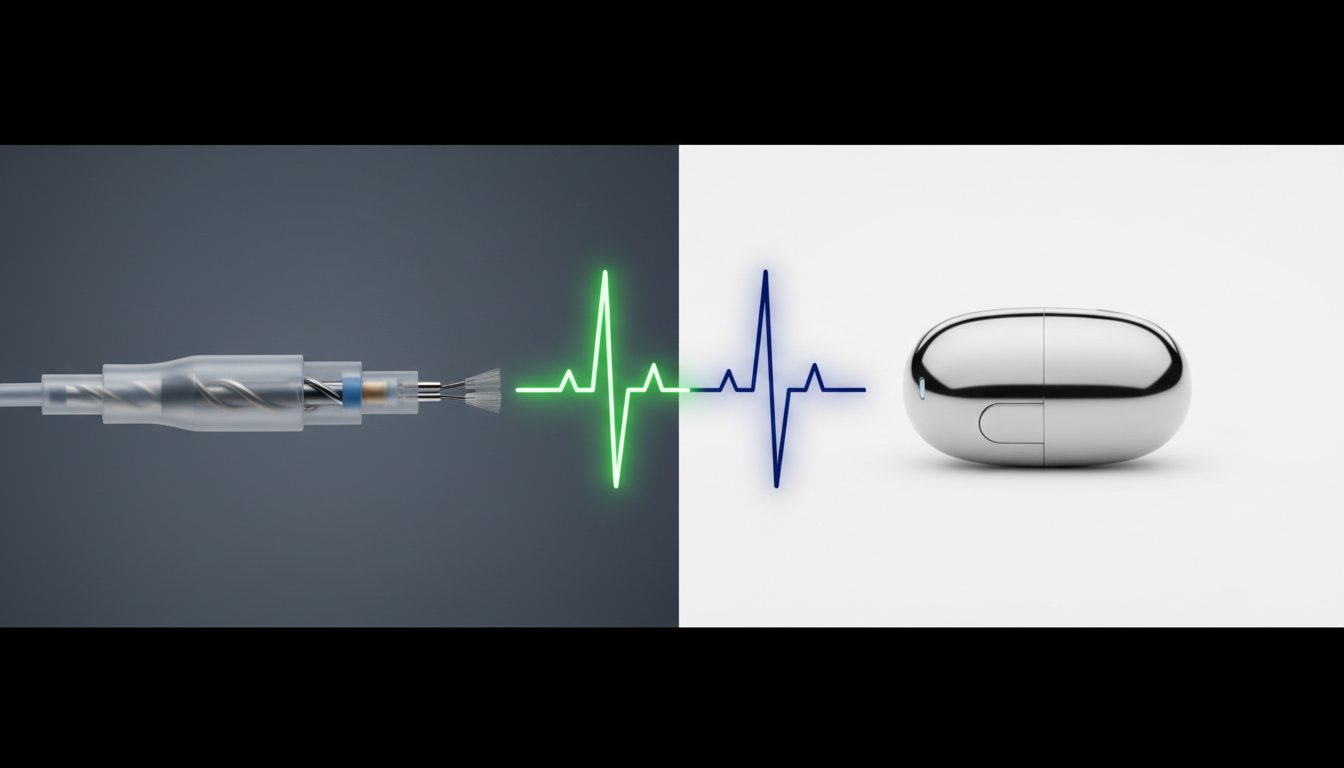
For decades, the transvenous lead has been considered the "Achilles' heel" of conventional pacing systems, being the component most prone to failure. This vulnerability spurred the development of leadless pacemaker technology, which integrates the pulse generator and electrode into a single, compact device implanted directly inside the heart. The current market is dominated by systems like the Medtronic Micra™ and Abbott Aveir™.
| Feature | Transvenous Pacing System | Leadless Pacing System |
|---|---|---|
| Complication Profile | Lead dislodgement, fracture, insulation breach; generator pocket infection. | Device dislodgement, cardiac perforation, vascular access complications. Eliminates lead and pocket issues. |
| Pacing Capability | Single, dual, and multi-chamber (CRT) pacing available. | Primarily single-chamber (ventricular). Dual-chamber systems are emerging but less common. |
| Battery Replacement | Relatively simple generator replacement procedure via subcutaneous pocket. | Device is typically abandoned and a new one implanted. Retrieval is complex and reserved for specific cases. |
| Procurement Cost | Lower upfront device cost. | Significantly higher upfront device cost. |
| Long-Term ROI | Potential costs from lead revisions and pocket-related complications over the long term. | Potential savings by avoiding long-term lead- and pocket-related revision surgeries. |
Pros and Cons of Leadless Systems
The primary advantage of leadless pacemakers is the complete elimination of complications associated with the transvenous lead and the generator pocket. However, current technology has limitations, including a primary focus on single-chamber ventricular pacing and challenges related to battery depletion, as the entire device must be replaced or abandoned. Retrieval techniques exist but are not routine.
Selecting the Right System for Your Inventory
From a procurement standpoint, the decision to stock leadless versus traditional systems depends on clinical need and economic analysis. Leadless systems are often prioritized for patients with limited venous access, a high risk of infection, or a history of lead-related complications. A cost-benefit analysis must weigh the higher initial acquisition price against the potential long-term savings from avoiding costly lead revision procedures.
Technical Metrics for Evaluating Pacemaker Lead Reliability
For procurement officers and hospital administrators, evaluating pacemaker lead technology requires a focus on objective performance metrics that correlate with long-term reliability and clinical efficacy.
- Pacing Threshold Stability: A low and stable pacing threshold over time indicates a healthy lead-tissue interface and is crucial for maximizing battery longevity.
- Impedance Measurements: Lead impedance provides critical diagnostic information. A sudden drop may signal an insulation breach, while a sharp rise can indicate a conductor fracture. - Handling Characteristics: Clinicians value leads with good torque transfer, pushability, and flexibility, which facilitate easier and safer implantation. - Industry Standards: Leads from major manufacturers undergo rigorous bench testing, including accelerated life cycle simulations, to validate their mechanical durability.
Critical Performance Benchmarks
When reviewing product specifications, focus on these key benchmarks:
- Threshold Measurements (Volts/ms): Optimal chronic thresholds are typically below 1.0V at a 0.4ms pulse width.
- Sensing Amplitudes: R-wave amplitudes should be consistently above 5mV to ensure accurate rhythm detection and avoid oversensing.
- Lead Diameter (French size): Smaller lead diameters (e.g., <6 French) are advantageous, especially in patients requiring multiple leads, as they reduce the risk of venous crowding and thrombosis.
Post-Market Surveillance and Reliability Reports
A crucial step in procurement is to analyze manufacturer-published Product Performance Reports (PPR). These documents provide real-world data on lead performance, including survival probability curves for specific models over many years. Analyzing these reports helps quantify the long-term reliability of a lead. Sourcing from globally recognized brands like Medtronic, Boston Scientific, and Abbott ensures access to devices with extensive post-market surveillance data and a proven track record of performance.
Strategic Sourcing: Procuring Global Pacing Lead Brands
For international distributors and large healthcare systems, securing a reliable supply of high-quality pacing leads is a significant logistical challenge. IMT Medical Devices serves as a critical partner in the global cardiac rhythm management (CRM) supply chain, providing wholesale access to premium brands and managing the complexities of international trade.
Wholesale Product Sales and Inventory Management
IMT Medical Devices facilitates the bulk sourcing of pacing systems from leading manufacturers. This includes access to a wide range of Medtronic pacing leads and delivery systems, such as those used with their advanced catheter technologies. For more information on related Medtronic products, see our review of the Medtronic Launcher Guide Catheter. We help high-turnover cardiology departments manage inventory effectively, ensuring the right technology is available when needed through B2B pricing tiers designed for international procurement.
Global Export and Logistics Excellence
With experience exporting to over 50 countries, IMT navigates complex regulatory landscapes to ensure seamless cross-border trade. Our strategic presence in key international logistics hubs ensures efficient global distribution and compliance. We specialize in the handling of sensitive medical implants, including cold chain management, to guarantee product integrity upon arrival. This expertise in global distribution is central to our operational model, as detailed in our analysis of global medical technology distribution.
Frequently Asked Questions (FAQs)
What is the average lifespan of a modern pacemaker lead?
Modern pacemaker leads are designed to last for the patient's lifetime. While failures can occur, high-quality leads from major manufacturers have reported survival rates exceeding 95% at 10 years post-implant.
How do leadless pacemakers differ from traditional systems in terms of technology?
Leadless pacemakers are self-contained devices implanted directly in the heart, combining the battery and electrode into one unit. Traditional systems have a separate pulse generator implanted in the chest, connected to the heart via transvenous leads.
Which insulation material is superior: silicone or polyurethane?
Neither is definitively superior; they offer a trade-off. Modern polyurethane (like Optim) provides higher strength and allows for thinner leads, while silicone has a longer track record of proven biostability. Many premium leads now use hybrid designs to leverage the benefits of both.
Are all modern pacemaker leads MRI-conditional?
Most, but not all. It is critical to verify the specific model and its compatibility with MRI scans. "MRI-conditional" means the device is safe for MRI under specific conditions related to the scanner's field strength and settings.
What are the main causes of pacemaker lead failure?
The primary causes are conductor fracture (a break in the internal wire) due to mechanical stress, and insulation failure (a breach in the protective coating), which can lead to electrical shorting.
How can hospitals optimize their pacing lead inventory?
Hospitals can optimize inventory by partnering with a wholesale distributor to consolidate brands, analyzing historical usage data to forecast demand, and balancing stock of standard-use leads with specialty leads (e.g., for specific anatomies or MRI needs).
What brands are considered the gold standard in pacemaker lead technology?
Medtronic, Boston Scientific, and Abbott are widely regarded as the market leaders, with extensive clinical data and long-term performance reports backing their lead technologies.