Reliable Interventional Cardiology Devices Supplier Guide
The global interventional cardiology market is projected to reach 31.12 billion USD in 2026, with stents alone representing 44.5% of that volume. For procurement professionals, the primary challenge isn't just finding inventory; it's managing the fragmentation of a supply chain where specialized hardware must meet the FDA’s updated Quality Management System Regulation (QMSR) and EU MDR standards. Securing a reliable interventional cardiology devices supplier that offers consolidated access to Medtronic, Terumo, and Boston Scientific is now a logistical necessity for high-capacity healthcare systems. You need a partner that functions as a high-speed inventory feed rather than a traditional vendor.
Managing multiple international manufacturers while handling complex customs documentation often leads to operational bottlenecks. We understand that your priority is rapid information retrieval and immediate product availability. This guide provides a comprehensive roadmap for streamlining the procurement of drug-eluting stents, PTCA balloon catheters, and pacemakers. We'll outline specific strategies for manufacturer selection, high-volume international logistics, and the technical documentation required to ensure a verified, continuous supply of life-saving cardiology technology across global markets.
Key Takeaways
- Transition to consolidated B2B procurement models to optimize supply chain efficiency for large-scale hospital networks.
- Identify critical inventory requirements for modern catheterization labs, focusing on high-volume sourcing from a reliable interventional cardiology devices supplier.
- Evaluate manufacturer-specific advantages across the portfolios of Medtronic, Terumo, and Boston Scientific to align procurement with clinical demand.
- Navigate complex international logistics, including cold chain management and essential regulatory documentation for the export of implantable devices.
- Leverage high-capacity global wholesaling to secure a verified and consistent supply of Drug-Eluting Stents and PTCA Balloon Catheters.
Global Landscape of Interventional Cardiology Device Supply
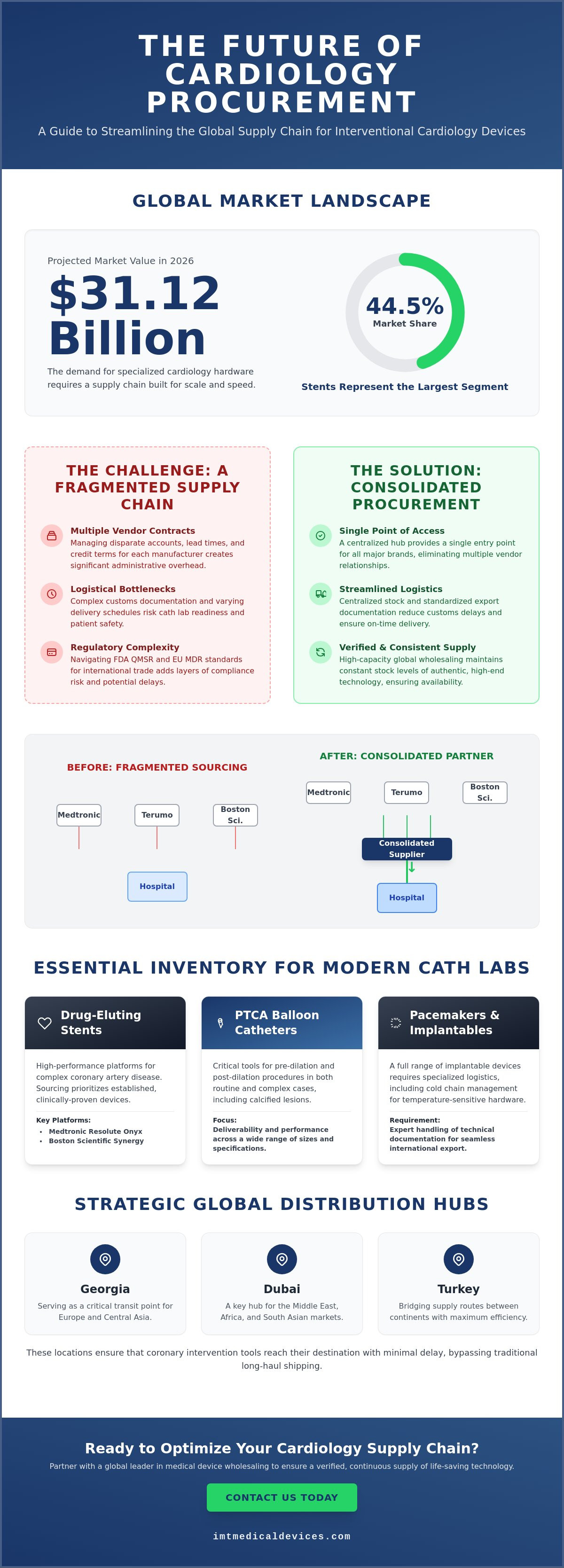
In 2026, the role of a global interventional cardiology devices supplier is defined by logistical precision and inventory depth. The global market for these specialized tools is valued at approximately 31.12 billion USD. Stents alone account for 44.5% of this market share. Hospital networks are rapidly moving away from fragmented, small-scale purchasing. They're adopting consolidated B2B procurement models to streamline high-volume operations. This transition is essential to support the increasing volume of interventional cardiology procedures performed across international healthcare systems. Strategic wholesale hubs now provide the required scale and manufacturer access that individual direct channels often struggle to maintain.
Direct sourcing from manufacturers often introduces administrative bottlenecks. Procurement professionals must manage separate accounts, varying credit terms, and disparate lead times for Medtronic, Terumo, and Boston Scientific. Centralized hubs eliminate these hurdles. They provide a single point of entry for coronary stents and other critical hardware. This efficiency is vital as PCI volumes continue to rise globally. The demand for next-generation drug-eluting stent (DES) technology requires a supplier capable of maintaining constant stock levels despite global market fluctuations.
Procurement Challenges in a Fragmented Market
Managing multiple vendor contracts consumes significant administrative resources. Discrepancies in delivery schedules can compromise cath lab readiness and patient safety. Supply chain volatility, influenced by regulatory shifts like the FDA's new Quality Management System Regulation (QMSR), adds further complexity to international trade. A master distributor serves as a logistical anchor by centralizing stock and standardizing export documentation across borders. This consolidation reduces the risk of customs delays and ensures that essential devices are available when clinical demand spikes.
The Strategic Importance of Multi-Brand Inventory
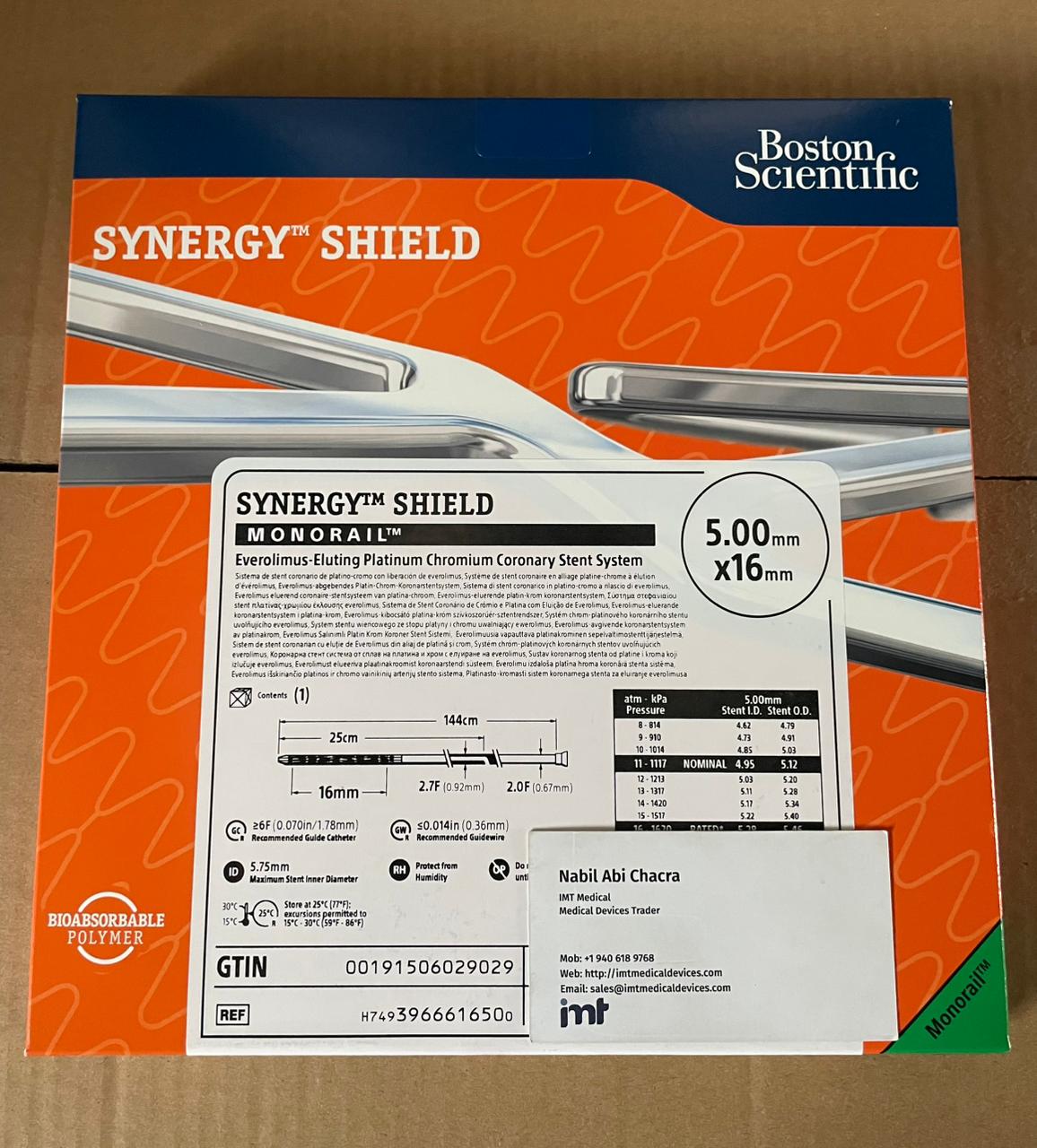
Clinics require access to specific technical platforms to meet diverse patient needs. The Medtronic Resolute Onyx and Boston Scientific Synergy stents offer different clinical advantages; clinicians must have the freedom to choose based on vessel morphology. A reliable interventional cardiology devices supplier maintains inventory across all major manufacturers to ensure this clinical flexibility. Cost-efficiency is achieved through bulk procurement, while clinical standards are upheld by providing authentic, high-end technology. Regional distribution hubs in Georgia, Dubai, and Turkey serve as critical transit points. These locations ensure that coronary intervention tools reach their destination with minimal delay, bypassing the traditional delays associated with long-haul manufacturer shipping.
Essential Inventory for Modern Catheterization Laboratories
Modern cath lab operations depend on immediate access to specialized hardware SKUs. A high-capacity interventional cardiology devices supplier must provide a logistical bridge between manufacturers and clinical environments. Inventory management focuses on high-turnover items like stents and catheters alongside critical implantables. In 2026, stents represent 44.5% of the global market share. Ensuring a verified supply of these devices is the primary objective for procurement professionals managing hospital networks. Efficient sourcing prevents procedural delays and ensures that life-saving technology is available for every PCI case.
Coronary Intervention Hardware
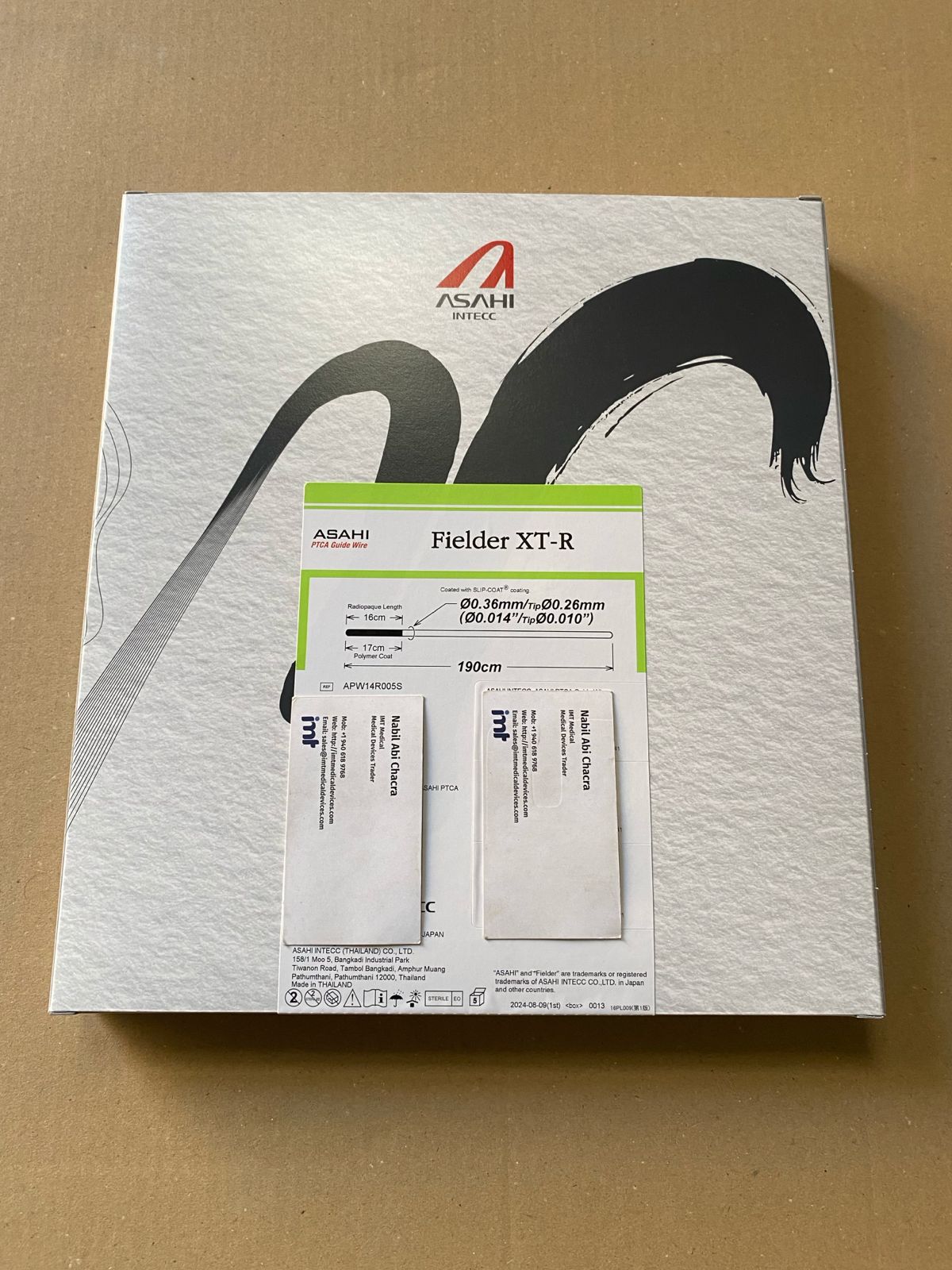
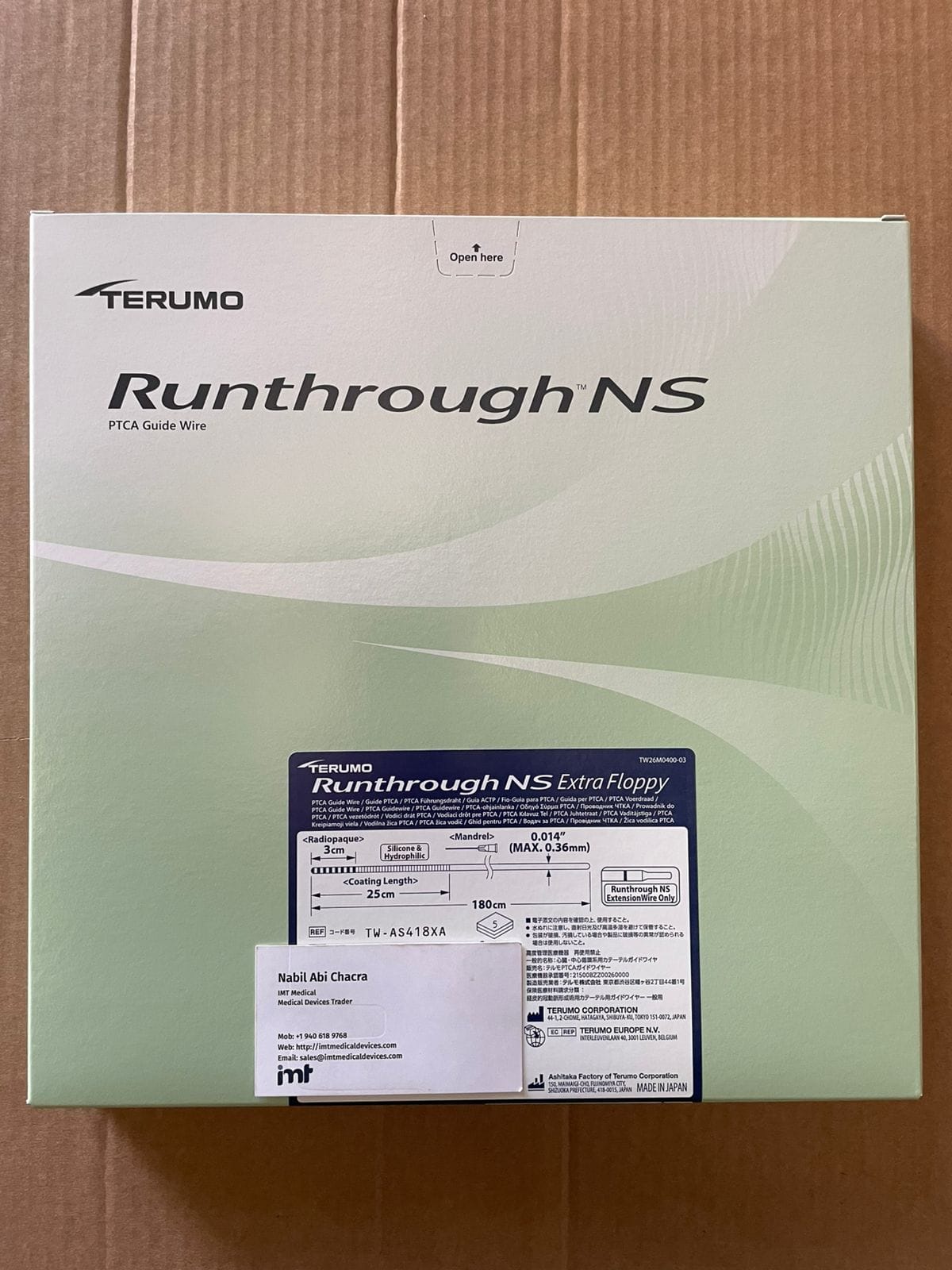
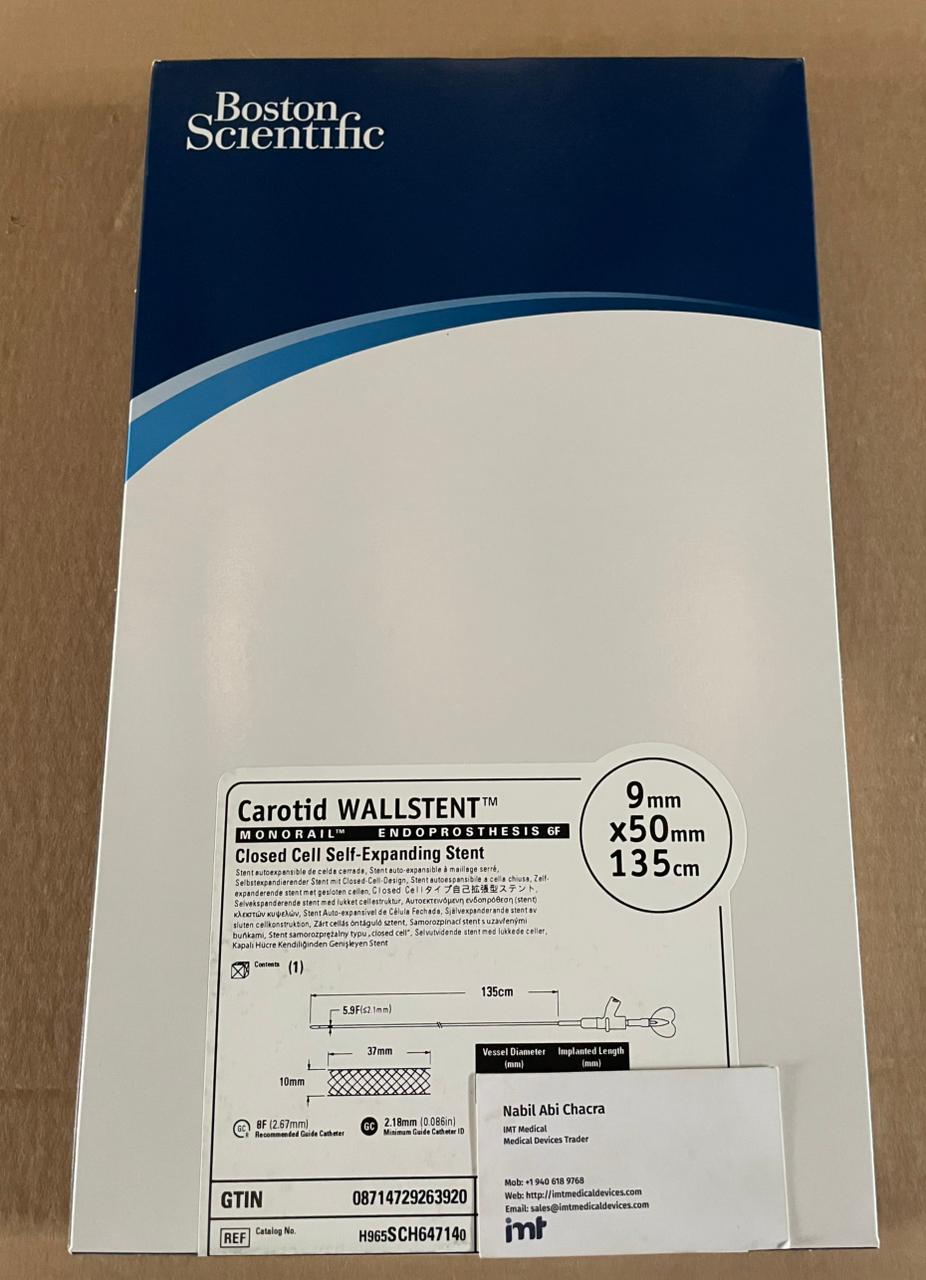
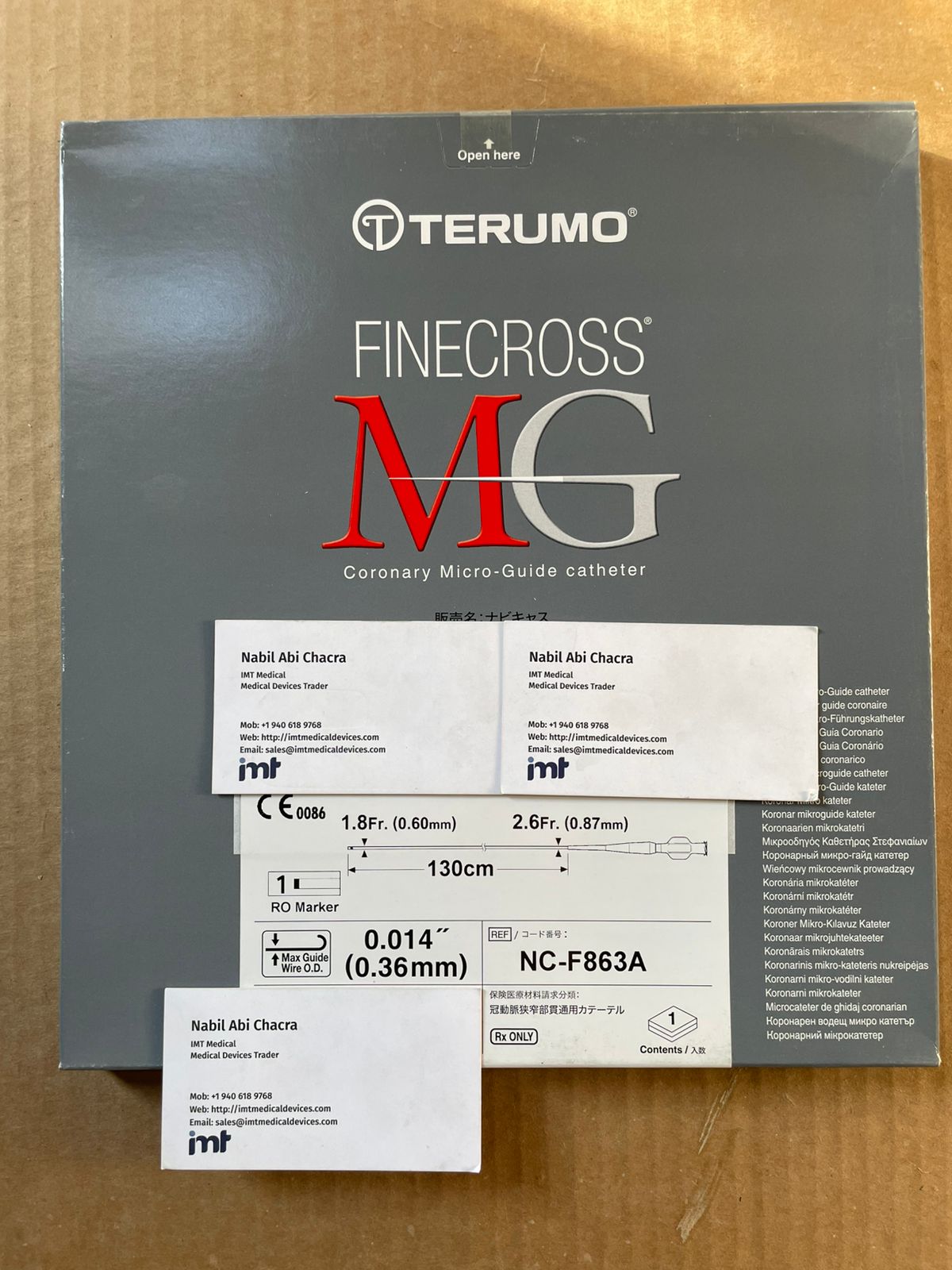
Technical requirements for drug-eluting stents focus on radial strength, deliverability, and polymer biocompatibility. Procurement protocols prioritize established platforms such as the Medtronic Resolute Onyx and Boston Scientific Synergy. These devices are essential for treating complex coronary artery disease. Sourcing high-performance PTCA balloon catheters is equally critical. These tools are used for pre-dilation and post-dilation in calcified or complex lesions. Access systems rely on precise specifications for coronary guidewires and guiding catheters. Brands like Asahi Intec and Terumo are the industry standard for torque control and trackability. Procurement teams can browse the full coronary intervention catalog to verify current stock levels and technical codes.
Cardiac Rhythm Management and Electrophysiology
Cardiac Rhythm Management (CRM) requires a separate logistical framework. This category includes permanent pacemakers and Implantable Cardioverter Defibrillators (ICDs). In April 2026, the FDA approved the Biotronik Acticor Sky and Rivacor Sky systems, introducing new standards for implantable longevity and diagnostic capability. Procurement professionals must evaluate lead performance and battery life cycles during vendor selection. Electrophysiology (EP) labs require high-density mapping catheters and ablation tools. Bulk sourcing strategies for EP hardware ensure cost-efficiency while maintaining access to premium brands like Medtronic and Boston Scientific. Surgical staplers and peripheral stents round out the necessary inventory for comprehensive cardiovascular care.
Effective inventory management also involves strict adherence to regulatory compliance for cardiology devices. This ensures all hardware meets international safety standards and Unique Device Identification (UDI) requirements. A streamlined interventional cardiology devices supplier manages these certifications internally. This allows clinics to focus on patient outcomes rather than documentation hurdles. Centralized sourcing of diagnostic guide wires and surgical hardware minimizes supply chain fragmentation and prevents procedural delays in high-volume cardiac centers.
Evaluating Manufacturer Portfolios: Medtronic, Terumo, and Beyond
Brand reputation serves as the primary trust signal in high-stakes clinical environments. Procurement teams don't just buy hardware; they buy the reliability of established global manufacturers. A strategic interventional cardiology devices supplier provides access to diverse technical platforms, allowing clinicians to tailor interventions to specific patient vessel morphologies. This clinical flexibility directly impacts procedural success rates and long-term patient outcomes. Relying on a single-brand catalog limits options for complex cases where specific hardware specifications are non-negotiable.
Medtronic remains a dominant force in both DES and CRM technology. Their Resolute Onyx platform is known for its thin-strut design and superior deliverability in tortuous anatomy. In contrast, the Boston Scientific Synergy platform utilizes a bioabsorbable polymer to address long-term stent thrombosis concerns in complex coronary interventions. Accessing both technologies through a single partner simplifies the supply chain while maintaining clinical standards. This consolidation is a significant advantage over manufacturer-direct models that force procurement into rigid, single-brand silos.
Precision vascular access relies heavily on the specialized portfolios of Terumo and Asahi Intec. Terumo’s Glidesheath and guiding catheters are the industry standard for transradial procedures. Asahi Intec provides the torque control necessary for chronic total occlusion (CTO) cases. A supplier that integrates these brands into a single inventory feed reduces the administrative burden of managing multiple direct accounts. It ensures that the specific technical identifiers required by clinicians are always in stock and ready for export.
Top-Tier Brands in the 2026 Market
- Medtronic: Global leadership in DES and CRM systems, including the latest ICD and pacemaker technology.
- Terumo: The industry standard for radial access, hydrophilic coatings, and high-performance guiding catheters.
- Boston Scientific: Advanced hardware for complex coronary interventions and specialized peripheral stents.
Integrating Diverse Technologies
Compatibility is a critical factor when sourcing hardware across different manufacturers. Using a 'one-stop' interventional cardiology devices supplier ensures that Medtronic stents, Terumo catheters, and Boston Scientific wires arrive with synchronized documentation and logistical handling. This consolidation prevents the technical mismatches and lead-time discrepancies often seen in fragmented procurement models. It's about maintaining a digital warehouse of authentic, premium technology that matches clinical demand. For a more detailed analysis of specific hardware requirements, refer to the PTCA Balloon Catheters: A Technical and Procurement Guide for 2026.
International Logistics and Regulatory Compliance
International logistics for cardiology hardware require specialized handling protocols. A high-capacity interventional cardiology devices supplier must manage complex regulatory landscapes while maintaining product integrity. Implantable devices like permanent pacemakers and drug-eluting stents are sensitive to environmental conditions. Climate-controlled storage and shock-resistant packaging are mandatory standards. These measures preserve the technical integrity of life-saving technology during long-haul transit. Reliable distribution ensures that sensitive hardware arrives at the clinic in factory-calibrated condition.
Documentation and Compliance Framework
Regulatory compliance is anchored in precise documentation. Exporting medical hardware to international markets requires a Certificate of Free Sale (CFS) and a Certificate of Origin (CO). These documents verify that the technology is legally marketed and meets all safety standards. Adherence to ISO 13485:2016 ensures quality management throughout the distribution chain. Effective inventory management relies on tracking lot numbers and expiration dates. This prevents the distribution of obsolete or compromised hardware. High-turnover items like PTCA balloon catheters require constant monitoring of these identifiers to maintain clinical safety. Proper documentation is the primary trust signal for procurement professionals in 2026.
- Certificate of Free Sale (CFS) for target market entry.
- Certificate of Origin (CO) for customs valuation and trade compliance.
- ISO 13485:2016 certification for quality management systems.
- UDI (Unique Device Identification) tracking for every SKU.
Optimizing the Medical Supply Chain
Strategic regional hubs in Georgia and Dubai facilitate rapid global distribution. These locations serve as logistical anchors. They reduce transit times and lower shipping costs for international buyers. Navigating customs clearance in markets like the UAE, Turkey, and Poland requires specialized expertise in local medical device regulations. Proper classification prevents costly delays at the border. Minimizing shipping damage is another priority. Fragile catheters and diagnostic wires require reinforced packaging and shock-resistant handling protocols. For a deeper analysis of these processes, read more about Medical Device Distribution: A Global Guide to Supply Chain and Procurement.
A robust logistics partner ensures that high-end manufacturers reach their destination without technical or regulatory friction. You can consult our logistics experts to streamline your international procurement and export strategy. Centralized distribution models eliminate the fragmentation that often disrupts cardiac care in emerging markets. By consolidating shipments and documentation, we provide a reliable bridge between premium manufacturers and global clinical centers.
IMT Medical Devices: Your Global Partner in Cardiology Sourcing
IMT Medical Devices operates as a high-capacity global wholesaler. We position ourselves as a vital, efficient bridge between premium manufacturers and international healthcare markets. As a reliable interventional cardiology devices supplier, we maintain a vast inventory of authentic technology. Our portfolio includes Drug-Eluting Stents, PTCA Balloon Catheters, and Permanent Pacemakers. We provide immediate access to the latest hardware from Medtronic, Terumo, and Boston Scientific. Our operational scope covers export logistics across 50+ countries. This expansive reach ensures that healthcare providers receive critical supplies without the delays inherent in fragmented supply chains.
Volume-based pricing models are designed specifically for B2B distributors and large-scale hospital networks. This transactional efficiency allows procurement professionals to optimize budgets while securing high-end clinical technology. We prioritize product availability and technical accuracy above all else. Every SKU is tracked via Unique Device Identification (UDI) to ensure full traceability throughout the global supply chain. This pragmatic approach signals to potential partners that we're a serious player in the global medical distribution network.
Reliable Supply for Critical Interventions
Inventory availability is the foundation of our service model. We maintain deep stocks for coronary intervention and peripheral intervention procedures. This commitment prevents procedural bottlenecks in high-volume catheterization labs. Personalized support is provided for complex international procurement orders. We assist with technical specifications, manufacturer-specific codes, and regional regulatory requirements. Our strategic presence in key global trade corridors, including Georgia and Dubai, facilitates rapid transit. This logistical infrastructure minimizes lead times for sensitive hardware like Asahi Intec guidewires and Medtronic ICDs.
Next Steps for Procurement Professionals
Efficiency in sourcing begins with accurate, real-time data. Procurement teams can request manufacturer-specific price lists for Medtronic, Terumo, or Boston Scientific hardware. These lists provide clear technical identifiers and current availability status. We also offer professional consultation services for international export and documentation. This includes assistance with Certificate of Free Sale (CFS) and ISO 13485 compliance. We don't just supply products; we provide a structured, predictable reading of the global inventory landscape.
By choosing an experienced interventional cardiology devices supplier, you eliminate the administrative burden of multi-vendor management. We centralize your sourcing, documentation, and logistics into a single, high-speed inventory feed. This approach ensures that your facility remains ready for any cardiac intervention. Our manufacturer-centric approach guarantees that the value lies in providing access to premium, authentic technology.
Contact IMT Medical Devices for Bulk Cardiology Sourcing to begin the consultation process and secure your clinical supply chain.
Optimizing Your Global Cardiology Supply Chain
Efficient procurement in 2026 relies on consolidating high-volume hardware needs through a single, high-capacity partner. Shifting away from fragmented manufacturer-direct models reduces administrative friction and ensures cath lab readiness. Managing international logistics and regulatory documentation requires specialized expertise to prevent customs delays and product compromise. We maintain a verified inventory of Medtronic, Terumo, and Boston Scientific products to meet clinical demand across diverse patient vessel morphologies.
As an experienced interventional cardiology devices supplier, we've built a logistical infrastructure designed for scale. Our strategic offices in Georgia, Dubai, Turkey, and Poland facilitate rapid distribution to over 50 countries. This global reach, combined with our manufacturer-centric approach, provides a reliable bridge to premium medical technology. You can secure your facility's supply chain by accessing our digital warehouse of authentic hardware today.
Request a Wholesale Quote for Cardiology Devices to streamline your international procurement. We look forward to supporting your high-volume sourcing requirements.
Frequently Asked Questions
What are the core responsibilities of an interventional cardiology devices supplier?
A supplier centralizes inventory, manages export logistics, and ensures regulatory compliance across international borders. Their core responsibility is to act as an efficient bridge between manufacturers like Medtronic and clinical centers. This involves maintaining stock of high-turnover items like stents and catheters while managing complex documentation. By consolidating multiple brands, they reduce supply chain fragmentation for procurement professionals.
Which manufacturers are considered the gold standard for drug-eluting stents in 2026?
Medtronic, Boston Scientific, and Abbott remain the industry leaders for drug-eluting stent (DES) technology in 2026. These manufacturers provide platforms with extensive clinical evidence, such as the Resolute Onyx and Synergy systems. Stents currently account for 44.5% of the global market share. Procurement teams prioritize these brands due to their proven radial strength and deliverability in complex coronary interventions.
How does IMT Medical Devices ensure the integrity of exported medical implants?
Integrity is maintained through climate-controlled storage and reinforced, shock-resistant packaging. We adhere to ISO 13485:2016 standards and utilize Unique Device Identification (UDI) tracking for every SKU. This allows us to monitor lot numbers and expiration dates with industrial precision. These protocols ensure that sensitive implantable devices arrive in factory-calibrated condition, regardless of the transit distance or destination.
Can I source multiple brands like Medtronic and Terumo in a single wholesale order?
Yes, our B2B model is designed for multi-brand consolidation in a single wholesale order. You can source Medtronic pacemakers, Terumo guiding catheters, and Asahi Intec guidewires simultaneously. This eliminates the need to manage separate accounts and varying lead times from different manufacturers. Centralizing your procurement through one interventional cardiology devices supplier simplifies the administrative process and reduces total shipping costs.
What documentation is required for importing cardiology devices into the UAE or Turkey?
Importing into these markets requires a Certificate of Free Sale (CFS), a Certificate of Origin (CO), and proof of ISO 13485 compliance. Documentation must accurately reflect technical identifiers and manufacturer codes on all commercial invoices. We manage these requirements internally to prevent customs delays in the UAE and Turkey. Proper documentation serves as a primary trust signal and ensures that devices are cleared for clinical use immediately upon arrival.
How do volume-based pricing tiers work for medical device wholesalers?
Pricing tiers are determined by the total unit volume of the procurement order. Larger commitments for coronary stents or balloon catheters result in lower unit costs for the buyer. These tiers are designed to support high-volume hospital networks and international distributors managing expansive patient populations. We provide transparent, manufacturer-specific price lists to help procurement teams optimize their annual hardware budgets.
Does IMT Medical Devices provide logistics support for sensitive medical technology?
We provide specialized logistics support, including cold chain management and shock-resistant handling for all interventional hardware. Our strategic hubs in Georgia and Dubai act as transit anchors to reduce global shipping times. This expertise as an interventional cardiology devices supplier ensures that sensitive technology like electrophysiology catheters is protected from environmental stressors. We handle all aspects of the supply chain from warehouse to final delivery.
What is the typical lead time for international delivery of cardiac pacemakers?
Typical lead times for international delivery range from 3 to 7 business days for in-stock inventory. Our presence in key trade corridors like Poland and Turkey allows us to bypass common logistical bottlenecks. Real-time tracking is provided for all high-priority cardiac rhythm management devices, including pacemakers and ICDs. This speed is essential for maintaining cath lab readiness and meeting urgent clinical demands in diverse global markets.