
Terumo Runthrough Wire Buying Guide
A request for a Terumo Runthrough guidewire usually comes in with very little room for interpretation. The physician already knows the platform, the lab needs the correct tip load and length, and purchasing needs a quote that matches the exact item without back-and-forth. In that setting, product naming and SKU accuracy matter more than broad product education.
For hospitals, independent distributors, and physicians sourcing outside local channels, the main question is not whether the Terumo Runthrough is a known product. It is whether the exact configuration needed for the case can be identified and supplied quickly, with no confusion between versions that look similar on paper.
What the Terumo Runthrough is used for
The Terumo Runthrough is a coronary guidewire family used in percutaneous coronary intervention. Buyers typically associate it with workhorse wire usage, especially when they need a balanced profile rather than a highly specialized CTO or heavy-support wire. It is commonly considered when operators want trackability, torque response, and a familiar platform for routine or moderately complex coronary work.
From a procurement standpoint, that means the Terumo Runthrough often sits in a high-rotation category. It may not always be the most technically niche item in the cart, but it is often one of the wires that labs want consistently available. When a facility standardizes around a small set of workhorse wires, stockouts create immediate procedural friction.
That is why buyers usually search by exact product family, not just by category. "Coronary guidewire" is too broad. "Terumo Runthrough" is actionable.
Terumo Runthrough variants and why they matter
The first purchasing risk with the Terumo Runthrough is assuming all Runthrough wires are interchangeable. They are not. Different versions in the family are selected based on operator preference, lesion characteristics, device delivery plans, and support requirements.
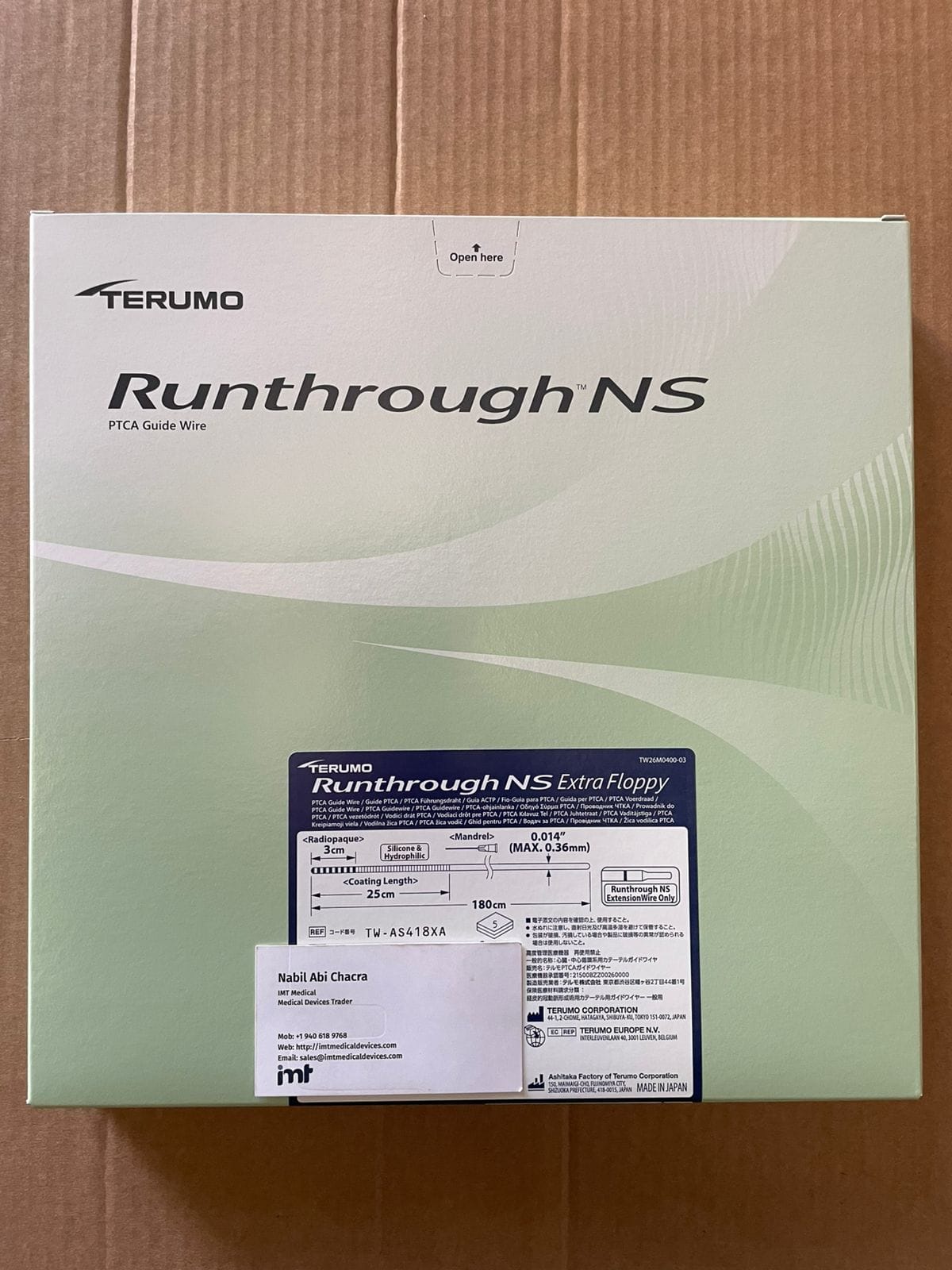
You will commonly see demand around specific naming variations such as Runthrough NS and other family configurations depending on market availability. Even when the product family is stated correctly, the quote process can still fail if the requester does not specify diameter, length, or tip style.
Key specification points to confirm
For quote accuracy, buyers should confirm four items before requesting supply. The first is wire diameter, commonly aligned with standard coronary practice. The second is working length. The third is the exact Runthrough family variant. The fourth is packaging unit and regulatory preference for the destination market.
Those details sound basic, but they are usually where errors happen. A lab may ask for "Runthrough wire" when what it actually needs is a particular length already validated in its standard PCI setup. A distributor may quote the right family but the wrong market configuration. A physician may specify the clinical preference but not the exact ordering code.
Why exact identifiers reduce purchasing delays
In interventional supply, product families are recognized clinically, but purchasing is executed by item code. That is especially true when branded products from Terumo, Medtronic, Boston Scientific, Asahi, Abbott, Cordis, or MicroVention are purchased in parallel and compared line by line.
If a buyer provides the exact catalog number, the quote becomes faster and cleaner. If the buyer provides only a partial name, the sourcing team has to validate the intended version. That slows the order path and increases the chance of substitution questions that most cath labs do not want during active case scheduling.
How buyers usually compare the Terumo Runthrough
Most customers do not evaluate the Terumo Runthrough in isolation. They compare it against other workhorse coronary wires already approved in the lab. The comparison usually centers on tactile familiarity, support level, coating preference, and deliverability in routine coronary anatomy.
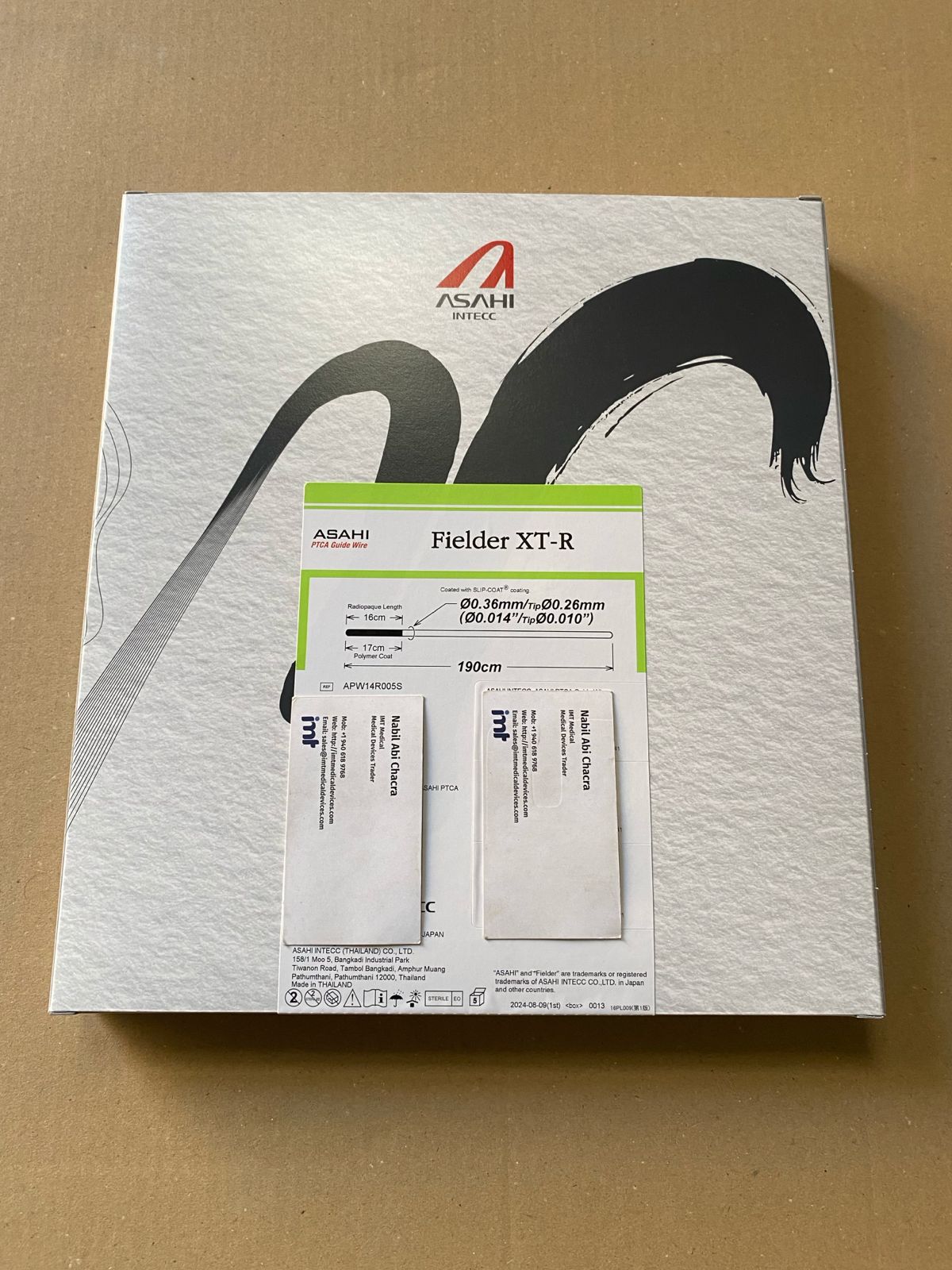
That means there is no single "best" option across all accounts. Some operators stay with Runthrough because it fits their standard workflow and they know how it behaves. Others alternate between Terumo and Asahi platforms depending on lesion type or personal handling preference. From the purchasing side, this creates a practical need to stock by physician demand pattern rather than by generalized product category alone.
For hospitals and competing distributors, the trade-off is straightforward. Narrow standardization can reduce inventory complexity, but broader branded availability can prevent case disruption when operator preference changes or when a specific physician requests a known wire by name.
What to include in a Terumo Runthrough quote request
A usable quote request should read more like an order sheet than a general inquiry. The fastest requests typically include the exact product name, the full SKU if available, required quantity, destination country, and whether the buyer will accept equivalent packaging configurations for the same branded item.
If the SKU is not available, the next best option is a clear specification set: product family, wire diameter, length, and any identifying packaging detail from prior stock. A photo of the label can also help confirm the exact wire without adding ambiguity.
Recommended information for procurement teams
When a hospital purchasing office sends a request without physician-level detail, sourcing gets slower. Internal procurement teams can avoid that by collecting the clinician-approved identifier before sending the inquiry. The most useful request format includes:
- Exact product name
- Catalog or reference number
- Required quantity
- Expiration expectations if relevant
- Destination country and delivery terms
- Whether split lots or partial fulfillment are acceptable
This is especially relevant in cross-border procurement, where the same branded family may be requested under slightly different local naming habits. Using the manufacturer identifier keeps the process clean.
Stock planning for Terumo Runthrough demand
The Terumo Runthrough is not usually a one-off purchase. It is often part of a broader coronary intervention replenishment cycle that includes guiding catheters, balloon catheters, stents, microcatheters, and adjunctive wires. Buyers who treat it as a recurring line item generally get better results than those who source only when shelves are low.
For hospitals, the practical issue is procedure continuity. For distributors, it is account retention. If a competing supplier can provide the exact wire immediately, brand loyalty shifts quickly at the account level.
A better approach is to monitor Runthrough usage alongside other high-frequency PCI items and maintain reorder visibility early. That does not always mean carrying excess stock. It means aligning demand history with realistic lead times and shipment patterns.
When flexibility helps and when it does not
There are cases where buyers can accept more than one approved workhorse wire. In those settings, procurement has room to compare availability across Terumo and alternative brands. But if the operator has specified the Terumo Runthrough for a scheduled case or if a lab has standardized around a specific version, flexibility drops to near zero.
That distinction matters. Some supply teams ask for alternatives too early, when the real requirement is exact fulfillment. Others insist on one SKU when a clinically approved secondary option would keep the schedule intact. The right path depends on how tightly the account controls physician preference and standardization.
Sourcing Terumo Runthrough across export markets
For buyers in Gulf countries, Latin America, Asia, China, and Russia, the biggest sourcing issue is often not product recognition but channel friction. A hospital may know the exact Runthrough wire it wants yet face delays through the local distributor structure. An independent distributor may need inventory access to compete on branded coronary lines. A physician may want the same wire used previously but cannot get reliable local support.
In those cases, the advantage of specialized sourcing is straightforward: product matching, branded inventory access, and quote handling that starts from exact identifiers instead of general category assumptions. That is the operating model buyers typically want for high-acuity interventional devices.
If you are sourcing the Terumo Runthrough through an external supply channel, it helps to treat the inquiry as a precision request, not a broad product search. Provide the exact wire details, confirm market requirements, and ask availability questions early. On https://imtmedicaldevices.com, that kind of request is handled best when the product family and item code are stated clearly from the start.
Common mistakes when ordering the Terumo Runthrough
The most common error is using the family name without the full specification. The second is assuming prior purchase history guarantees the same version will be quoted automatically. The third is waiting until case demand becomes urgent before validating stock.
Another avoidable problem is internal mismatch between physician request and procurement submission. If the operator asks for one configuration and purchasing sends a shortened or generic description, delays are almost guaranteed. In interventional cardiology, small specification gaps create outsized procurement problems.
A clean Terumo Runthrough order process is simple: identify the exact product, match the SKU, verify the quantity, and confirm destination requirements before quote release. That saves time for the lab, the buyer, and the supplier.
The buyers who get the best results with the Terumo Runthrough are usually the ones who treat guidewire sourcing as a precision task, not a commodity purchase. When the identifier is right, the rest of the transaction moves faster.