
Bulk Pricing for Drug-Eluting Stents 2026: A Global B2B Procurement Guide
The era of spot-buying cardiovascular implants is over as global tariffs on patented medical components reach up to 100% in 2026. Procuring high-volume inventories of Medtronic, Boston Scientific, or Terumo hardware is now a gamble against fluctuating trade barriers and the new FDA Quality Management System Regulation (QMSR) standards. You've likely noticed that securing bulk pricing for drug-eluting stents requires more than just a volume commitment; it demands a sophisticated approach to manufacturer contract rates and international export logistics.
This guide provides the technical data needed to stabilize your supply chain and secure predictable unit costs for high-volume orders. It's designed to help you navigate the complexities of the 2026 market with industrial precision. You'll learn how to leverage structured procurement contracts to mitigate the impact of unpredictable tariff fluctuations and rising logistics costs while maintaining strict clinical compliance.
We'll preview 2026 pricing tiers, the impact of the May 26 EU MDR transition deadline for Class III devices, and the documentation protocols required for seamless customs clearance. You'll gain the specific insights necessary to manage a reliable, compliant inventory from verified global exporters. This analysis ensures your procurement process remains efficient, authentic, and fully aligned with current international trade regulations.
Key Takeaways
- Assessment of 2026 DES procurement dynamics under updated FDA QMSR and EU MDR regulatory frameworks for Class III implants.
- Technical breakdown of bulk pricing for drug-eluting stents based on Minimum Order Quantity (MOQ) thresholds and manufacturer contract tiers.
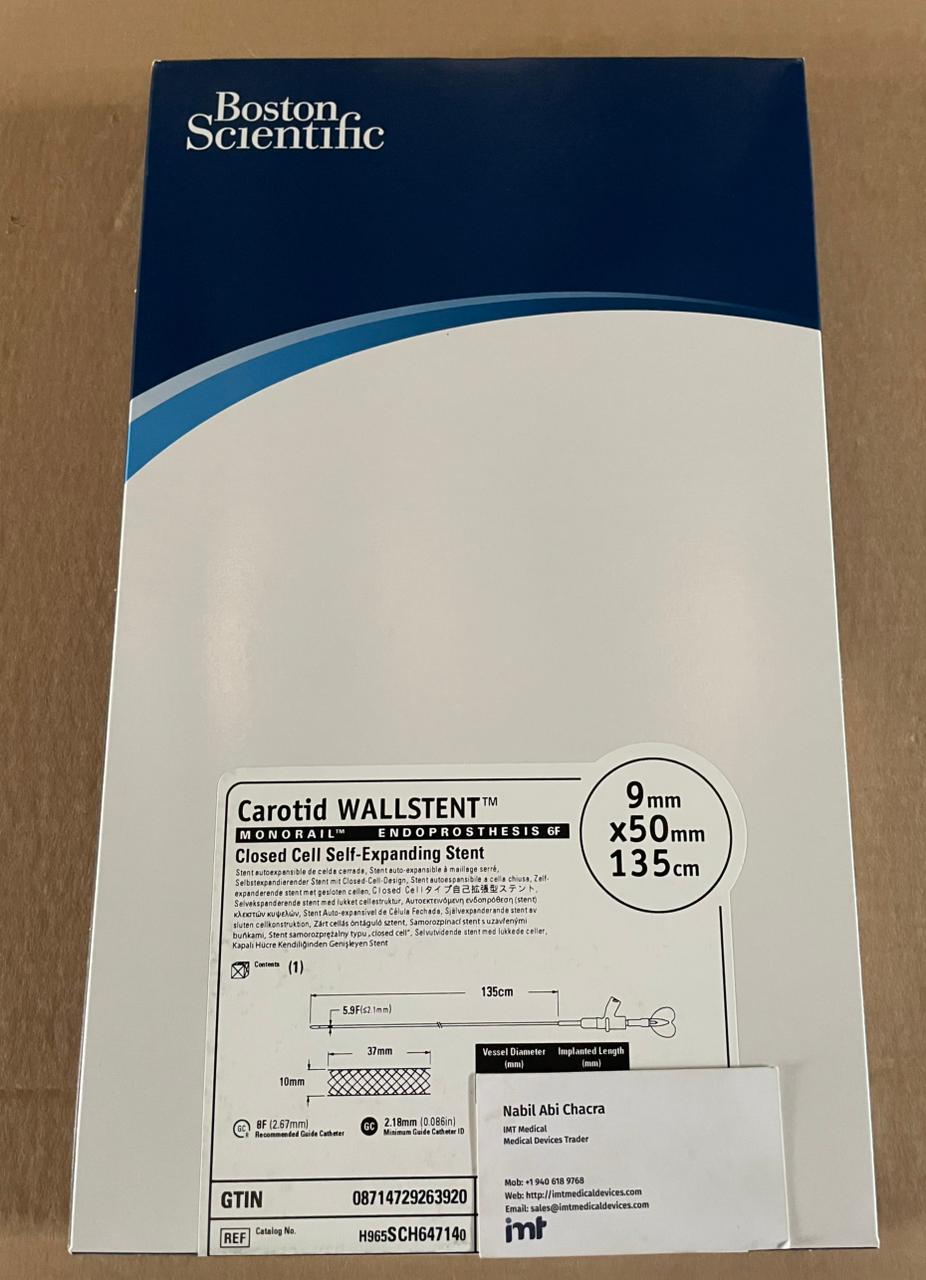
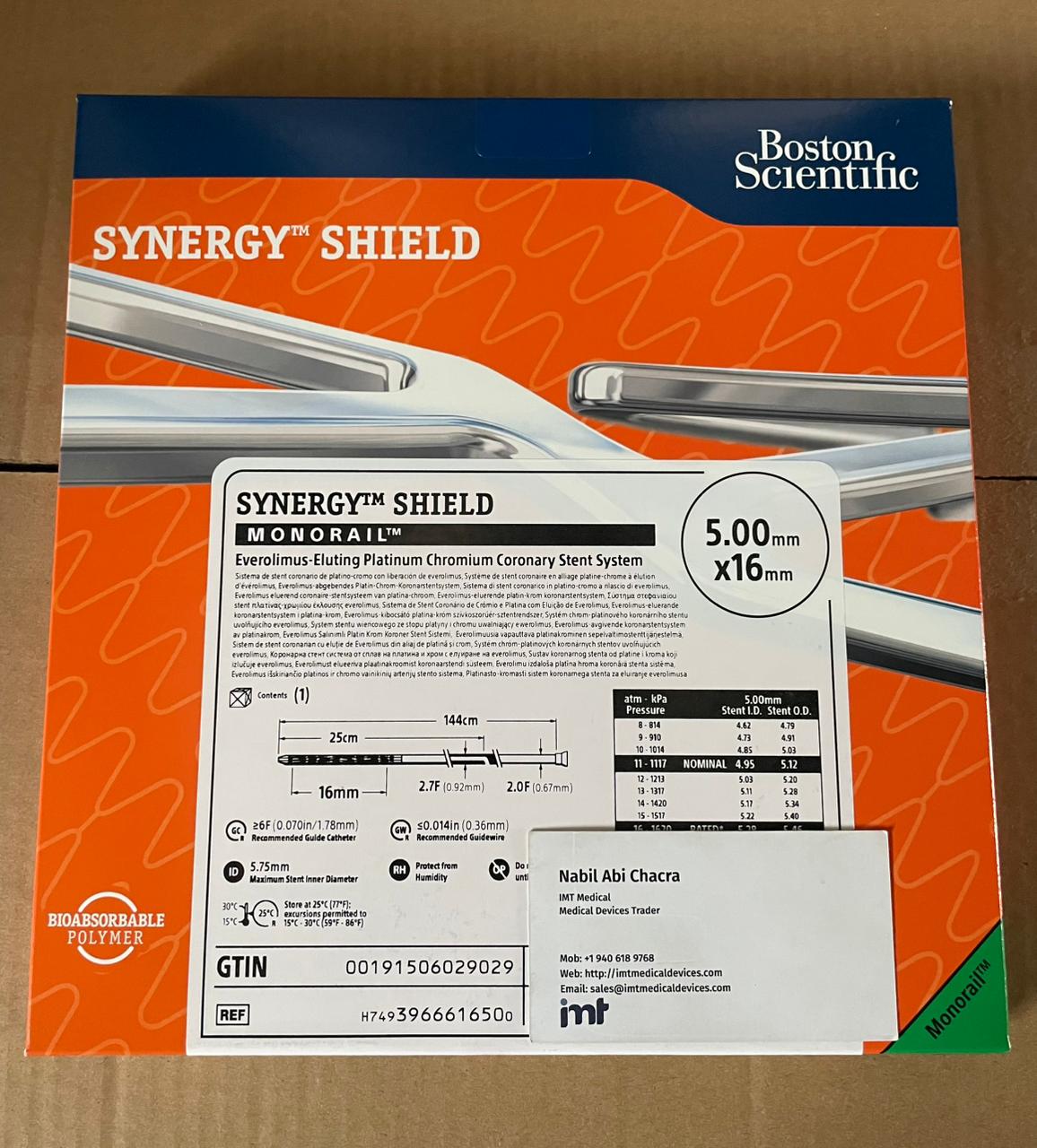
- Comparative sourcing analysis for Tier 1 cardiovascular hardware, including Medtronic Resolute Onyx and Boston Scientific Synergy platforms.
- Evaluation of export logistics, cold chain requirements, and regulatory documentation fees essential for international B2B shipments.
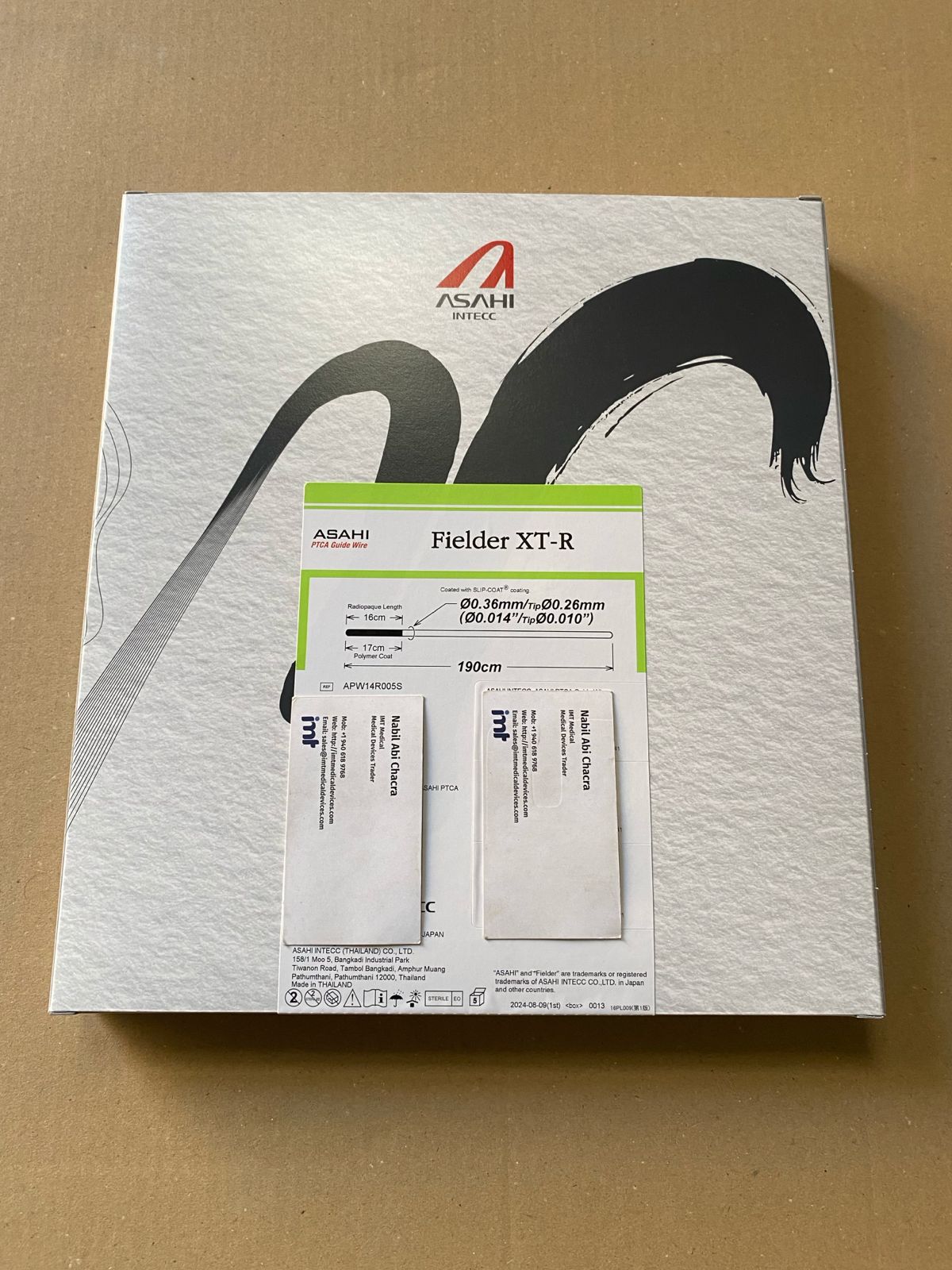
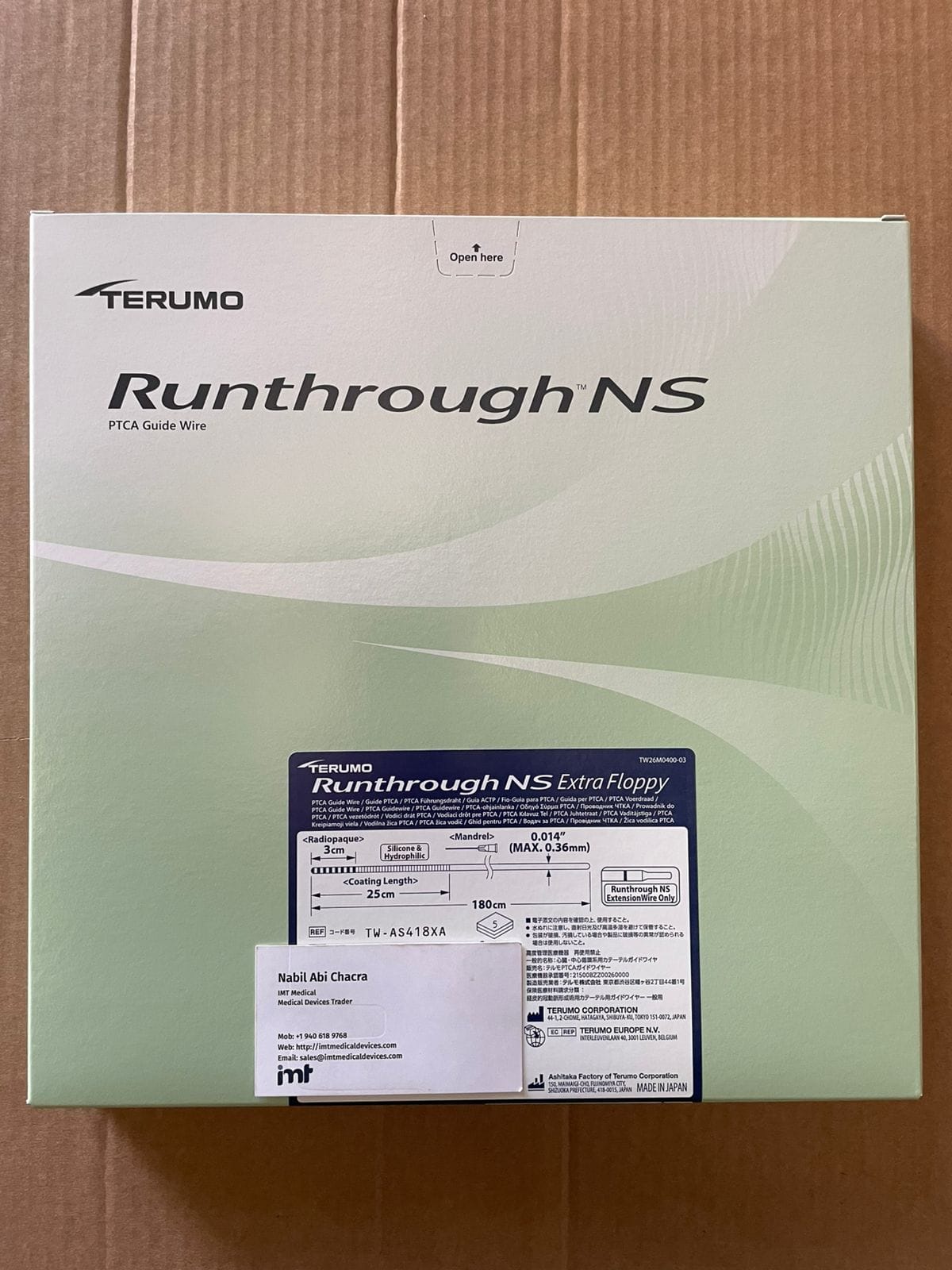
- Strategies for establishing resilient supply chains through verified global distributors of Terumo, Asahi Intec, and Medtronic cardiovascular portfolios.
Global Drug-Eluting Stent Market Dynamics in 2026
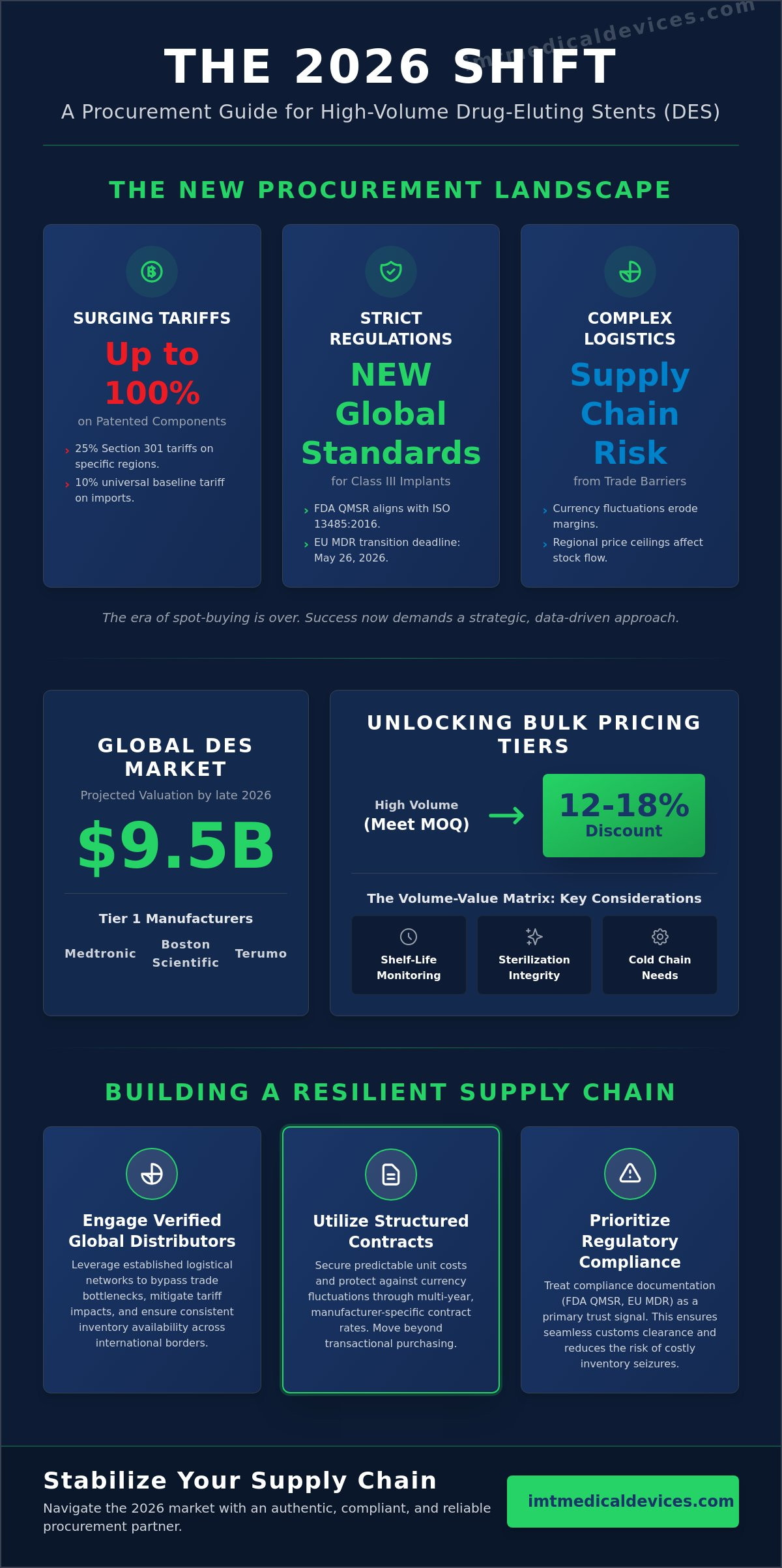
The global market for the drug-eluting stent (DES) is projected to reach a valuation between $8.94 billion and $9.5 billion by late 2026. This massive scale reflects a high-volume demand for Class III implants, which now operate under the most stringent regulatory oversight in history. Procurement professionals are moving away from a simple lowest-bidder model. They're prioritizing regulatory security instead. This shift is driven by the 10% universal baseline tariff on imported medical devices and Section 301 tariffs that can reach 25% for specific regions. Securing bulk pricing for drug-eluting stents in this environment requires a deep understanding of how these economic barriers interact with manufacturer-specific inventory levels.
Inventory availability is no longer guaranteed by brand name alone. The $9.25 billion market valuation creates a landscape where Tier 1 manufacturers like Medtronic, Boston Scientific, and Terumo must balance global demand against localized trade restrictions. Procurement teams that fail to account for these dynamics often face sudden stockouts or unexpected surcharge applications at the point of export. Success in 2026 depends on identifying partners who can bypass these bottlenecks through established logistical routes and verified compliance protocols.
Regulatory Mandates Shaping 2026 Pricing
The regulatory landscape underwent a fundamental shift on February 2, 2026. The FDA officially replaced its Quality System Regulation with the Quality Management System Regulation (QMSR). This move aligns U.S. standards with ISO 13485:2016, streamlining global trade but increasing the initial cost of compliance documentation. Simultaneously, the European Union Medical Device Regulation (EU MDR) transition period for Class III custom-made implantable devices ends on May 26, 2026. These mandates aren't just legal hurdles; they're value drivers. Compliance documentation now serves as a primary trust signal for wholesale inventory. It ensures that every unit in a high-volume order meets international safety benchmarks, reducing the risk of costly customs seizures or non-compliant inventory returns.
Economic Factors in International Distribution
Currency fluctuations remain a primary risk factor for multi-year procurement contracts. Market volatility can erode the margins of a bulk order within a single fiscal quarter. Regional ceiling prices also dictate global stock flow. For instance, the Indian National Pharmaceutical Pricing Authority (NPPA) set the ceiling price for drug-eluting stents at approximately ₹39,186 as of April 2026. These caps influence where manufacturers allocate their Tier 1 inventory. Utilizing established medical device distribution networks is the only way to maintain price stability. These networks mitigate the impact of localized price controls and ensure consistent availability of Medtronic, Terumo, and Boston Scientific products across international borders, regardless of regional economic shifts.
Calculating Bulk Pricing Tiers for Cardiovascular Implants
B2B procurement of cardiovascular hardware in 2026 is driven by mathematical precision. Bulk pricing for drug-eluting stents isn't a fixed figure. It's a dynamic calculation based on Minimum Order Quantities (MOQ). Large-scale hospital networks often secure discounts ranging from 12% to 18% when meeting Tier 1 volume thresholds. These manufacturer-specific contract rates provide a level of cost predictability that general wholesale pricing cannot match. Procurement officers must analyze the "Volume-Value" matrix to balance stock turnover against these bulk discounts. While high MOQs reduce the immediate unit price, they increase the logistical burden of shelf-life monitoring and sterilization integrity. Sensitive drug-coated implants require constant environmental oversight, adding indirect costs to the procurement cycle if stock isn't rotated efficiently.
When evaluating these rates, a comparative analysis of DES platforms helps procurement officers justify the investment in premium brands like Medtronic or Boston Scientific. Clinical data remains a primary driver of procurement value. It's critical to distinguish between the list price and the effective contract rate, which often includes year-end volume incentives or manufacturer rebates. Understanding these tiers is essential for maintaining a competitive edge in international markets where regional price ceilings are strictly enforced.
Standard Wholesale Pricing Tiers
Tier 1 involves high-capacity national distributors and major hospital networks. These entities access the lowest unit rates through multi-year commitments and massive MOQs. Tier 2 applies to regional suppliers and private clinic groups, offering moderate savings for medium-scale orders. Tier 3 is reserved for spot-buying and emergency inventory replenishment. In Tier 3, unit costs are highest because the buyer lacks the volume leverage to trigger manufacturer-level discounts. Most professional buyers aim for Tier 1 or Tier 2 status to ensure long-term budget stability.
Factors Influencing Contract Rate Fluctuations
Manufacturer rebates and inventory lifecycle stages significantly impact final invoices. Mature platforms often see more aggressive pricing than next-generation launches. Strategic bundling with ptca balloon catheters, diagnostic guide wires, and guiding catheters further optimizes the total cost of acquisition. Reviewing available international inventory lists allows procurement managers to identify these bundling opportunities across Medtronic, Terumo, and Boston Scientific portfolios. This approach consolidates shipping costs and maximizes the value of each international shipment.
Comparative Analysis of High-Volume DES Platforms
Direct comparison of Tier 1 cardiovascular hardware is essential for justifying bulk pricing for drug-eluting stents in 2026. Procurement officers must weigh clinical data against logistical availability. Medtronic Resolute Onyx maintains market dominance through its Zotarolimus-eluting platform and BioLinx polymer. It's the preferred choice for complex coronary anatomy due to high deliverability and structural integrity. Boston Scientific Synergy offers a distinct B2B advantage with its bioabsorbable polymer technology. This reduces long-term vessel inflammation and simplifies post-procedure care protocols for hospital networks. A Comparative Cost Analysis of Drug-Eluting Stents confirms that while initial acquisition costs vary, long-term clinical efficacy impacts the total cost of ownership. Abbott Xience remains a global benchmark. Its extensive clinical data serves as a trust signal for high-volume inventory commitments in regulated markets.
Emerging Tier 2 manufacturers provide Sirolimus-eluting alternatives for budget-sensitive regions. These platforms often lack the extensive clinical backing of Medtronic or Boston Scientific but offer lower entry points for secondary healthcare facilities. Evaluating these alternatives requires a strict audit of manufacturing standards and drug-release profiles. Procurement teams often utilize these Tier 2 options to balance the high cost of premium implants in diverse portfolios.
Technical Specifications for Procurement Officers
Strut thickness and drug concentrations are the primary technical metrics for inventory selection. Thinner struts generally improve deliverability but may impact radial strength. Inventory managers must track these specs to ensure clinical compatibility across their facility networks:
- Medtronic Resolute Onyx: 81μm strut thickness; Zotarolimus-eluting; BioLinx permanent polymer; 180-day drug release cycle.
- Boston Scientific Synergy: 74μm strut thickness; Everolimus-eluting; Bioabsorbable PLGA polymer; 90-day drug release cycle.
- Abbott Xience Sierra: 81μm strut thickness; Everolimus-eluting; Fluorinated copolymer; established safety profile.
Shelf-life considerations are critical for bulk inventory management. Most drug-coated implants carry a 12 to 24-month expiration window. Procurement cycles must align with these dates to prevent inventory waste.
Brand-Specific Supply Chain Reliability
Lead times for Medtronic and Terumo remain the most stable in 2026. These manufacturers have optimized their international distribution hubs to bypass common logistical bottlenecks. Sourcing Boston Scientific or Asahi Intec products in emerging markets requires established relationships with high-capacity exporters. Authenticity verification is paramount in high-volume international trades. Professional buyers must confirm batch numbers and regulatory certificates before final payment. This ensures bulk pricing for drug-eluting stents is paired with genuine, non-counterfeit hardware. Maintaining a diverse supplier base across major brands reduces the risk of regional stockouts caused by localized trade disputes or manufacturing delays.
Export Logistics and Regulatory Impact on Wholesale Rates
Landed cost is the primary metric for 2026 cardiovascular procurement. Export logistics and documentation fees often constitute a significant percentage of the final invoice, directly impacting the effective bulk pricing for drug-eluting stents. Drug-coated implants require specialized handling to maintain sterilization integrity and drug-release profiles. Improper thermal management or physical shock during transit leads to product loss and regulatory rejection at the port of entry. Specialized logistics providers utilize validated cold chain protocols to protect these margins, ensuring that high-volume orders arrive in clinical-ready condition. This logistical precision is a prerequisite for maintaining the value of Class III medical hardware across international borders.
Navigating regional customs protocols is increasingly complex. The Malaysia Circular Letter No. 1/2026, effective January 28, 2026, mandates that any entity participating in medical device tenders is legally "placing devices in the Malaysian market." This requires full compliance with Act 737 regulations. Similar mandates across Southeast Asia and the Middle East mean that documentation is no longer a secondary concern; it's a core component of the pricing structure. Buyers must verify that their suppliers can provide the necessary regulatory filings to avoid shipment seizures and costly storage fees at customs hubs.
International Shipping and Customs Compliance
High-volume international trades rely on a comprehensive documentation stack. Certificates of Free Sale (CFS) and Certificates of Origin are mandatory for customs clearance in most jurisdictions. For Class III cardiovascular devices, additional technical files and compliance certificates under the 2026 FDA QMSR and EU MDR frameworks are required. Strategic office locations in Dubai, Turkey, and Georgia serve as vital logistical anchors. These hubs optimize transit times and provide a buffer against regional trade volatility. Utilizing these established routes allows for faster inventory turnover and more predictable delivery schedules for Medtronic, Boston Scientific, and Terumo products.
Protecting Inventory Integrity
Packaging standards for international air freight must meet IATA requirements for sensitive medical cargo. High-value shipments of stents and pacemakers require dedicated insurance coverage to mitigate the risk of transit-related financial loss. Procurement efficiency is also improved by ensuring accessory compatibility during the sourcing phase. Sourcing a compatible guidewire, guiding catheter, or diagnostic wire alongside the primary stent inventory reduces the total number of shipments. Consolidating these components into a single logistical stream minimizes documentation fees and simplifies the customs inspection process. For a detailed breakdown of landed costs and shipping schedules, request a logistics consultation from our export desk.
Strategic Sourcing: Securing Reliable DES Supply Chains
Strategic sourcing in 2026 requires a partner capable of bridging the gap between major manufacturers and international clinical markets. IMT Medical Devices operates as this vital bridge. We provide access to an extensive portfolio featuring Medtronic, Boston Scientific, and Terumo hardware. Securing bulk pricing for drug-eluting stents is no longer just about volume. It's about securing a reliable supply chain that withstands the 2026 tariff environment and regulatory shifts. Our procurement process is streamlined from the initial inquiry to final international delivery. This ensures clinical facilities maintain inventory levels without the risk of non-compliant stock or logistical delays. We prioritize product availability and technical authenticity above all else.
The 2026 market dynamics demand high-capacity distribution. Our volume-based pricing tiers are specifically tailored to B2B clients, including national distributors and hospital networks. By consolidating orders across multiple brands, buyers can optimize their total spend. This manufacturer-centric approach allows partners to access premium technology while benefiting from the logistical efficiency of a centralized exporter. Our capabilities extend beyond simple distribution; we manage the entire commercial scope of the transaction, including all necessary customs documentation for Class III implants. This industrial competence signals to potential partners that we are a serious player in the global medical supply chain.
The IMT Medical Devices Advantage
We provide reliable supply chain solutions serving over 50 countries. Our strategic hubs in Georgia, Dubai, Turkey, and Poland are positioned for rapid deployment across emerging and established markets. These locations minimize transit times and provide critical redundancy in the global supply chain. We specialize in the complex logistics required for Class III devices, including bulk pricing for drug-eluting stents and permanent pacemakers. Every shipment undergoes rigorous verification to ensure batch integrity and compliance with the 2026 FDA QMSR standards. This focus on global logistics and product availability creates a sense of industrial reliability for our international partners.
Initiating Your 2026 Procurement Strategy
Transitioning to a structured procurement model begins with a technical quote request. Buyers should specify their required volumes for Medtronic Resolute Onyx, Boston Scientific Synergy, or Terumo platforms. We customize orders based on manufacturer-specific contract rates and regional ceiling prices. Our global logistics team is available to conduct a comprehensive supply chain audit for your facility. This audit identifies potential bottlenecks and optimizes your landed unit costs. Contact our export desk to review our current inventory list and secure your 2026 allocation. Efficient procurement is the only way to ensure clinical continuity in an increasingly volatile global market.
Optimizing Your 2026 Cardiovascular Inventory Strategy
Success in 2026 procurement depends on technical compliance and logistical efficiency. High-volume acquisition must account for the shift toward FDA QMSR standards and the conclusion of EU MDR transition periods for Class III implants. Managing landed costs requires a precise understanding of how bulk pricing for drug-eluting stents interacts with international trade barriers and specialized handling protocols. Professional buyers don't just purchase hardware; they secure regulatory security and clinical continuity through verified supply chains.
IMT Medical Devices operates as a high-capacity international distributor with established hubs in Dubai, Turkey, and Georgia. As an authorized wholesaler for Medtronic, Boston Scientific, and Terumo, we facilitate global distribution to 50+ countries. We prioritize product availability and technical authenticity to protect your margins against market volatility. Our infrastructure is designed for rapid deployment and strict adherence to cold chain requirements for sensitive drug-coated implants.
Request a Personalised Bulk Quote for Drug-Eluting Stents to finalize your 2026 allocation. Secure your inventory through a partner committed to logistical reliability and industrial competence.
Frequently Asked Questions
What is the typical MOQ for Tier 1 drug-eluting stents in 2026?
Minimum Order Quantities (MOQs) for Tier 1 status typically require commitments to high-volume units per fiscal quarter. These thresholds are defined by manufacturer-specific contract rates rather than fixed industry standards. Meeting these quotas allows procurement teams to secure the most competitive unit costs. It's common for national distributors to consolidate orders to reach these tiers and stabilize their supply chains against market volatility.
How do 2026 tariffs affect the wholesale price of Medtronic and Abbott stents?
Tariffs significantly increase the landed cost of Medtronic and Abbott hardware. A 10% universal baseline tariff on imported medical devices is common in 2026, while Section 301 tariffs on specific regions can reach 25%. These costs are often passed through to the buyer as surcharges. Strategic sourcing from regional hubs in Dubai or Turkey can sometimes mitigate these financial impacts by optimizing the logistical route.
Are drug-eluting stents subject to specific temperature-controlled shipping requirements?
Drug-eluting stents require strict environmental monitoring during transit to maintain the integrity of the drug-polymer coating. Exposure to extreme temperatures can degrade the pharmacologic agent, rendering the implant clinically unsafe. Most international air freight for these Class III devices uses validated cold chain packaging. Logistics providers must provide thermal data logs as part of the standard documentation package for high-volume orders.
What documentation is required for the international export of Class III medical devices?
International export requires a comprehensive documentation stack including a Certificate of Free Sale (CFS) and a Certificate of Origin. For Class III devices, technical files must demonstrate compliance with the 2026 FDA QMSR or EU MDR frameworks. These documents are essential for customs clearance and regulatory audits. Professional exporters provide these files alongside batch-specific certificates of analysis to ensure seamless entry into the destination market.
How does the EU MDR transition impact the availability of DES inventory?
The EU MDR transition period for Class III custom-made implantable devices ends on May 26, 2026. This deadline forces manufacturers to prioritize compliant inventory, which can lead to temporary stockouts of legacy platforms. Procurement managers should anticipate shifts in availability as producers phase out non-compliant hardware. Securing multi-year contracts for MDR-certified stents is the most effective way to maintain a predictable supply during this regulatory shift.
Can I bundle stent orders with PTCA balloons and guidewires for better pricing?
Bundling is a standard strategy to optimize bulk pricing for drug-eluting stents. Consolidating orders for PTCA balloon catheters, guidewires, and guiding catheters into a single logistical stream reduces documentation fees and shipping costs. Many manufacturers offer volume-based incentives when purchasing complete interventional kits. This approach also ensures technical compatibility between components, which simplifies inventory management for high-capacity hospital networks.
How do I verify the authenticity of bulk-sourced cardiovascular implants?
Authenticity verification relies on auditing batch numbers and regulatory certificates against manufacturer databases. Professional buyers should only source from authorized wholesalers who provide full traceability for every unit. Verifying the physical packaging for security seals and tamper-evident indicators is also mandatory. In 2026, digital tracking and blockchain-based provenance are increasingly used to confirm the origin of high-value implants like Medtronic or Terumo hardware.
What are the primary differences in procurement costs between Sirolimus and Everolimus stents?
Everolimus-eluting platforms, such as those from Abbott and Boston Scientific, often carry a price premium due to extensive clinical safety data. Sirolimus-eluting stents are frequently available from Tier 2 manufacturers at lower unit costs, making them suitable for budget-sensitive markets. While the drug coating choice impacts the base rate, the final bulk pricing for drug-eluting stents is more heavily influenced by manufacturer contract tiers and regional trade agreements.