
Challenges of Importing Medical Devices into the EU: A 2026 Regulatory and Logistical Guide
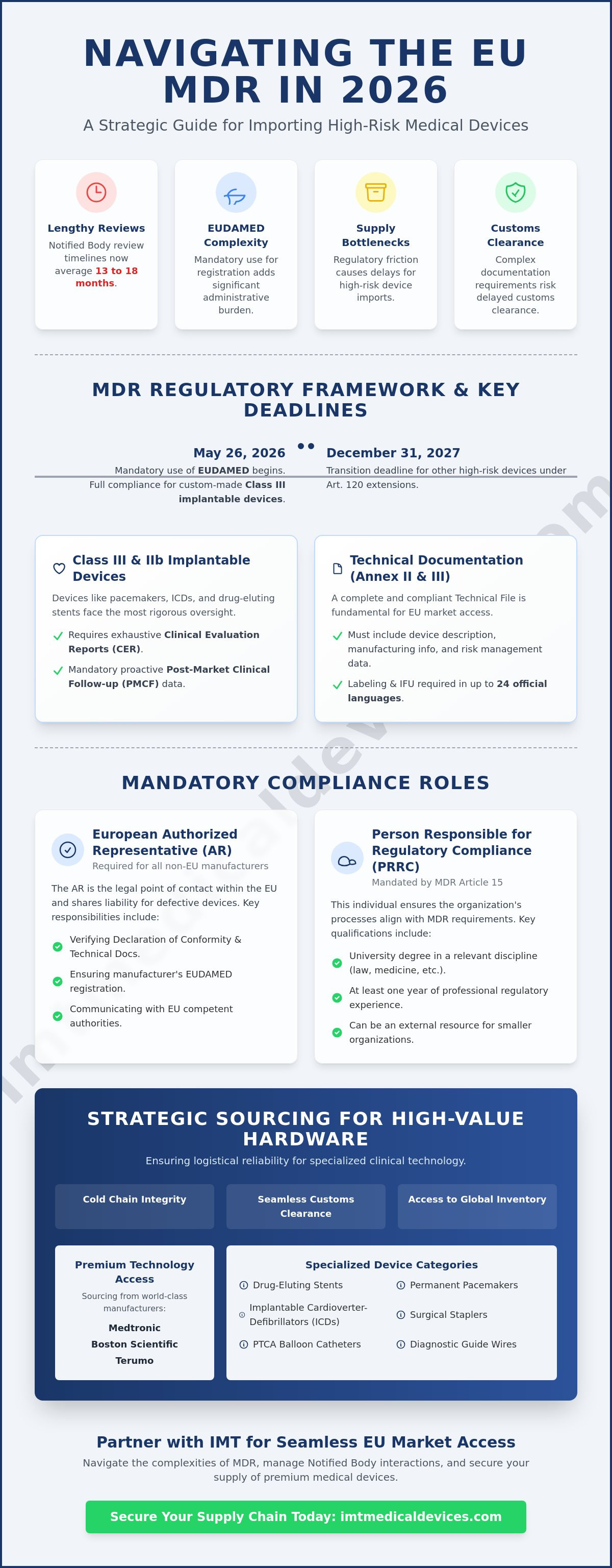
With Notified Body review timelines now averaging 13 to 18 months, the window for European market entry is narrower than ever. You recognize that the administrative burden of EUDAMED and the technical demands of the Medical Devices Regulation (MDR) create significant friction for global distributors. These challenges of importing medical devices into the EU often result in supply chain bottlenecks and delayed customs clearance for high-risk inventory. As of May 28, 2026, the mandatory use of EUDAMED for registration and transparency obligations adds a final layer of complexity to an already stringent regulatory landscape.
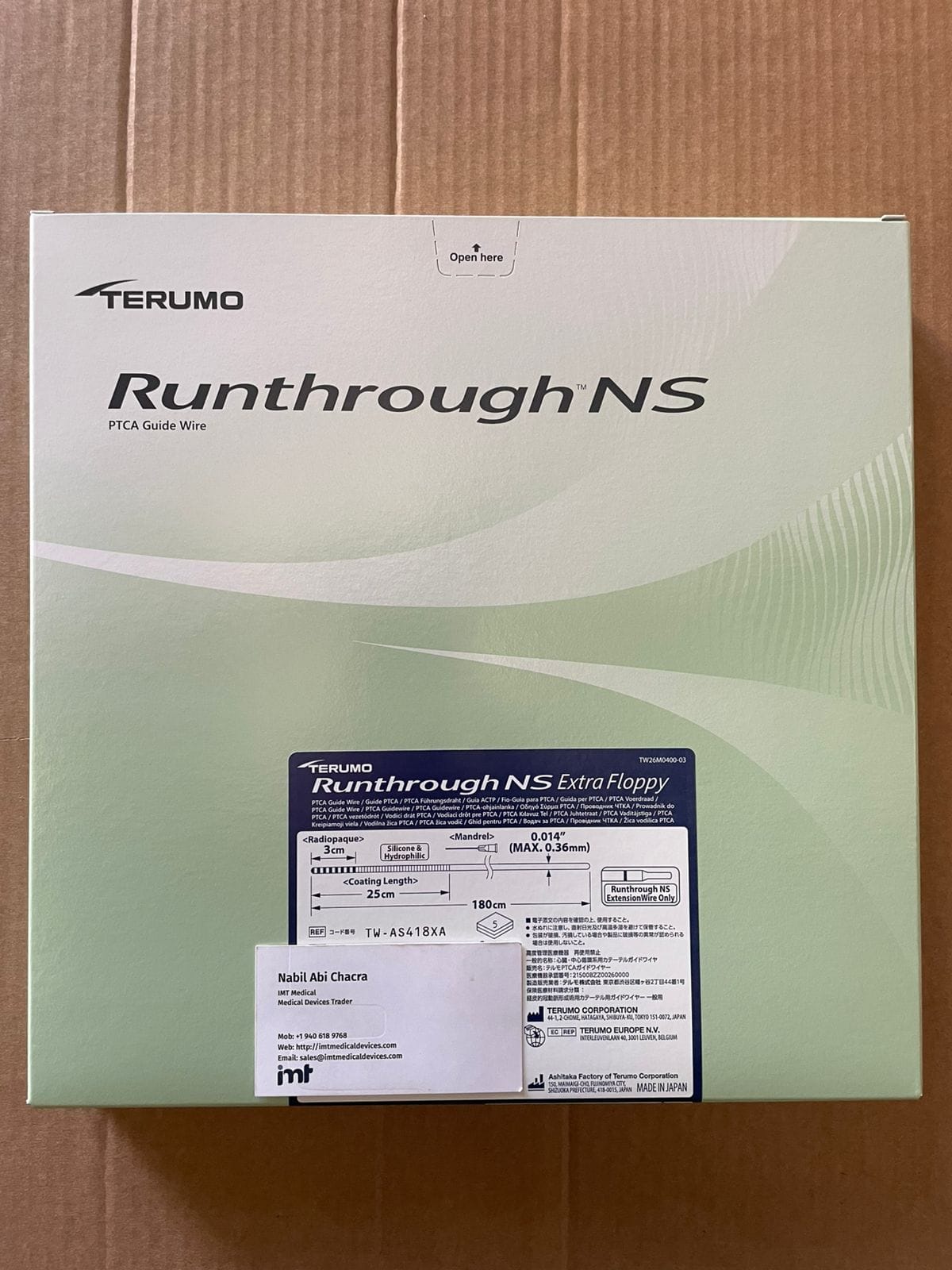
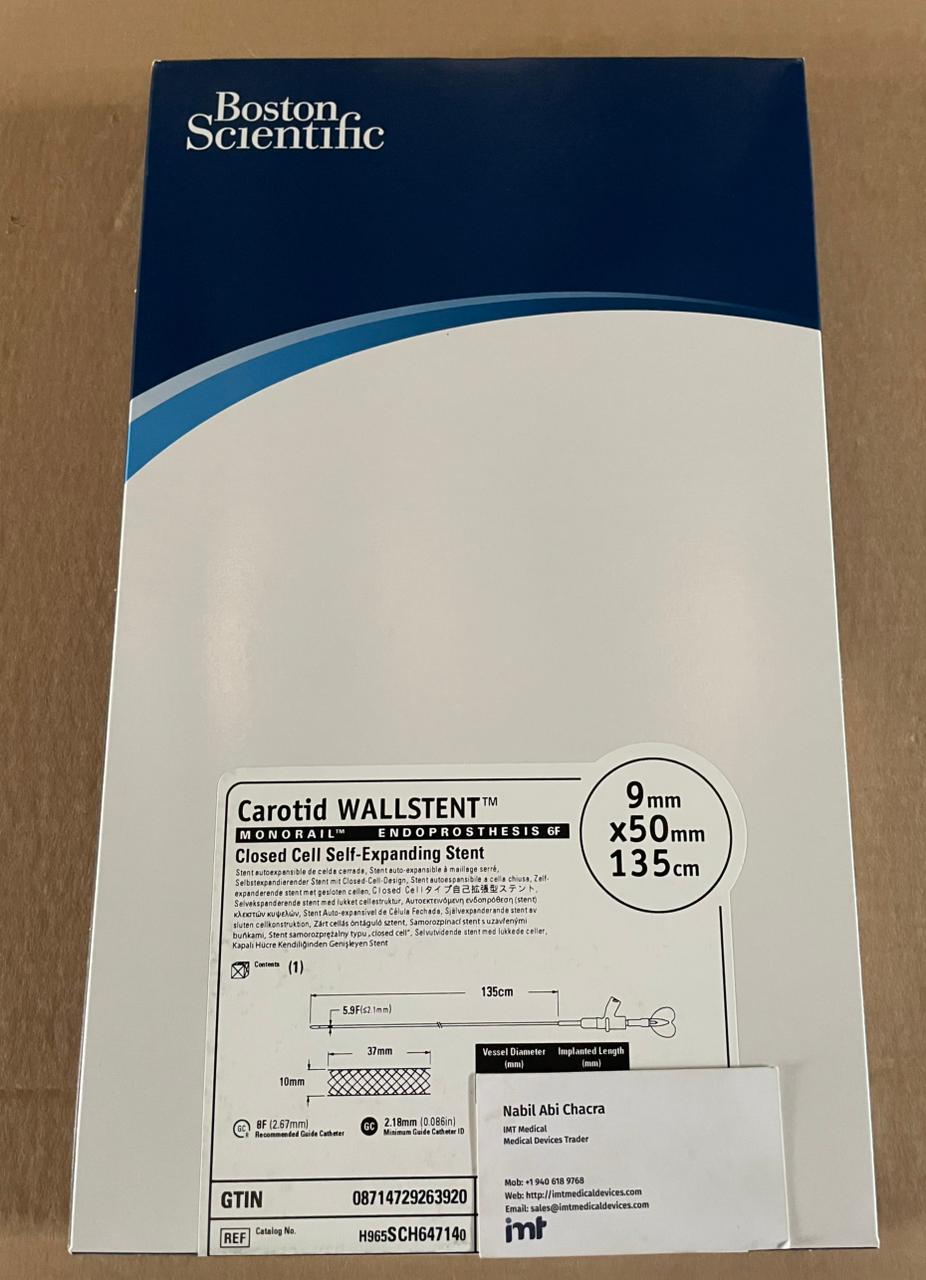
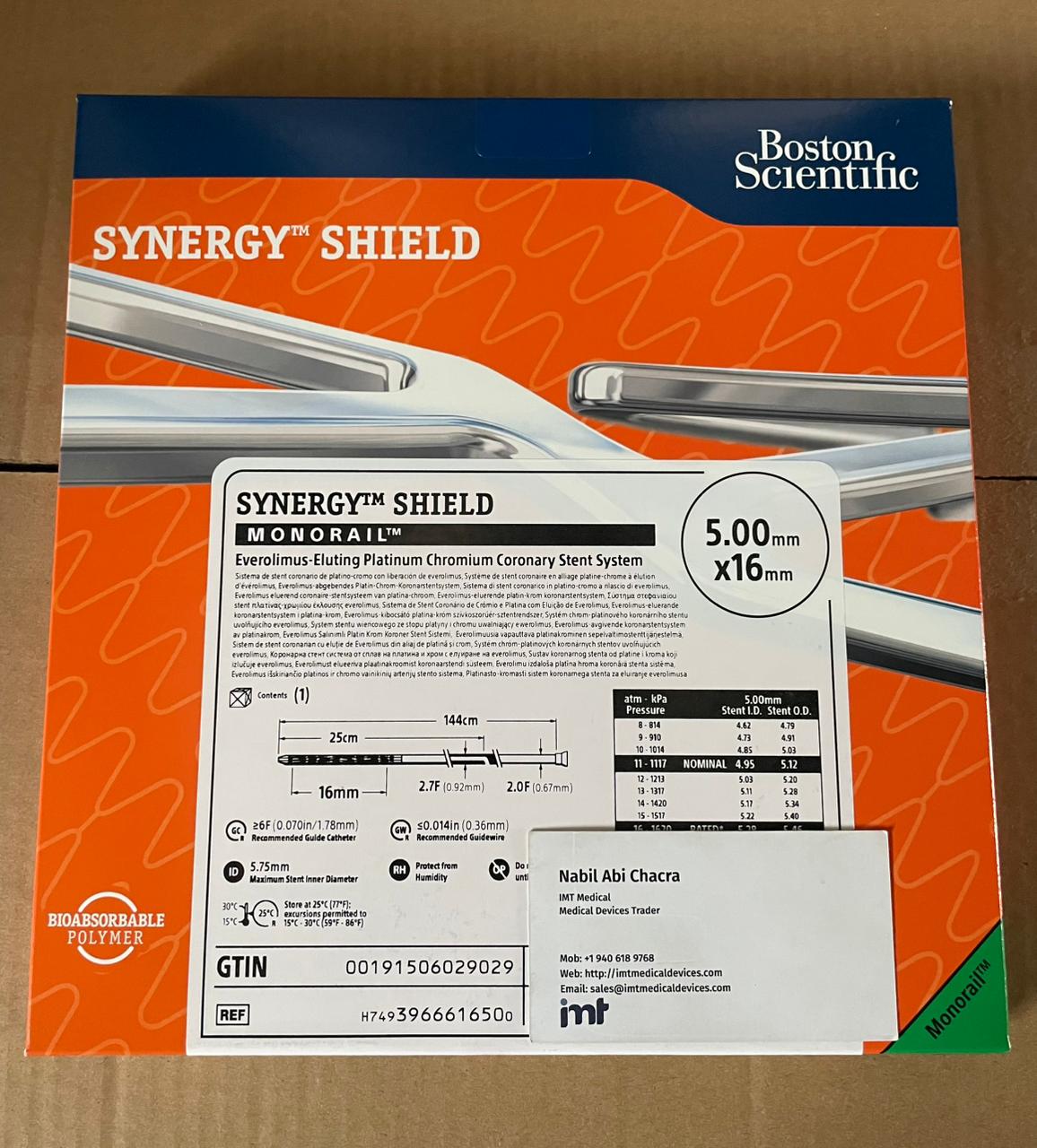
This guide provides the technical roadmap to secure successful CE marking, UDI implementation, and EUDAMED compliance. You'll learn how to manage the transition deadlines for Class III and Class IIb implantable devices while maintaining a reliable supply of premium hardware. We'll analyze the logistics of sourcing specialized clinical technology, including drug-eluting stents, permanent pacemakers, and surgical staplers from manufacturers like Medtronic, Boston Scientific, and Terumo. This overview ensures your operations align with current EU standards for seamless international commerce and logistical reliability.
Key Takeaways
- Technical documentation requirements for Class III and implantable devices; focus on Annex II and III MDR Technical Files.
- Protocols for the challenges of importing medical devices into the EU; management of Notified Body bottlenecks and EUDAMED Actor registration (SRN).
- Logistical standards for high-value hardware; cold chain integrity and customs clearance for drug-eluting stents, ICDs, and pacemakers.
- Strategic procurement of premium technology; access to global inventory from Medtronic, Boston Scientific, and Terumo.
The MDR Regulatory Framework: Importing in 2026
The EU's Medical Device Regulation (MDR) 2017/745 dictates the current operational requirements for all clinical hardware entering the European Economic Area. By May 2026, the transition from legacy directives is nearly complete. Custom-made Class III implantable devices must reach full compliance by May 26, 2026. This regulatory environment intensifies the challenges of importing medical devices into the EU, as legacy certificates for high-risk items face expiration. Manufacturers must ensure all technical files align with current Annex II and III standards to avoid market exclusion.
Device classification determines the depth of clinical scrutiny and the necessity of Notified Body involvement. Class III and Class IIb implantable devices, such as permanent pacemakers and ICDs, remain under the most rigorous oversight. While the transition deadline for these specific high-risk devices is December 31, 2027, the 13 to 18 month review bottleneck at Notified Bodies requires immediate action in 2026. Procurement professionals must verify that certificates remain valid under Article 120 extensions or possess new MDR certification to maintain supply chain continuity.
Class III Device Scrutiny under MDR
High-risk technology like drug-eluting stents and implantable cardioverter defibrillators (ICDs) requires exhaustive Clinical Evaluation Reports (CER). In 2026, the standard for clinical evidence is higher; manufacturers can't rely solely on equivalence to older models. They must provide proactive post-market clinical follow-up (PMCF) data. This increased scrutiny has slowed the introduction of new hardware, as companies prioritize the re-certification of existing, high-revenue inventory from brands like Medtronic and Boston Scientific. Successful EU market entry depends on the quality of this technical data.
The Authorized Representative (AR) Mandate
Non-EU manufacturers must appoint a European Authorized Representative (AR) under Article 11 of the MDR. The AR serves as the legal point of contact for EU competent authorities and shares liability for defective devices. Their responsibilities include:
- Verifying the existence of the Declaration of Conformity and technical documentation.
- Ensuring the manufacturer has complied with registration obligations in EUDAMED.
- Communicating with authorities regarding corrective actions or incident reports.
Selecting an AR is a critical logistical step. A qualified AR must have access to the full technical file and possess the regulatory expertise to manage complex challenges of importing medical devices into the EU. This partnership is vital for maintaining a compliant and uninterrupted flow of specialized medical hardware across international borders. Technical competence and liability insurance are the primary selection criteria for a global distribution partner.
Technical Documentation and PRRC Requirements
Compliance with the technical documentation standards outlined in Annex II and III of the MDR is a fundamental requirement for market access. These files must include device description, specifications, manufacturing information, and risk management data. The administrative burden of maintaining these records constitutes one of the primary challenges of importing medical devices into the EU in 2026. Importers must verify that manufacturers have compiled complete documentation before hardware crosses the border. This verification process ensures that every PTCA balloon catheter or diagnostic guide wire meets the safety benchmarks established by the European Commission's new medical device regulations.
Language requirements add a significant layer of logistical complexity. Under the MDR, instructions for use (IFU) and labeling must be provided in the official languages of the member states where the device is sold. For a distributor operating across the Eurozone, this involves managing translations for up to 24 different languages. Errors in translation or labeling can lead to immediate customs seizures or market withdrawals. Maintaining a centralized database of approved labels is essential for high-capacity international distribution.
The PRRC: A Strategic Compliance Requirement
Article 15 of the MDR mandates the appointment of a Person Responsible for Regulatory Compliance (PRRC). This individual must possess a university degree in law, medicine, or a relevant scientific discipline, plus at least one year of professional experience in regulatory affairs. For smaller organizations, an external PRRC is permissible, provided they are permanently and continuously at their disposal. The PRRC oversees the release of devices and ensures technical documentation remains current. Their role is critical in mitigating the risks associated with the challenges of importing medical devices into the EU by providing an authoritative point of oversight for every shipment.
UDI and Labeling Standards
The Unique Device Identification (UDI) system is now fully operational for all device classes. This system utilizes two distinct identifiers to track hardware through the supply chain:
- UDI-DI (Device Identifier): A static code specific to the manufacturer and the device model.
- UDI-PI (Production Identifier): A dynamic code identifying the lot number, serial number, and expiration date.
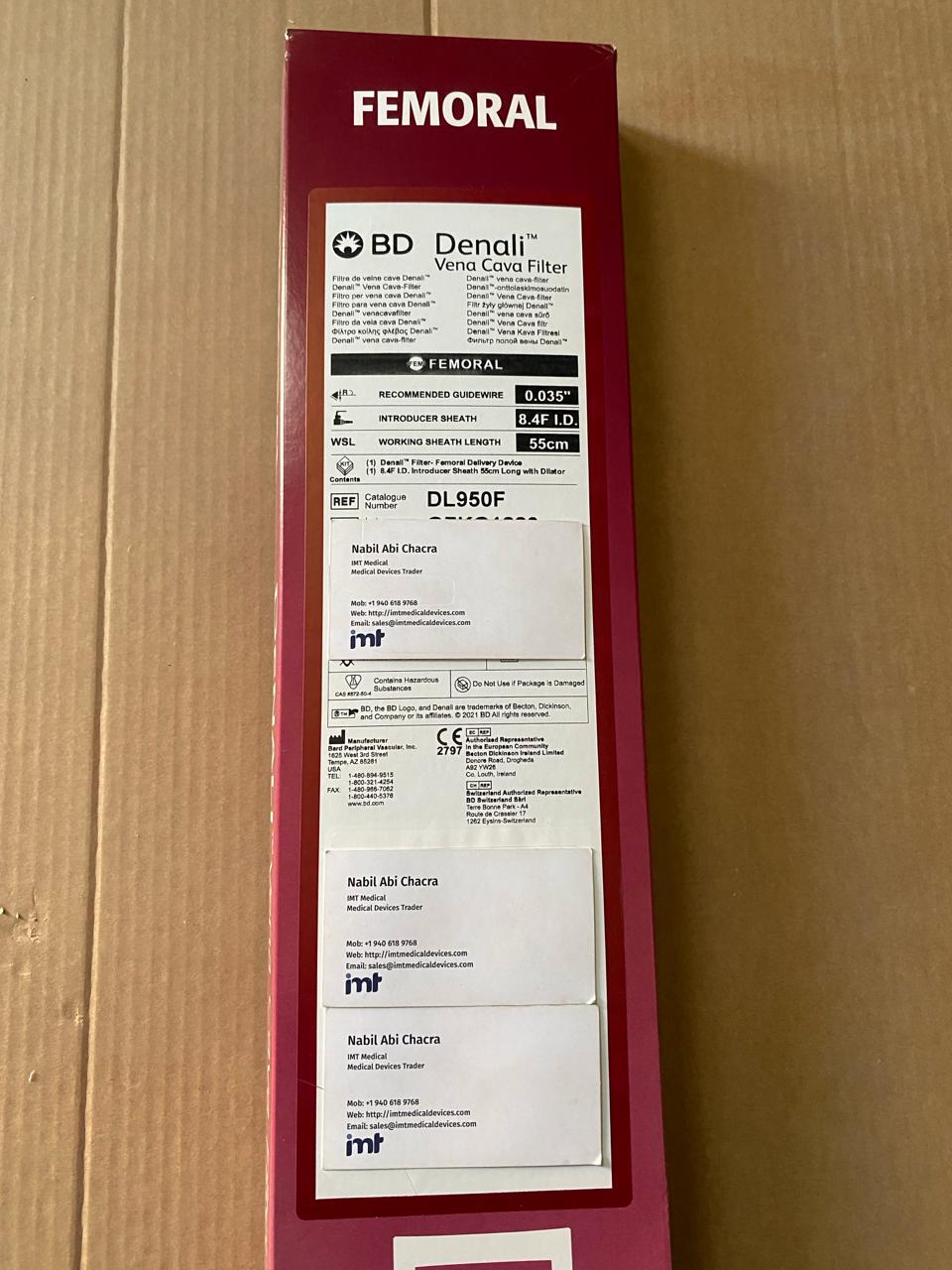
For sterile cardiology equipment, such as electrophysiology catheters and peripheral stents, the UDI must be clearly legible on the primary packaging. This data allows hospital procurement systems to automate inventory management and track patient outcomes. Reliable access to certified medical technology requires a logistics partner capable of managing these complex identifying codes across thousands of SKUs. Accurate UDI implementation is the only way to ensure seamless customs clearance and post-market traceability in the 2026 regulatory environment.
EUDAMED Registration and Notified Body Bottlenecks
As of May 28, 2026, the EUDAMED database is fully operational and mandatory for all market actors. This deadline marks a critical shift in the administrative challenges of importing medical devices into the EU. Manufacturers and importers must now utilize all six modules for transparency and registration obligations. These modules cover actor registration, UDI and device registration, certificates and notified bodies, clinical investigations, vigilance, and market surveillance. Failure to maintain accurate data within these modules results in immediate supply chain disruptions and loss of market access.
The scarcity of Notified Body (NB) capacity remains a significant barrier for high-risk device entry. Current data indicates an average MDR certification review time of 13 to 18 months. For complex hardware like implantable cardioverter defibrillators (ICDs) or drug-eluting stents, timelines often exceed this range. A study on manufacturer challenges highlights how increased clinical evidence requirements contribute to these bottlenecks. Managing these challenges of importing medical devices into the EU requires a proactive approach to regulatory scheduling. Delays in certification lead directly to inventory shortages for critical items like PTCA balloon catheters and electrophysiology catheters.
Navigating the EUDAMED Actor Module
Registration in the Actor module is the first requirement for any international wholesaler or importer. Upon successful validation by a national competent authority, the system issues a Single Registration Number (SRN). This unique identifier is mandatory for all official documentation, including the Declaration of Conformity and certificate applications. Data entry requirements are extensive. Importers must provide verified corporate details and link their profiles to non-EU manufacturers. While EUDAMED increases public transparency, commercial confidentiality regarding specific proprietary manufacturing details remains protected within secure data fields.
Overcoming Notified Body Delays
To minimize rejections, procurement teams must verify that manufacturers have initiated conformity assessments well in advance of certificate expiration. Strategies for 2026 include:
- Prioritizing submissions for Class III legacy devices before the December 2027 transition deadline.
- Maintaining rigorous post-market surveillance data to satisfy NB clinical evaluators.
- Securing early-stage engagement with NBs for new product launches from brands like Medtronic and Abbott.
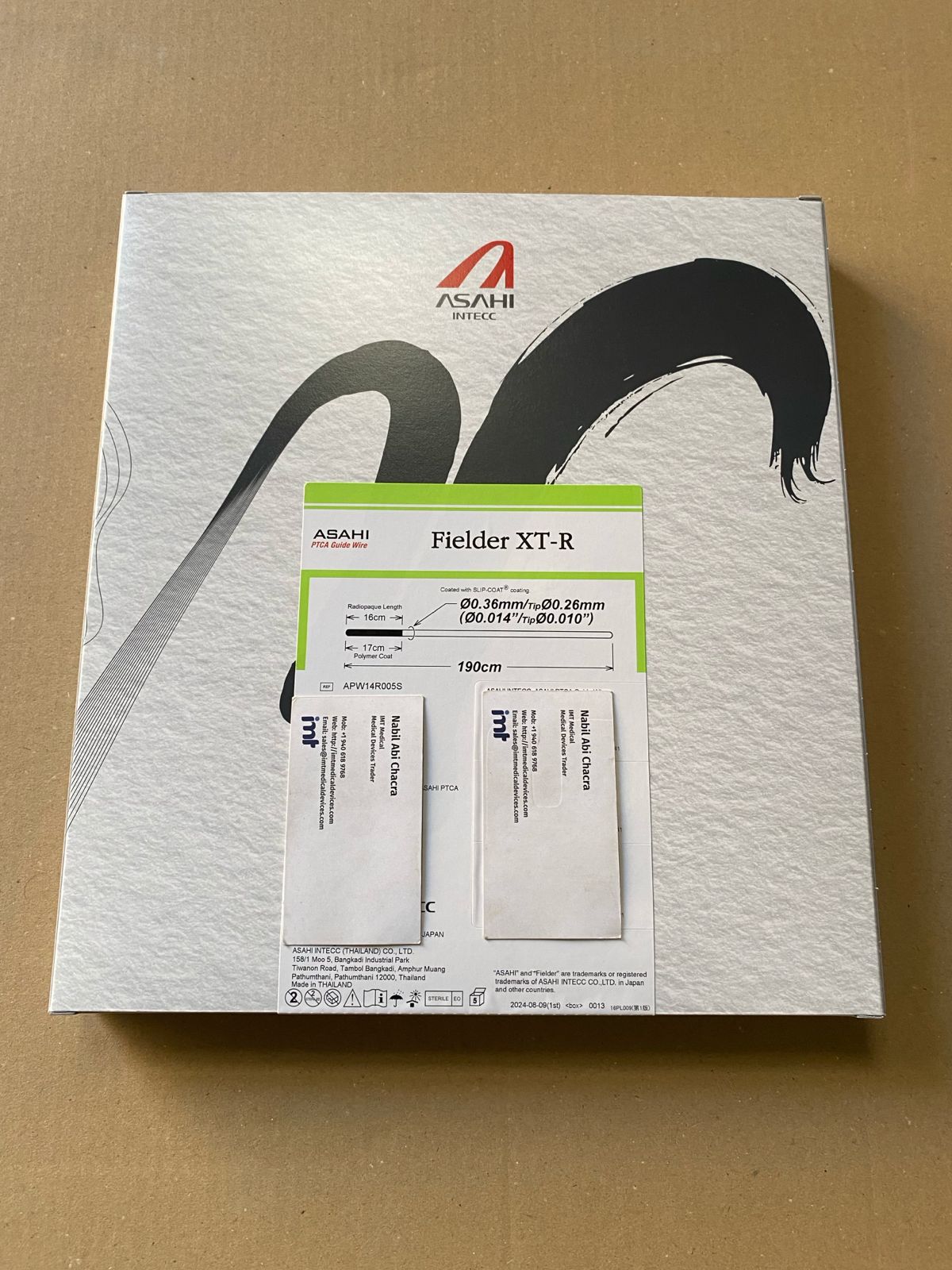
The elimination of the "sell-off" provision allows existing inventory to remain on the market subject to shelf-life limits. New imports, however, require valid MDR certification. Successful distribution of specialized hardware like Asahi Intec guidewires or Terumo guiding catheters depends on the synchronization of regulatory approvals with logistical lead times. High-capacity distributors mitigate these risks by maintaining deep inventories of certified technology.
Logistics, Cold Chain, and Customs Compliance
Physical movement of inventory represents a secondary set of challenges of importing medical devices into the EU. Regulatory compliance in EUDAMED is useless if the physical integrity of the hardware is compromised during transit. High-value cardiology equipment requires specialized handling and documented temperature control. Logistics providers must provide continuous data logging to prove that implants remained within manufacturer-specified ranges throughout the journey. This data is essential for both regulatory audits and hospital procurement verification.
Risk mitigation in international transport focuses on the reduction of transshipment points. Every manual handling event increases the probability of packaging damage or sterile barrier breach. For high-capacity distributors, the priority is securing direct routes from manufacturing hubs to EU bonded warehouses. This logistical precision ensures that inventory from brands like Medtronic, Abbott, and Boston Scientific arrives in clinical-ready condition. Efficient customs clearance depends on the perfect synchronization of the Bill of Lading with the MDR technical documentation.
Integrity Management for Cardiology Implants
Maintaining the functional specifications of permanent pacemakers requires climate-controlled shipping environments. These active implantable devices contain sensitive lithium-iodide batteries and micro-circuitry vulnerable to extreme thermal fluctuations. Similarly, the structural integrity of guidewire systems depends on shock-absorbent packaging. Vibration during air or sea freight can cause micro-fractures in specialized coatings. Such damage renders the device non-compliant with sterile barrier standards and compromises patient safety during interventions.
EU Customs and Regulatory Intersection
EU border authorities now cross-reference customs declarations with EUDAMED actor registration data. Customs clearance for PTCA balloon catheters and other sterile hardware requires the presentation of a valid Declaration of Conformity and a matching UDI. Discrepancies between the shipping manifest and the MDR technical file lead to immediate impoundment. Importers must also account for varying VAT rates across member states. These rates vary significantly depending on the specific medical classification and national policy. Accurate HS code classification is the only way to optimize tariff costs and avoid administrative penalties.
Efficient international distribution requires a partner with established trade lanes and technical expertise. You can source premium medical technology through a global logistics network that prioritizes speed and compliance. This approach minimizes the challenges of importing medical devices into the EU by handling the intersection of tax law and clinical regulation. Reliable supply chains are built on technical identifiers and logistical reliability rather than generic freight forwarding.
Strategic Sourcing with IMT Medical Devices
IMT Medical Devices operates as a high-capacity international distributor, specializing in the complex logistics of cardiology and surgical hardware. By centralizing regulatory oversight and export logistics, the entity effectively mitigates the primary challenges of importing medical devices into the EU. Strategic hubs in Georgia, Dubai, and Poland provide the infrastructure necessary for rapid data transmission and inventory movement. This global presence allows for the efficient management of MDR-compliant documentation and UDI tracking across diverse markets.
The commercial inventory focuses on premium technology from established manufacturers. Access to Medtronic, Boston Scientific, Abbott, Terumo, and Asahi Intec ensures that clinical partners receive authentic, high-performance hardware. This manufacturer-centric approach prioritizes product reliability and logistical speed, which are essential for maintaining market presence under 2026 regulatory standards. The focus remains on providing a vital, efficient bridge between major producers and international procurement teams.
Wholesale Solutions for Healthcare Providers
Bulk sourcing protocols allow international distributors to secure large volumes of critical hardware. Procurement professionals utilize volume-based pricing tiers for high-demand items, including drug-eluting stents, PTCA balloon catheters, and permanent pacemakers. This model ensures supply chain continuity despite the volatile regulatory environment. Inventory availability includes implantable cardioverter defibrillators (ICDs), peripheral stents, and surgical staplers, all maintained under strict quality management systems to meet international commercial standards.
The IMT Advantage in Global Logistics
Expertise in high-risk device documentation is the core of the IMT advantage. The logistics team manages the technical identifiers and technical file requirements for electrophysiology catheters, diagnostic guide wires, and guiding catheters. Specialized handling protocols protect sensitive cardiology equipment from mechanical shock and thermal variance during transit. This technical precision minimizes the administrative friction associated with the challenges of importing medical devices into the EU. You can partner with IMT Medical Devices for your global procurement needs to secure a reliable, MDR-compliant supply chain and access to premium clinical technology.
Optimizing EU Market Access for 2026 and Beyond
Successful entry into the European market requires the synchronization of technical documentation, EUDAMED registration, and specialized logistics. The 2026 regulatory environment mandates absolute precision in technical files and UDI implementation. These administrative and technical challenges of importing medical devices into the EU demand a partner with established international infrastructure. It's essential to rely on verified data for Class III devices, such as permanent pacemakers and peripheral stents, to ensure your supply chain stays uninterrupted by Notified Body bottlenecks or customs delays.
IMT Medical Devices maintains a global distribution network with strategic offices in Georgia, Dubai, Turkey, and Poland. With export operations reaching 50+ countries, the entity provides a reliable gateway for authentic technology from Medtronic, Terumo, and Abbott. You can effectively bridge the gap between manufacturer supply and clinical demand through high-capacity logistics and expert regulatory oversight. Secure your position in the global medical supply chain by aligning with a partner focused on industrial competence and technical identifier accuracy.
Request a Quote for Global Medical Device Wholesale to streamline your international procurement and ensure compliance with current EU standards. Your transition to full MDR compliance starts with a robust logistical foundation.
Frequently Asked Questions
What are the primary MDR deadlines for medical device imports in 2026?
May 26, 2026, is the final deadline for custom-made Class III implantable devices to achieve full MDR compliance. Additionally, May 28, 2026, marks the mandatory implementation date for the EUDAMED database modules. Manufacturers and importers must ensure all technical documentation and registrations align with these specific dates to maintain legal market access within the European Union.
Who is required to register in the EUDAMED database?
Manufacturers, authorized representatives, importers, and notified bodies must complete registration in the EUDAMED Actor module. This requirement applies to all entities involved in the European medical supply chain. Registration is a prerequisite for obtaining a Single Registration Number (SRN), which is necessary for device identification and regulatory submissions for hardware like PTCA balloon catheters and surgical staplers.
What is the role of a Person Responsible for Regulatory Compliance (PRRC)?
The PRRC ensures that the manufacturer or authorized representative fulfills the obligations set out in the MDR. Under Article 15, this individual is responsible for the release of devices and the maintenance of the technical file. Their oversight covers post-market surveillance, vigilance reporting, and ensuring that clinical evaluations remain current for high-risk inventory such as permanent pacemakers.
How does MDR affect the importation of Class III devices like stents?
MDR imposes stricter clinical evidence requirements and eliminates grandfathering for legacy Class III devices. Manufacturers of drug-eluting stents and peripheral stents must provide proactive clinical data rather than relying on equivalence. This increased technical burden represents one of the significant challenges of importing medical devices into the EU, requiring extensive Notified Body review and Annex II compliance.
What documentation is required for medical device customs clearance in the EU?
Customs clearance requires a valid Declaration of Conformity, the importer's Single Registration Number (SRN), and matching UDI identifiers. Border authorities verify this data against EUDAMED records to ensure compliance with MDR standards. For sterile equipment like electrophysiology catheters or diagnostic guide wires, labeling and instructions for use must also be provided in the required national languages.
Can a non-EU wholesaler act as an importer under MDR?
A non-EU wholesaler cannot legally act as an importer under the MDR. The importer must be a legal entity established within the European Union. This entity takes responsibility for placing devices from third countries on the Union market and must verify that the manufacturer has completed the necessary conformity assessments and technical documentation before shipment.
How do Notified Body delays impact medical device availability in 2026?
Notified Body delays lead to inventory shortages and restricted market access for new medical technology. With average review timelines of 13 to 18 months, these bottlenecks are among the persistent challenges of importing medical devices into the EU. Manufacturers often prioritize high-demand inventory from brands like Medtronic and Abbott to manage these certification delays and maintain supply chain continuity.
What is a Single Registration Number (SRN) and how is it obtained?
The SRN is a unique identifier that confirms an actor's registration in the EUDAMED database. It's obtained by submitting a registration request through the Actor module to the relevant national competent authority. Once the authority validates the corporate details and regulatory qualifications, the SRN is issued. This number is mandatory for all MDR-related documentation and device registration activities.