
Forecasting Demand for Cardiology Supplies: A B2B Procurement Guide for 2026
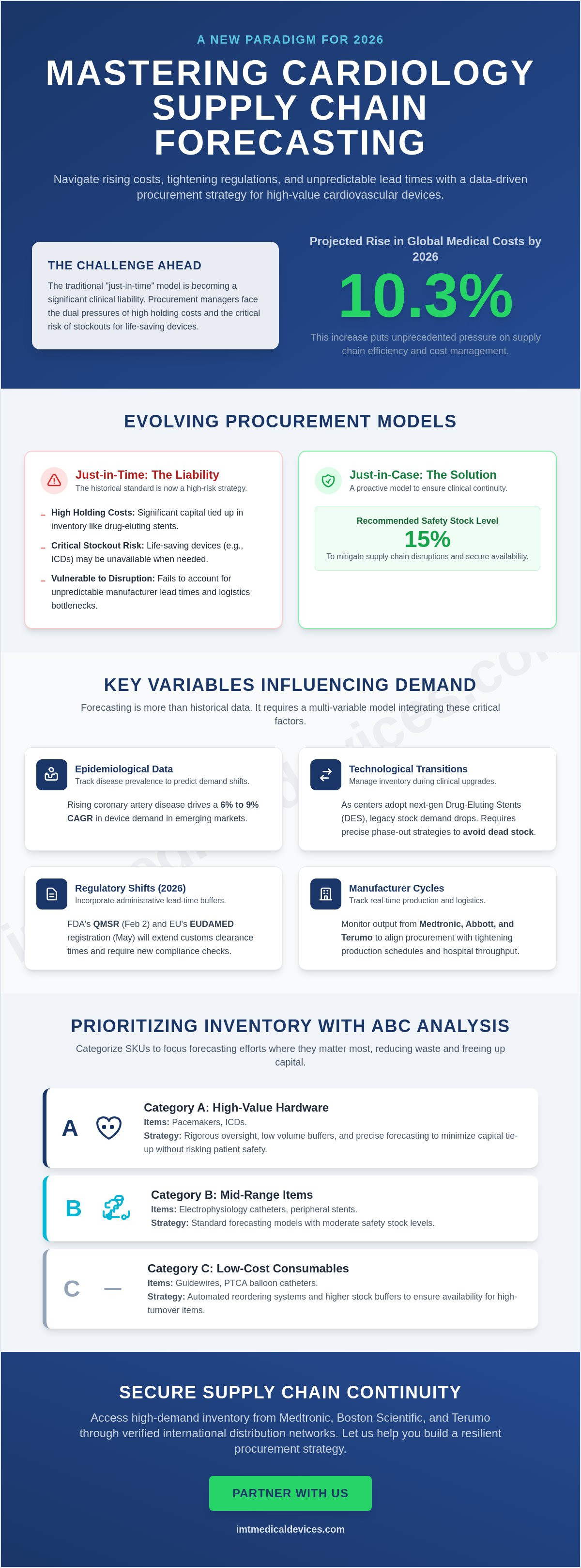
Global medical costs are projected to rise by 10.3% in 2026, making the traditional "just-in-time" procurement model a significant clinical liability. You're likely managing the constant tension between high holding costs for drug-eluting stents and the critical risk of stockouts for life-saving ICDs. Navigating unpredictable lead times from major manufacturers requires a shift from historical averaging to multi-variable modeling. Mastering the technical variables for forecasting demand for cardiology supplies is now essential to maintain service levels while FDA QMSR standards and EU MDR Class III deadlines tighten.
You'll learn to integrate clinical trends, manufacturer data, and logistical stability into a cohesive procurement strategy. This guide provides the technical frameworks required to secure essential inventory from Terumo, Asahi Intec, and Medtronic. We analyze the transition to "just-in-case" models with recommended 15% safety stock levels to mitigate supply chain disruptions. The following sections outline how to align your B2B ordering cycles with mandatory EUDAMED registration requirements and the evolving RAPID coverage pathways. This approach ensures maximum service levels and reduced inventory waste across your clinical departments in a $76.6 billion global market.
Key Takeaways
- Establish clear distinctions between clinical procedure volume and SKU-level procurement requirements to optimize inventory accuracy.
- Utilize advanced quantitative models for forecasting demand for cardiology supplies by integrating regional epidemiological data and technological life cycles.
- Align procurement schedules with clinical waitlists and hospital capacity through integrated causal modeling and time-series analysis.
- Optimize safety stock for permanent pacemakers and ICDs by factoring in precise logistical lead times from global transit hubs like Dubai.
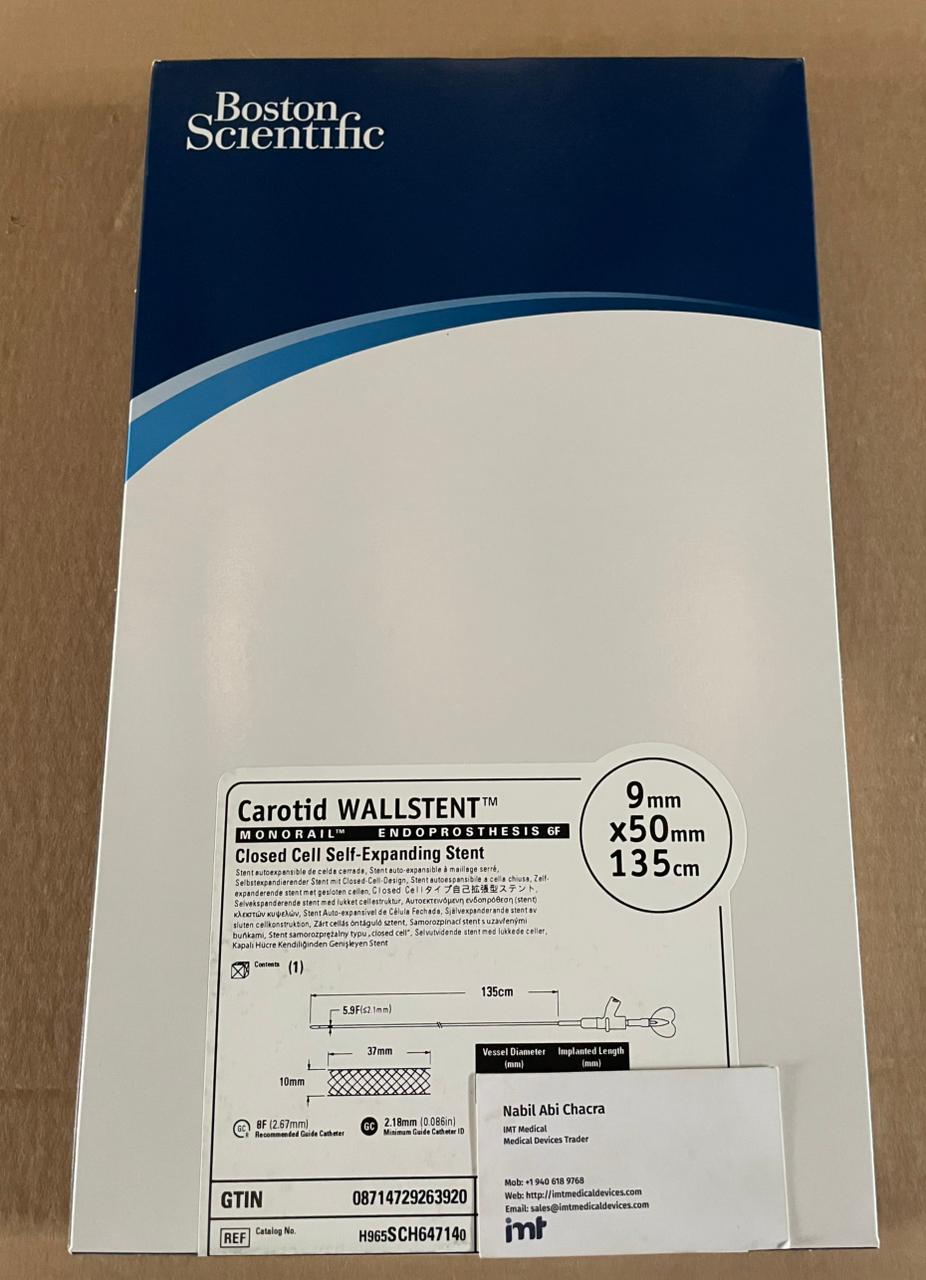
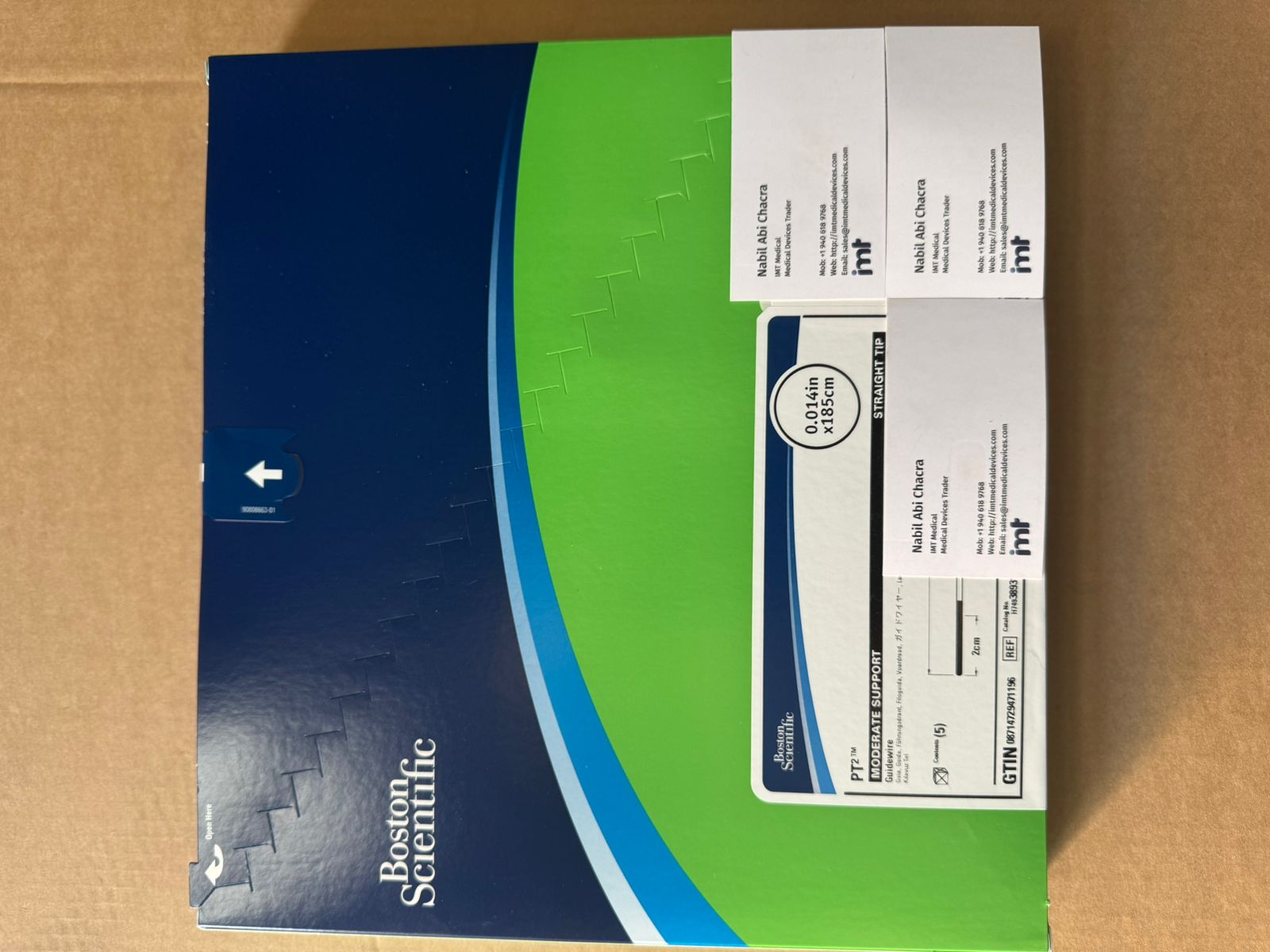
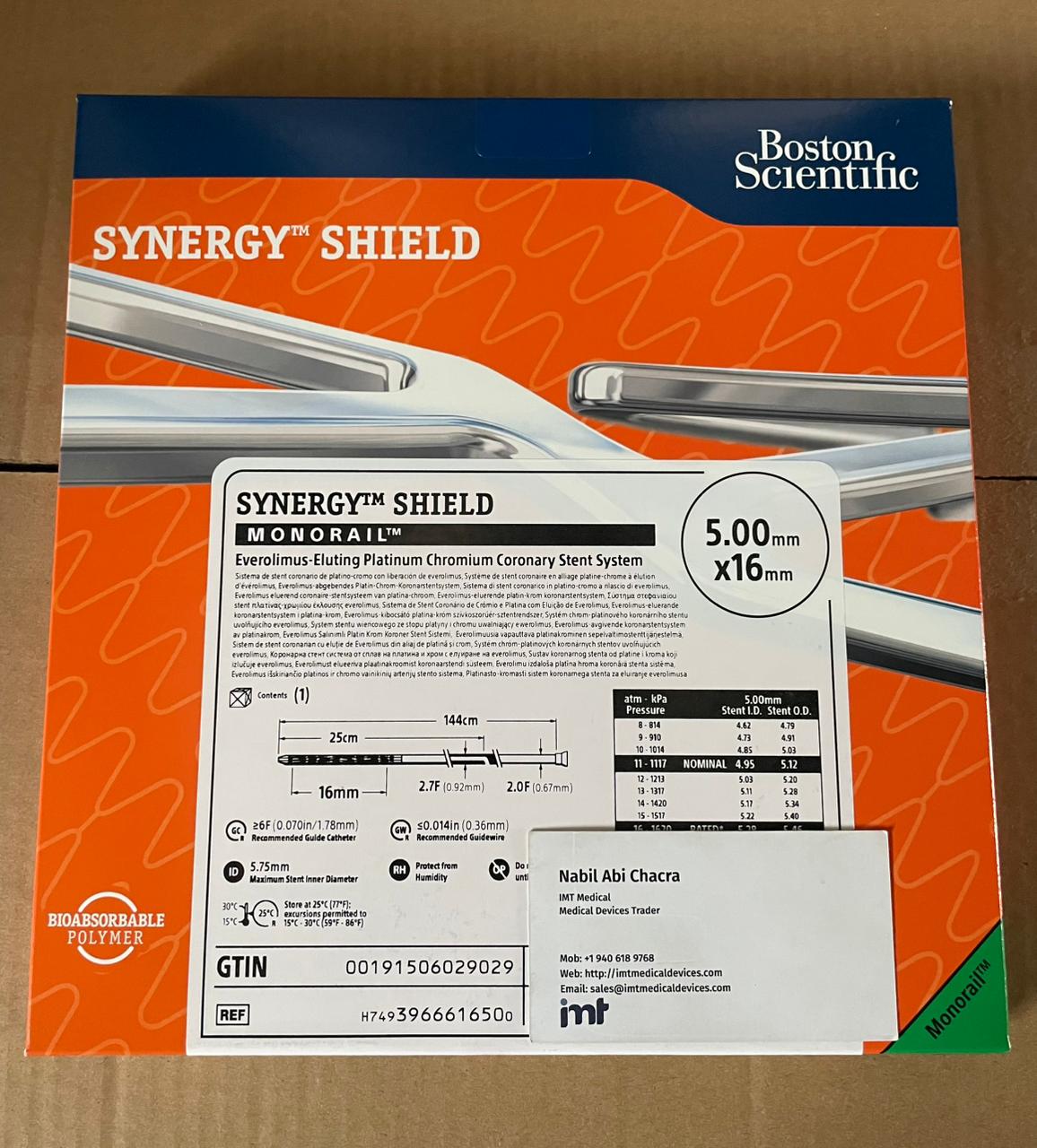
- Secure supply chain continuity by accessing high-demand inventory from Medtronic, Boston Scientific, and Terumo via verified international distribution networks.
Fundamentals of Cardiology Supply Chain Forecasting
Forecasting demand for cardiology supplies represents the systematic estimation of future clinical hardware requirements for cardiovascular interventions. It's not merely a reflection of procedure volume. Clinical demand tracks expected surgical cases, whereas procurement demand translates these cases into specific SKU orders. In 2026, supply chain normalization demands higher agility. High-value inventory, such as drug-eluting stents, dictates capital allocation strategies. Miscalculations lead to either clinical stockouts or excessive capital tie-up. Effective procurement relies on the Fundamentals of Demand Forecasting to align hospital throughput with global manufacturer lead times.
The Role of Historical Data in Medical Procurement
Baseline projections for 2026 depend on historical consumption rates for PTCA balloon catheters and diagnostic guide wires. Procurement managers must isolate seasonal fluctuations in cardiovascular admissions. Admissions often increase during winter months, impacting the volume of elective procedures. Data cleaning is a priority. You must remove statistical anomalies from previous years caused by logistics bottlenecks or temporary manufacturer shortages. This ensures the 2026 baseline reflects actual clinical utilization rather than artificial supply constraints. Analyzing usage patterns for Asahi Intec and Boston Scientific products enables more precise replenishment cycles.
Inventory Velocity and High-Value Cardiology SKU Management
Differentiating turnover rates between high-value hardware and low-cost consumables is vital for liquidity. Permanent pacemakers and ICDs require significant capital. These units demand precise forecasting to maintain lower safety stock levels without risking patient safety. Conversely, high-turnover items like guiding catheters require different stock buffers. Stents present a specific risk due to shelf-life constraints. The cost of obsolescence for expired drug-eluting stents is a major driver of inventory waste. Use ABC analysis to categorize inventory:
- Category A: High-value hardware including pacemakers and ICDs. Requires rigorous oversight and low volume buffers.
- Category B: Mid-range items such as electrophysiology catheters and peripheral stents.
- Category C: Low-cost, high-volume consumables like surgical staplers and guidewires.
Prioritizing forecasting demand for cardiology supplies through this tiered approach ensures capital remains available for emerging technologies. It reduces the financial burden of carrying expensive hardware while maintaining the availability of essential clinical tools. This method streamlines the B2B ordering cycle by focusing administrative resources on the most critical, high-cost assets.
Key Variables Influencing Demand for Interventional Cardiology Devices
Forecasting demand for cardiology supplies requires integrating epidemiological data with procurement math. In 2026, the rising prevalence of coronary artery disease in emerging markets drives a 6% to 9% CAGR in cardiovascular device demand. Procurement professionals must account for technological transitions. As clinical centers shift to newest-generation drug-eluting stents (DES), legacy stock demand drops. This transition requires precise phase-out strategies to avoid dead stock. Regulatory shifts also dictate supply availability. The FDA's transition to Quality Management System Regulation (QMSR) as of February 2, 2026, and mandatory EUDAMED registration in May 2026 create administrative hurdles. These changes often extend customs clearance times. Effective Fundamentals of Supply Chain Forecasting must incorporate these regulatory lead-time buffers to prevent stockouts.
Manufacturer production cycles for major brands like Abbott, Terumo, and Medtronic are tightening. Global medical costs are projected to increase by 10.3% in 2026, putting pressure on supply chain efficiency. Procurement teams must monitor these cycles to align with hospital throughput. It's not enough to look at last year's orders. You need to track real-time manufacturer output and logistical status to maintain service levels.
Clinical Preference and Physician-Driven Demand
Physician choice remains a primary variable. Adoption rates for specific guidewire technologies shift rapidly based on new clinical trial data. If a major trial favors a specific stent platform, procurement must pivot within one quarter. This is critical for specialized items like electrophysiology catheters. These devices often have shorter life cycles. Monitoring the FDA Breakthrough Device Program helps identify upcoming technologies that will disrupt current inventory models. You can view our cardiology portfolio to secure these high-demand components from Asahi Intec and Boston Scientific.
Demographic Trends and Procedure Volume Projections
Aging populations correlate directly with increased ICD and permanent pacemaker implants. North America currently holds a 47% to 48% market share, but decentralized growth is rising. The expansion of outpatient PCI centers shifts inventory from central hospital hubs to smaller, specialized facilities. This decentralization increases the need for safety stock across multiple locations. Preventative cardiology might reduce long-term surgical demand; however, the immediate 2026 outlook remains focused on therapeutic and surgical devices. These categories comprise approximately 88% of the market. Manufacturers are adjusting production cycles to meet this surgical throughput, requiring buyers to maintain 15% safety stock levels for high-turnover items.
Quantitative and Qualitative Forecasting Models for Medical Procurement
Forecasting demand for cardiology supplies requires a dual-track methodology. Relying solely on top-down market modeling fails at the warehouse level. Successful procurement operations in 2026 integrate quantitative data streams with qualitative clinician intelligence. This ensures that high-capacity hubs remain stocked with essential hardware from manufacturers like Medtronic and Terumo. The priority is finding the correct technical identifier and quantity rather than engaging in lengthy narrative estimates.
Quantitative Methods: Data-Driven Accuracy
Time-series analysis remains the standard for stable consumables. Moving averages effectively manage inventory for items like surgical staplers where usage patterns are consistent. For high-volume items like diagnostic guide wires, exponential smoothing provides better responsiveness to recent fluctuations. Trend projection is reserved for long-term capital equipment such as ICDs or permanent pacemakers. These models rely on accurate historical throughput to determine reorder points.
Calculating the Mean Absolute Percentage Error (MAPE) is a critical operational step. It measures the accuracy of your procurement cycles. Low MAPE scores indicate a streamlined supply chain. High scores signal data integrity issues within ERP systems. This is a common challenge in 2026. Many ERPs lack validated, real-time lead time data for critical components. Refining these calculations reduces the risk of expensive stockouts for life-saving hardware.
Causal Modeling and AI Integration
Causal modeling links inventory levels to external variables like surgical waitlists and hospital bed capacity. As of March 2026, 277 FDA-approved AI/ML-enabled medical devices are focused on cardiology. This represents 27.3% of all AI approvals. These technologies are now moving into medical device distribution. AI-driven predictive analytics identify patterns in procedure volume that traditional models miss. They account for regional manufacturing shifts and proposed universal baseline tariffs that influence procurement costs.
Qualitative Methods: Expert Insight and Market Intelligence
Qualitative models fill the gaps left by historical data. The Delphi Method leverages input from senior electrophysiologists and interventionalists. This is essential when forecasting demand for cardiology supplies for new technology adoption where no historical usage exists. Sales force composite models gather data from regional medical representatives who monitor competitor brand availability. Market intelligence must also account for "Black Swan" events. These include sudden regulatory shifts or logistical failures in international shipping hubs. While quantitative models provide the baseline, qualitative adjustments ensure the supply chain remains resilient against unpredictable manufacturer delays. This balanced approach protects clinical service levels across the $76.6 billion cardiovascular market.
Operationalizing Demand Forecasts: Inventory and Lead Time Management
Operationalizing forecasting demand for cardiology supplies requires managing the Bullwhip Effect. Small shifts in clinical throughput shouldn't trigger erratic wholesale orders. Use Economic Order Quantity (EOQ) to balance holding costs against procurement fees. In 2026, the global shift toward "just-in-case" models necessitates a 15% safety stock level for high-turnover SKUs. This buffer protects against production delays caused by the 13 to 18 month average MDR certification review time. Precise reorder points (ROP) are critical for high-value hardware. Setting safety stock for permanent pacemakers involves calculating average daily usage multiplied by the lead time, plus the safety buffer. For these Class III devices, stockouts aren't an option. Procurement managers must prioritize SKU-level accuracy for Medtronic and Boston Scientific implants to maintain clinical throughput.
Buffer Stock vs. Just-in-Time (JIT) in Cardiology
JIT models fail when life-critical devices are involved. The risks of JIT for ptca balloon catheters include clinical delays during manufacturer backlogs. Optimal ROP must account for specific storage requirements. Many cardiology implants require climate-controlled environments or specialized handling. Sensitive catheters and guidewires from Asahi Intec or Terumo demand rigorous warehouse protocols to maintain integrity. Maintaining a "just-in-case" inventory for these items ensures service levels don't drop when regional manufacturing slows. High-capacity distribution requires identifying the correct technical codes and manufacturer specifications to avoid replenishment errors.
Managing International Lead Time Variability
Shipping from international hubs like Dubai or Georgia involves complex customs clearance. You must account for universal baseline tariffs, currently proposed at 10%, which influence landed costs. Medtronic and Terumo maintain different delivery reliability profiles based on their regional production capacity. Strategic regional warehousing mitigates freight volatility. By positioning inventory closer to clinical centers, you reduce the impact of global transit disruptions. It's essential to validate lead time data within your ERP to prevent production delays. Contact our logistics team to secure verified lead times and technical specifications for your 2026 procurement cycle.
Effective management also requires monitoring the FDA's QMSR inspection updates. These regulatory changes impact how quickly manufacturers like Abbott can release new batches. Lead times from major manufacturers remain unpredictable. Regional hubs in the Middle East and Caucasus provide a vital bridge, offering expedited documentation and regulatory compliance. Prioritizing these logistical frameworks allows for streamlined B2B ordering cycles and higher service levels for clinical departments. You don't just order hardware; you secure a stable supply line for life-saving technology.
Strategic Sourcing: Ensuring Supply Continuity with IMT Medical Devices
IMT Medical Devices functions as a high-capacity international distributor. We provide direct access to premium inventory from Medtronic, Boston Scientific, and Abbott. Forecasting demand for cardiology supplies requires a partner capable of absorbing global logistics shocks. Our infrastructure supports volume-based pricing tiers for bulk cardiology procurement. We maintain strategic distribution hubs serving over 50 countries globally. This network ensures product availability regardless of regional manufacturer bottlenecks. Industrial competence and logistical reliability are the core of our operation. We focus on rapid information retrieval for procurement professionals.
Logistical expertise defines our B2B model. We manage all documentation and international regulatory compliance. This includes navigating the FDA's QMSR and EU EUDAMED requirements mandatory as of May 2026. Our focus is on industrial competence and clear technical data transmission. We don't just ship hardware; we secure your clinical throughput. The priority is finding the correct technical identifier and manufacturer code. Our system is designed for utility and speed. We bridge the gap between major manufacturers and international markets with precision.
The Advantage of Global Wholesaling
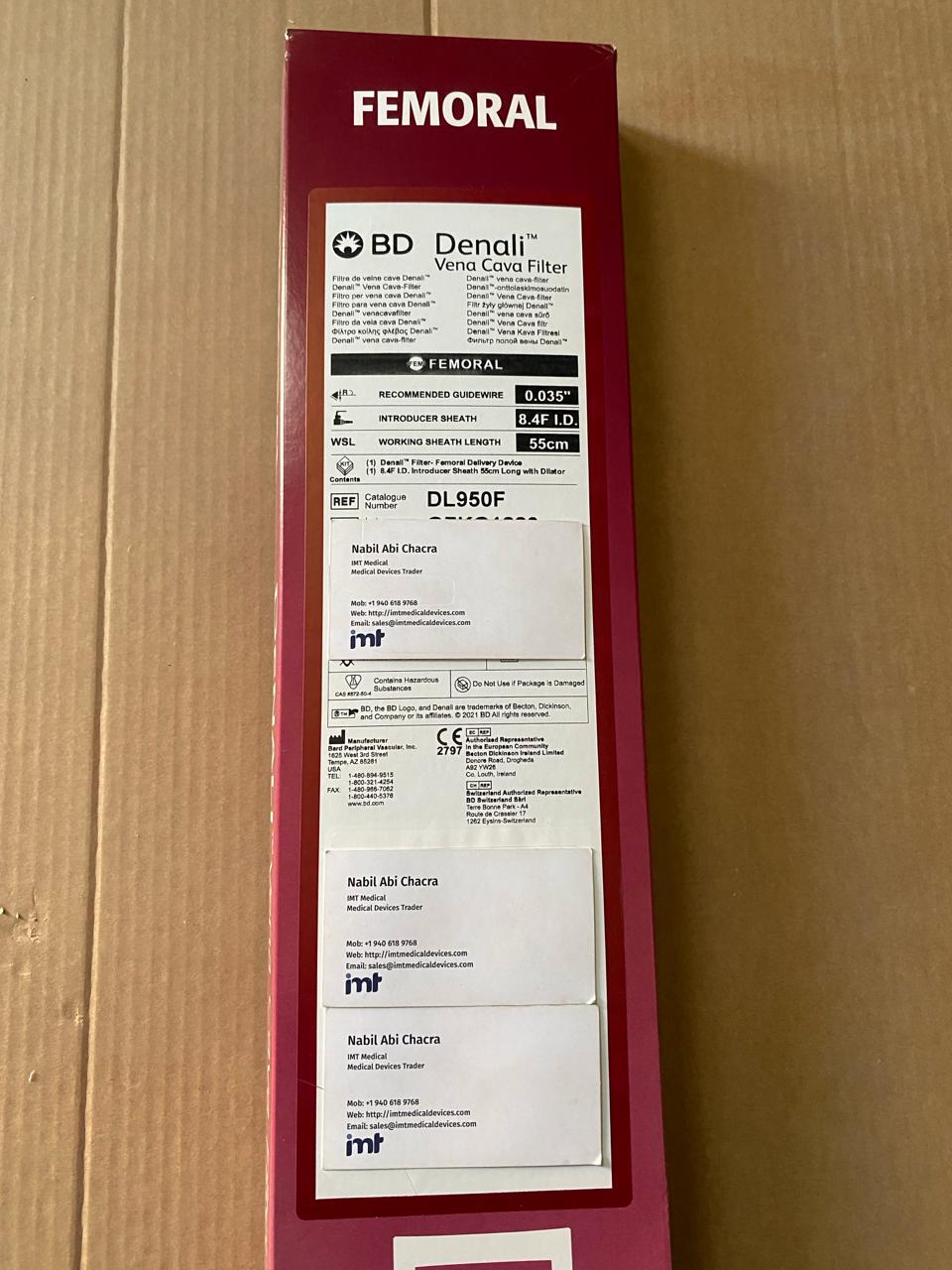
We offer a reliable supply of Drug-Eluting Stents, PTCA balloon catheters, and peripheral stents. Export logistics for sensitive medical technologies are streamlined. We minimize procurement friction through specialized handling and documentation. This approach reduces the cost of obsolescence for high-value cardiology SKUs. Our inventory includes:
- Medtronic: Permanent pacemakers, ICDs, and drug-eluting stents.
- Boston Scientific: PTCA balloon catheters and electrophysiology catheters.
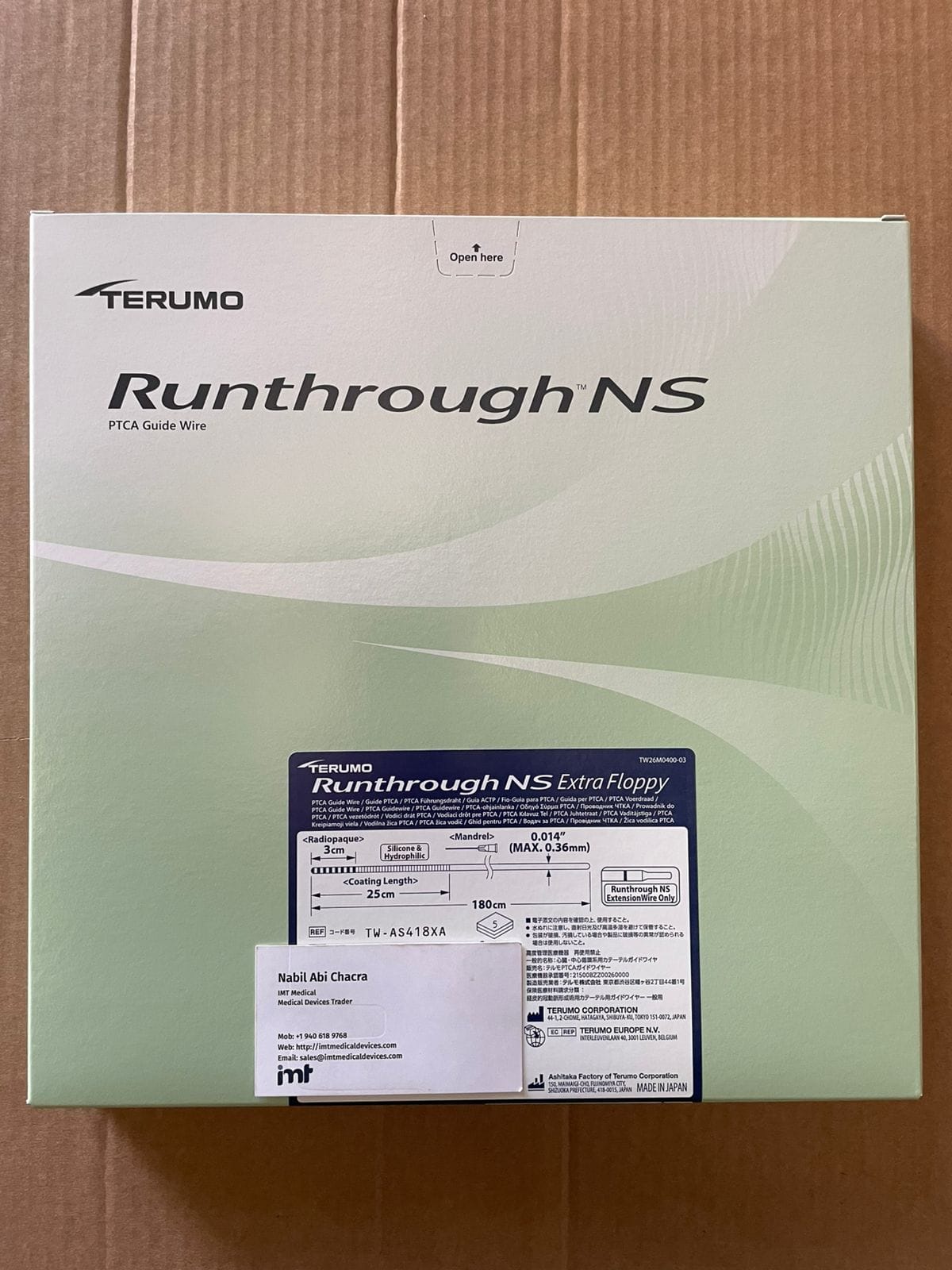
- Terumo: Guiding catheters and diagnostic guide wires.
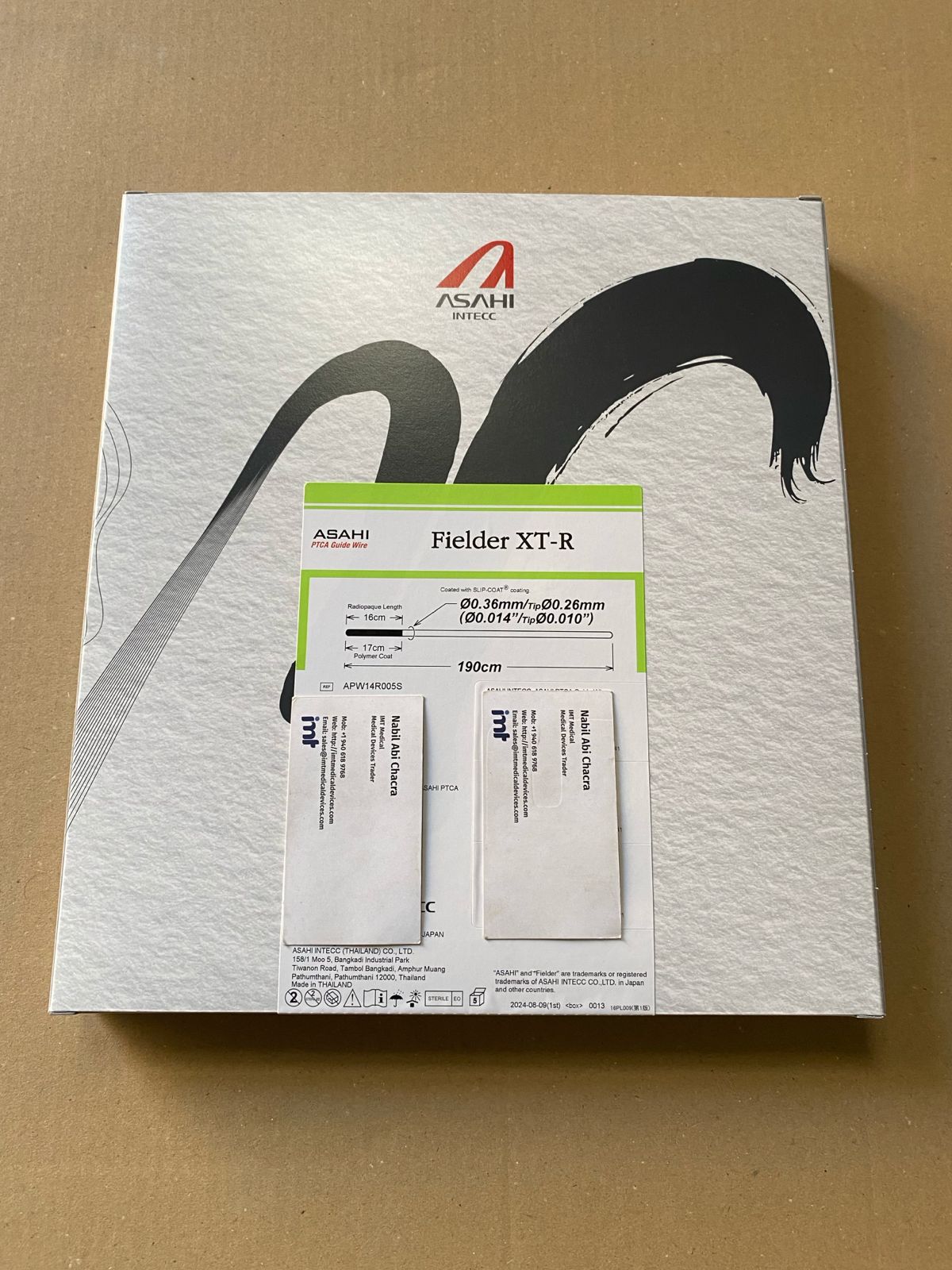
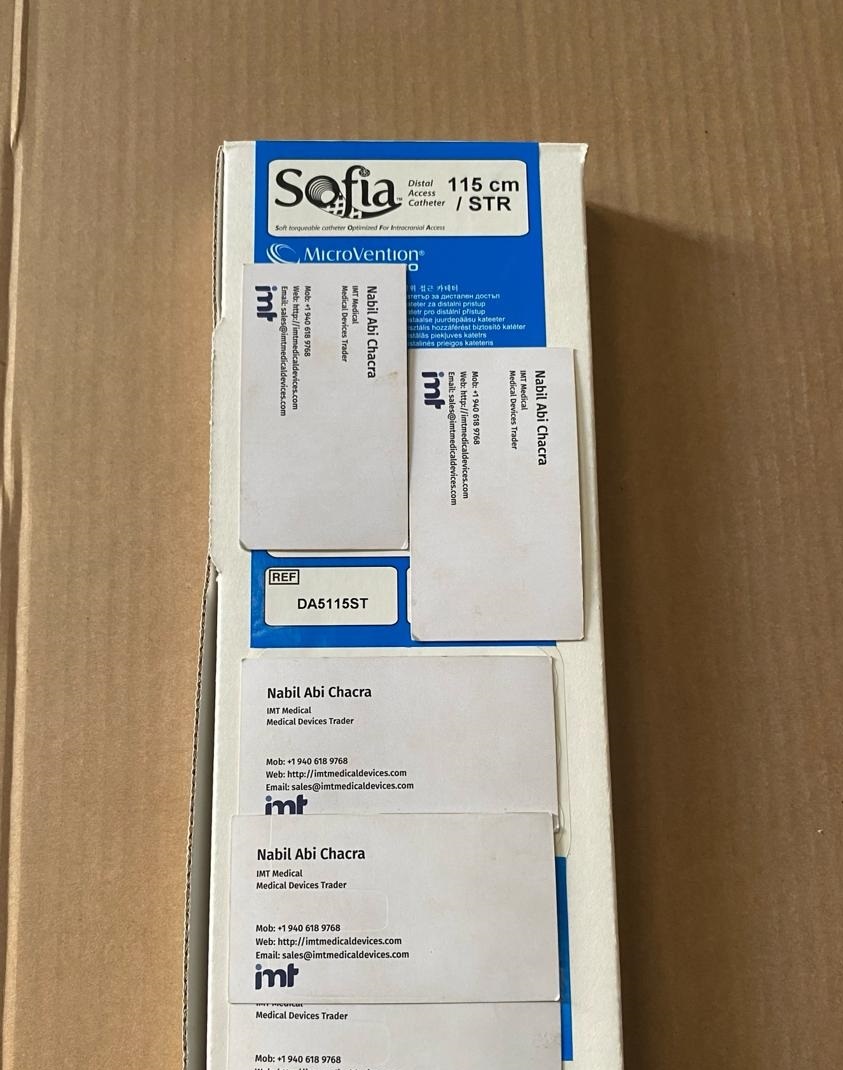
- Asahi Intec: Specialized guidewire technology and microcatheters.
Partnering for Reliable Cardiology Inventory
IMT Medical Devices stabilizes local supply chains against global volatility. We provide customized supply solutions for healthcare providers and international distributors. Our manufacturer-centric approach ensures access to authentic technology. Forecasting demand for cardiology supplies is simplified when lead times are verified and inventory is accessible. We prioritize clarity and speed in every transaction. Our voice is pragmatic and expansive. We value scale and reach in the global medical supply chain.
Contact our procurement team for technical specifications and current availability. We provide the logistical status and commercial scope for all inventory categories. Our digital warehouse feed allows for rapid identification of specific hardware. We don't seek traditional brand storytelling; we provide results. Secure your 2026 inventory through an experienced and well-connected global partner. We are the vital bridge for your cardiovascular hardware needs.
Optimizing Your 2026 Cardiology Supply Chain
Accurate forecasting demand for cardiology supplies requires integrating clinical throughput with precise logistical variables. You've analyzed how 15% safety stock levels and multi-variable modeling mitigate high-value hardware stockouts. Transitioning to a data-driven procurement cycle ensures service levels remain stable despite regulatory shifts like the FDA QMSR and EU MDR deadlines. Maintaining a resilient inventory pipeline is the only way to navigate the projected 10.3% increase in global medical costs and potential universal tariffs.
IMT Medical Devices provides the industrial competence required for global scale. We are an authorized distributor of Medtronic, Boston Scientific, and Terumo. With strategic logistics hubs in Georgia, Dubai, Turkey, and Poland, we currently export to 50+ countries. Our infrastructure is designed for rapid technical data transmission and reliable product availability. Contact IMT Medical Devices for Bulk Cardiology Supply and Global Export Solutions. Secure your 2026 inventory pipeline today.
Frequently Asked Questions
What are the primary factors that cause cardiology supply demand to fluctuate?
Clinical trial results and manufacturer production capacity are the primary drivers of fluctuation. If a major trial favors a specific Boston Scientific stent platform, demand shifts immediately. Regional increases in cardiovascular admissions during winter months also create predictable volume spikes that procurement teams must anticipate through seasonal data analysis.
How do I calculate safety stock for high-value items like Drug-Eluting Stents?
Use a 15% safety stock level as the 2026 baseline for drug-eluting stents. Calculate this by multiplying your maximum daily usage by the maximum manufacturer lead time, then subtracting average usage. This buffer is essential to offset the 13 to 18 month MDR certification delays currently impacting Class III implantable devices.
Which forecasting model is best for new cardiology technologies like Electrophysiology Catheters?
The Delphi Method is most effective for electrophysiology catheters. These devices have short life cycles and high innovation rates, making historical data less reliable. Gathering consensus from senior interventionalists allows you to adjust inventory levels before a technological shift renders existing legacy stock obsolete.
How does manufacturer lead time impact my cardiology inventory reorder points?
Lead time variability directly dictates your reorder point (ROP). Calculate ROP by multiplying average daily usage by the lead time and adding your safety stock buffer. If shipping from a hub like Dubai takes 14 days, your ROP must trigger earlier to ensure life-saving hardware remains available for scheduled procedures.
Can AI and machine learning improve demand forecasting for cardiology supplies in 2026?
AI and machine learning improve forecasting demand for cardiology supplies by processing non-linear patterns in surgical throughput. In 2026, AI-enabled ERP systems utilize data from 277 FDA-approved cardiology applications to predict SKU-level requirements. This technology identifies usage trends that traditional moving averages often miss.
What is the difference between quantitative and qualitative forecasting in medical procurement?
Quantitative forecasting relies on hard historical data, such as previous PTCA balloon consumption rates. Qualitative forecasting uses expert judgment and market intelligence to predict future needs. A hybrid approach is necessary in 2026 to balance historical consumption with unpredictable regulatory changes and manufacturer production shifts.
How often should I review and adjust my cardiology demand forecasts?
Review your forecasting demand for cardiology supplies at least once per quarter. High-turnover consumables like diagnostic guide wires may require monthly adjustments to reflect actual clinical usage. Annual reviews are no longer sufficient due to rapid technological shifts and the volatile nature of global medical logistics.
How does international logistics documentation affect the availability of cardiology supplies?
Incomplete documentation causes immediate customs delays, reducing available inventory. Mandatory EUDAMED registration and FDA QMSR compliance are critical in 2026. Missing certificates of conformity or incorrect manufacturer technical codes can extend lead times by weeks, potentially disrupting critical clinical service levels and cardiovascular intervention schedules.