
How to Choose the Right Coronary Stent
A coronary case can change quickly when the planned stent is not on the shelf, the platform does not track the anatomy, or the available size matrix does not match the vessel. In practice, coronary stent selection is not only a clinical decision. It is also an inventory decision, a vendor decision, and a risk-control decision for cath labs, hospitals, and independent distributors.
This guide to coronary stent selection is written for professional buyers and procedure-focused teams that need clarity on what matters before requesting a quote or building stock.
Guide to coronary stent selection: start with the lesion
The first filter is the lesion itself. Stent choice should match anatomy, plaque burden, vessel diameter, lesion length, calcification, tortuosity, bifurcation involvement, and restenosis risk. A product that performs well in a straightforward proximal lesion may not be the right platform for a distal, tortuous, heavily calcified segment.
For procurement teams, this means a single-brand strategy can create gaps. If your service line handles a mixed coronary workload, the practical requirement is broader. You need access to multiple stent families with different deliverability profiles, radial strength characteristics, and size ranges.
Short, focal lesions usually allow more flexibility. Long lesions narrow the field because length availability becomes critical, and overlap strategy may affect the physician's preference. Small vessels and diffuse disease also raise the importance of low crossing profile and precise sizing options. In left main or proximal high-flow segments, apposition and scaffolding strength may carry more weight than extreme trackability.
Clinical fit and inventory fit are not the same
A common purchasing mistake is evaluating stents only by headline product reputation. In the lab, physicians compare specific platform behavior. In the storeroom, buyers must compare assortment depth, replenishment reliability, and exact size availability.
That distinction matters. A premium drug-eluting stent platform may be clinically preferred in many cases, but if the local channel cannot reliably supply the diameter and length combinations used most often, the procurement value drops. On the other hand, a broader available matrix from a trusted manufacturer can reduce substitutions, emergency borrowing, and delayed cases.
For that reason, a useful guide to coronary stent selection should always include two parallel questions: is this the right stent for the lesion, and can this stent family be sourced consistently in the exact configurations the lab uses?
Drug-eluting vs other options
In most contemporary coronary practice, drug-eluting stents are the standard selection because they reduce restenosis risk compared with older bare-metal approaches. Even so, buying decisions still involve nuances within the DES category.
Not all DES platforms are equivalent in how they balance strut thickness, polymer design, flexibility, expansion behavior, and visibility. Some platforms are chosen because they track well in complex anatomy. Others are valued for radial support or broad evidence base. Physicians may also have established preferences around deployment feel and post-dilatation response.
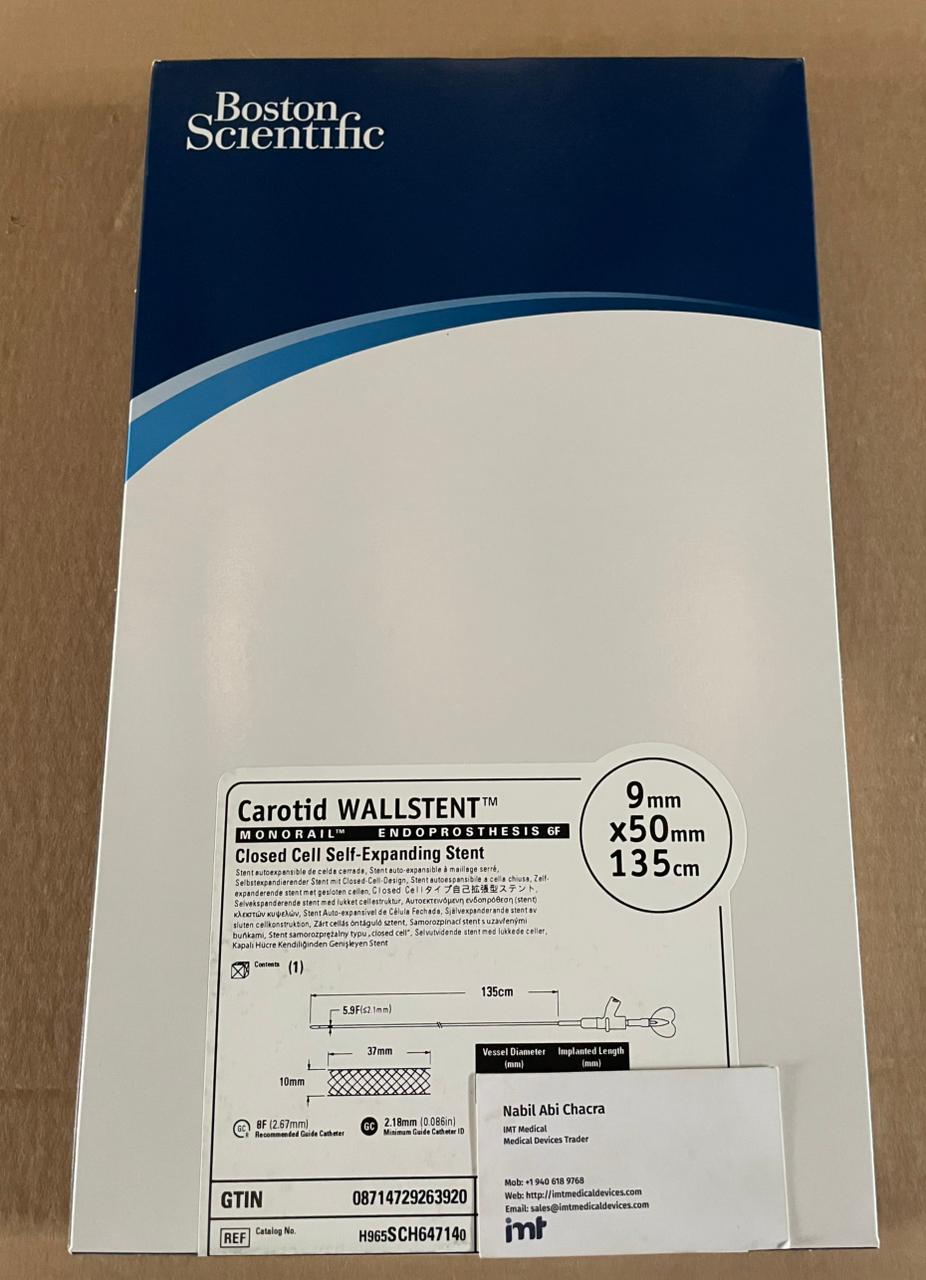
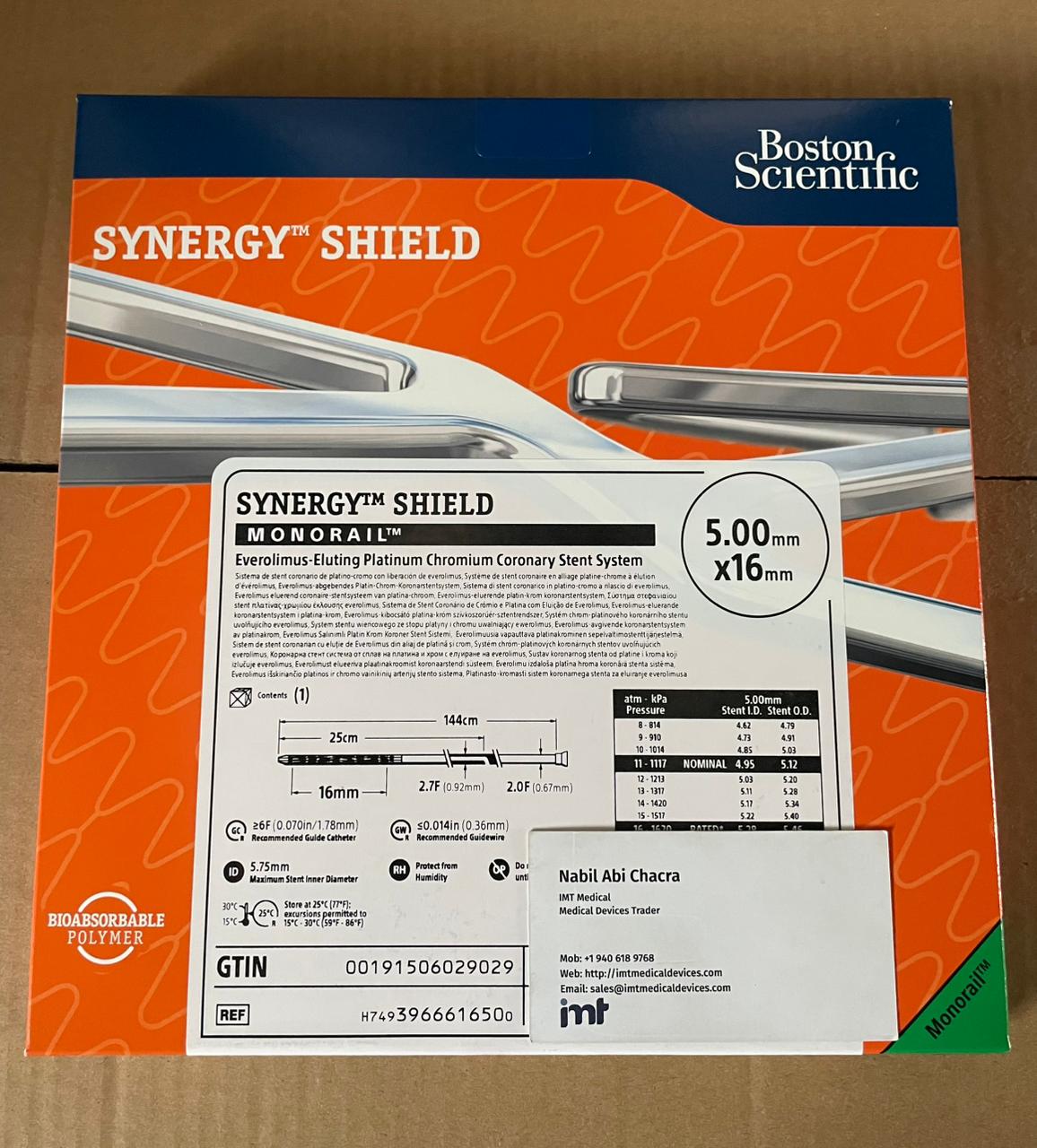
From a sourcing standpoint, branded platforms from Abbott, Medtronic, Boston Scientific, and Terumo remain central to many hospital formularies because buyers want traceable product origin, known IFU parameters, and lower ordering ambiguity. When a request includes exact product name and part number, the risk of mismatch drops sharply.
Sizing is where errors get expensive
Diameter and length selection are basic on paper and costly when handled loosely. Incorrect diameter risks malapposition or vessel injury. Incomplete lesion coverage increases the chance of geographic miss. Excess overlap can also create avoidable complexity.
For buyers, the operational lesson is simple: stock should reflect actual case distribution, not a generic coronary list. Review usage patterns by vessel size bands, common lesion lengths, and physician preference. Some labs consume a narrow core of sizes repeatedly and only occasionally require edge-case dimensions. Others, especially referral centers treating more complex disease, need a wider tail of SKUs available on short notice.
This is where exact identifiers matter. A stent family name alone is not enough for fast procurement. Teams should work from manufacturer references, diameter, length, and packaging unit details so requests can be quoted without back-and-forth clarification.
Platform trade-offs in real cases
Every stent platform involves trade-offs. Thinner struts may improve deliverability and reduce vessel injury, but the decision cannot be reduced to one design feature. Radial strength, recoil performance, side-branch access, lesion preparation requirements, and visibility under fluoroscopy all influence case success.
In tortuous anatomy, deliverability often becomes the deciding factor. In heavily calcified lesions, lesion preparation may matter more than the stent itself, but the final platform still needs adequate expansion behavior. In bifurcations, cell design and side-branch re-crossing can influence physician preference. In ostial disease, precision of placement and scaffolding characteristics may matter more than ultra-low profile performance.
That is why standardized purchasing based only on unit cost can fail in the cath lab. A lower-cost option that increases friction in complex cases can create a different form of cost through longer procedure times, extra devices, or physician rejection.
What procurement teams should verify before ordering
The fastest coronary purchasing workflows are built around exact matching. Before requesting a quote, confirm the manufacturer, product family, diameter, length, delivery system details, and any internal item code used by the hospital or distributor.
It also helps to verify shelf-life requirements and lot handling expectations, especially for buyers managing regional redistribution. For cross-border supply, documentation, labeling expectations, and packing accuracy become just as important as price. Hospitals and competing distributors often seek alternative sourcing because incumbent channels are slow, restrictive, or inconsistent. In those cases, quote speed is useful, but quote accuracy is what keeps cases moving.
If the request is for a physician-specific platform, avoid substitutions unless they are explicitly approved. In coronary interventions, near-equivalent is often not treated as equivalent. Procurement discipline here reduces returns, delays, and internal disputes between clinical and supply teams.
Building a practical coronary stent portfolio
Most labs do not need every available coronary stent. They need a portfolio that covers routine PCI, urgent cases, and a defined level of complexity. That usually means balancing a dependable core range with access to additional branded inventory for less frequent requirements.
A practical portfolio often includes high-turn diameters and lengths from leading DES families, with contingency access to niche sizes and physician-preferred platforms. The right balance depends on case mix. A center focused on standard coronary interventions can operate with a tighter stocking model. A higher-acuity center, or a distributor supplying multiple institutions, usually needs broader optionality and shorter replenishment cycles.
This is where supply-chain capability becomes part of stent selection. Availability across brands such as Abbott, Medtronic, Boston Scientific, Cordis, and Terumo can reduce dependence on a single local channel and make it easier to support physician preference without overstocking one line.
A procurement-focused guide to coronary stent selection
For buyers, the best way to approach coronary stent selection is to think in layers. First, match the lesion category and physician requirement. Second, confirm the exact product family and size matrix needed in your case mix. Third, check whether the source can supply branded product consistently, with clear identifiers and quote-ready documentation.
That process is more reliable than choosing by price sheet alone. It reduces emergency substitutions, cuts approval delays, and supports better alignment between the cath lab and purchasing office.
At https://imtmedicaldevices.com, the sourcing model is built around branded interventional inventory and quote-based supply for hospitals, doctors, and distributors that need an alternative to local channels. For coronary stents, that matters when the requirement is specific, time-sensitive, and not open to interpretation.
The most useful closing question is not which coronary stent is best in general. It is whether your current supply setup can deliver the exact stent, exact size, and exact brand your operators need when the case is already on the table.