
Medical Device Supplier Evaluation Checklist: A 2026 Procurement Framework
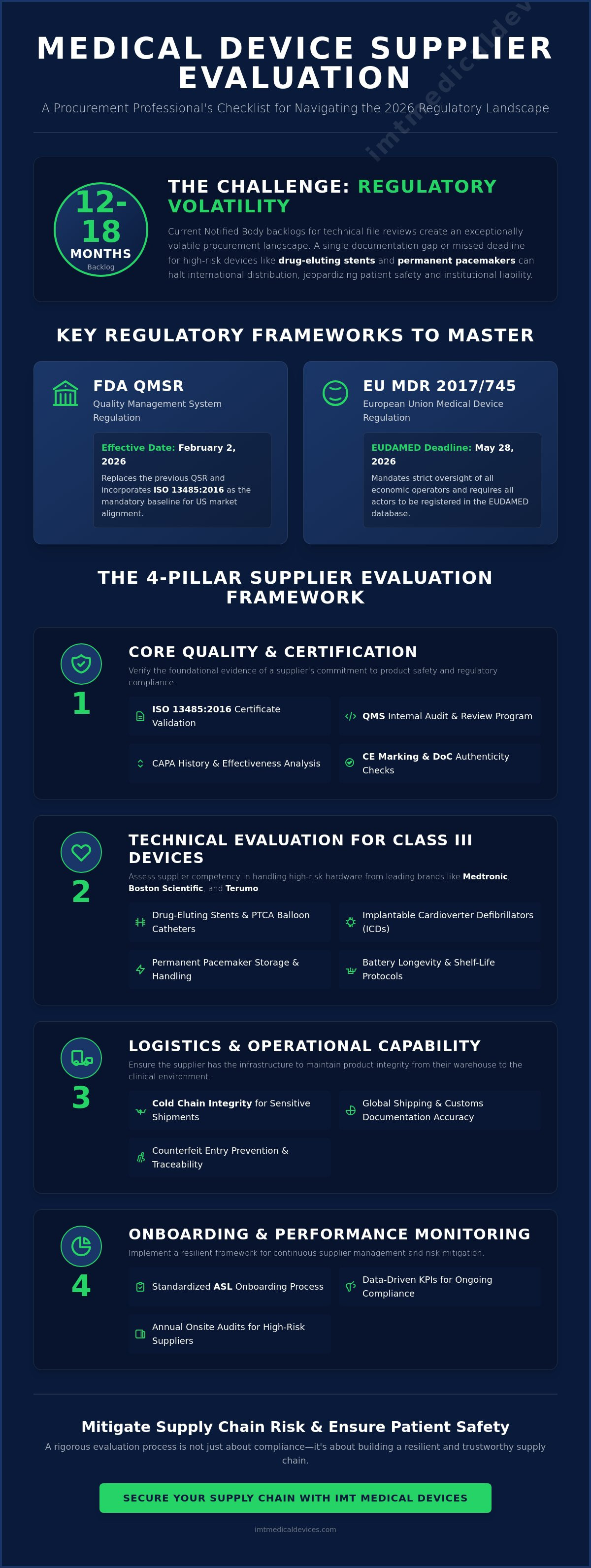
Notified Bodies in the EU currently report backlogs of 12 to 18 months for technical file reviews. This delay makes the 2026 procurement landscape exceptionally volatile for high-risk hardware like drug-eluting stents and permanent pacemakers. You understand that a single documentation gap or a missed EUDAMED registration deadline can halt international distribution entirely. To mitigate these risks, procurement professionals require a rigorous medical device supplier evaluation checklist that aligns with the new FDA Quality Management System Regulation (QMSR) and ISO 13485:2016 standards.
This framework ensures your Approved Supplier List (ASL) remains resilient against supply chain disruptions and counterfeit entry. You'll gain a technical roadmap for auditing wholesalers of premium brands such as Medtronic, Boston Scientific, and Terumo. The following sections preview the essential verification steps for Class III devices, mandatory actor registration protocols, and the logistical requirements for seamless global shipping. We focus on maintaining a reliable flow of specialized clinical technology including PTCA balloon catheters and implantable cardioverter defibrillators while meeting the May 2026 EUDAMED compliance mandates.
Key Takeaways
- Align procurement frameworks with the 2026 FDA QMSR and EU MDR registration requirements for Class III devices.
- Utilize a technical medical device supplier evaluation checklist to verify the storage and battery longevity protocols of CRM hardware.
- Audit global logistics capabilities to ensure cold chain integrity for sensitive shipments of drug-eluting stents and catheters.
- Standardize the Approved Supplier List (ASL) onboarding process to secure authentic inventory from manufacturers like Medtronic and Terumo.
- Implement data-driven KPIs to monitor ongoing supplier compliance and documentation accuracy in international distribution.
The Strategic Role of Supplier Evaluation in Medical Device Procurement
Supplier integrity dictates patient safety and institutional liability. In high-risk clinical environments, the reliability of a partner directly influences the performance of life-critical hardware. A rigorous supplier evaluation protocol serves as a defensive barrier against sub-standard product entry. Procurement professionals must implement a structured medical device supplier evaluation checklist to maintain the clinical efficacy of inventory such as permanent pacemakers and drug-eluting stents. This process shifts the focus from simple cost acquisition to long-term logistical resilience and regulatory safety.
Global regulations have evolved to demand deeper supply chain transparency. The FDA Quality Management System Regulation (QMSR), effective February 2, 2026, replaces the previous QSR and incorporates ISO 13485:2016. Simultaneously, EU MDR 2017/745 requires strict oversight of all economic operators. These frameworks distinguish between critical component suppliers and finished device wholesalers. While component suppliers impact manufacturing quality, wholesalers for brands like Medtronic, Terumo, and Boston Scientific control the storage and distribution integrity. Rigorous pre-qualification is more cost-effective than reactive quality interventions. Addressing a supply chain failure post-market involves expensive recalls and legal exposure that far exceed the cost of initial auditing.
Risk-Based Supplier Classification
Procurement teams categorize partners based on device classification. Class III devices, including implantable cardioverter defibrillators (ICDs) and PTCA balloon catheters, require the highest evaluation frequency. Critical suppliers are those whose products have a direct clinical impact on patient survival. Risk scores are assigned based on manufacturer reputation, historical performance data, and the complexity of the hardware. High-risk classifications necessitate annual onsite audits or deep-dive documentation reviews to ensure continued alignment with international standards.
Regulatory Consequences of Evaluation Failure
Inadequate supplier oversight leads to severe penalties. Regulatory bodies can trigger immediate product recalls or revoke import licenses for non-compliant entities. Sourcing through unverified international distributors increases the risk of documentation gaps in international shipping. Authorized Representatives play a vital role here; they act as the legal bridge in the EU, ensuring that every actor in the chain meets MDR requirements. Failure to verify these credentials results in immediate market suspension, especially with the mandatory EUDAMED registration deadline of May 28, 2026, approaching for all economic operators.
Core Quality Management and Certification Checklist
Quality management systems (QMS) provide the structural evidence of a supplier's ability to maintain product safety. Under the FDA Quality Management System Regulation (QMSR) effective February 2, 2026, the ISO 13485:2016 standard is now the mandatory baseline for US market alignment. A robust medical device supplier evaluation checklist must prioritize the verification of these certifications. Certification alone is insufficient; procurement teams must validate the scope of registration to ensure it covers the specific distribution and storage requirements of Class III hardware like implantable cardioverter defibrillators (ICDs) and drug-eluting stents.
Change control and notification protocols are critical. Suppliers must demonstrate a formalized process for communicating manufacturer-driven changes, such as technical updates to Boston Scientific or Medtronic products. Reviewing a supplier's Corrective and Preventive Action (CAPA) history reveals their operational maturity. Analyze the effectiveness of past interventions regarding diagnostic guide wires or surgical staplers to identify recurring systemic failures. Authenticity checks for CE Marking and the Declaration of Conformity (DoC) are also essential. Cross-reference Notified Body numbers with official databases to prevent the entry of counterfeit or expired inventory into the supply chain.
ISO 13485 and QMS Verification
Validate all ISO 13485:2016 certificates through accredited registrar databases like IAF CertSearch. Confirm that the supplier’s internal audit program is active and supported by management reviews. Personnel training records must show technical competency for specialized device handling. This includes specific protocols for permanent pacemakers and electrophysiology catheters. Procurement teams seeking reliable medical device inventory should prioritize partners with transparent, audit-ready QMS documentation.
Post-Market Surveillance and Vigilance
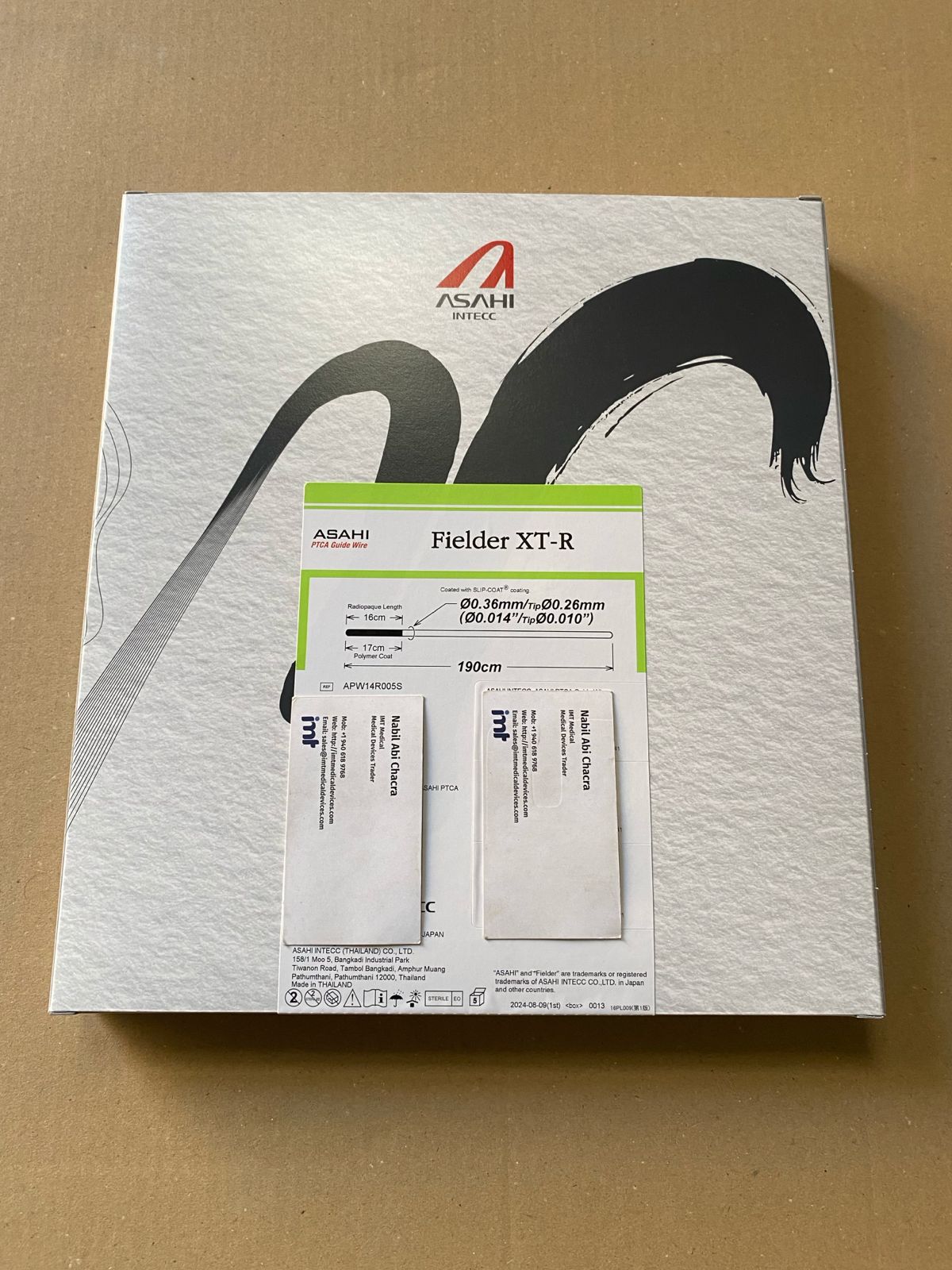
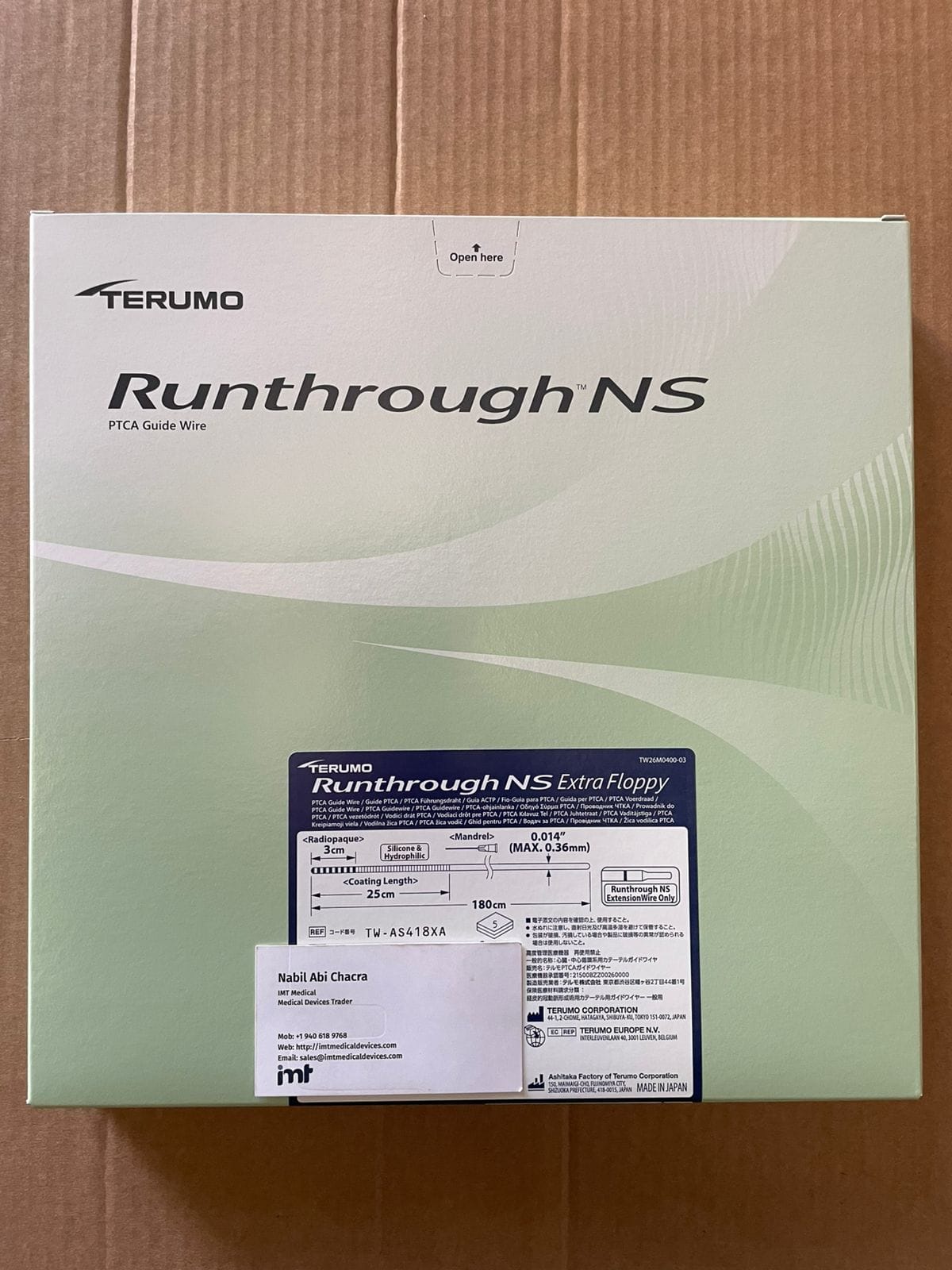
Vigilance systems must ensure the rapid distribution of Field Safety Notices (FSN). Evaluate the supplier’s complaint management system for adherence to regulatory reporting timelines. Traceability is now a digital requirement. Verify full Unique Device Identification (UDI) compliance across the entire inventory, from Terumo PTCA balloon catheters to Asahi Intec guidewires. By May 28, 2026, all economic operators must complete mandatory registration in the EUDAMED database. Use your medical device supplier evaluation checklist to confirm the supplier’s Actor Registration Single Registration Number (SRN) to maintain uninterrupted market access.
Technical Evaluation for Cardiovascular and CRM Devices
Procurement of high-risk hardware requires a specialized medical device supplier evaluation checklist that moves beyond general QMS verification. For Cardiovascular and Cardiac Rhythm Management (CRM) devices, technical scrutiny must focus on specialized storage and manufacturer-specific performance data. Wholesalers must demonstrate consistent adherence to environmental controls for drug-eluting stents (DES). These products contain sensitive drug-polymer coatings that degrade if temperature and humidity levels fluctuate outside specified parameters. Verification of calibrated monitoring systems in the supplier's facility is a primary audit requirement.
CRM devices like permanent pacemakers and implantable cardioverter defibrillators (ICDs) demand battery longevity verification. Suppliers must provide documentation on shelf-life monitoring and rotation strategies. This ensures that every unit delivered maintains its full operational lifespan. Procurement teams should also review technical data sheets for PTCA balloon catheters and guidewires to confirm compatibility with existing lab inventory. Authenticity verification is paramount for premium brands like Medtronic, Boston Scientific, and Abbott. This involves cross-referencing lot numbers and UDI data directly with manufacturer databases to eliminate the risk of counterfeit entry into the clinical environment.
Stent and Implantable Device Integrity
Evaluation protocols must include lot-specific sterilization records and packaging integrity checks. Any breach in sterile barrier packaging renders Class III implants unusable. For DES, the shelf-life requirements for drug-polymer coatings are more stringent than for bare-metal alternatives. Suppliers must provide clear evidence of first-in, first-out (FIFO) inventory management. Additionally, technical specifications for PTCA balloon catheters, including burst pressure and trackability profiles, must match the clinical requirements of the interventional suite. A comprehensive medical device supplier evaluation checklist validates these technical parameters before onboarding.
Technical Support and Clinical Data
Supplier capability extends to the provision of clinical data and technical support. Instructions for Use (IFU) must be available in the regional languages required by local regulatory bodies. For high-risk implants, suppliers should offer clinical data summaries that support the device’s safety profile. Access to manufacturer-certified technical training and support materials is also a critical differentiator. Reliable partners provide the technical documentation necessary for hospital value analysis committees (VAC) to approve new hardware, ensuring that clinical teams have the resources needed for successful patient outcomes.
Operational and Global Logistics Capability Assessment
Logistical competence is the functional bridge between manufacturer production and clinical application. A rigorous medical device supplier evaluation checklist must prioritize the audit of international export capabilities. High-risk hardware like implantable cardioverter defibrillators (ICDs) requires specialized medical logistics to prevent mechanical shock or environmental damage. Verification of cold chain integrity is mandatory for drug-eluting stents. Suppliers must demonstrate the consistent use of active or passive cooling systems and calibrated data loggers. These tools provide the necessary thermal history required for regulatory acceptance at the point of entry. Assessment of specialized transport protocols ensures that sensitive clinical technology maintains its intended efficacy during transit.
Operational efficiency is measured by inventory management precision and stock availability. Procurement teams must evaluate lead times for core inventory from Boston Scientific, Terumo, and Medtronic. Reliable wholesalers maintain deep stock levels of PTCA balloon catheters, surgical staplers, and electrophysiology catheters. This ensures rapid fulfillment and minimizes clinical downtime. Financial stability audits are equally vital. Suppliers with strong balance sheets offer more predictable volume-based pricing structures and better resilience against global economic shifts. A partner’s ability to maintain high-capacity inventory of Asahi Intec products or diagnostic guide wires indicates a mature supply chain capable of supporting large-scale institutional needs.
International Documentation and Compliance
Accurate international documentation is the primary defense against customs seizure. The medical device supplier evaluation checklist must include verification of the Certificate of Free Sale (FSC) and Certificate of Origin (COO). Proforma and Commercial Invoices must align perfectly with the technical codes for guidewires and diagnostic guide wires to avoid clearance delays. Specialized knowledge of regional regulatory frameworks in Turkey, the UAE, and Georgia is a significant trust signal. Procurement professionals should source from high-capacity international distributors who understand these localized import requirements and documentation standards.
Supply Chain Resilience and Transparency
Resilience depends on redundant logistical networks and real-time shipment visibility. Audit the supplier’s contingency plans for managing global supply chain disruptions. This includes the use of multiple strategic hubs and diverse carrier partnerships. Real-time tracking capabilities allow for precise inventory planning and risk mitigation. Verify the supplier's internal digital infrastructure for tracking lot numbers and UDI data throughout the export process. This level of transparency is essential for maintaining compliance with the 2026 EUDAMED registration mandates for all economic operators. A well-connected partner provides the logistical reliability needed to secure a steady supply of premium medical interventions.
Implementation: Onboarding and Performance Monitoring
Implementation marks the functional transition from theoretical assessment to active supply chain integration. Once a partner satisfies the criteria within the medical device supplier evaluation checklist, they move to Approved Supplier List (ASL) status. This phase requires the formalization of Quality Agreements and commercial contracts. These documents define the legal and technical expectations for the distribution of high-risk interventions like permanent pacemakers and implantable cardioverter defibrillators (ICDs). Clear protocols for inventory transitions ensure that clinical supply remains uninterrupted when onboarding new wholesalers for brands like Medtronic or Boston Scientific.
The Onboarding Process
The initial phase centers on a structured trial order. This order serves as a live test for the supplier’s logistical and documentation precision. Quality inspection protocols must verify the integrity of Class III hardware, including drug-eluting stents and PTCA balloon catheters, upon arrival. Establishing formal communication channels for technical coordination is vital. These channels facilitate the rapid exchange of data regarding Asahi Intec guidewires or Terumo products. A successful trial order validates the supplier’s ability to meet the rigorous standards established during the pre-qualification audit. It’s the final step before full-scale procurement begins.
Continuous Performance Monitoring
Ongoing monitoring relies on data-driven Key Performance Indicators (KPIs). Procurement teams track on-time delivery (OTD) and order accuracy metrics to ensure logistical reliability. Quality incidents and the speed of response to technical inquiries regarding electrophysiology catheters or surgical staplers are primary performance markers. Periodic re-evaluations occur at defined intervals. Class III suppliers require more frequent audits than those providing lower-risk diagnostic guide wires. If a partner doesn't meet the established thresholds, the disqualification protocol begins.
Performance data determines the scope of these reviews. Consistent failure to meet KPI targets triggers a formal transition plan. This process includes the phased removal of the supplier from the ASL and the immediate reallocation of inventory requirements to secondary partners. Remote and on-site audits provide the necessary oversight to maintain full regulatory alignment with the latest FDA and MDR standards. This systematic approach secures a resilient supply of premium technology. It ensures that critical hardware like peripheral stents and guiding catheters are always available for clinical use.
Securing Your 2026 Procurement Pipeline
Success in 2026 requires a shift from reactive sourcing to proactive risk management. You've seen how regulatory alignment with QMSR and EUDAMED registration forms the foundation of modern procurement. Implementing a technical medical device supplier evaluation checklist ensures that your institution maintains access to critical hardware like drug-eluting stents and permanent pacemakers without the risk of documentation gaps or supply chain failures. Verification of cold chain integrity and international export capabilities remains the primary trust signal for global partners.
Procurement teams must prioritize wholesalers with proven reach and technical competency. We offer global distribution to 50+ countries through strategic hubs in Georgia, Dubai, and Poland. Our inventory features authentic technology from Medtronic, Abbott, and Boston Scientific. To optimize your supply chain and ensure uninterrupted clinical flow, Access Premium Medical Device Inventory and Export Solutions. Standardizing your evaluation process today protects your institutional liability and patient outcomes tomorrow. Your transition to a more resilient, data-driven procurement framework starts now.
Frequently Asked Questions
What are the most critical criteria in a medical device supplier evaluation?
Critical criteria include verified ISO 13485:2016 certification and evidence of EUDAMED actor registration. Wholesalers must demonstrate cold chain integrity for drug-eluting stents and secure storage for CRM hardware. Financial stability and volume-based pricing structures are secondary indicators of long-term reliability. Every partner must show technical competency in handling specialized clinical technology.
How does ISO 13485 influence the supplier evaluation process?
ISO 13485:2016 provides the technical framework for the Quality Management System (QMS). It's the primary reference for the 2026 FDA QMSR mandates. This standard ensures that suppliers maintain traceability and change control protocols for specialized hardware like PTCA balloon catheters and electrophysiology catheters. It serves as the baseline for all quality audits.
Is a physical audit mandatory for all medical device suppliers?
Physical audits aren't mandatory for every entity but are standard for high-risk Class III suppliers. Procurement teams often use a medical device supplier evaluation checklist to conduct desktop audits for Class I and IIa items. However, onsite verification is necessary to confirm the storage conditions for battery-sensitive permanent pacemakers and sterile packaging integrity.
What documentation is required for international medical device procurement?
International procurement requires a Certificate of Free Sale (FSC) and a Certificate of Origin (COO). Accurate commercial invoices and Proforma documents must align with technical codes for diagnostic guide wires and peripheral stents. Regional import requirements in Turkey or the UAE often demand additional legalized documentation to ensure customs clearance.
How often should a medical device supplier be re-evaluated?
Re-evaluation frequency follows a risk-based schedule. Suppliers of Class III implants require annual reviews of their certification and CAPA history. Lower-risk suppliers of surgical staplers or guidewires may undergo re-evaluation every two to three years depending on performance data and delivery accuracy. Any significant quality incident triggers an immediate out-of-cycle review.
What is the difference between supplier selection and supplier monitoring?
Supplier selection is the initial pre-qualification phase before onboarding to the Approved Supplier List (ASL). Monitoring is the continuous tracking of delivery metrics and technical incident reports. Both processes utilize the medical device supplier evaluation checklist to maintain quality standards across the supply chain and ensure inventory reliability.
How do I verify the authenticity of a medical device wholesaler?
Authenticity verification involves cross-referencing lot numbers and Unique Device Identification (UDI) data with manufacturer records. Procurement professionals should check the EUDAMED database for the supplier's Single Registration Number (SRN). This ensures that products from Medtronic, Terumo, and Boston Scientific are authentic and sourced through compliant channels.
What role does risk assessment play in supplier management?
Risk assessment determines the level of scrutiny applied during the evaluation process. It categorizes suppliers based on the clinical impact of device failure. High-risk categories, such as implantable cardioverter defibrillators (ICDs), trigger more intensive audits and documentation reviews to prevent supply chain disruptions and protect patient safety.