
Peace of Mind in Critical Medical Supply Chains: A Strategic Procurement Framework for 2026
Peace of mind in critical medical supply chains is not a feeling. It is a logistical architecture built on manufacturer-direct sourcing and strategic regional warehousing. Global volatility, highlighted by the June 2026 Medline neurosurgical product shortages, proves that traditional procurement models are insufficient. You understand that a single stockout of a Medtronic pacemaker or a Boston Scientific stent is not just a delay; it's a clinical failure. Relying on "just-in-time" delivery is no longer a viable strategy for high-stakes clinical hardware.
This framework outlines the logistical and technical requirements for ensuring uninterrupted access to life-saving devices in a volatile 2026 market. You'll discover how to eliminate the risk of counterfeit infiltration and bypass regulatory delays in regions like Georgia or Turkey. We focus on the mastery of international documentation, the integration of FDA Quality Management System Regulation (QMSR) standards, and the utilization of strategic distribution hubs to reduce lead times for critical cardiology and surgical supplies. This guide details the transition to a "just-in-case" inventory model through verified manufacturer partnerships and EUDAMED-compliant tracking.
Key Takeaways
- Technical authenticity through manufacturer-centric sourcing for Medtronic, Boston Scientific, and Terumo hardware.
- Strategic utilization of regional distribution hubs in Georgia, Dubai, Turkey, and Poland for rapid response.
- Logistical peace of mind in critical medical supply chains via rigorous audit of export documentation and wholesaler relationships.
- Procurement frameworks for high-stakes cardiology technology, specifically drug-eluting stents and permanent pacemakers.
- Transition to resilient, just-in-case inventory models to mitigate geopolitical shifts and logistical bottlenecks.
The Anatomy of Disruption in Critical Medical Supply Chains
Critical medical supply chains are the specialized systems delivering life-sustaining implants and surgical consumables to healthcare providers. These aren't standard retail networks. They're high-precision frameworks where peace of mind in critical medical supply chains depends on technical authenticity and logistical speed. In 2026, the disruption landscape is characterized by geopolitical shifts, tariff fluctuations, and chronic logistical bottlenecks. The introduction of the ONSHORE Manufacturing Act on July 21, 2026, reflects a global attempt to secure domestic production, but international reliance remains the reality for specialized technology.
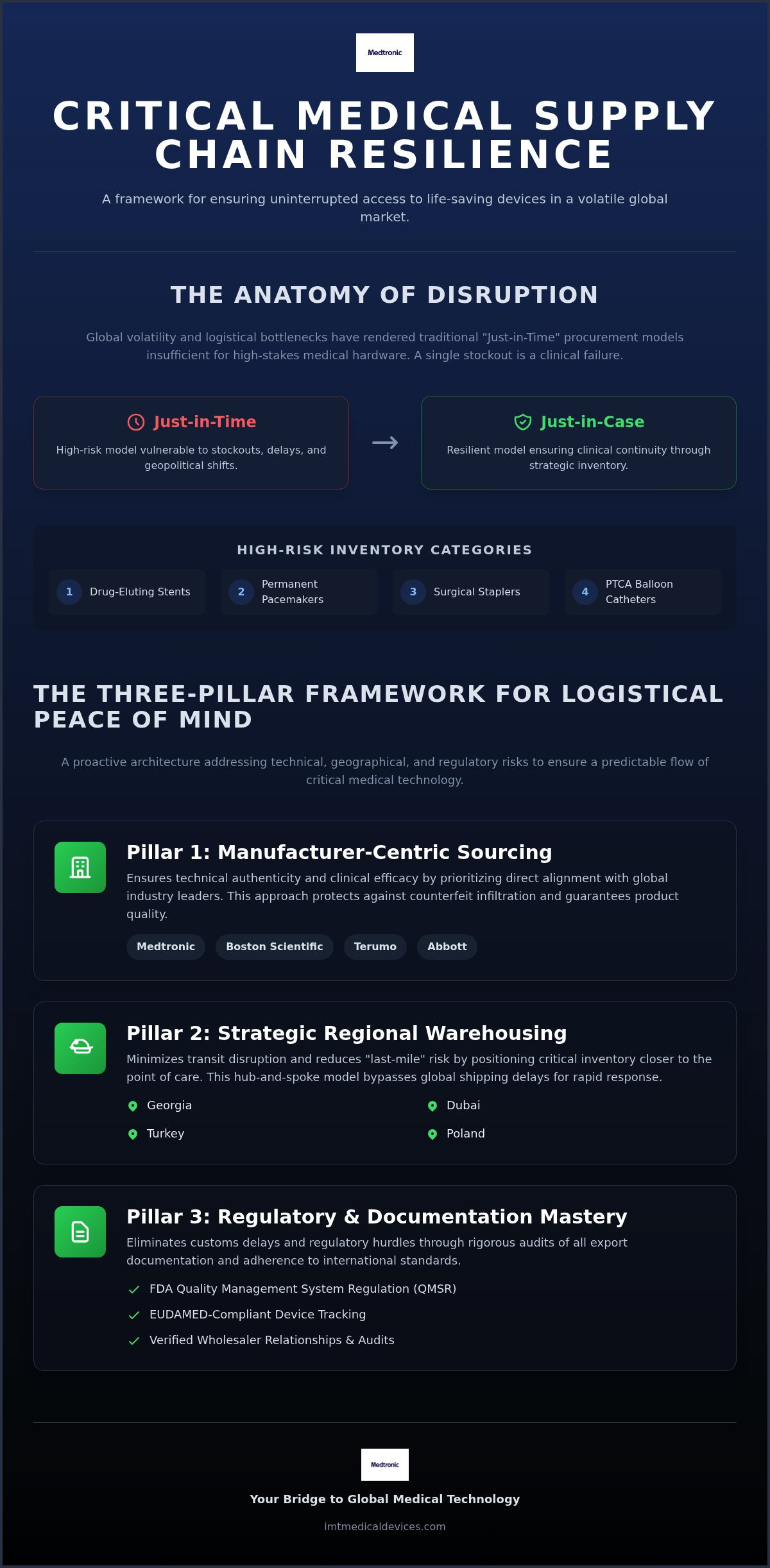
Traditional "just-in-time" delivery models are insufficient for cardiology and neurovascular care. The high cost of failure is measured in canceled surgeries and compromised patient outcomes. High-risk inventory categories include:
- Drug-Eluting Stents (DES)
- Permanent Pacemakers
- Surgical Staplers
- PTCA Balloon Catheters
Vulnerabilities in Implantable Device Logistics
Cardiology implants require extreme technical sensitivity during international transit. Mechanical integrity must be maintained from the manufacturer to the sterile field. Documentation errors frequently cause customs clearance delays in emerging markets like Georgia or Turkey. In these environments, manufacturer reputation is the primary safeguard. Authentic technology from Medtronic, Boston Scientific, and Terumo ensures that medical logistics operations meet clinical safety standards.
The Shift from Just-in-Time to Just-in-Case
Procurement professionals are moving toward strategic stockpiling for coronary stents and other essential hardware. This shift requires balancing inventory carrying costs against the catastrophic risk of surgical delays. The goal is a predictable flow of Medtronic or Abbott technology regardless of global trade shifts. The Just-in-Case model serves as a risk mitigation strategy for 2026 to ensure clinical continuity during market volatility. Establishing these architectures is the only way to achieve peace of mind in critical medical supply chains.
The Three-Pillar Framework for Logistical Peace of Mind
Predictable procurement requires a structured architecture. The three-pillar framework provides peace of mind in critical medical supply chains by addressing technical, geographical, and regulatory risks simultaneously. This system shifts the focus from reactive crisis management to proactive asset control. For international distributors, this framework eliminates the ambiguity of global logistics, replacing it with a standardized process for hardware acquisition and delivery.
Manufacturer-Centric Sourcing Strategies
Technical authenticity starts with direct manufacturer alignment. Procurement teams must prioritize global leaders like Medtronic products, Boston Scientific, and Terumo to ensure clinical efficacy. Wholesalers act as a vital bridge for accessing premium PTCA balloon catheters and implantable devices. Serial number traceability across international borders is mandatory for patient safety. Implementing strategic sourcing for medical equipment allows distributors to verify the provenance of every SKU before it enters the warehouse. This manufacturer-first approach protects against sub-standard product infiltration.
Leveraging Regional Hubs: Georgia, Dubai, and Turkey
Geographic proximity minimizes transit disruption. Operating strategic hubs in Georgia and Dubai provides a logistical advantage for Eurasian and Middle Eastern markets. Regional offices in Turkey and Poland bypass global shipping delays by maintaining local inventory reserves. This infrastructure reduces the "last-mile" risk for sensitive medical technologies like electrophysiology catheters or permanent pacemakers. By positioning stock closer to the point of care, providers can partner with an expansive global distributor to stabilize their local inventory levels.
The final pillar is regulatory mastery. Documentation precision is the only way to avoid customs seizures in volatile markets. This involves strict adherence to the FDA's Quality Management System Regulation (QMSR), which became effective on February 2, 2026, and the mandatory EUDAMED modules as of May 28, 2026. Mastery of these technical identifiers ensures peace of mind in critical medical supply chains by preventing administrative bottlenecks that lead to stockouts. When technical specifications and manufacturer reputations are verified at the source, procurement anxiety is replaced by industrial competence.
Technical Analysis: Sourcing High-Stakes Cardiology Technology
Cardiology procurement in 2026 demands technical precision. It's not just about inventory; it's about matching specific clinical requirements with manufacturer-direct hardware. Achieving peace of mind in critical medical supply chains requires a granular understanding of device specifications and their logistical vulnerabilities. High-stakes interventional suites cannot function without a predictable flow of specialized implants and consumables. Procurement teams must evaluate the technical merits of manufacturer platforms while securing the supply lines that deliver them.
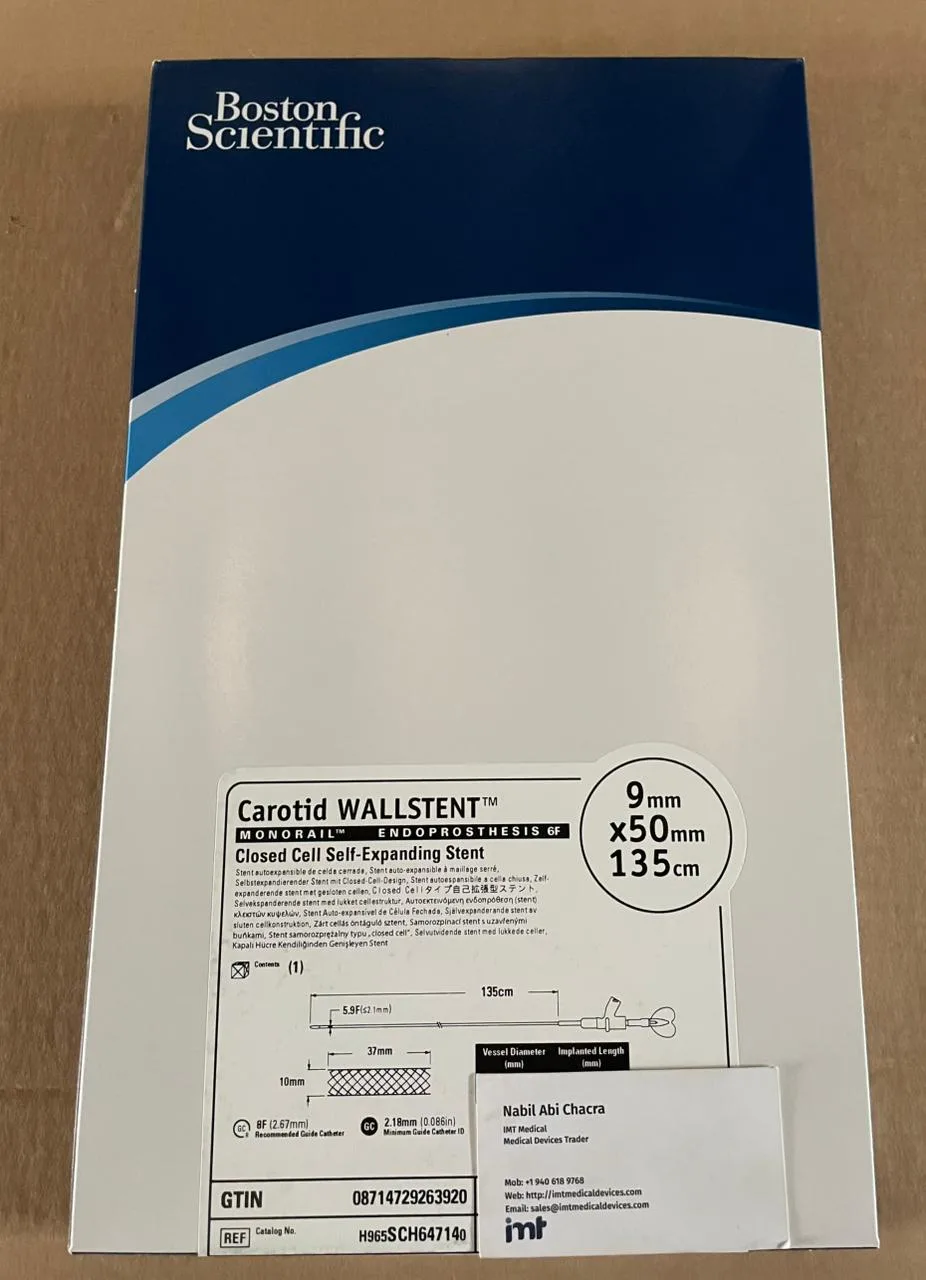
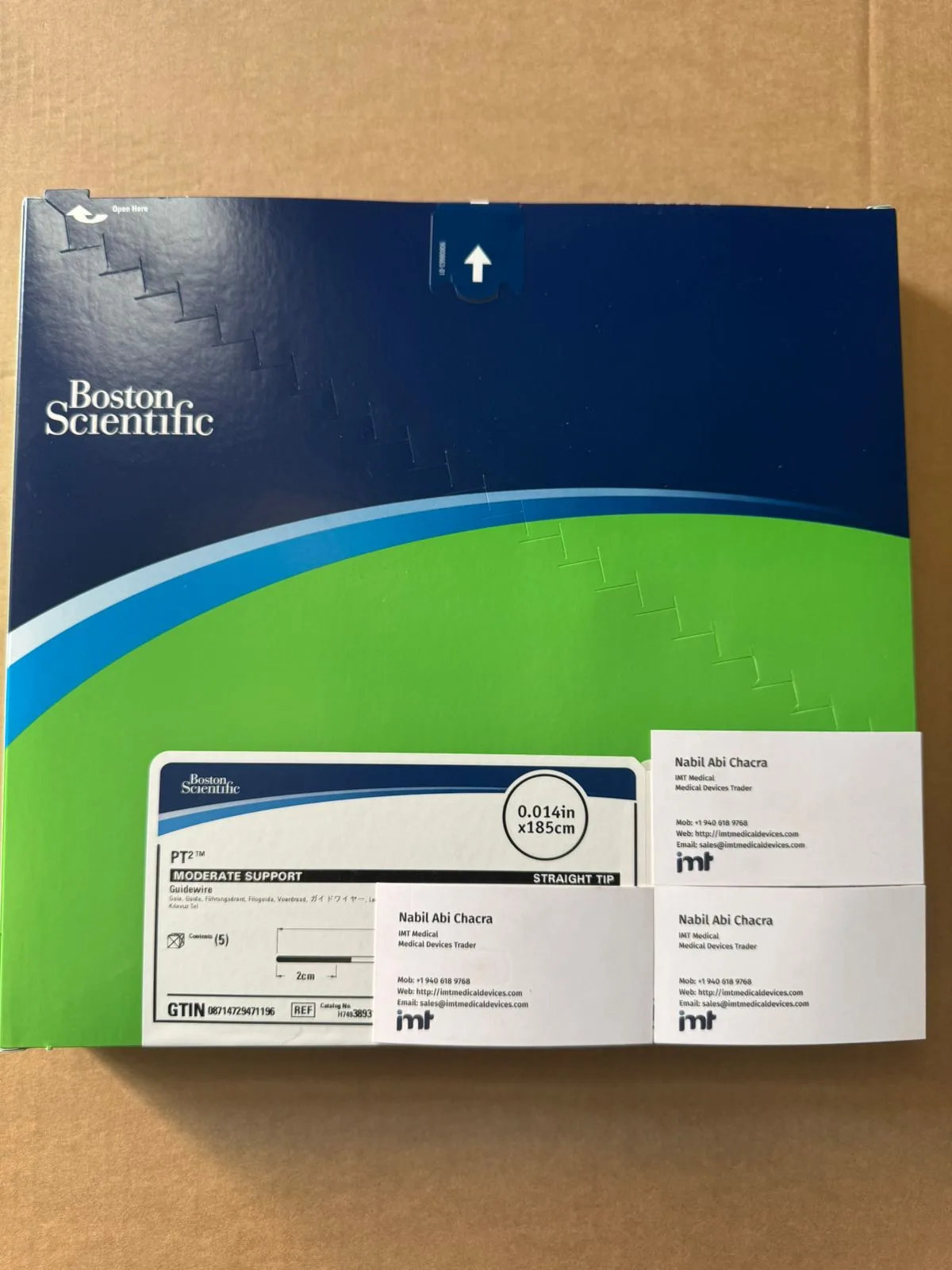
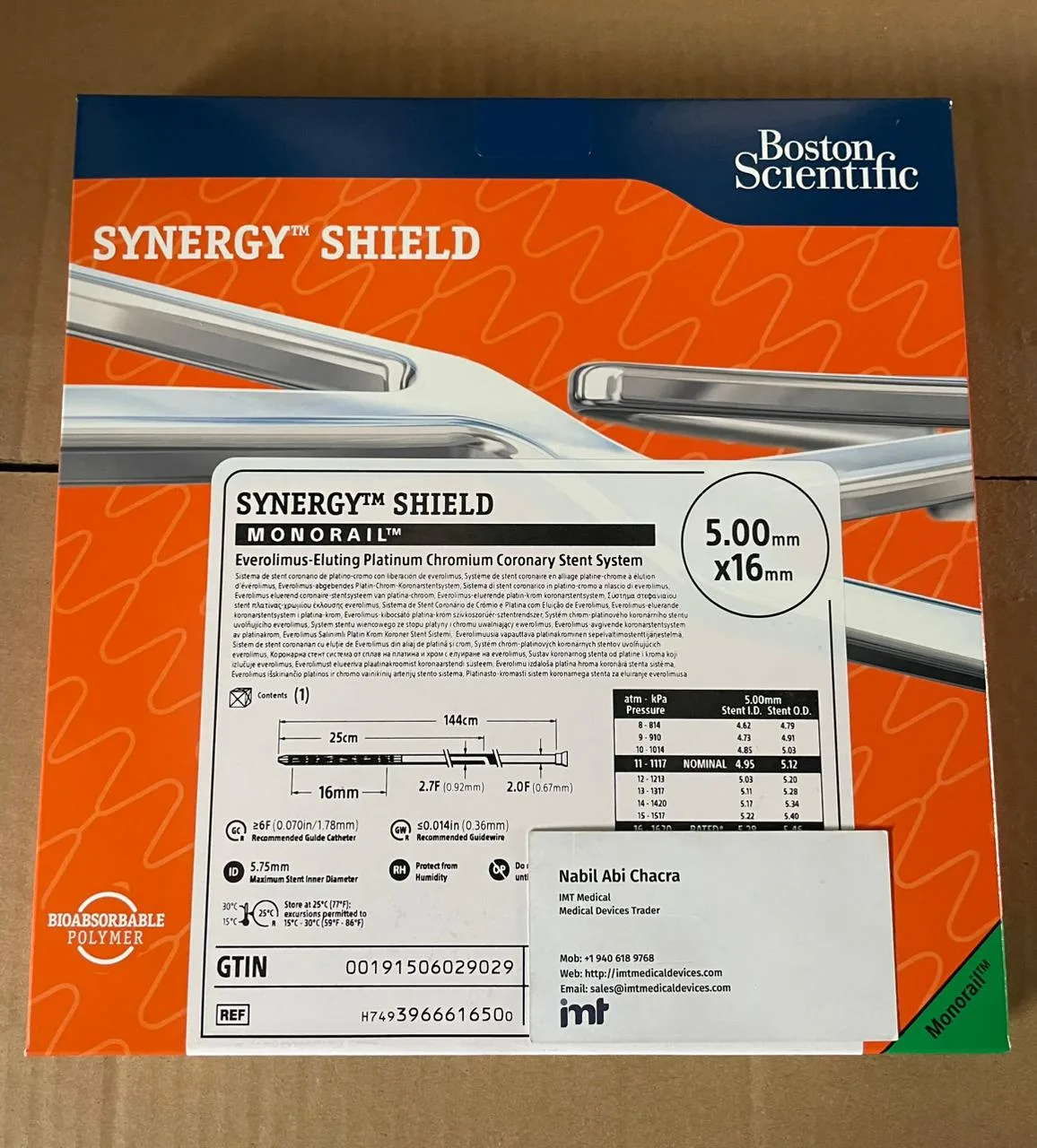
Drug-Eluting Stents (DES) remain the highest-volume critical asset. Comparing the Medtronic Resolute Integrity against the Boston Scientific Synergy Megatron reveals distinct differences in polymer bioabsorbability and scaffold thickness. These technical identifiers dictate clinical choice. Procurement frameworks must ensure these specific SKUs are available in bulk to prevent procedural delays. Procedural continuity also depends on secondary hardware. The role of guidewires and guiding catheters is often overlooked, yet they are the essential tools for stent delivery. Without these consumables, the most advanced implants remain unusable in the sterile field.
Securing the Cardiac Rhythm Management (CRM) Chain
Cardiac Rhythm Management involves active implantable devices with complex logistical requirements. Sourcing Abbott pacemakers and ICDs requires strict management of battery shelf-life. Long-haul export presents risks to both sterility and power cell integrity. Regulatory hurdles for active implants are significantly higher than for passive consumables. Procurement professionals must navigate these barriers by verifying that every permanent pacemaker meets the latest 2026 FDA and EU regulatory standards before shipping. This technical vetting is the only way to guarantee peace of mind in critical medical supply chains.
Interventional Cardiology: Stents and Balloons
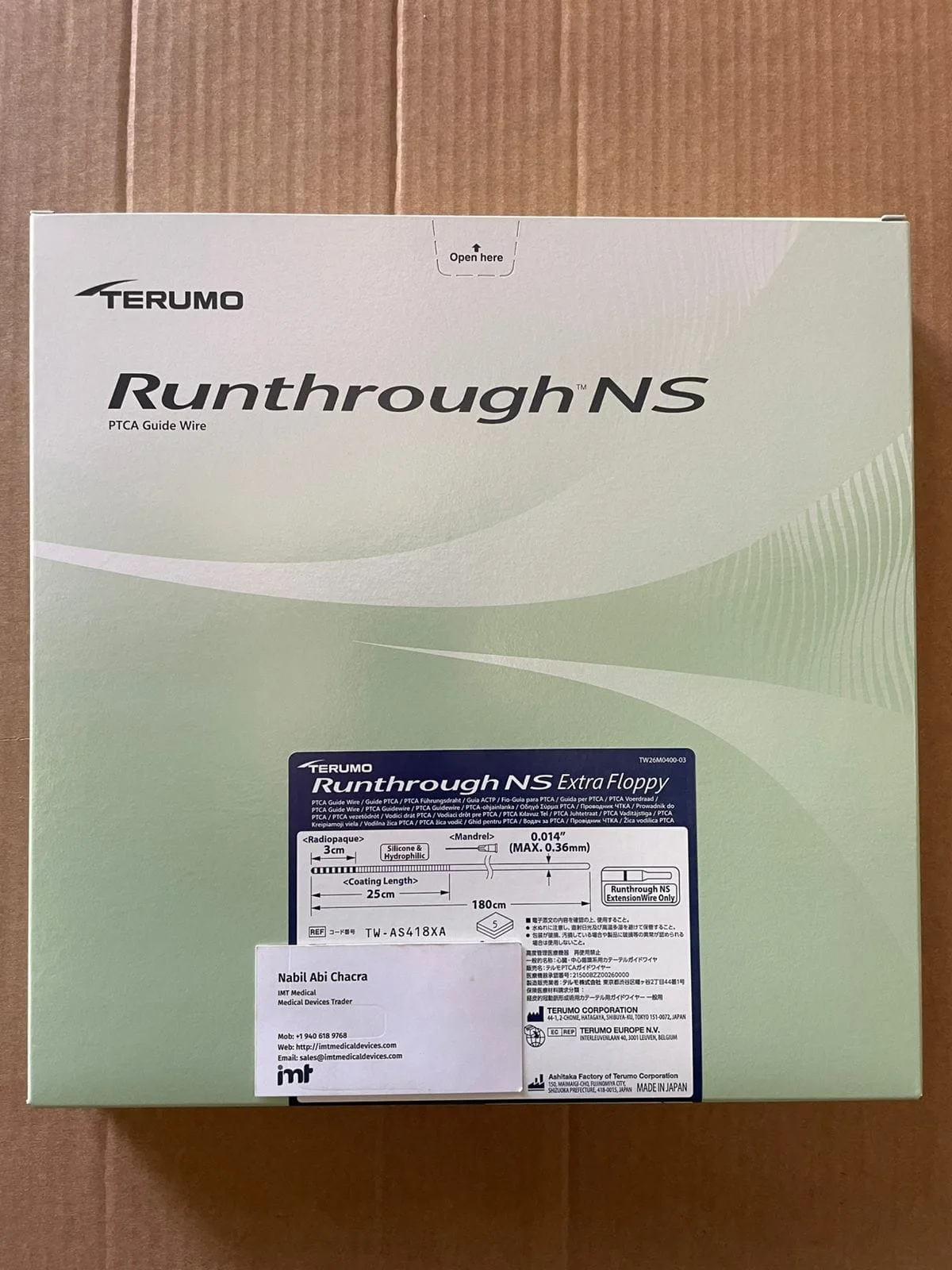
Interventional labs require bulk procurement strategies for high-performance devices like the Terumo Ultimaster Nagomi. Technical specifications for PTCA guide wires, such as the Runthrough NS series, must be standardized across the supply chain. Maintaining sterile barrier integrity for balloon dilatation catheters is a primary logistical concern. Any breach in packaging during transit renders the device a total loss. Industrial-scale distributors mitigate this risk through specialized handling protocols and manufacturer-approved transit containers. This focus on technical specs and hardware authenticity defines the 2026 procurement landscape.
Risk Mitigation Checklist for Medical Device Procurement
Establishing peace of mind in critical medical supply chains requires a systematic audit of procurement partners and logistical protocols. A checklist-driven approach eliminates the variability found in standard wholesale models. For international distributors, the final layer of defense against stockouts is a rigorous verification of manufacturer relationships and regional hub infrastructure. This framework ensures that high-stakes clinical hardware, from Medtronic pacemakers to Boston Scientific stents, remains accessible regardless of market volatility.
- Step 1: Verify Wholesaler Manufacturer Relationships. Confirm direct or authorized access to Medtronic, Boston Scientific, Terumo, and Abbott portfolios.
- Step 2: Audit Export Logistics and Documentation. Evaluate the track record of delivery to 50+ countries with specialized handling for sterile implants.
- Step 3: Assess Regional Hub Proximity. Map the distance between strategic hubs in Georgia, Dubai, Turkey, or Poland and your target medical facilities.
- Step 4: Confirm Technical Support for Compliance. Ensure alignment with ISO 13485:2016 and the 2026 FDA Quality Management System Regulation (QMSR).
- Step 5: Evaluate Multi-Brand Portfolio Depth. Verify inventory availability across categories including drug-eluting stents, surgical staplers, and PTCA balloon catheters.
Auditing Your Global Wholesaler
Proximity determines response time. Exporters don't just ship; they manage regional inventory reserves to bypass global bottlenecks. Evaluate a partner's presence in Dubai or Georgia by examining their capacity for rapid retrieval and local customs expertise. A high-capacity international distributor maintains multi-hub inventory reserves and direct manufacturer-verified sourcing channels to ensure clinical asset availability. Verify their performance history in 50+ countries to confirm they can navigate the logistical complexities of 2026. Audit our global distribution capabilities to see how we secure your supply line.
Documentation and Compliance Essentials
Documentation precision is the primary driver of customs speed. Imports into Turkey require ÜTS registration and specific CE certificates, while Poland demands strict adherence to EU MDR standards and mandatory EUDAMED modules as of May 28, 2026. Managing specialized handling fees for sensitive cardiac equipment is a standard component of professional peace of mind in critical medical supply chains. Proforma Invoices and Packing Lists must match technical codes exactly to avoid the administrative delays that cause surgical stockouts. It's the logistical speed, combined with regulatory mastery of the Feb 2, 2026, FDA QMSR updates, that defines a reliable partner.
IMT Medical Devices: Your Bridge to Global Medical Technology
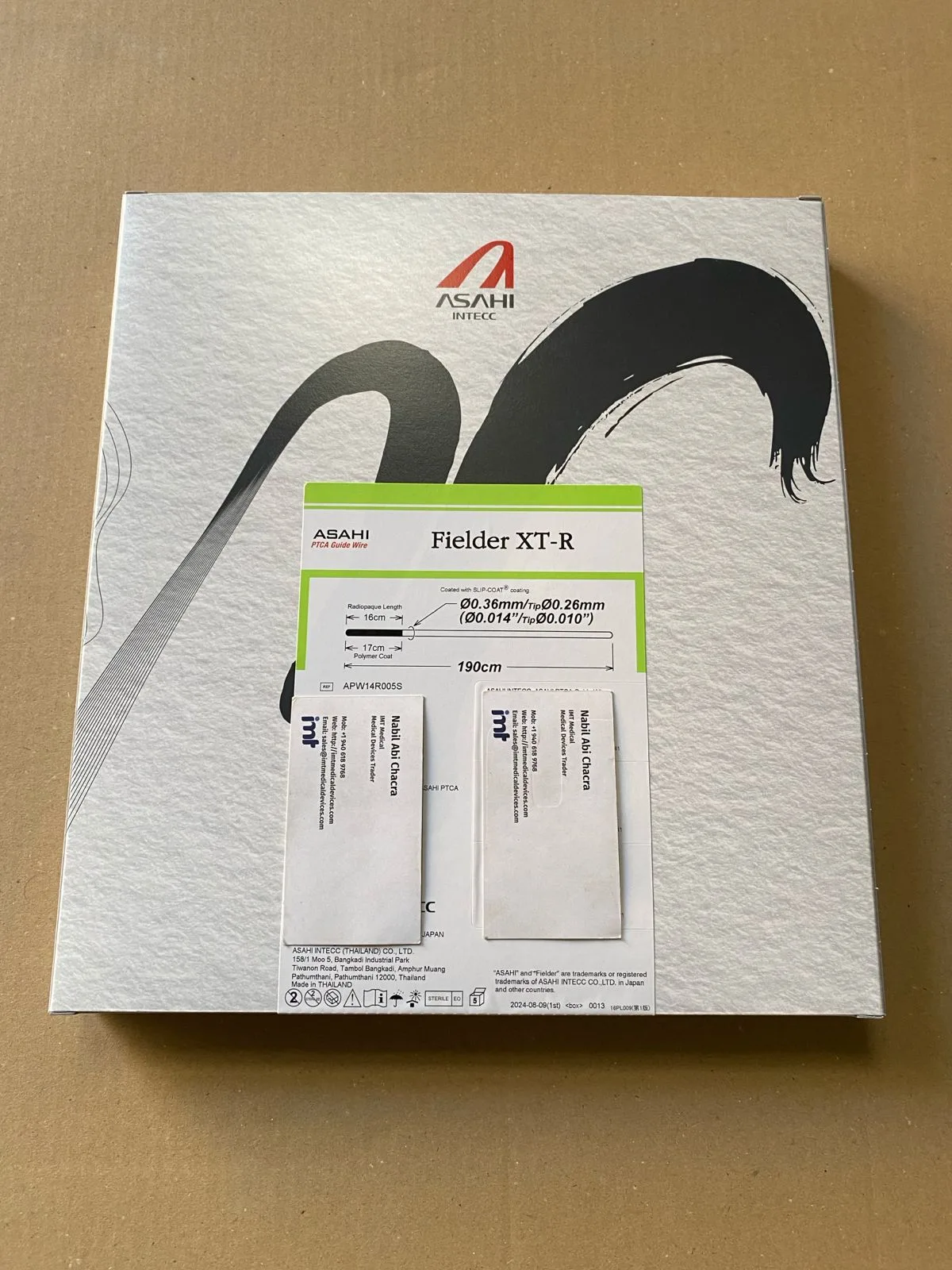
IMT Medical Devices functions as a high-capacity industrial bridge between premium manufacturers and international healthcare providers. Pragmatic global partnership defines our approach. We provide direct access to an expansive multi-brand portfolio, ensuring peace of mind in critical medical supply chains through logistical mastery. Our infrastructure supports the delivery of high-stakes hardware from Medtronic, Boston Scientific, Terumo, Abbott, and Asahi Intec. This manufacturer-centric model guarantees that clinicians receive authentic, sterile technology for every procedure.
Inventory availability remains our primary trust signal. We maintain consistent stock levels for cardiac implantable devices, including permanent pacemakers and ICDs. Our strategic presence in Georgia, Dubai, Turkey, and Poland allows for rapid response to regional demand. This network bypasses the bottlenecks typical of standard wholesale models, moving hardware swiftly from manufacturer-validated sources to the point of care. Logistical reliability isn't a preference; it's a clinical requirement for 2026.
Why Partners Choose IMT Medical Devices
Global reach to over 50 countries establishes our competence as an international distributor. We prioritize industrial efficiency and technical accuracy. Our team manages the complexities of export documentation, ensuring that shipments meet local regulatory standards without delay. Partners benefit from:
- Wholesale B2B pricing structures for high-volume procurement.
- Direct access to coronary intervention hardware, including drug-eluting stents and PTCA balloons.
- Specialized portfolios for peripheral intervention and neurovascular care.
- Proven expertise in specialized handling for active implantable devices.
- Strict adherence to the 2026 FDA Quality Management System Regulation (QMSR).
Initiating Your Secure Supply Chain
Securing your supply line starts with contacting our regional offices in Georgia, Dubai, Turkey, or Poland. We provide tailored procurement solutions designed for the 2026 medical device landscape. Our authoritative position in the market allows us to navigate geopolitical shifts and tariff fluctuations with precision. We don't just ship products; we build the logistical architecture required for peace of mind in critical medical supply chains. Authoritative partnership is the only safeguard against the volatility of the global market. Logistical reliability ensures patient safety by preventing the stockouts that compromise clinical outcomes. Contact IMT Medical Devices to stabilize your inventory flow today.
Securing Your Clinical Supply Architecture for 2026
Procurement in 2026 demands logistical precision. You've seen that manufacturer-direct sourcing and regional hub utilization are the only methods to bypass global bottlenecks. Achieving peace of mind in critical medical supply chains depends on this architectural approach. It requires matching technical hardware specifications with precise documentation to ensure clinical continuity. Transitioning to a "just-in-case" model is mandatory for high-stakes cardiology and neurovascular care. Reliable inventory management is no longer a preference; it's a clinical necessity.
IMT Medical Devices provides the industrial scale for these complex operations. We maintain strategic hubs in Dubai, Georgia, Turkey, and Poland to minimize transit risk and documentation errors. Our portfolio features prestigious global brands including Medtronic, Terumo, and Boston Scientific. With proven export capabilities to 50+ countries, we function as a vital bridge between manufacturers and international markets. Secure your critical medical supply chain with IMT Medical Devices. Build a resilient, predictable inventory flow today.
Frequently Asked Questions
How do you ensure the authenticity of medical devices in a global supply chain?
Authenticity is guaranteed through direct manufacturer-centric sourcing and rigorous vetting of wholesaler-manufacturer relationships. Serial number traceability is maintained across all international borders. This process eliminates the risk of sub-standard or counterfeit product infiltration. Partners gain peace of mind in critical medical supply chains by receiving hardware with verified provenance from brands like Medtronic and Boston Scientific.
What are the most critical factors for medical device export to emerging markets?
Success in emerging markets depends on regulatory mastery and precise documentation. Local knowledge of customs protocols in regions like Turkey or Georgia is mandatory. Technical identifiers must match Proforma Invoices and Packing Lists exactly to prevent administrative seizures. Hub-based distribution further secures the supply line by placing inventory closer to the point of care.
How does IMT Medical Devices manage cold chain requirements for sensitive implants?
Sensitive implants require specialized handling protocols to maintain sterile barrier integrity and battery shelf-life. Active devices such as permanent pacemakers and ICDs undergo strict environmental monitoring during transit. We utilize manufacturer-approved transit containers and specialized logistics partners. This technical oversight ensures that active clinical hardware remains within specified operational parameters throughout the export process.
Can I source multiple brands like Medtronic and Terumo from a single wholesaler?
Yes, IMT Medical Devices offers a comprehensive multi-brand portfolio from a single source. Procurement professionals can consolidate orders for Medtronic, Terumo, Boston Scientific, and Abbott products. This consolidation simplifies the procurement architecture and reduces administrative overhead. It allows for bulk B2B acquisition of drug-eluting stents, PTCA balloons, and electrophysiology catheters.
What documentation is required for importing cardiology stents into Turkey or Georgia?
Imports into Turkey require ÜTS registration and valid CE certificates. Georgia requires standard international medical documentation including Proforma Invoices, Packing Lists, and Certificates of Origin. Compliance with the May 28, 2026, EUDAMED mandatory modules is necessary for European-bound shipments. Accurate technical codes are essential for rapid customs clearance of interventional cardiology hardware.
How does a regional hub strategy improve medical supply chain resilience?
A regional hub strategy improves resilience by maintaining local inventory reserves in strategic locations like Dubai and Poland. This infrastructure bypasses transcontinental shipping delays and geopolitical bottlenecks. It reduces the "last-mile" risk for critical devices. Strategic proximity ensures peace of mind in critical medical supply chains by providing a predictable response to local stockouts.
What is the typical lead time for international medical device exports?
Lead times vary based on the specific hub and target destination. Sourcing from regional offices in Georgia or Turkey significantly reduces transit times compared to direct manufacturer shipping. Typical lead times are optimized through pre-cleared documentation and established export channels to over 50 countries. Our hub network is designed for rapid retrieval and industrial-scale delivery of surgical consumables.
Does IMT Medical Devices provide technical support for regulatory compliance?
We provide authoritative support for regulatory compliance including alignment with the Feb 2, 2026, FDA Quality Management System Regulation (QMSR). Our expertise extends to international documentation standards and EUDAMED module requirements. We assist partners in navigating the technical identifiers required for cardiac and neurovascular device registration. This support minimizes the risk of regulatory bottlenecks in complex markets.