Terumo vs Asahi Guidewires
Terumo vs Asahi guidewires
When a cath lab asks for a wire by brand instead of by category, the reason is usually simple: the operator already knows what response they want at the tip, what support they need at the shaft, and what failure they are trying to avoid. That is where the Terumo vs Asahi guidewires discussion matters. For procurement teams, independent distributors, and physicians sourcing outside local channels, this is less about broad brand preference and more about matching a known device family to a procedural requirement without introducing ordering risk.
Terumo and Asahi both sit in the core guidewire conversation across coronary and peripheral interventions, but they are not interchangeable in the way generic purchasing language sometimes suggests. Their portfolios overlap in some areas, separate clearly in others, and are often selected based on feel, lesion type, vessel anatomy, crossing strategy, and operator habit. Buying decisions usually follow that same logic.
Where the real difference shows up
The most useful way to compare Terumo vs Asahi guidewires is not by asking which brand is better. The better question is which wire family is being requested, for which vascular bed, and at what stage of the case.
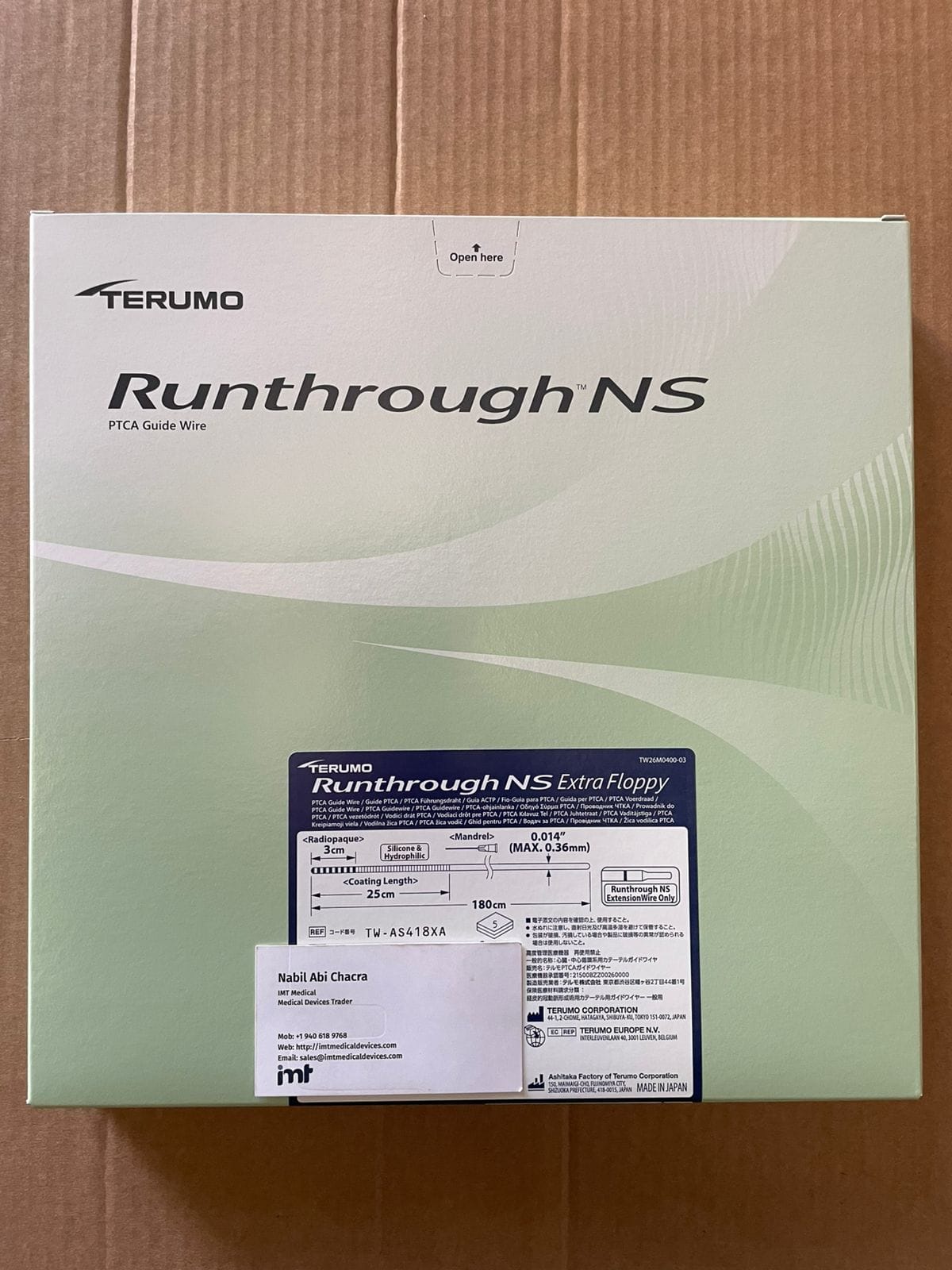
Terumo is widely associated with hydrophilic access and navigation performance. In many labs, the Terumo name is tied closely to Glidewire usage patterns, especially where trackability and vessel navigation matter more than specialty penetration. In peripheral work, that familiarity can make Terumo a default request for access, crossing support, or routine navigation through tortuous anatomy. The brand also has strong recognition in neurovascular segments through Terumo Neuro, although that sits in a more specialized category than a simple side-by-side brand comparison usually captures.
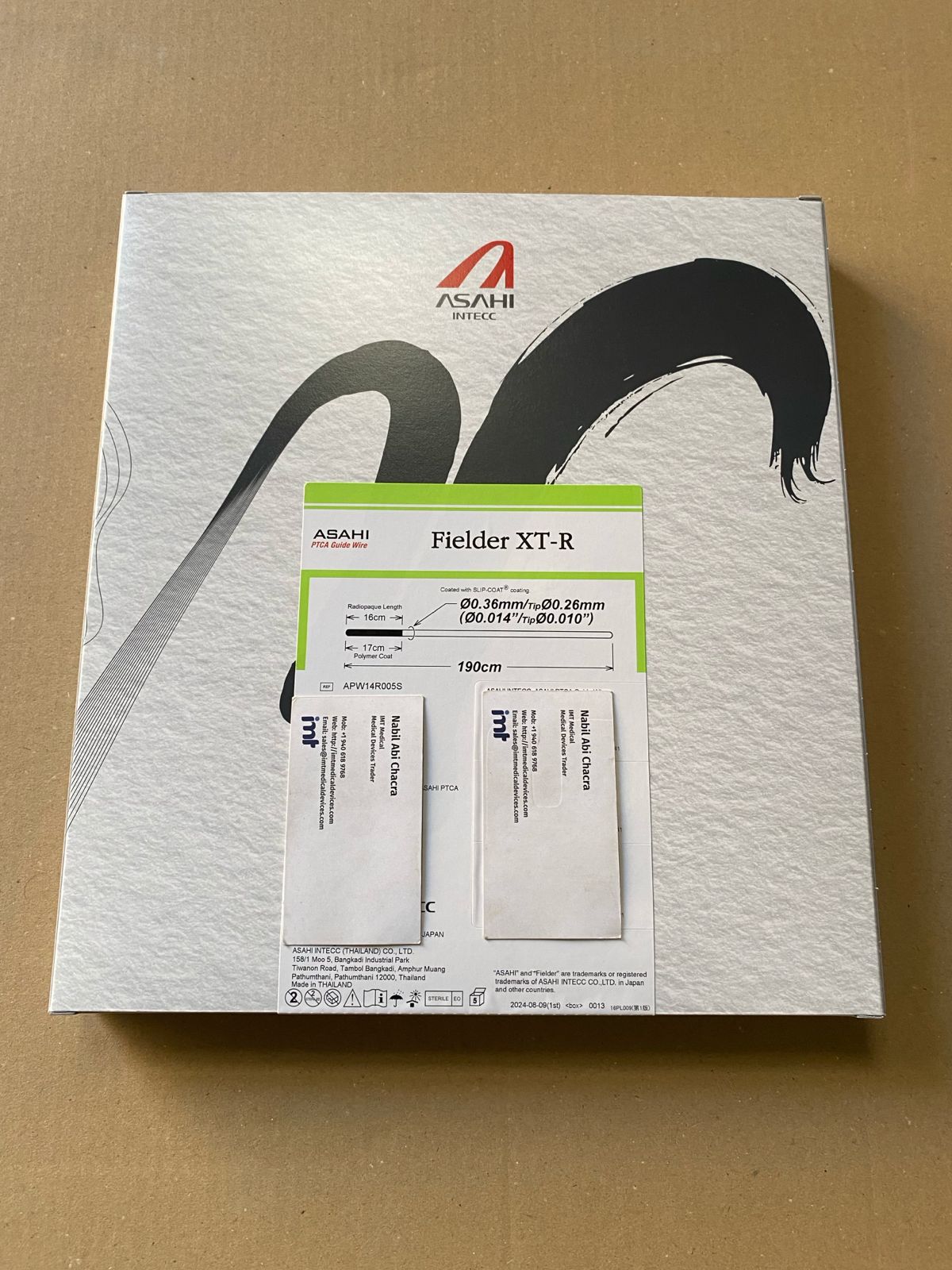
Asahi, by contrast, is often brought into the conversation with greater emphasis on coronary precision, specialty wire escalation, and CTO technique. Operators commonly associate Asahi with a more granular wire selection strategy, especially when moving from workhorse to intermediate to high-penetration or polymer-jacketed options. In coronary labs, that often translates into requests that are less brand-generic and more SKU-specific.
That distinction matters for buyers. If the request is loose, such as "need hydrophilic wire," Terumo may be the easier functional fit. If the request is exact, such as a known Asahi coronary wire family for lesion crossing or CTO escalation, substitution risk goes up quickly.
Coronary cases: workhorse versus specialty logic
In standard coronary intervention, the choice between Terumo and Asahi often comes down to wire behavior rather than headline specifications. Workhorse coronary wires need predictable torque, enough support for device delivery, and a tip profile that does not create unnecessary difficulty in routine lesions. Specialty wires need to do one thing exceptionally well, whether that is tracking, penetration, or maintaining position in difficult anatomy.
Asahi has strong brand pull in this category because many operators use a stepwise wire escalation framework built around its coronary range. That does not mean Terumo lacks capable coronary options. It means Asahi is frequently selected when the operator has a very specific lesion strategy in mind and does not want to change wire feel mid-technique.
For procurement, this usually creates two different buying patterns. One is stock for routine PCI, where workhorse demand can be forecasted by procedure volume. The other is stock for advanced coronary or CTO programs, where lower-turn specialty wires may still be critical because a single missing wire can disrupt a case plan. In those environments, availability can matter as much as price.
Peripheral cases: Terumo often enters earlier
In peripheral intervention, Terumo often has stronger routine recognition, particularly where hydrophilic navigation is central to access or lesion crossing. Buyers in this segment frequently see Terumo requested for wires that need to move efficiently through tortuous vessels or support catheter advancement with minimal friction.
Asahi still matters in peripheral settings, but the demand pattern may be narrower, depending on the physician mix and the types of procedures being performed. If a lab's peripheral volume is built around straightforward access and navigation, Terumo may appear more often on requisitions. If the user base includes physicians with crossover coronary and peripheral preferences, Asahi requests may follow the operator rather than the procedure category.
This is one of those areas where inventory planning benefits from physician-level mapping. A hospital may think it needs to choose between brands at the purchasing level, when in practice it needs both, with stocking depth adjusted to actual usage by room, by physician, and by case type.
Coating, torque, and support are not small details
The Terumo vs Asahi guidewires decision is often decided by three practical factors: coating behavior, torque response, and support profile.
Hydrophilic coating changes how a wire moves through anatomy. It can reduce friction and improve navigation, but some users will trade a little lubricity for more tactile feedback. Terumo has long-standing recognition in hydrophilic wire handling, which is one reason it is frequently selected for access and peripheral navigation.
Torque response matters when the operator needs directional control without over-rotation or lag. In coronary work, that becomes more sensitive, especially in branch selection, tortuous segments, or lesion crossing where subtle tip movement changes outcomes. Asahi's reputation in this area is a major reason many coronary operators stay loyal to specific Asahi wire families.
Support affects what happens after wire position is achieved. A wire may cross well but still fail to provide enough rail support for balloon or stent delivery. That is why substitution based only on size and coating can lead to complaints after purchase. Two 0.014 inch wires may look close on paper while performing very differently in the case.
For non-clinical buyers, the lesson is straightforward: if the request came from an operator who names the exact wire, do not generalize from diameter and length alone.
SKU-level purchasing reduces problems
This category is one where exact product identification matters. Brand-level orders create avoidable delays because guidewires are selected by family, tip load, coating style, diameter, length, and sometimes very specific procedural intent. The safest requests use full product names and exact references.
That is especially true when buying across borders or outside incumbent local distribution. Hospitals and competing distributors in Gulf countries, Latin America, Asia, China, and Russia often contact alternative supply partners because they need branded product availability without waiting on restricted local channels. In that setting, clarity on manufacturer, product family, and part number is what prevents substitution disputes and customs-side documentation issues.
If the request arrives as "Asahi wire" or "Terumo wire," the quote process slows down immediately. If it arrives with the exact identifier, the sourcing path is cleaner and the risk is lower for everyone involved.
When not to substitute
Substitution is most dangerous in three situations. First, when the physician has established muscle memory with a specific coronary or CTO wire. Second, when the case depends on escalation through multiple known wires in a defined sequence. Third, when a distributor is trying to fill a hospital requirement that was written against a precise product code.
In those cases, the commercial instinct to offer a "similar" wire can backfire. Even when another brand is clinically credible, the buyer may reject it because the issue is not only function. It is procedural consistency, physician acceptance, and liability around off-request supply.
That does not mean alternatives never work. It means alternatives should be positioned as alternatives, not as assumed equivalents.
A better procurement approach for Terumo and Asahi
For labs with mixed coronary and peripheral volume, the practical approach is usually dual-brand stocking with tighter depth control. Terumo often covers routine hydrophilic demand efficiently. Asahi often fills the need for more specialized coronary and CTO inventory. The right balance depends on physician preference concentration and case complexity.
For distributors serving hospitals that want options outside local incumbents, the best approach is to build quote requests around exact product names, reference numbers, and target quantities, then identify whether demand is recurring or case-specific. That helps separate stable stock items from urgent fills.
For physicians sourcing directly, precision matters even more. A request with brand, wire family, diameter, length, and SKU is faster to validate and less likely to trigger back-and-forth.
At IMTmedicaldevices.com, this is the kind of category where exact branded sourcing matters more than broad catalog language. Buyers are usually not asking for education. They are asking whether a specific Terumo or Asahi guidewire can be supplied, in what quantity, and on what timeline.
The most useful next step is not picking a winner between the two brands. It is identifying which exact wire the case, operator, or account already trusts, then sourcing that reference without guesswork.