
Wholesale Medical Supply for Hospitals: Trusted Solutions
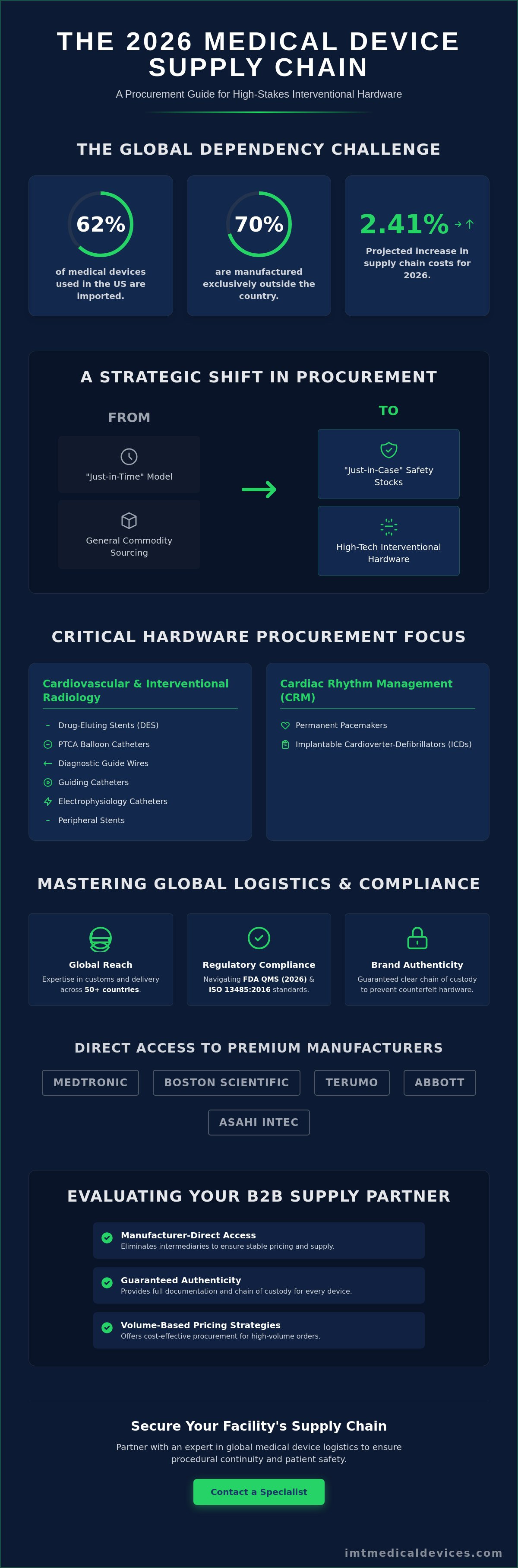
Current data indicates that 62% of medical devices used in the United States are imported, with 70% manufactured exclusively outside the country. This high dependency on international markets makes the selection of a partner for wholesale medical supply for hospitals a primary logistical concern. Procurement officers face a projected 2.41% increase in supply chain costs for 2026. New regulatory hurdles, including the FDA Quality Management System Regulation transition on February 2, 2026, add further complexity to the acquisition of critical hardware. It's a landscape that requires technical precision and verified global reach.
We recognize that securing high-stakes technology like drug-eluting stents and permanent pacemakers requires absolute accuracy in documentation. Authenticity shouldn't be a gamble when dealing with life-critical implants. This guide provides a technical framework for sourcing specialized hardware from manufacturers such as Medtronic, Boston Scientific, and Terumo. You'll find a clear roadmap for navigating international delivery routes and managing complex trade tariffs. We'll also detail strategies for obtaining volume-based pricing to ensure your facility maintains a consistent inventory of premium clinical technology.
Key Takeaways
- Identify the transition from general commodity sourcing to high-tech interventional hardware procurement for specialized clinical units.
- Optimize inventory for high-stakes cardiac procedures including Drug-Eluting Stents, PTCA Balloon Catheters, and Permanent Pacemakers.
- Navigate complex international regulatory documentation and customs clearance for wholesale medical supply for hospitals across 50+ countries.
- Evaluate supply partners based on manufacturer-direct access to premium brands like Medtronic, Boston Scientific, and Terumo.
- Implement volume-based pricing strategies and flexible contracting to secure reliable delivery of specialized surgical and electrophysiology hardware.
The Evolution of Wholesale Medical Supply for Hospitals in 2026
Wholesale medical supply for hospitals in 2026 defines the strategic acquisition of high-complexity clinical assets rather than simple commodity purchasing. It's a logistical discipline focused on the B2B distribution of interventional hardware, life-critical implants, and specialized surgical tools. The industry has moved away from the traditional "just-in-time" model. Procurement officers now prioritize a "just-in-case" approach to mitigate global supply chain volatility. This shift involves maintaining significant safety stocks of essential items like Drug-Eluting Stents and PTCA Balloon Catheters to ensure procedural continuity. Efficient medical logistics operations serve as the backbone of this evolution, bridging the gap between global manufacturers and local clinical needs.
Digital inventory tracking has transformed the procurement office into a data-driven hub. With the healthcare supply chain management software market projected to reach $11.35 billion by 2034, hospitals now utilize AI for predictive analytics. These tools identify potential shortages before they impact the operating room. Optimizing wholesale medical supply for hospitals now requires real-time visibility into international shipping lanes and customs status. This technological integration reduces administrative overhead and maximizes the speed of data transmission during high-stakes sourcing cycles.
Current Trends in Hospital Procurement
Demand for specialized implants and minimally invasive tools continues to accelerate. Clinical teams require immediate access to Electrophysiology Catheters and Peripheral Stents to support advanced cardiovascular interventions. Procurement strategies have become manufacturer-centric, focusing on direct access to prestigious brands like Asahi Intec and Terumo. This eliminates unnecessary intermediaries and stabilizes pricing. The 2026 procurement landscape for high-stakes medical devices is defined by mandatory ISO 13485:2016 compliance and electronic, package-level traceability to meet rigorous safety standards.
The Importance of Brand Authenticity
Non-verified medical supply chains introduce unacceptable risks to patient safety and institutional liability. Counterfeit or substandard hardware can lead to catastrophic clinical failures in cardiac rhythm management or vascular surgery. Hospitals prioritize established brands including Medtronic, Abbott, and Boston Scientific because their technical specifications are proven and reliable. Working with established international exporters ensures that every Permanent Pacemaker or ICD arrives with the necessary regulatory documentation. Reliable partners provide a clear chain of custody, which is essential for navigating the complex customs requirements of over 50 countries. Authenticity is the primary trust signal in a high-stakes global market.
Strategic Categories in High-Volume Medical Sourcing
High-intensity clinical units require a specialized approach to wholesale medical supply for hospitals. Sourcing priorities must shift from low-cost consumables to high-value interventional hardware to ensure procedural readiness in cath labs and surgical suites. This category-specific focus minimizes the risk of stockouts for critical hardware and allows for better volume-based negotiation with global manufacturers. Effective procurement strategies prioritize technical specifications and manufacturer reputation over simple price points.
Cardiovascular and Interventional Radiology
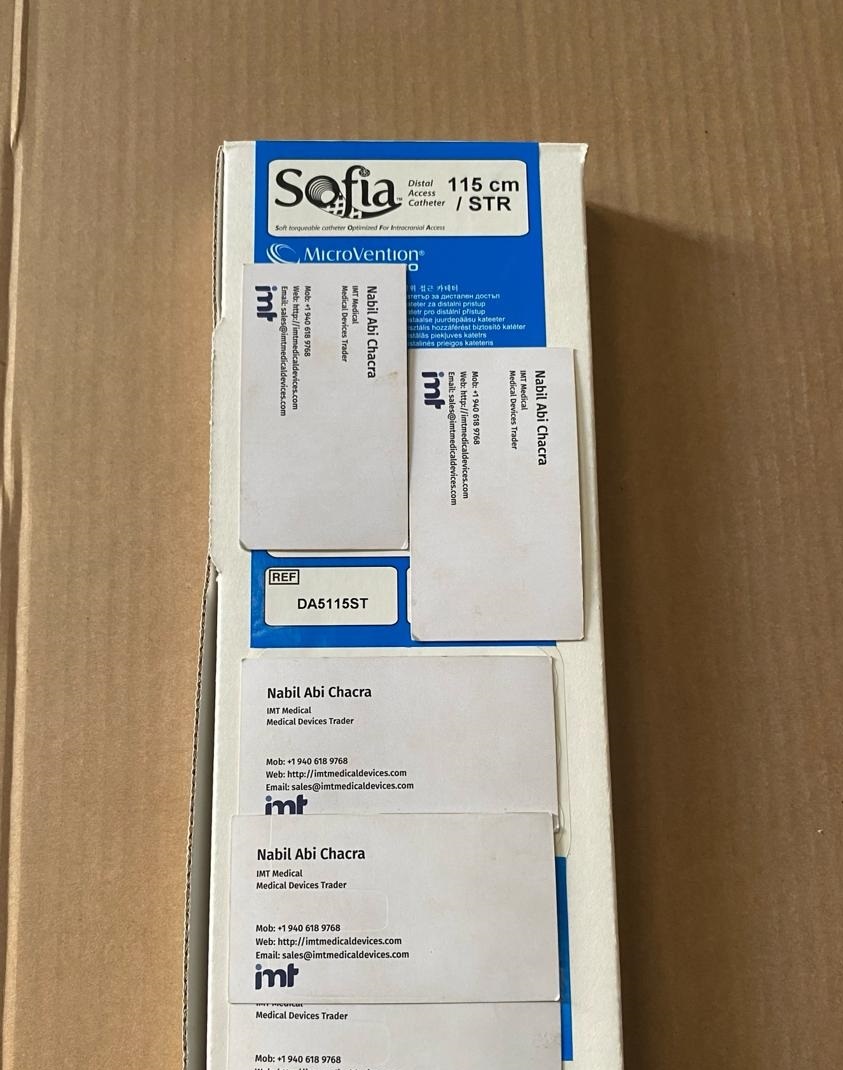
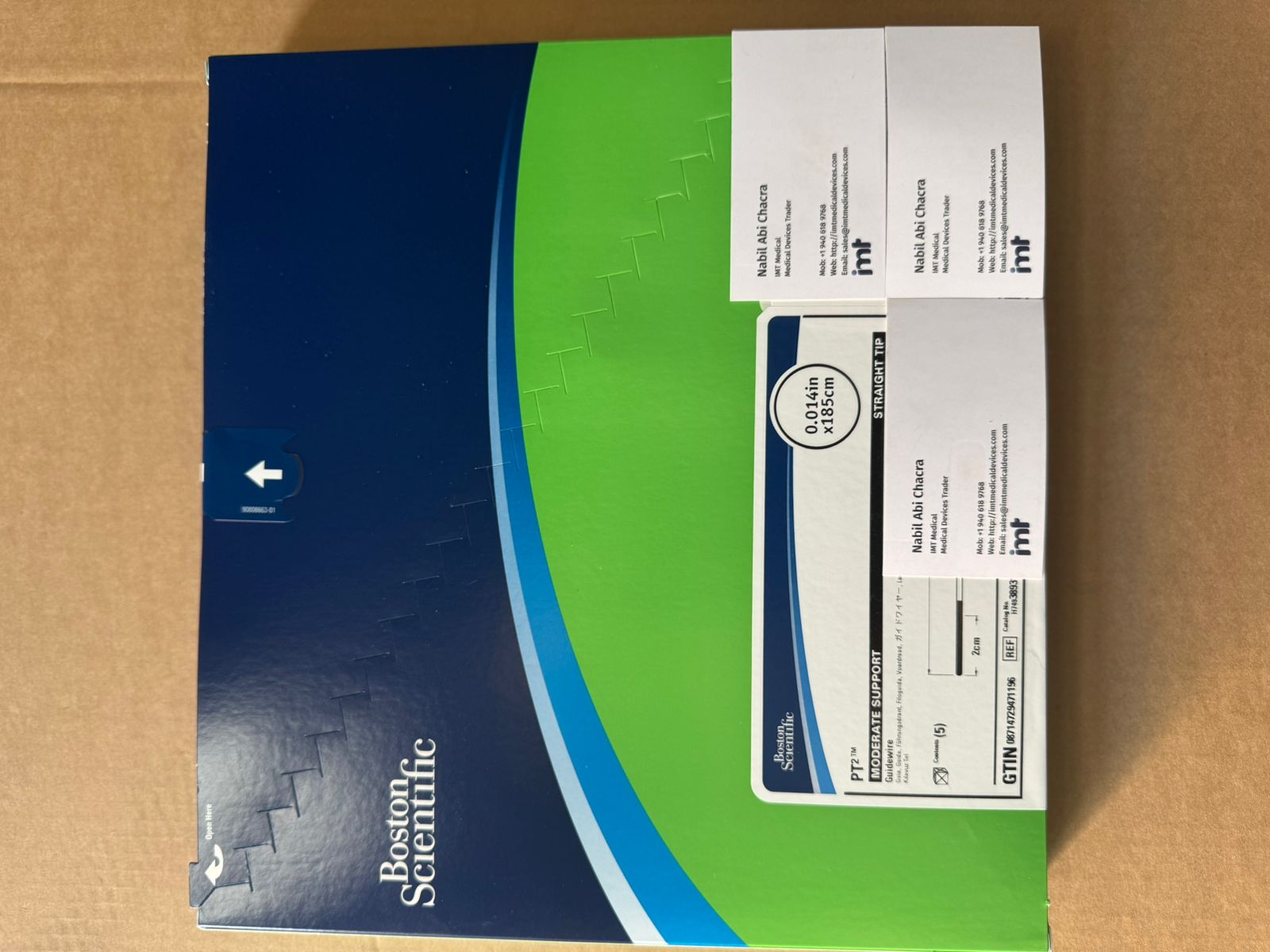
Procurement for interventional radiology centers on precision instruments. Bulk acquisition of drug-eluting stents (DES) requires strict adherence to manufacturer storage protocols and shelf-life monitoring. High-volume cath labs rely on a consistent intake of PTCA balloon catheters from brands like Medtronic, Boston Scientific, and Terumo. Diagnostic guide wires and guiding catheters serve as essential primary tools for vascular access. Sourcing these items at scale involves identifying specific technical codes to ensure compatibility with existing imaging and delivery systems.
Cardiac Rhythm Management (CRM) Sourcing
Managing inventory for permanent pacemakers and Implantable Cardioverter Defibrillators (ICDs) presents unique logistical challenges. These sensitive implantable electronic devices demand climate-controlled transport and rigorous serial number tracking. Compliance with the Drug Supply Chain Security Act (DSCSA) ensures full traceability through the final delivery stage, which is critical for meeting the November 27, 2026, regulatory deadlines for electronic package-level tracking. Electrophysiology catheters for cardiac mapping must meet exact technical identifiers to match specific clinical platforms from Abbott or Boston Scientific.
Advanced Surgical and Peripheral Interventions
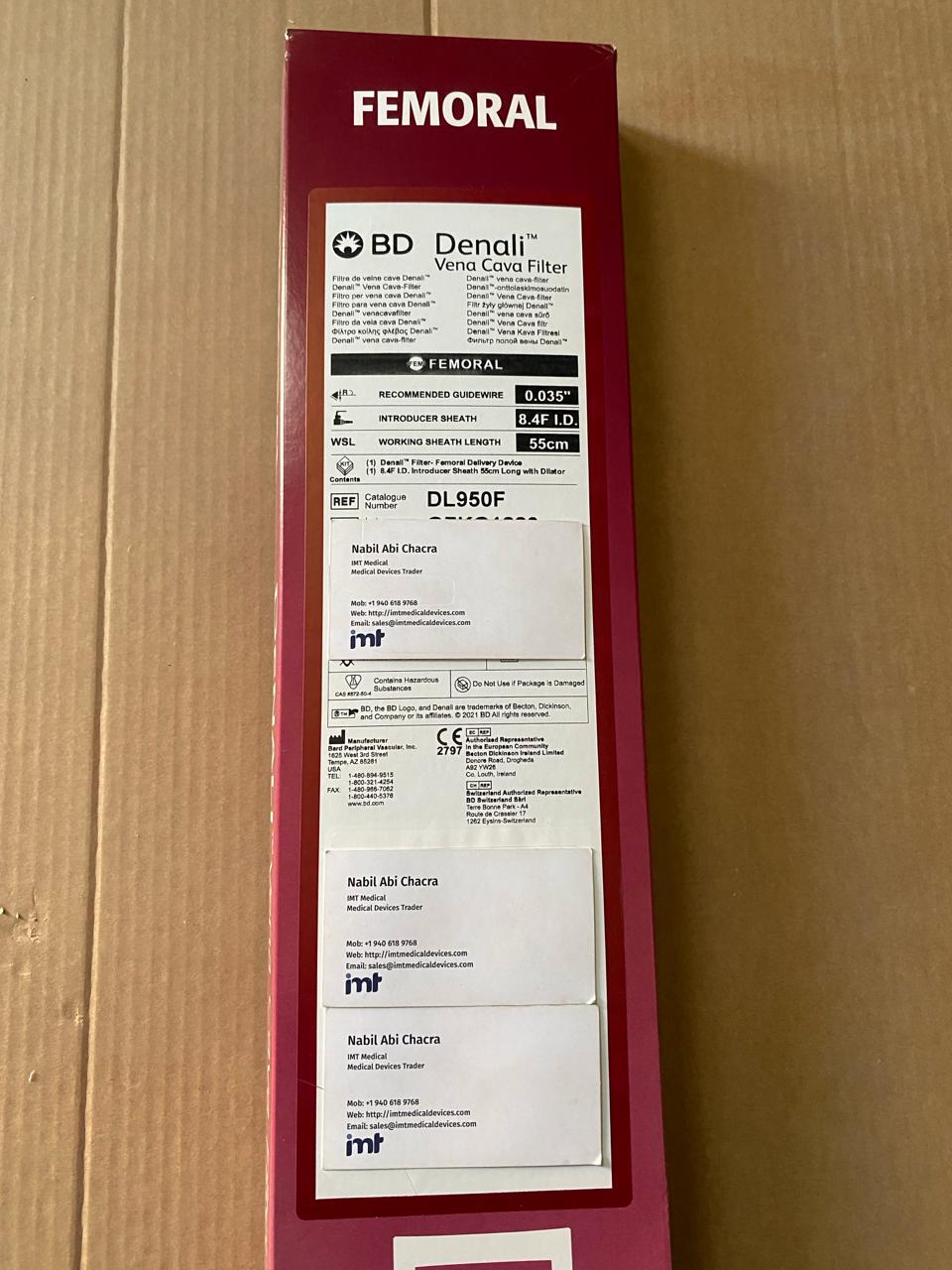
Surgical departments require reliable access to advanced surgical staplers for complex oncology and bariatric procedures. Peripheral stents for vascular surgery must be available across a broad range of diameters and lengths to accommodate diverse patient anatomies. Sourcing Asahi Intec and Nipro Medical Corp products at scale allows hospitals to maintain operational efficiency without relying on volatile local markets. Many facilities now review their global sourcing partners to secure direct access to these premium manufacturer portfolios. This strategic bridge to global inventory ensures that even highly specialized hardware remains available during regional supply disruptions.
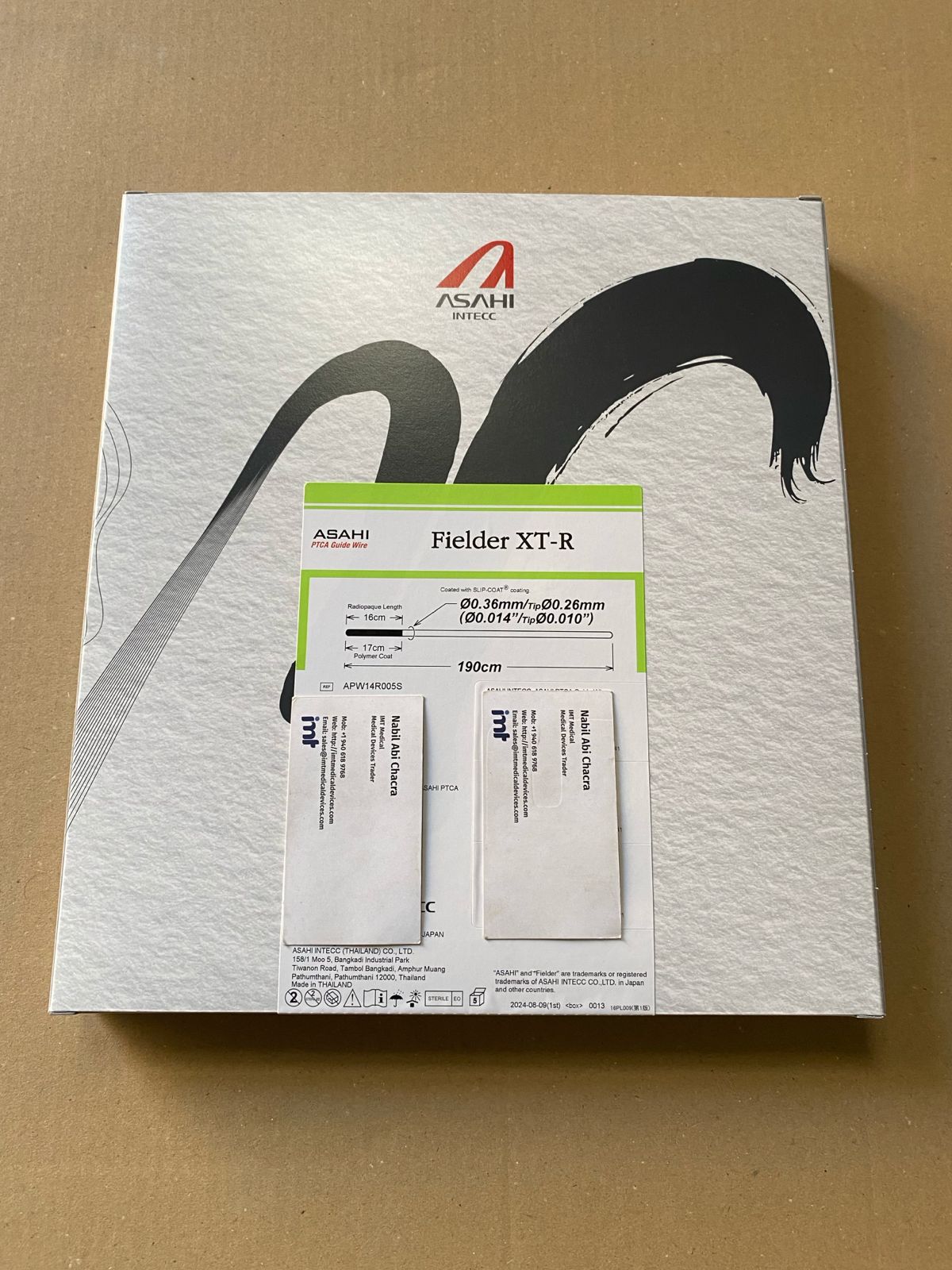
- Asahi Intec: High-precision diagnostic guide wires and microcatheters.
- Medtronic: DES, permanent pacemakers, and surgical stapling technology.
- Boston Scientific: PTCA balloons, ICDs, and peripheral vascular solutions.
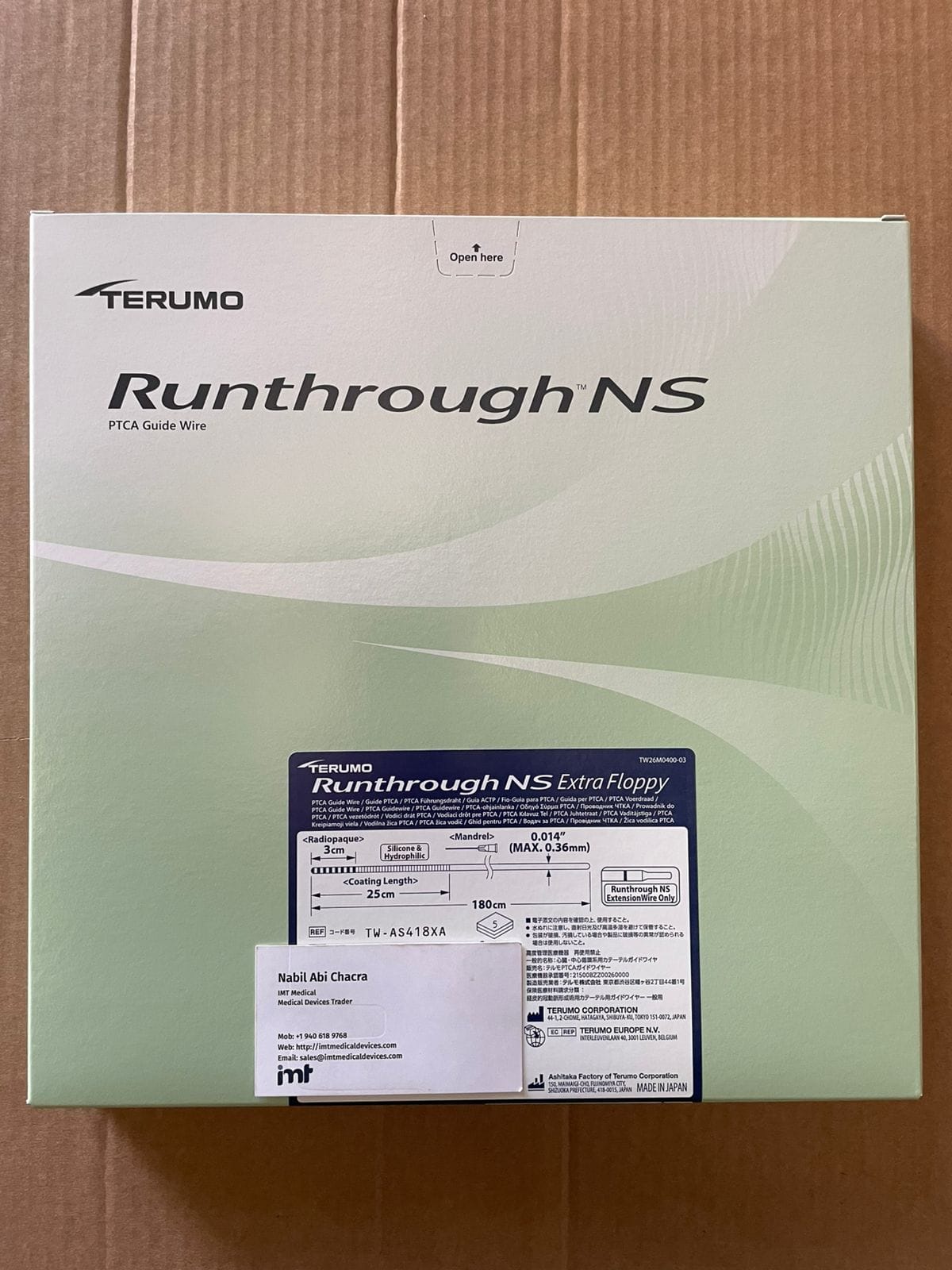
- Terumo: Guiding catheters and interventional access tools.
Navigating Global Export Logistics and Regulatory Compliance
Distributing high-stakes medical technology across international borders requires more than simple freight forwarding. For wholesale medical supply for hospitals, success depends on navigating the regulatory frameworks of over 50 countries. Each jurisdiction has unique import requirements for devices like Drug-Eluting Stents or Permanent Pacemakers. Managing these variables requires a robust infrastructure capable of handling complex export documentation and varying customs protocols. Procurement officers must account for shifting duty rates, such as the Section 301 tariffs on Chinese components that can reach effective rates exceeding 40% in specific markets. This logistical complexity demands a partner with verified international reach and technical expertise.
International Shipping and Customs Management
Efficiency in global medical distribution is achieved through strategic office locations in key trade corridors. Operating hubs in Dubai, Turkey, and Poland allow for rapid deployment of inventory to Europe, the Middle East, and Africa. These centers streamline the processing of regulatory compliance fees and export certificates. Since January 2, 2024, the FDA has issued export certificates in downloadable PDF format, a shift that procurement teams must track to avoid delays at the border. Implementing Strategic Sourcing Strategies involves aligning these logistical advantages with hospital demand to reduce lead times significantly. The transition of the FDA's CECV database, active until January 2, 2026, marks a critical deadline for verifying older paper certificates and ensuring uninterrupted customs clearance.
Ensuring Product Integrity During Transit
Sensitive cardiology implants and surgical hardware demand specialized handling to maintain manufacturer-specified integrity. Permanent Pacemakers and ICDs contain sensitive electronics and batteries that must remain within strict temperature and vibration parameters during transit. Sterile-packed surgical instruments, Electrophysiology Catheters, and Guidewires require impact-resistant packaging to prevent compromise of the sterile barrier. While most hardware is shelf-stable, specific medical consumables may require cold chain management to preserve chemical efficacy. Specialized logistics protocols are the only way to ensure that high-stakes medical technology arrives in the exact condition required for immediate clinical use. Reliable transit ensures that the manufacturer's quality standards are preserved from the warehouse floor to the hospital's sterile storage.
Criteria for Evaluating a B2B Medical Supply Partner
Selecting a partner for wholesale medical supply for hospitals requires a technical audit of their distribution infrastructure and manufacturer relationships. Procurement officers must look beyond simple inventory lists to verify the logistical depth of a potential supplier. A reliable partner demonstrates direct access to premium portfolios from manufacturers like Medtronic, Boston Scientific, and Terumo. This transparency ensures product authenticity and minimizes the risk of sourcing through unverified intermediaries. Evaluation should focus on the partner's ability to maintain a consistent flow of interventional cardiology and surgical hardware across multiple international jurisdictions. Reliable partners provide a clear chain of custody for every item in their catalog.
Volume-Based Pricing and Commercial Terms
Unit cost efficiency is a primary driver in high-volume medical procurement. Bulk purchasing of high-value items, such as Drug-Eluting Stents and Permanent Pacemakers, allows hospitals to leverage tiered pricing structures effectively. These agreements should offer contract flexibility to accommodate shifting procedural volumes without penalizing the facility for inventory fluctuations. Negotiating long-term supply agreements requires a clear understanding of current market trends and manufacturer price points. A strategic partner provides transparent commercial terms that reflect the scale of the hospital's clinical operations. This ensures that premium technology remains financially viable for specialized units while maintaining high standards of care.
Logistical Reliability and Support
Logistical competence is verified through a partner's export track record and their ability to manage urgent inventory replenishment. Documentation accuracy is critical for avoiding customs delays and regulatory fines in the global market. Order errors are minimized through the use of precise technical identifiers and manufacturer codes. Having access to a guidewire and catheter specialist during the sales process ensures that the technical specifications of every Diagnostic Guide Wire and Guiding Catheter match the clinical requirements of the facility. This level of technical support distinguishes a transactional vendor from a strategic global partner. Analyzing a partner's previous performance in over 50 countries provides a reliable indicator of their capacity to handle complex international trade requirements.
Procurement teams looking to stabilize their high-stakes inventory can contact IMT Medical Devices for a technical consultation on global distribution capabilities and manufacturer-direct sourcing.
Strategic Sourcing via IMT Medical Devices
IMT Medical Devices functions as a high-capacity international distributor. We specialize in the wholesale medical supply for hospitals with a focus on interventional cardiology and surgical technology. Our network serves healthcare providers in over 50 countries. We operate strategic offices in Georgia, Dubai, and Poland to ensure logistical efficiency. This infrastructure allows us to manage the entire supply chain from procurement to final customs clearance. We don't rely on local intermediaries; we provide a direct link to global manufacturers. Our approach is pragmatic and no-nonsense, prioritizing scale and reach in every transaction.
A Portfolio of Premium Global Brands
Access to authentic, high-stakes medical technology is the core of our inventory strategy. We provide direct sourcing for industry-leading hardware. Our catalog includes the following critical categories and manufacturers:
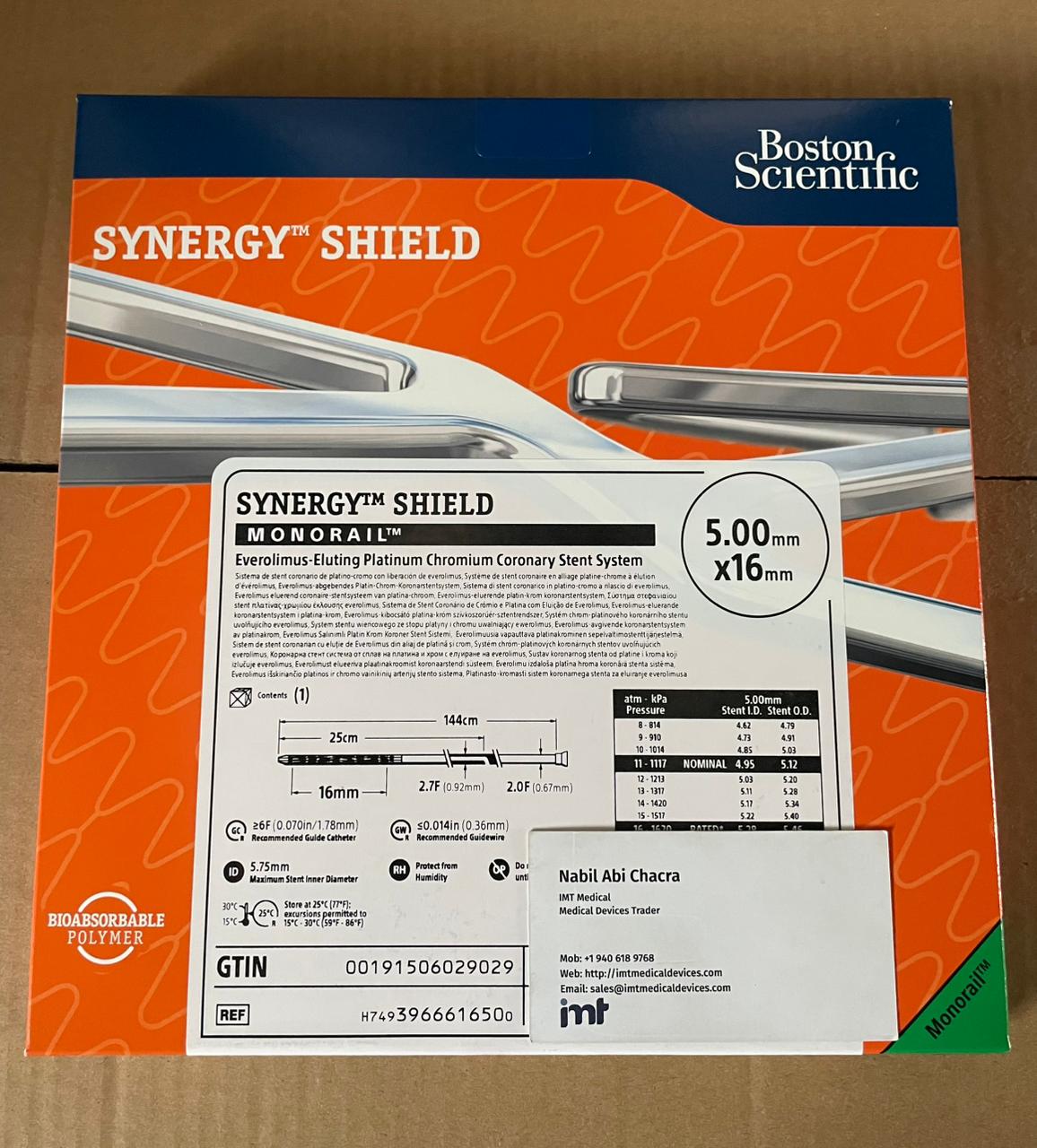
- Medtronic: Drug-Eluting Stents (Resolute Onyx), Permanent Pacemakers, and surgical staplers.
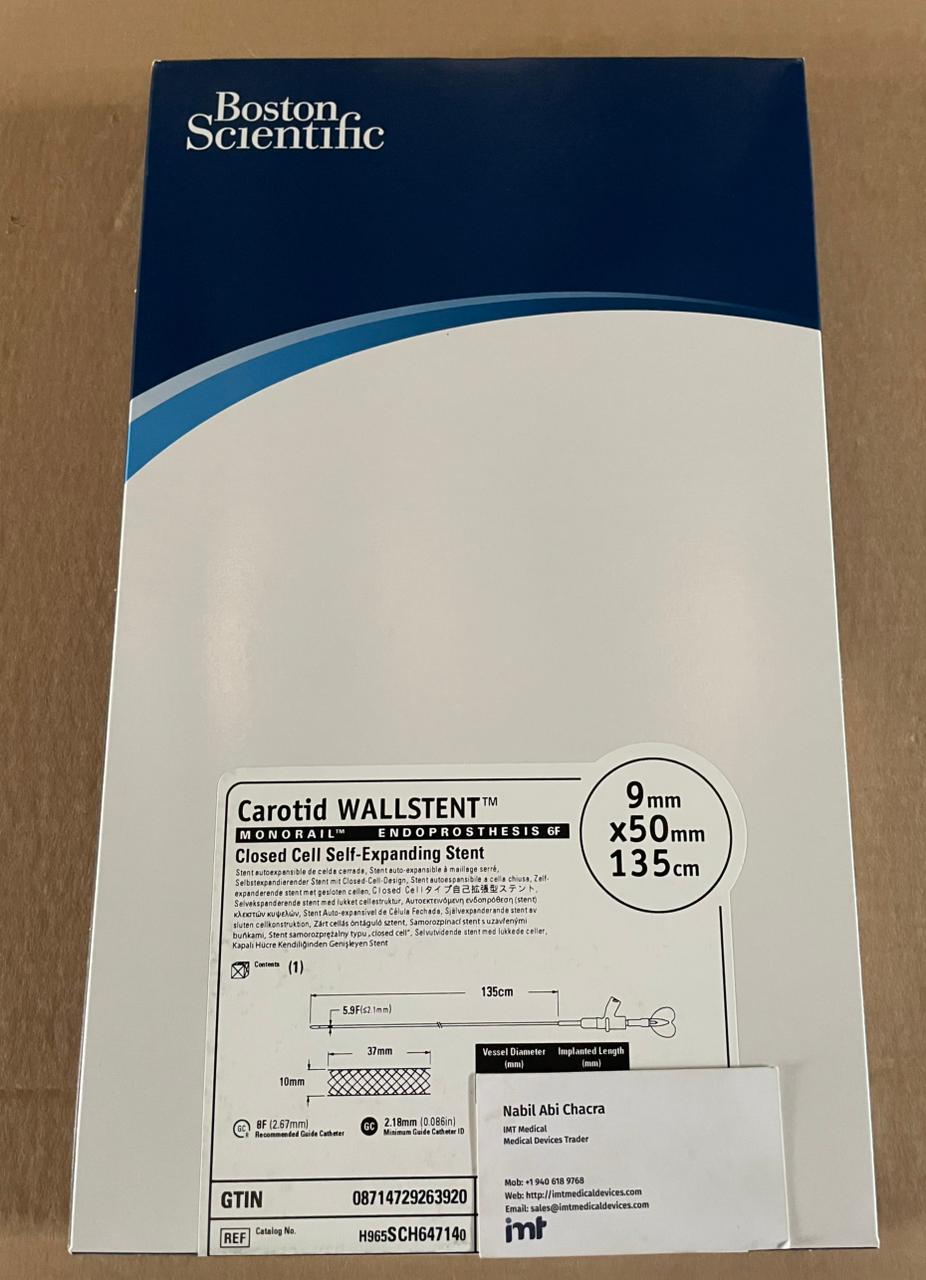
- Boston Scientific: PTCA Balloon Catheters, ICDs, and peripheral stents.
- Terumo: Guiding Catheters and diagnostic guide wires.
- Abbott: Electrophysiology Catheters and specialized cardiac mapping tools.
- Asahi Intec: High-precision vascular access guidewires and microcatheters.
Our inventory reflects the exact technical requirements of modern cath labs and surgical suites. We don't just supply commodities; we provide the specific hardware codes needed for complex interventions. This manufacturer-centric approach guarantees that hospitals receive premium technology without the risks of unverified supply chains. Every item is verified for authenticity and regulatory compliance before export.
Efficient B2B Logistics for Hospitals
Logistical reliability is a prerequisite for wholesale medical supply for hospitals. Our export processes are designed for speed and regulatory precision. We handle all aspects of customs and regulatory documentation, including FDA export certificates and ISO compliance data. Our presence in major trade corridors like Dubai and Poland minimizes transit times and reduces the impact of regional disruptions. It's an infrastructure built for high-volume, high-frequency procurement cycles where delays are not an option.
Procurement officers can rely on our technical expertise to navigate complex international trade tariffs. We provide clear chain-of-custody tracking for all sensitive cardiology implants. This structured approach ensures that life-critical items like ICDs and stents arrive in sterile, manufacturer-specified condition. For volume-based pricing and bulk procurement inquiries, contact IMT Medical Devices directly to discuss your facility's technical requirements. We prioritize rapid information retrieval and product availability to support your clinical operations.
Advancing Global Procurement for Interventional Excellence
Hospitals in 2026 require a strategic shift from general sourcing to specialized, manufacturer-centric acquisition. Success in this landscape depends on navigating the complex documentation of international trade and securing authentic hardware from premium global brands. Integrating these logistical and technical requirements ensures that high-stakes units like cath labs remain operational during regional supply chain disruptions. Reliable procurement is no longer just about inventory; it's about the precision of the global delivery network.
IMT Medical Devices provides a vital bridge between manufacturers and international markets. We export high-quality medical equipment to over 50 countries, utilizing strategic distribution hubs in Georgia, Dubai, Turkey, and Poland. Our portfolio features prestigious technology from Medtronic, Terumo, Abbott, and Boston Scientific. This established network streamlines wholesale medical supply for hospitals by managing every regulatory and logistical variable. Procurement teams can achieve volume-based pricing and guaranteed authenticity through our structured distribution channels. We prioritize clarity and product availability to ensure your clinical standards are met without delay.
Contact IMT Medical Devices for Wholesale Procurement Inquiries to optimize your facility's high-stakes inventory. We're ready to support your clinical expansion with technical precision and global reach.
Frequently Asked Questions
How do hospitals procure medical supplies in bulk?
Hospitals procure supplies in bulk through strategic B2B contracts with international distributors. This involves issuing Request for Proposals (RFPs) to verify manufacturer-direct access and logistical capacity. Procurement officers prioritize long-term agreements for high-volume items like surgical staplers and catheters. These contracts define delivery schedules, technical identifiers, and volume-based pricing tiers to ensure operational continuity in specialized clinical units.
What are the benefits of using a global medical supply wholesaler?
Global wholesalers provide access to a broader manufacturer portfolio and mitigate local supply chain volatility. By leveraging international trade corridors, these partners bypass regional stockouts of critical hardware. Hospitals benefit from consolidated shipping and streamlined regulatory management. This approach secures consistent availability of high-stakes technology, including permanent pacemakers and ICDs, regardless of regional market fluctuations.
What documentation is required for international medical device imports?
International imports require a comprehensive set of regulatory documents to ensure customs clearance. Essential items include the Certificate of Free Sale (CFS), Certificate of Origin, and technical specifications for each device code. Since January 2, 2024, the FDA has transitioned to electronic export certificates in PDF format. Compliance with these digital standards is mandatory for importing complex hardware like drug-eluting stents into over 50 countries.
Which brands are most commonly sourced for interventional cardiology?
Interventional cardiology units most commonly source hardware from prestigious global manufacturers. The primary portfolio includes Medtronic, Boston Scientific, Terumo, Abbott, and Asahi Intec. These brands are selected for their proven clinical efficacy and technical reliability. Procurement focuses on specific product lines, such as Resolute Onyx stents or specialized diagnostic guide wires, to maintain compatibility with existing cath lab imaging systems.
How is the authenticity of wholesale medical devices verified?
Authenticity is verified through package-level traceability and manufacturer-direct chain of custody. Compliance with the Drug Supply Chain Security Act (DSCSA) ensures electronic tracking for every unit by the November 27, 2026, deadline. Hospitals utilize serial number verification and technical identifiers to confirm product origin. Reliable partners provide complete documentation from the original production facility to the point of delivery, eliminating the risk of unverified intermediaries.
What are the typical lead times for international medical device exports?
Lead times for international medical device exports range from 7 to 14 business days, depending on destination and customs protocols. Utilizing strategic hubs in Dubai, Turkey, or Poland facilitates rapid transit across Europe and the Middle East. Shipping duration is influenced by the complexity of the regulatory documentation and the specific handling requirements of the hardware. Consistent logistics management reduces the need for excessive on-site safety stock.
Can hospitals buy drug-eluting stents directly from wholesalers?
Hospitals acquire drug-eluting stents (DES) and other interventional hardware directly from specialized B2B distributors. Utilizing wholesale medical supply for hospitals allows facilities to secure bulk quantities of stents from manufacturers like Medtronic or Boston Scientific. This direct sourcing model ensures that clinical units have immediate access to necessary sizes and specifications. Wholesale agreements provide a reliable inventory buffer for high-frequency cardiovascular procedures.
How do volume-based tiers affect medical device pricing?
Volume-based tiers reduce the per-unit cost of high-value medical devices as the order quantity increases. B2B contracts often feature multi-level pricing structures that reward hospitals for large-scale procurement of implants and catheters. These tiers allow procurement officers to optimize the budget for expensive technology like ICDs or peripheral stents. Tiered pricing ensures that premium brands remain accessible for high-volume surgical and interventional departments.